

Surgery in Turkey: Questions to Ask About ICU, Ward Stay, and Overnight Monitoring

Where you wake up after surgery in Turkey depends on the procedure, the anaesthetic, and your medical history. Rhinoplasty is often a day-case or one-night stay; larger operations may involve planned monitoring in a high-dependency area or ICU. Ask before booking travel: what is routine for your operation, what could extend it, and what discharge depends on. Build your plans around a range, not a best case.
Where will you actually wake up after your operation: a recovery room, your own ward room, or a unit with closer monitoring? And how many hotel nights should you book? These are the questions that keep people awake before flying for treatment, whether they are planning rhinoplasty in Turkey or a major abdominal operation. They are easier to answer than you might think, if you ask them before you confirm your dates.
This guide walks you through the questions worth asking about ICU, ward care, and overnight observation. None of them are difficult or demanding. They are the questions experienced hospital teams expect, and the answers shape everything practical about your trip: your accommodation, your companion’s role, and when it is realistic to fly home.
At a glance
- Best time to ask: Before you confirm travel dates, and again at your pre-operative assessment
- Main topics: ICU versus routine recovery, ward room type, monitoring level, companion rules, discharge criteria
- Why it matters: The post-operative plan determines your hotel nights, companion logistics, and return-flight timing
- Who should ask: You, your companion, and your international patient coordinator
- Useful documents: Treatment plan, full medication list, medical history, travel itinerary
Why these questions matter before rhinoplasty in Turkey, or any operation
Search interest in rhinoplasty in Turkey is enormous, and most of it focuses on surgeons, results, and travel. Far less attention goes to the part of the trip you will actually spend the most time on: the hours and nights after the operation. Yet this is where the practical decisions live. Whether you go from theatre to a recovery bay, a standard inpatient room, a high-dependency setting, or an intensive care unit affects how long you stay in hospital, whether your companion can be nearby, and when you can safely move back to your hotel.
This applies whether your procedure is a nose job in Turkey or something far larger. The scale differs, but the questions are the same: what is the routine pathway after this operation, what would change it, and who decides. Patients who ask these questions before booking flights tend to build calmer, more realistic itineraries. Patients who do not sometimes find themselves rearranging hotels and airport transfers from a hospital bed.
In a large international hospital group such as Acibadem, your pathway usually involves several teams, surgeons, anaesthesiologists, ward nurses, and international patient services. Asking in advance how these teams decide on post-operative monitoring gives you a clear picture of what is routine for your procedure and what would happen if your needs change after surgery in Turkey. A broader patient decision checklist covers the questions that come before these; this guide focuses on the night after.
What to ask about ICU, high-dependency care, and recovery areas
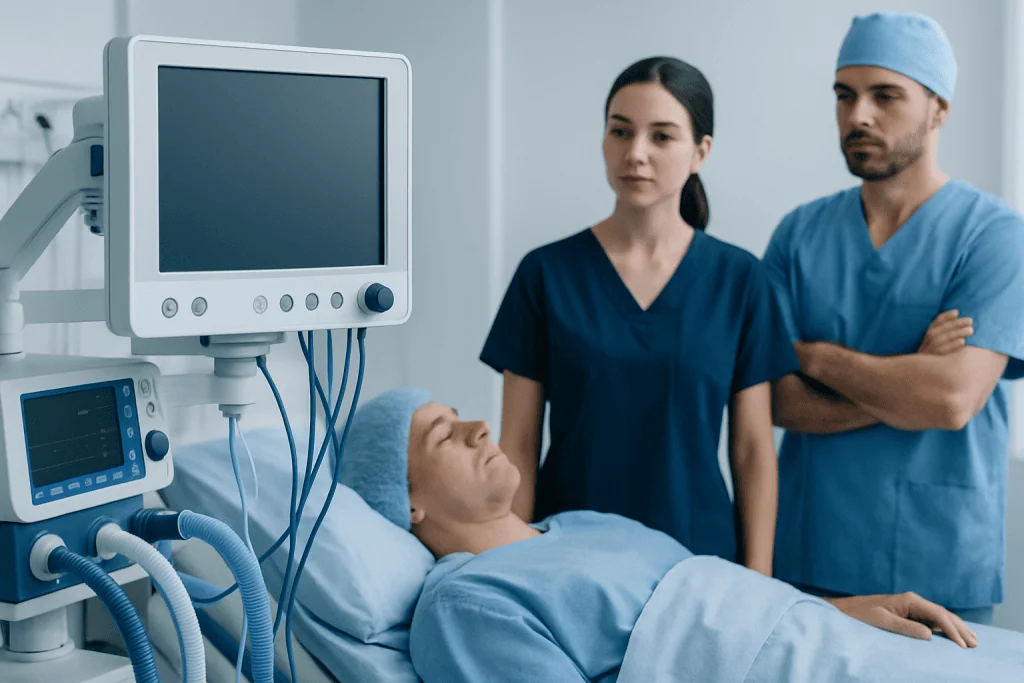
Not every operation involves intensive care, and the term ICU often sounds more alarming than the reality. For some procedures, a night in a higher-monitoring area is planned in advance simply because of the type of surgery, the anaesthetic used, your age, or existing health conditions. A planned ICU night is a precaution built into the pathway, not a sign that something has gone wrong. The useful question is not just whether ICU is possible, but under what circumstances it would be routine, precautionary, or unexpected for your specific operation.
Ask where patients usually go immediately after your procedure. For most operations, you first spend time in a post-anaesthesia recovery unit, where staff watch your breathing, blood pressure, pain, and alertness before moving you to your room. For others, one night of closer observation is standard. Ask how long patients typically stay in each area, what monitoring is used, and what the team looks for before transferring you to a ward. Our separate guide on ICU care before major surgery in Turkey goes deeper if your operation is a large one.
Practical questions that matter most to families:
- Is ICU or high-dependency care planned for this operation, or only used if needed?
- If it is planned, how long is the usual stay?
- Will my companion be able to visit, and are visiting hours different there?
- What equipment and monitoring should I expect to see when I wake up?
- Who will update my companion after surgery, and in which language?
These questions are especially useful if you are travelling to Istanbul or another Turkish city without family support nearby. A clear explanation before travel removes most of the anxiety on the day itself.
Questions to ask about your ward room and overnight stay

Once you leave the immediate recovery area, you will usually move to a ward room if you are staying overnight. This is where comfort and logistics take over from clinical drama. Ask whether your procedure is normally day-case, one-night, or multi-night, and, just as importantly, what your actual stay depends on: pain control, mobility, drains, test results, or simply the time of day your operation finishes. An afternoon procedure often makes an overnight stay more likely than a morning one, for entirely unremarkable reasons.
Ask what support looks like during the night. International patients most often want to know whether a companion can stay, whether interpreter assistance is available after hours, and how nursing calls work if they feel unwell, dizzy, or nauseated at 3 a.m. Overnight nursing observations, checking your blood pressure, pulse, temperature, and wound at intervals, are routine, and knowing to expect them makes for a less startling night.
If you are choosing among hospitals or dates, ask early:
- Will I stay in a private room or a shared room?
- Can a relative or companion stay with me, and is there a bed or sofa for them?
- Are meals adjusted for medical or cultural needs?
- How do I report pain or discomfort during the night, and how is it managed?
- What should I bring for the first night in hospital?
Room type, companion beds, and the practical questions around them are covered in more detail in our guide to choosing a hospital room in Turkey. Pain management deserves its own conversation too; raise it directly at your pre-operative appointment.
How overnight monitoring decisions are usually made
No single factor decides whether you stay overnight. Teams typically weigh the type and length of the operation, the anaesthetic, how your blood pressure and breathing behave in recovery, how well your pain is controlled, how mobile you are, and your medical history. Heart or lung conditions, sleep apnoea, diabetes, and clotting problems generally make monitoring plans more cautious, not because something is expected to go wrong, but because caution is cheap and rearranged flights are not.
Ask which parts of your own history could change the plan. Patients taking blood thinners, using CPAP, recovering alone in a hotel, or facing a long transfer back to their accommodation may reasonably be observed longer than someone having the same procedure in simpler circumstances. Note that medication decisions, including anything you take before or after surgery, belong entirely to your treating doctor; your job is simply to disclose everything accurately so the plan fits you.
Ask who makes the final call. In most hospitals, the surgeon and anaesthesiologist decide together, informed by how nurses see you recover in the first hours. Understanding this helps you treat the quoted length of stay as a plan, not a contract. If your surgery is booked through an international pathway, ask whether your coordinator will tell you if the expected stay changes after pre-operative review: that single update can save a hotel rebooking. It also helps to know in advance what an unexpected overnight stay would look like for you and your companion.
What this looks like for rhinoplasty and other aesthetic surgery
Turkey plastic surgery searches are dominated by rhinoplasty, so it is worth saying plainly how these questions apply to it. Rhinoplasty is usually performed under general anaesthesia, and in many hospitals it is a day-case or one-night procedure. ICU care is not part of the routine pathway for a straightforward turkey nose job; you would normally wake in a post-anaesthesia recovery area and then move to a ward room. That said, “usually” is doing real work in that sentence: your anaesthetic review may still recommend an overnight stay depending on your history, and revision or combined procedures can change the plan.
The bigger planning question for rhinoplasty is not the hospital stay but the days after it. External splints and dressings are typically reviewed and removed at a follow-up visit in the first week or so, and most surgeons want to see you before you fly. Swelling and congestion are expected in the early days, and cabin pressure changes are one reason teams prefer you not to fly immediately after nasal surgery. So when people ask how long to stay in Turkey after a nose job, the honest answer is: long enough for your surgeon’s planned follow-up, plus a margin: your team will give you a specific window based on your operation.
You can read more about the specialty itself on our Plastic, Reconstructive & Aesthetic Surgery page. Whatever the procedure, the questions in this guide apply unchanged: what is the routine pathway, what could extend it, and what has to happen before you leave.
Questions your companion should ask too
If someone is travelling with you, they need their own briefing. Companions are the ones waiting during the operation, receiving updates, bringing personal items, and handling discharge logistics. If they do not understand the plan, the day is far more stressful for them than it needs to be.
Your companion should ask where they can wait, how they will be told the operation is finished, and whom to contact for an update in English or another preferred language. If the hospital has international patient coordinators or interpreters, confirm how those services work outside daytime hours: the night shift is exactly when a language barrier bites hardest.
Practical policies worth checking in advance:
- Can my companion see me in recovery, or only once I am in my room?
- Can they stay overnight, and what does the room provide for them?
- What identification do they need for hospital access?
- If my stay is extended, who helps adjust travel and accommodation plans?
In hospital groups that care for international patients regularly, these non-clinical questions are usually easy to answer before arrival. Getting them settled ahead of time spares your companion from solving logistics while also worrying about you.
How this affects discharge, hotel plans, and your trip home
Your hospital stay is welded to the rest of your itinerary. If there is a realistic chance of overnight monitoring or an extra ward night, do not book a same-day hotel transfer or a return flight with no slack in it. A cautious itinerary is always less stressful than rearranging one after surgery.
Ask when discharge usually happens and what milestones it depends on. One night in hospital does not automatically mean an early checkout: discharge may wait on a morning review, a wound check, eating and drinking normally, adequate mobility, or final instructions. Treat the expected stay as a guide, not a promise made to your airline.
Before you travel, try to confirm:
- How many hospital nights are typical, and how many extra nights are sensible to hold in your travel plan?
- What transport is recommended from hospital to hotel?
- How close to the hospital should your accommodation be?
- When is flying usually considered reasonable after this operation, and who confirms it in your case?
- Will I need a follow-up visit before leaving Turkey?
These answers turn a hopeful itinerary into a realistic one, and they usually argue for staying near the hospital a few extra nights rather than moving around too soon.
Where cost questions fit, and why this page has no numbers
Almost everyone researching this topic also types some version of “how much is a nose job in Turkey” into a search bar. This guide will not give you a figure, and you should be wary of any page that quotes one before anyone has reviewed your case. Prices for surgery depend on the procedure and technique, the anaesthetic, the hospital setting, the expected length of stay, including whether planned monitoring or an extra ward night is part of the pathway, and what the quote does or does not include, such as pre-operative tests, follow-up visits, transfers, and companion arrangements.
The honest process works the other way around: a clinical review of your case comes first, and a written, itemised quote follows from it. That is why the monitoring and length-of-stay questions in this guide are also cost questions in disguise. A quote that specifies the number of hospital nights, what happens if the stay is extended, and what follow-up is included tells you far more than a headline figure ever will. Our guide to questions to ask before booking surgery in Turkey covers how to read a quote critically.
A simple way to prepare for your consultation
Write your questions down and keep them in one place on your phone. Start with the practical core: where you will go straight after surgery, whether an overnight stay is expected, and what could make your stay longer. A written list gets you clear answers even if you feel rushed or nervous in the appointment.
Bring a complete medication list and be candid about all health conditions, previous anaesthesia problems, smoking, sleep apnoea, and the support you will or will not have afterwards. These details directly influence where you recover and how closely you are monitored overnight. The more complete your information, the more realistic the plan, and the fewer surprises for your itinerary.
Finally, do not worry that these questions sound demanding. They are the questions well-prepared patients ask, and good teams answer them readily. Clear questions before you travel mean fewer unknowns after you land.
Step by step
- Ask about the immediate recovery plan. Find out whether the normal pathway after your operation is recovery room only, an overnight ward admission, or closer monitoring in a high-dependency or ICU setting.
- Separate routine from backup. Ask whether ICU or overnight monitoring is standard for your operation or only used if specific concerns arise. This distinction removes most unnecessary worry.
- Disclose your history fully. Share all conditions, medications, past anaesthesia issues, and sleep-related breathing problems, and ask how they could affect where and how long you are observed.
- Confirm ward and companion arrangements. Establish the likely room type, whether your companion can stay overnight, and how interpreter or international patient support works in the evening and at night.
- Plan discharge with slack. Ask what must happen before you can leave safely and whether discharge is likely the same day, next day, or later, then book hotel and flights around the longer end of that range.
- Give your companion the communication plan. Make sure they know who will update them when surgery ends and whom to call for help.
- Reconfirm after pre-assessment. If the expected stay, monitoring level, or follow-up schedule changes, update your accommodation, transfers, and return travel straight away.
Your checklist
- Ask where you will recover immediately after surgery
- Ask whether ICU or high-dependency monitoring is planned, possible, or unlikely
- Confirm the expected number of hospital nights
- Check whether your companion can visit or stay overnight
- Ask what parts of your medical history could extend your stay
- Confirm who updates your companion after surgery, and in what language
- Ask when discharge usually happens and what criteria must be met
- Ask whether a follow-up visit is needed before you fly
- Leave extra time before your return flight from Turkey
- Keep your medication list and medical history ready
Key takeaways
- Ask early where you are likely to stay right after surgery: recovery room, ward, or a higher-monitoring unit.
- A planned ICU or high-dependency night is often a precaution built into the pathway, not a sign of complications.
- Rhinoplasty is typically a day-case or one-night procedure, but the follow-up visit before flying is the real driver of your trip length.
- Discharge depends on recovery milestones, not the calendar, treat quoted stays as plans, not promises.
- Length-of-stay questions are also cost questions: a quote that specifies hospital nights and follow-up tells you more than any headline figure.
- International patient support can connect the clinical plan to travel, language, and accommodation logistics before you arrive.
Frequently asked questions
Is it safe to get plastic surgery in Turkey?
Safety is not a property of a country; it depends on the specific hospital, the surgical and anaesthesia team, honest pre-operative assessment, and realistic aftercare planning. Turkey has large, well-equipped hospitals as well as smaller clinics, so the useful questions are about the individual provider: who performs the anaesthetic review, where you recover, what monitoring is available, and what the follow-up plan looks like before you fly. The questions in this guide are a good starting point for judging any provider.
How much is nose surgery in Turkey?
There is no single figure, and any quote given before your case has been reviewed should be treated cautiously. The price depends on the technique, whether it is a first or revision procedure, the anaesthetic, the hospital setting, the number of hospital nights, and what the quote includes, tests, follow-up visits, transfers, and companion arrangements. A written, itemised quote prepared after clinical review is the only version worth comparing.
Does surgery in Turkey usually involve an ICU stay?
Not for most operations. Many patients recover in a post-anaesthesia unit and then move to a standard room. ICU or high-dependency monitoring may be planned in advance for certain major procedures or for patients with specific medical needs, as a precaution, not a complication. Ask what is routine for your specific operation.
How long should you stay in Turkey after a nose job?
Long enough for your surgeon’s planned follow-up, plus a sensible margin. Splints and dressings are usually reviewed at a visit in the first week or so, and most surgeons want to see you before you fly. Your team will give you a specific window based on your operation; plan your accommodation around the longer end of it rather than the shortest possible timeline.
Can you fly after a nose job?
Eventually, yes, but not immediately. Swelling, congestion, and cabin pressure changes are the reasons surgeons prefer a gap between nasal surgery and flying, and the right timing varies with the procedure and your recovery. Your surgeon confirms when flying is reasonable in your case, usually at the follow-up visit before departure.
Can my companion stay with me overnight in hospital?
This depends on the hospital, the room type, and your condition after surgery. Private rooms often accommodate a companion; higher-monitoring areas usually have stricter visiting rules. Ask in advance about companion policies, visiting hours in each area, and what identification your companion needs for access.
Who decides whether I need overnight monitoring after surgery?
Usually the clinical team together: the surgeon and anaesthesiologist, informed by how the nursing team sees you recover in the first hours. They weigh the type of surgery, your medical history, your pain control and mobility, and practical factors such as whether you would be recovering alone. The plan can change on the day, which is why flexible travel arrangements matter.
Add us as a Preferred Source to see more of our trusted health content across Google Search, AI Overviews and Discover.

Update history
- PublishedJuly 8, 2026
- Medical review approvedSeptember 13, 2026
- Last content updateSeptember 12, 2026
References2
More Patient Guides

How Long Does Anesthesia Last? Wear-Off Times by Type
Coming round from an operation, almost everyone asks the same two questions: when will my head feel normal, and how long is…

Flying to Turkey After a Recent Illness: When Is It Safe to Travel?
Flying to Turkey after a recent illness may be safe once you are medically stable and cleared to travel; plan airline support…

Braces, Retainers, and Dental Work Before Surgery in Turkey: What to Tell Your Team
Braces, retainers and dental work before surgery in Turkey should be shared with your care team early to plan safe anaesthesia and…

When to Stop Eating, Drinking, or Smoking Before a Procedure in Turkey
When to stop eating before a procedure in Turkey depends on your anesthesia plan; follow your care team’s exact fasting instructions for…