

Authorized Contact Person for Treatment in Turkey

An authorized contact person for treatment in Turkey is the individual you permit the hospital to contact about appointments, admission, discharge and practical arrangements. Choose someone calm, reachable and discreet, give the hospital their details in writing, and complete any consent forms early. They support your care but are not automatically a legal decision-maker: that requires separate documentation.
Who should the hospital call if you are in a scan, sedated after surgery, or simply too exhausted to answer your phone? That single question is worth settling before you book a flight.
Naming an authorized contact person for treatment in Turkey gives your care team one clear channel for communication, protects your privacy, and gives you practical backup when you are tired or stressed. This guide explains who to choose, what that person can and cannot do, which documents to prepare, and how the process works when you travel to an Acibadem hospital as an international patient.
At a glance
- Who to choose: Someone calm, reachable, discreet, and able to handle medical and travel information, not necessarily your closest relative
- Main purpose: One trusted channel for communication, coordination and practical support before, during and after your treatment
- What they are not: A legal decision-maker. Consent for treatment stays with you unless recognised legal documentation says otherwise
- What to prepare: Their full name, relationship to you, phone number with country code, email, preferred language, and any consent forms the hospital requests
- Where they can be: Travelling with you or staying at home, both work, as long as they are genuinely reachable
- Acibadem support: International patient teams help with registration, consent forms, interpretation, scheduling and companion logistics
What an authorized contact person for treatment in Turkey actually means
Your authorized contact person is the individual you permit the hospital to communicate with about your care journey: appointment times, admission details, schedule changes, discharge planning and practical arrangements. The role exists to keep information flowing when you cannot manage it yourself, during a long procedure, while you rest afterwards, or when a time-zone difference makes it hard for family at home to reach you directly.
The role matters more for international patients than for local ones. Treatment abroad stacks up moving parts: flights, hotels, interpreters, fasting instructions, payment coordination, follow-up messages after you return home. One named, prepared person keeps those parts from colliding.
Your contact person may be a spouse, adult child, parent, sibling, close friend or caregiver. There is no rule that it must be your nearest relative. What matters is trust: you should be comfortable with this person receiving the information you approve, helping you remember instructions, and stepping in calmly if something changes.
Be clear about what this role is not. Naming a contact person does not hand over your medical decisions, and it does not open your full medical record to them. Those boundaries are covered below, because misunderstanding them is the most common source of friction between families and hospitals.
At Acibadem, international patient teams work with companions and authorized contacts from many countries every day. They can record the correct details at registration, explain which consent forms apply, and set expectations for how communication will run before, during and after your hospital stay. If you have not yet made contact, the guide to your first contact with Acibadem, from online inquiry to care plan explains how that early process works.
What your contact person can usually help with

Think of your contact person as the bridge between you, your family and the hospital team. On a day with several consultations and tests, one organised person tracking arrival times, preparation instructions and which building you need next makes a real difference. After a procedure, when you may be drowsy or in discomfort, they become your memory: writing down what the nurse said, saving the discharge summary, confirming the follow-up date.
Depending on your written consent and hospital policy, your contact person may receive updates about scheduling, admission procedures, room arrangements and general care coordination. They can ask practical questions on your behalf, record the answers, and make sure you understand what happens next, without ever replacing your own voice in medical decisions.
Common support tasks include:
- Keeping your passport, appointment schedule and hospital contact numbers easily accessible
- Acting as the day-to-day link with your international patient coordinator
- Arranging transport between the airport, hotel and hospital
- Updating family members at home, only the ones you want updated
- Helping you follow fasting, preparation and arrival instructions exactly as given
- Listening to discharge instructions alongside you and keeping the written copy safe
- Helping with practical matters such as managing valuables and personal belongings in a Turkish hospital while you are in theatre or recovery
What your contact person cannot do without proper permission

An authorized contact person is not automatically a legal representative. In almost all situations, you remain the person who gives consent for treatment, hears the medical explanations, and makes the healthcare decisions. Your contact person supports you; they do not substitute for you.
Hospitals are obliged to protect your privacy. Medical information cannot be shared with whoever happens to call or message the ward, even a spouse or parent. If you want your companion to join consultations, receive updates or handle documents, you will normally need to give written permission naming that person and defining what may be discussed. Tell the international patient team early, so the consent paperwork is done before the first appointment rather than argued about at the nursing station.
One situation deserves advance planning: the possibility that you might temporarily be unable to make decisions yourself, for example under general anaesthesia or in intensive care. If your treatment carries that possibility, ask before you travel what documentation would apply. Depending on your circumstances and home country, this may involve a legal guardian, a power of attorney, or another form of recognised authorisation. Requirements vary between cases and cannot be improvised in an urgent moment, which is exactly why the question belongs in your pre-travel checklist, not your hospital bedside.
If you are unsure whether a document from your home country will be recognised, raise it with your coordinator in writing and keep the answer. Plain, early questions here save genuine distress later.
How to choose the right person
The best authorized contact person for treatment in Turkey is rarely chosen by sentiment alone. The person who loves you most may also be the person who panics first. Choose for temperament and reliability: someone practical, calm under pressure, responsive by phone, and able to keep information confidential without being reminded.
Weigh three practical factors. First, availability: will they actually answer during your treatment dates, allowing for time zones? Second, language: can they follow information in English, or will they depend fully on interpreter support? Third, stamina: if they travel with you, can they manage their own accommodation, meals, transport and rest across several hospital days?
A useful contact person can:
- Answer calls and messages promptly, including at inconvenient hours
- Keep accurate records of appointments and instructions
- Stay steady when a schedule changes at short notice
- Respect your privacy choices, even under pressure from other relatives
- Relay information to family clearly, without embellishment or alarm
- Support your decisions even when they personally feel anxious
It is sensible to name one primary contact and, if you wish, one backup. What creates problems is naming nobody, or letting five relatives each believe they are the official channel.
Information and documents to prepare before arrival
Before you travel, prepare your contact person’s full name, relationship to you, mobile number with country code, email address and preferred language. If the hospital requests it, a passport or ID copy may also be needed for the record. Check that the phone number will actually work while you are in Turkey, or that the person is reachable through a reliable messaging application they genuinely monitor.
Decide in advance what you are comfortable sharing. Some patients want their contact person copied on everything, from appointment confirmations to discharge details. Others prefer to limit them to logistics only, times, places, transport, with medical content staying between patient and doctor. Neither choice is wrong. What matters is stating it clearly at registration so the hospital can respect it consistently.
If your contact person will accompany you, ask your coordinator about companion arrangements: visitor guidance, hospital access, interpreter scheduling, accommodation suggestions and airport transfer coordination. If they will stay at home, confirm the best email address and phone number for international communication, and agree how they will be reached if something changes while you are unreachable.
Foreign patients in Turkish hospitals: access, consultations and how costs work
Two questions come up constantly from people researching this topic, so it is worth answering them plainly.
Can foreigners go to hospital in Turkey? Yes. Foreign nationals can be treated in Turkish hospitals, and large private groups such as Acibadem run dedicated international patient departments precisely because so many patients arrive from abroad. You will be registered with your passport, and the international team coordinates appointments, interpretation and documentation. In a genuine emergency, hospitals treat first and sort paperwork after, but planned treatment always works better with advance registration, which is where your authorized contact person’s details are recorded.
How are consultation and treatment costs handled? This guide deliberately gives no figures, because no honest figure exists in the abstract. What a consultation or treatment costs depends on the speciality, the specific doctor and hospital, the tests and imaging your case needs, the type of room, the length of stay, and whether complications or plan changes occur. The reliable path is a written, itemised quote based on your own medical records, requested before travel, with clear notes on what is included and what would be billed separately. Your contact person can help you keep those documents organised and ask follow-up questions, but the quote itself should always come from the hospital in writing, not from a forum, a middleman or a price list on a third-party website.
Bear in mind that a plan built from records sent remotely can change once doctors examine you in person. Read what happens if your in-person evaluation changes the initial plan so that neither you nor your contact person is caught off guard by an updated recommendation or a revised quote.
Working with interpreters and international patient teams
Language support is one of the most important parts of safe, comfortable care abroad. Even if your contact person speaks reasonable English or some Turkish, medical conversations use unfamiliar terms where a small misunderstanding can matter. Professional interpreter support reduces that risk and lets you ask questions with confidence rather than guesswork.
At Acibadem, international patient services coordinate communication between you, your medical team and your companion or authorized contact, appointment guidance, hospital orientation, interpretation and help understanding next steps after consultations. Your contact person can be included in these discussions whenever you have given permission. The guide on how Acibadem supports international patients from first contact describes the full scope of that service.
For sensitive conversations, speak for yourself wherever possible, with the interpreter supporting accuracy. Let your contact person take notes, prompt you with the questions you prepared, and reconcile the doctor’s instructions with your travel plans afterwards. That division of labour keeps your voice central while your support person handles the organisation: the healthiest version of this arrangement.
If your contact person is also your travel companion
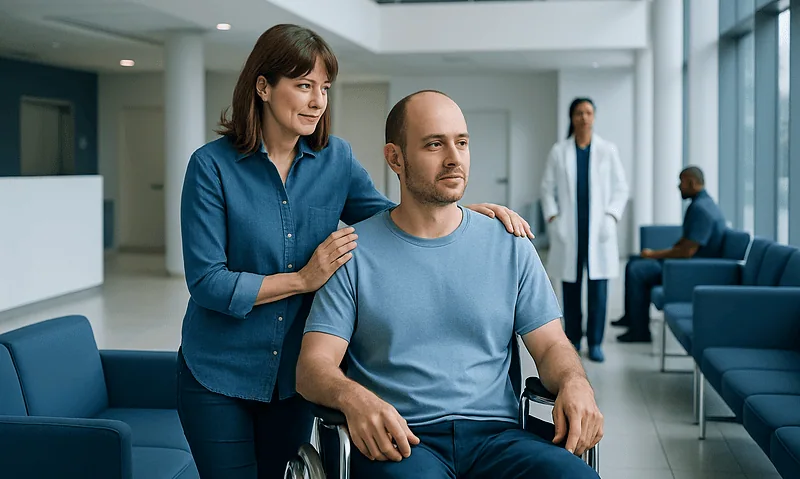
Many patients prefer their authorized contact person to travel with them, and for surgery or a complex evaluation this can be genuinely reassuring. A companion navigates the airport with you, remembers instructions when you cannot, and manages everyday tasks while you concentrate on treatment and rest.
Agree on practical limits before departure. Your companion may not be able to enter every hospital area, sit in on every examination, or stay overnight unless the unit’s rules and room arrangements allow it. Visitor policies vary by department and can tighten for patient safety or infection prevention reasons. Asking your coordinator in advance means your companion books accommodation with realistic expectations instead of discovering restrictions at the ward door.
Plan for your companion’s wellbeing as deliberately as your own. They need somewhere to sleep, regular meals, local transport information and the key phone numbers saved in their phone. A rested companion is useful; an exhausted one trying to manage everything alone becomes a second problem.
When things do not go to plan
The contact person role earns its keep precisely when something unexpected happens: a schedule change, a delayed discharge, a concern during recovery. Before treatment, make sure both of you know how to reach your care team out of hours, and save the numbers listed in the guide to emergency contacts for medical travellers in Turkey in both phones.
Agree on a simple rule for genuine emergencies. If either of you notices a sudden, severe change, such as serious difficulty breathing, chest pain, uncontrolled bleeding or a collapse, call your local emergency number or go to the nearest emergency department now. For non-urgent concerns during recovery, contact your care team through the channels they gave you and describe what you are seeing calmly and specifically.
The role also continues after you fly home. Your contact person can help you monitor your recovery and keep the hospital’s remote follow-up channel active. The guide on complications after you return home and when to contact your Turkey care team is worth reading together before departure, so you both recognise what deserves a message and what deserves urgent local care.
Step by step
- Choose one primary contact person. Select the person you trust most with communication and logistics. Other relatives can stay involved, but one primary contact prevents confusion and tells the hospital exactly whom to reach first.
- Discuss your privacy preferences. Tell your contact person what you are comfortable sharing and what stays private. If there are family members you do not want updated, say so plainly before hospital registration, not after the first awkward phone call.
- Share accurate contact details. Provide the full name, relationship, phone number with country code, email address and preferred language. Test that the number works internationally and that messages will actually be seen during your travel dates.
- Ask about required consent forms. Before or during registration, ask the international patient team which forms allow communication with your authorized contact, and what each form does and does not cover. If any wording is unclear, ask before signing.
- Prepare a shared folder. Keep travel documents, appointment confirmations, medical summaries, medication lists, allergy information and insurance or payment documents in one secure place your contact person can access if needed.
- Agree communication routines. Decide how often your contact person updates the family and who receives what. One short daily message prevents a dozen repeated calls and lets you rest between appointments.
- Review discharge and follow-up plans together. Before leaving hospital, have your contact person listen to the discharge instructions with you and write down the key points, medication timing, wound care guidance, warning signs and follow-up dates. Keep that written record somewhere both of you can find it during recovery.
Your checklist
- Full name and relationship of your authorized contact person
- Mobile number with country code and a monitored messaging app
- Email address checked regularly during your travel dates
- Copy of passport or ID if requested for hospital records
- Written consent preferences: what may be shared, and with whom
- Question asked in advance about legal authorisation, if your treatment could leave you temporarily unable to decide
- Medication list, allergy details and medical summary stored securely and accessibly
- Emergency contact plan agreed with family at home
- Accommodation and transport plan for any travelling companion
- Interpreter needs communicated before the first appointment
- Discharge and follow-up instructions saved in one shared place
Key takeaways
- An authorized contact person for treatment in Turkey handles communication, logistics and practical support, one clear channel between you, your family and the hospital.
- The role carries no automatic legal power. Consent and treatment decisions stay with you unless recognised legal documentation says otherwise; arrange any such documentation before travel.
- Choose for calm, reachability and discretion, not proximity of kinship. One primary contact beats five competing relatives.
- Put your privacy preferences in writing at registration so the hospital knows exactly what may be shared and with whom.
- Costs are answered with a written, itemised quote based on your records, never with a generic figure.
- Acibadem international patient teams coordinate the consent forms, interpreters, registration details and companion logistics that make this role work.
Frequently asked questions
Do I have to name an authorized contact person for treatment in Turkey?
It is strongly recommended for anyone travelling internationally, though the exact requirement depends on the hospital process and the type of care. A named contact makes scheduling, updates and discharge planning far smoother. If you are travelling alone, ask the international patient team in advance how communication will be managed while you are in treatment or recovery.
Can my authorized contact person make medical decisions for me?
Usually, no. You make your own treatment decisions and give consent yourself. Your contact person can support discussions and help you understand information, but legal decision-making requires specific documentation, such as a recognised authorisation, power of attorney or guardianship arrangement, depending on the situation. If this could apply to you, ask what is needed before you travel.
Can foreigners go to hospital in Turkey?
Yes. Foreign nationals can register and be treated in Turkish hospitals, and hospital groups with international departments, including Acibadem, handle patients from abroad routinely. You register with your passport, and the international team coordinates appointments, interpretation and paperwork. Emergencies are treated regardless of nationality; planned care works best when arranged and documented in advance.
How much does a consultation or medical treatment cost in Turkey?
There is no honest single figure. Cost depends on the speciality, the hospital, the tests and imaging your case requires, room type, length of stay, and whether the plan changes after in-person evaluation. Request a written, itemised quote based on your own medical records before travelling, and confirm in writing what it includes and what would be billed separately.
Is Turkey good for medical treatment?
Turkey is a widely used destination for international patients, with large hospital groups experienced in cross-border care. Whether it is right for you depends on your condition, the specific hospital and doctor, and how well the plan is documented. Judge the individual provider, not the country: ask for a written plan, named department, clear follow-up arrangements and honest answers about risks.
Can my contact person receive my test results?
Only if your consent and hospital policy allow it. Medical information is private, so the hospital must confirm exactly what you have agreed to share and with whom. If you want your contact person to receive results or join result discussions, state this clearly at registration or before the appointment, and put it in the written consent form.
Can my authorized contact person be outside Turkey?
Yes, in many cases they can remain in your home country. Make sure they are genuinely reachable despite time-zone differences and that their phone and email details on the hospital record are correct. For urgent practical matters on the ground, it still helps to have a local companion or a clear plan for in-person support.
What if I want to change my authorized contact person?
Ask the hospital team how to update your records and consent forms. Do it in writing, confirm explicitly that the previous contact should no longer receive information, and brief your new contact on the responsibilities they are taking on, including your privacy preferences and the communication routines you have already agreed.
Add us as a Preferred Source to see more of our trusted health content across Google Search, AI Overviews and Discover.

Update history
- PublishedJune 8, 2026
- Medical review approvedSeptember 13, 2026
- Last content updateSeptember 12, 2026
References2
More Patient Guides
Medical Travel with a Companion: Who Should Come and Why
Medical travel with a companion can make treatment in Turkey easier by providing practical help, communication support and reassurance before and after…

How Family Members Can Help Without Disrupting Recovery
Family support during recovery helps when you listen, organize practical tasks and follow the care plan without taking over, in Turkey or…

Need a Family Member to Travel With You? A Companion Decision Guide
A companion travel guide for treatment in Turkey: decide who should travel with you, plan practical support, and prepare for Istanbul care.

Unexpected Overnight Stay in Turkey: What Patients and Companions Should Be Ready For
Unexpected overnight stay in Turkey? Here is what patients and companions should prepare for, from essentials and updates to hospital logistics in…