

Can a Family Member Join Your Consultation in Turkey?

Yes, in most cases a family member can join your consultation in Turkey, provided you give your consent and the department's privacy, safety and space rules allow it. One companion per patient is the usual arrangement. Some areas, such as imaging rooms and sterile zones, restrict companions, so it helps to confirm the details before you travel and again at check-in.
You are planning treatment in Turkey and want your husband, sister or adult child beside you when you meet the doctor. In most cases, that is possible. Can a family member join your consultation in Turkey? Usually yes, with your consent, and within the hospital’s privacy and safety rules. What follows explains how attendance actually works, where limits apply, and how to arrange it so nothing surprises either of you on the day.
A few minutes of preparation matter here. Knowing when a companion can attend, what they can genuinely help with, and which parts of a visit they may need to sit out makes the consultation calmer and far more useful for both of you.
At a glance
- Short answer: Yes, usually: a family member can join your consultation if you give consent.
- Main condition: Your privacy choice, plus the department’s room, safety and workflow rules.
- Typical limit: One companion per patient in most outpatient consultations.
- Best time to ask: When the appointment is being confirmed, and again at check-in.
- Useful for: Note-taking, remembering questions, emotional support and travel logistics.
- Where restrictions apply: Imaging areas, procedure rooms, sterile zones, intensive care and very small consultation rooms.
- Language support: A professional medical interpreter is the safer choice for clinical detail; your relative supports you in other ways.
The short answer: yes, usually, with your permission
If you are asking whether a family member can join your consultation in Turkey, the answer in most outpatient settings is yes. Hospitals and clinics generally allow one companion in the consultation room, provided two conditions are met: you want them there, and nothing about privacy, safety or space rules them out at that moment.
Your consent is the deciding factor. Even when a spouse, parent or adult child has travelled thousands of kilometres to be with you, the medical team still needs to know that you are comfortable discussing your health in front of them. If at any point during the visit you would rather speak alone, you can say so. That preference will be respected, and it does not need justifying.
Practical limits do exist. Some consultation rooms are small. Some departments cap visitor numbers to keep clinics moving. Parts of a medical visit involve physical examination, personal questions, infection-control measures or equipment areas where companions cannot enter. None of this usually means your family member is shut out of the whole visit. More often it means they join for part of the appointment, typically the discussion at the beginning and the summary at the end, and wait nearby for the rest.
It is also worth saying what this guide does not cover: whether you need a companion at all. If you are still weighing that decision, the companion decision guide works through it step by step. This page assumes the decision is made and someone is coming with you.
Why consent comes first
In Turkey, as in most countries, your medical information is private. That is why staff may ask you directly, sometimes at reception, sometimes in the consultation room, whether you give permission for your family member to be present or to receive updates about your condition. It can feel like a formality, but it is a genuine safeguard: it puts you in control of who hears personal health information.
You can set the boundaries as narrowly or as broadly as you like. Some patients want their relative present for everything. Others want them there for the general discussion but not for questions about medical history, or present for the treatment plan but not the examination. You can also change your mind partway through the visit. A good care team adapts to whatever you decide.
For routine attendance in the room, verbal consent at check-in or in front of the doctor is usually enough. If you want the hospital to share records with your relative, discuss your condition with them separately, or give them updates when you are not present, more formal confirmation may be requested. Rules differ where the patient is a child or where decision-making capacity is in question; in those situations the care team explains what applies and guides the family through it.
How a companion can help during your consultation
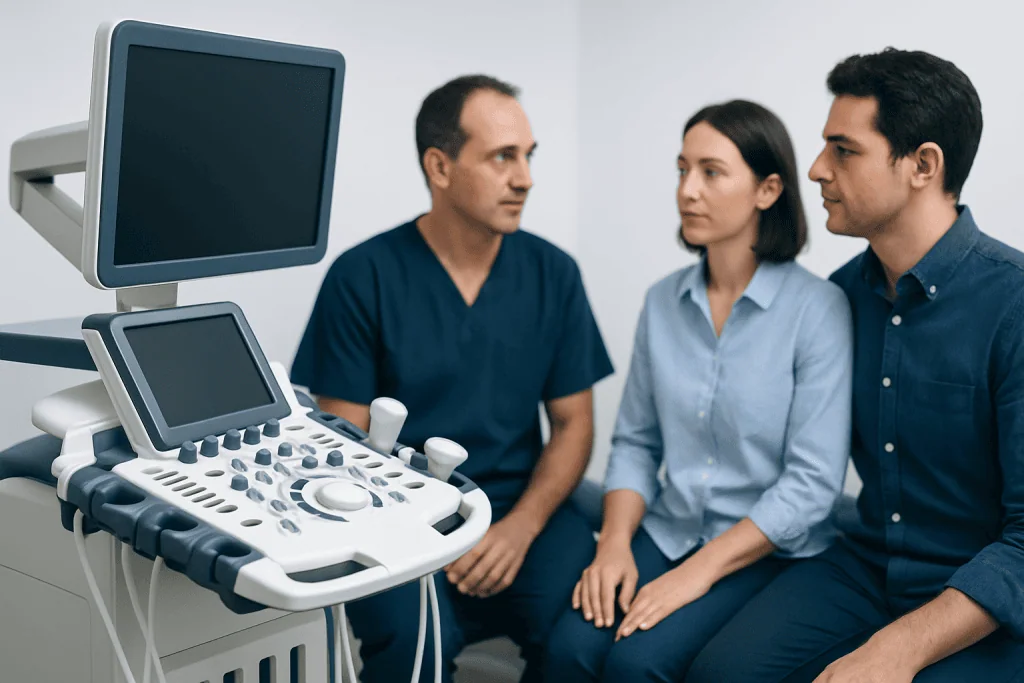
There is a reason so many international patients bring someone. You are managing travel, an unfamiliar system and a large amount of new information, often while tired or anxious. A familiar person in the room tends to make it easier to ask questions and to remember the answers afterwards.
The most useful companion roles are practical ones. Taking notes during the discussion. Keeping track of appointment times across a multi-day visit. Reminding you of symptoms, dates or previous treatments you mentioned at home but forget in the moment. Making sure the questions you prepared actually get asked. Outside the consultation itself, a family member can handle transport back to the hotel, collect documents, keep paperwork in order and manage prescriptions and follow-up arrangements.
- Emotional reassurance during a stressful visit
- Help remembering the questions you meant to ask
- Note-taking and keeping documents organised
- A second memory for instructions and follow-up dates
- Support with travel, hotel and transport planning
If you want a family member to join your consultation in Turkey mainly as a second set of ears, that is a legitimate and common arrangement, and often the most valuable one. Consultations are information-heavy, and two people rarely remember the same details. There is a fuller discussion of how relatives can take part in clinical conversations productively in how family members can join medical discussions in Turkey without confusion.
Companion or interpreter: keep the roles separate
If language is a concern, be careful about asking your relative to translate. A bilingual family member can help with everyday communication, directions, reception desks, meal choices, but important clinical discussions are a different matter. Diagnosis, consent, medication instructions and follow-up plans involve precise language, and informal translation by a relative under pressure is where misunderstandings creep in.
The safer arrangement is a professional medical interpreter for the clinical content, with your family member free to do what they do best: listen, take notes and support you. International patient teams, including Acibadem’s, can often coordinate interpreter support ahead of a visit. The trade-offs between the two roles are set out in detail in medical interpreter or family member: who should help during appointments in Turkey.
When a family member may not be able to come in

Even in companion-friendly hospitals, there are settings where your family member will be asked to wait outside. The common ones are imaging departments, procedure rooms, pre-operative areas, recovery units, intensive care and any sterile or safety-controlled zone. These restrictions exist for patient safety, infection prevention and privacy, including the privacy of other patients in shared clinical areas. They are not a judgement on your family.
There may also be moments within the consultation itself when the doctor asks to speak with you alone for a few minutes. This happens routinely when discussing personal medical history, consent or sensitive topics, and it exists to give you private space to speak openly. It is a normal part of patient-centred care, not a sign that anything is wrong.
When a companion cannot be present for the full visit, partial arrangements usually work well: they join at the start and return for the summary at the end, or the doctor recaps the key points with your permission once they are back in the room. Staff in international patient settings are used to finding practical arrangements like this. If you expect a hospital stay or surgery rather than a single consultation, it is worth understanding in advance how relatives are kept informedfamily updates during surgery in Turkey explains how that communication typically works.
How to arrange it smoothly before you travel
The simplest approach is to raise it early. When your appointment is being confirmed, mention that you would like one family member to join the consultation. That gives staff the chance to record your request, flag any department-specific rules, and tell you plainly if only one companion is permitted or if certain parts of the visit exclude companions altogether.
It also helps to explain your companion’s role. Saying “my wife is my main support person and will help me manage paperwork and follow-up instructions” tells the team more than a name on a form. If you want your relative included in discussions about diagnosis, test results or treatment planning, state that clearly so your preferences are on record before the visit begins.
If your treatment pathway starts with a remote appointment rather than an in-person one, the same principle applies: decide in advance whether a relative will sit in, and say so. A companion joining a video consultation from the same room as you is usually straightforward.
At larger international hospitals, including Acibadem, international patient coordinators handle exactly these questions day to day. They can confirm visitor policies for the relevant department, arrange interpreter support, explain where companions wait during restricted stages, and walk both of you through registration and appointment timing. Having one named coordination channel for the visit makes life noticeably easier for the person accompanying you as well as for you.
Practical tips for companions on the day
Ask your family member to arrive with you, on time, carrying identification in case it is requested. The most important thing they can understand in advance is that the appointment is centred on you. The consultation goes better when the companion listens, takes notes and saves their own questions for the end rather than speaking over you or answering on your behalf. Doctors need to hear your account in your words.
Prepare a small folder or a phone note containing your passport copy, appointment confirmation, medication list, previous reports and scans, known allergies, and a short summary of your symptoms or treatment history. Your companion can keep these materials organised and produce them when asked, genuinely useful if you are tired from travel or managing several appointments in one day. General preparation for the appointment itself is covered in how to prepare for a doctor consultation in Turkey.
Agree a simple division of labour before you walk in: you speak, they write. Ask them to note key terms, instructions and follow-up dates exactly as stated, and to flag, at the end, not mid-sentence, anything they think was left unclear. Two people leaving the room with the same understanding is the whole point of bringing someone.
After the consultation: keeping your companion useful
The hour after a consultation is when a companion earns their place. Sit down together while the discussion is fresh and compare notes: what was said about diagnosis or next steps, what tests are scheduled, what the follow-up plan is and who provides reports. Gaps in understanding show up quickly in that conversation, and it is far easier to seek clarification the same day than a week later from another country.
Before leaving the hospital, make sure both of you know the point of contact for reports, scheduling changes and practical questions during the rest of your stay. If treatment continues beyond a single visit, your relative’s role will evolve too, from consultation support to day-to-day help during treatment and recovery, which is covered separately in how family members can support a patient during treatment in Turkey.
Step by step
- Ask about companion policy before you travel. When the consultation is booked, ask whether one family member can attend and whether any department-specific restrictions apply. Knowing this early lets you plan transport, timing, and child or elder care around it.
- State your consent clearly. At check-in or when you meet the doctor, say that you want your family member present. If you are happy for them to hear results and discuss next steps, say so directly, so your privacy preferences are unambiguous.
- Prepare your questions together. Before the appointment, write a short list of what you want covered, diagnosis, tests, timelines, travel considerations. This keeps the consultation focused and gives your companion a defined role without taking over.
- Use professional language support where it matters. If neither English nor Turkish is your strong language, ask for a medical interpreter rather than relying on a relative for clinical detail. Your companion still attends for reassurance and notes; the interpreter carries the precise communication.
- Expect partial access in some areas. Plan for your companion to wait outside during imaging, procedures or safety-controlled stages. Ask whether they can rejoin for the discussion afterwards or hear a summary with your permission.
- Let your companion take the notes. Consultations are information-heavy, especially after a long journey. Someone writing down key points, instructions and follow-up dates makes the rest of your stay markedly easier.
- Confirm the next point of contact before leaving. Make sure you both know who handles reports, scheduling changes and practical questions for the remainder of your time in Turkey. One named channel prevents confusion later.
Your checklist
- Ask in advance whether one companion is allowed in the consultation
- Bring passports or ID and the appointment confirmation for both of you
- Tell staff clearly that you consent to your family member being present
- Prepare your question list before the visit
- Carry previous reports, scans, prescriptions and a medication list
- Request a professional interpreter if language is a concern
- Expect possible limits in imaging, procedure and sterile areas
- Have your companion take notes throughout
- Compare notes together straight after the appointment
- Confirm who handles reports and follow-up before you leave
Key takeaways
- A family member can usually join your consultation in Turkey if you give permission, one companion per patient is the common arrangement.
- Your consent and privacy come first; you can ask to speak alone at any point, and you can change your mind mid-visit.
- Imaging areas, procedure rooms, sterile zones and intensive care commonly restrict companions for safety and privacy reasons.
- Companions are most valuable as note-takers and second memories; professional interpreters should carry the clinical language.
- Raising the request when the appointment is booked, and again at check-in, is what makes the day run smoothly.
Frequently asked questions
Can my spouse come into my consultation with me in Turkey?
In most cases, yes. If you are comfortable with it and the department allows companions in that setting, your spouse can attend all or part of the consultation. One companion per patient is the usual limit.
Do I need to give written permission for my family member to join?
Verbal consent at check-in or in the consultation room is usually enough for routine attendance. Sharing records with your relative, or updating them separately from you, may require more formal confirmation.
Can a family member translate for me during the appointment?
They can help with everyday communication, but a professional medical interpreter is the safer choice for clinical discussions. Diagnosis, consent and medication instructions depend on precise language, and informal translation is where misunderstandings arise.
Will my companion be allowed into scans or procedure areas?
Often not. Imaging rooms, sterile areas, recovery spaces and procedure rooms typically have safety, infection-control or privacy restrictions, so your companion may wait outside and rejoin for the discussion afterwards.
What if I want my family member there for support but not for every topic?
You can set limits at any point. Many patients have their companion present for the general discussion, step outside for private questions, and return for the treatment summary at the end. Staff will follow whatever boundary you set.
Is there a limit on how many family members can attend?
Usually yes. Most hospitals prefer one companion per patient in consultations to protect privacy, reduce crowding and keep clinics running on time, so confirm the number in advance if several relatives are travelling with you.
Can this be arranged in advance with the hospital?
Yes, and it is the best approach. International patient teams routinely note companion requests when appointments are confirmed, explain any department-specific rules, and coordinate interpreter support so everything is settled before you arrive.
Add us as a Preferred Source to see more of our trusted health content across Google Search, AI Overviews and Discover.

Update history
- PublishedJuly 8, 2026
- Medical review approvedSeptember 1, 2026
- Last content updateSeptember 1, 2026
References1
- Talking With Your Doctor: MedlinePlus medlineplus.gov
More Patient Guides
Medical Travel with a Companion: Who Should Come and Why
Medical travel with a companion can make treatment in Turkey easier by providing practical help, communication support and reassurance before and after…

How Family Members Can Help Without Disrupting Recovery
Family support during recovery helps when you listen, organize practical tasks and follow the care plan without taking over, in Turkey or…

Need a Family Member to Travel With You? A Companion Decision Guide
A companion travel guide for treatment in Turkey: decide who should travel with you, plan practical support, and prepare for Istanbul care.

Unexpected Overnight Stay in Turkey: What Patients and Companions Should Be Ready For
Unexpected overnight stay in Turkey? Here is what patients and companions should prepare for, from essentials and updates to hospital logistics in…