

Clinical Handover in Turkey: How Your Care Team Shares Information

Clinical handover in Turkey is the structured way doctors, nurses, coordinators and interpreters pass your care information between shifts, departments and hospitals. It relies on medical records, checklists and team briefings rather than memory. As an international patient, you strengthen it by sending records before travel, bringing an accurate medication and allergy list, confirming details when asked, and repeating the plan back before you leave any consultation.
You have flown in for treatment, seen one doctor on Monday and a different one on Wednesday, and you are wondering: does the second doctor actually know what the first one said? That question sits behind a lot of anxiety for international patients. The answer is clinical handover.
Clinical handover is the structured way your doctors, nurses and coordinators share important information about your care. This guide explains how clinical handover in Turkey works in practice, what Acibadem does to support safe communication across teams and shifts, and, just as importantly, what you can do to make each handover more accurate. You are not a passive part of this process. You are one of its most reliable safeguards.
At a glance
- Purpose: To keep your care continuous, accurate and safe as information moves between teams, shifts, departments and countries
- Who is involved: Doctors, nurses, coordinators, interpreters, pharmacists, allied health professionals and discharge teams
- Key moments: Pre-travel record review, admission, consultations, tests, surgery or procedures, ward transfers, discharge and follow-up
- Your role: Bring documents, keep your medication list current, confirm details when asked, and repeat the plan back in your own words
- Support available: Interpreter assistance, international patient coordination, shared electronic records and written discharge information
What clinical handover in Turkey means for you
Clinical handover is the process your care team uses to pass responsibility for your care, and the information that goes with it, from one professional or department to another. In practical terms, it means the doctor seeing you today should understand what happened yesterday, the nurse on the next shift should know your current plan, and the discharge team should have what it needs to send you home safely.
Clinical handover in Turkey follows the same logic you would find in any well-run hospital system: it does not rely on memory or hallway conversations alone. It uses structured communication, electronic medical records, checklists, team briefings and documented plans.
When you travel for healthcare, handover matters even more than at home. Your medical history may sit in records from another country. Your medications may carry brand names your Turkish team does not recognise at first glance. A family member may be helping you make decisions, sometimes across a language barrier. Each of those factors adds a point where information can be lost, and each is something a good handover process is designed to catch.
At Acibadem, handover sits inside broader patient safety and coordination practices within JCI-accredited hospital settings. You can read more about what that accreditation covers in our guide to how JCI accreditation and clinical standards support safe care. You will not see every handover happen. You should feel its effect: fewer repeated explanations from your side, clearer next steps, and a team that already knows your priorities, language needs and travel timeline.
When information is shared during your journey
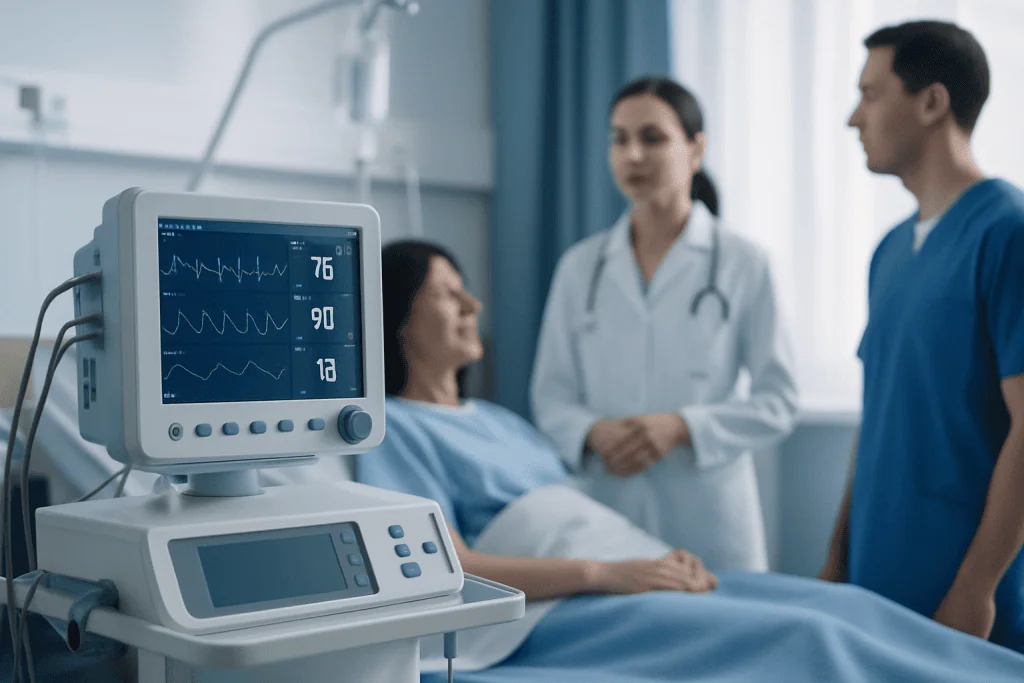
Handover starts before you land. If you send medical reports, imaging, laboratory results or a treatment summary in advance, the international patient team directs those documents to the relevant department for review. This early step shapes everything that follows: it supports appointment planning, flags whether additional documents or tests may be needed, and gives the specialist a real picture of your history before you sit down together. Our guide on how doctors and clinical teams plan care before you travel explains this pre-arrival stage in detail.
Once you are in Turkey, handover happens at every point where your care changes hands. Some of these transitions are visible to you; many are not. Common handover moments include:
- From international patient services to the hospital registration and clinical team on arrival
- From emergency or outpatient assessment to inpatient admission
- From one nursing shift to the next, usually at set times each day
- Between departments, for example, from imaging in the morning to a specialist consultation in the afternoon
- From the operating room or procedure area to the recovery unit, and then to the ward
- From intensive care to a general ward, if your treatment involves that step
- From the hospital team to your written discharge and follow-up plan
Take the imaging example. If you have a scan at 09:00 and see the specialist at 14:00, the goal of clinical handover in Turkey, as anywhere, is that the specialist has access to the relevant results and notes before your conversation begins, so the appointment is spent on decisions rather than on reconstructing what happened.
Because international care runs on travel dates and return flights, your non-medical logistics travel with your clinical information where relevant. Interpreter needs, companion details, hotel arrangements, mobility assistance and timing constraints for discharge can all be noted so that clinical and practical planning stay aligned.
Who participates in your handover

Your handover is not a conversation between two doctors. It is a coordinated exchange between several professionals, each contributing a different part of the picture:
- Your treating physician holds the diagnosis, the treatment options and the medical decisions, and remains the reference point for your plan.
- Nurses pass on day-to-day observations at each shift change: pain levels, medication timing, mobility, wound care needs and any change in your condition.
- Radiologists and laboratory teams report findings that feed directly into your specialist’s decisions.
- Anaesthesiology teams review surgical readiness and hand over your status to recovery staff after a procedure.
- Pharmacists help check medication safety, including how medicines you brought from home fit with what is prescribed in hospital.
- Rehabilitation, physiotherapy and nutrition professionals contribute recovery and mobility recommendations where relevant.
If your case is complex, multidisciplinary discussions bring these specialties together around one care plan rather than several parallel ones. It is always reasonable to ask who leads your care, how the team is organised, and who your day-to-day contact is: the team should be able to answer clearly.
For international patients, interpreters and patient coordinators play a distinct, practical role. They do not make clinical decisions and they do not replace your doctor. What they do is keep information moving accurately: helping you understand instructions, preparing you for appointments, guiding you between departments and clarifying what the medical team needs from you. At Acibadem, these services exist to take confusion out of unfamiliar hospital processes so that the clinical handover itself stays clean.
How language, documents and consent are handled
Clear communication is the foundation of safe handover, and it becomes harder when you and your medical team do not share a first language. Interpreter support is available for consultations, consent discussions, admission procedures and discharge education. Use it without hesitation. Ask for information to be repeated, slowed down or written out so you can review it later. A question asked twice costs a minute; a misunderstanding carried home can cost far more.
Your documents are part of the handover
Your medical documents move through the same handover channels as everything else. The most useful items are previous diagnoses, operation notes, pathology reports, imaging files, medication lists, allergy records and recent laboratory results. If your records are in a language other than English or Turkish, provide translated summaries where you can, especially for critical reports such as biopsy results or prior surgery details. Original documents plus a short translated summary is usually more useful than either alone.
Consent is a communication checkpoint, not a signature
Before a procedure or treatment, your team should explain the purpose, the expected benefits, the possible risks, the alternatives and what to expect afterwards. If you are unsure whether you have understood, four questions cut through most confusion: What is the decision I need to make today? What are the main risks? What happens if I wait? Who do I contact with questions after I leave? If the answers are not clear, say so before signing anything.
Privacy and your companion
Clinical details are shared with the professionals involved in your care and, when you authorise it, with the family member or companion you choose. If you want a spouse, adult child or friend included in updates, tell your coordinator and clinical team early so this is noted clearly. Deciding this on day one is far easier than untangling it mid-treatment.
Your role in safer handover
You know your medical history, your symptoms, your medication habits and your concerns better than anyone else in the building. Even strong hospital systems benefit from your confirmation, because you are the one constant across every handover. Your check can catch a missing detail, an outdated medication list or a misunderstanding before it affects your care.
Start with your medication list. Bring a written list using generic names where possible, covering prescription medicines, over-the-counter drugs, supplements, injections and allergy medicines, with doses and timing, not just names. Some medicines matter more than others at handover; if you take anticoagulants, read what to tell your care team about blood thinners before treatment, because this is information your team needs early and accurately. Never change any medicine yourself in preparation for treatment; that decision belongs to your treating doctor.
If you use medical devices, a CPAP machine, a glucose monitor, a pacemaker (bring the card), a mobility aid, bring the related documentation. Food allergies and dietary requirements belong in the record too, not just in conversation with ward staff; see food allergies and special diets during treatment in Turkey.
Then build two simple habits:
- Keep a care notebook. A paper notebook or a phone note works equally well. Record the departments you visit, major test dates, new instructions, medication changes and questions for the next appointment. If a companion is with you, agree who takes notes so you can focus on the conversation.
- Use the check-back. Before leaving any consultation or ward, repeat the plan in your own words and invite correction: “I understand I will have the blood test tomorrow morning, continue this medication tonight, and meet the doctor after the imaging report is ready. Is that correct?” Thirty seconds of check-back catches misunderstandings that no system can see.
One more thing: expect repetition, and welcome it. Staff will confirm your name, date of birth, allergies and planned procedure at multiple points. This is not disorganisation. It is a deliberate safety practice designed to match the right patient with the right care at every step. If anything they read back is wrong or has changed, say so immediately.
Discharge handover and returning home
Discharge is the single most important handover of your journey, because responsibility passes from the hospital to you, your companion and, eventually, your doctor at home. Before you leave, you should have clear information, verbally and in writing, about your diagnosis, the treatment provided, your medications, wound or device care if relevant, activity guidance, warning signs to watch for, and follow-up appointments. If any of it is unclear, ask before you leave the building. That is what the discharge conversation is for.
As an international patient, add the travel layer. Ask specifically about flying, walking long distances, lifting luggage, driving, bathing, particular foods, and how any of these interact with your recovery timeline. Your care team gives the medical guidance; your coordinator helps align discharge paperwork, appointments and transport around it.
If a companion or family member will support your recovery, hand information to them deliberately rather than assuming it will transfer by osmosis. Our guide on preparing a caregiver handover before returning home walks through exactly what they need to know.
If you plan to continue care in your home country, ask which documents your local physician will need. Typically this means the discharge summary, operation reports, pathology results, imaging reports, the final medication list and follow-up recommendations. Keep both digital and printed copies; some clinics and some border situations require quick access to medical information, and a printed summary never runs out of battery.
Finally, know your contact routes before you need them. Your discharge documents should tell you who to reach for routine questions and how. If your recovery raises concerns after you get home, our guide on when to contact your Turkey care team after returning home explains which changes are worth a message and which need faster action. If you develop a symptom your discharge notes flagged as urgent, do not wait for a reply from abroad: call your local emergency number or go to the nearest emergency department now.
Step by step
- Send your records before travel. Share recent medical reports, imaging, your medication list and allergy information with the international patient team before arrival, so the relevant specialists can review your history and plan appointments efficiently.
- Confirm your identity and key details. At each major step, staff may confirm your name, date of birth, planned procedure and allergies. It feels repetitive; it is deliberate. Correct anything that is wrong on the spot.
- Use interpreter support when needed. If you are not fully comfortable discussing medical details in English or Turkish, ask for interpreter assistance. Pausing to clarify beats leaving with uncertainty about a diagnosis, a consent form or a medication instruction.
- Repeat the care plan back. Before leaving a consultation, summarise what you understood in your own words. This gives the team a chance to correct misunderstandings and helps the plan stick in your memory.
- Keep your coordinator informed. Tell your patient coordinator about travel dates, companion changes, mobility needs or appointment concerns. Logistics affect timing, and early information lets the hospital coordinate around it.
- Review discharge documents carefully. Before leaving hospital, check that you understand your medications, follow-up dates, warning signs and contact routes. Ask for copies of the reports your doctor at home will need.
- Share updates after returning home. If your symptoms change or your local doctor needs clarification, use the follow-up channel provided at discharge. Timely communication is how the handover bridges Turkey and your home country.
Your checklist
- Passport or official ID matching your hospital registration details
- Recent medical reports, test results and imaging files
- Current medication list with doses, timing and generic names if available
- Allergy list, including medication, food, latex or contrast allergies
- Previous surgery notes, pathology reports or discharge summaries
- Contact details for your doctor in your home country
- Insurance or payment documents if applicable
- Interpreter request or preferred language information
- Notebook or phone note for questions and instructions
- Companion contact details and authorisation preferences
Key takeaways
- Clinical handover is the structured sharing of your care information between teams, shifts, departments, and, at discharge, countries.
- Handover starts before you travel: records sent in advance shape appointment planning and specialist review.
- Repeated identity, allergy and procedure checks are a safety practice, not a sign of disorganisation.
- You strengthen every handover with an accurate medication list, a care notebook and the habit of repeating the plan back.
- Discharge is the most important handover of all: leave with written information on medications, warning signs, follow-up and contact routes.
- Acibadem supports handover through multidisciplinary teams, JCI-accredited hospital practices, shared electronic records and international patient coordination.
Frequently asked questions
Why do hospital staff ask me the same questions more than once?
Repeated questions are part of patient safety checks. Staff confirm your identity, allergies, medication use and planned procedure at different stages to reduce the risk of errors and to make sure the right patient receives the right care. If something has changed or was recorded incorrectly, speak up immediately: that is exactly what these checks are for.
Can my family member be included in handover discussions?
In many situations, yes, if you give permission and it is appropriate for your care. Tell your coordinator and clinical team early whom you want involved in updates. This is especially useful when your companion will help with travel, medication reminders or recovery after discharge, because they will carry part of the plan home with you.
What if my medical records are not in English or Turkish?
Bring the original documents and, where possible, translated summaries of the key reports. The items most worth translating are usually diagnosis letters, pathology reports, operation notes and recent imaging conclusions. Your international patient contact can advise which documents are most useful for the reviewing specialist.
How will I know who is responsible for my care?
Ask directly: who is my treating physician, which department is leading my care, and who do I contact for practical questions? In hospital, nurses and coordinators can point you to the right person. In complex cases several specialists contribute, but there should always be a clear lead and a clear communication route, and you are entitled to know both.
What should I check before I leave the hospital?
Make sure you understand your diagnosis, the treatment you received, any medication changes, activity guidance, warning signs to watch for and your follow-up plan. Ask for written discharge information and copies of the reports your doctor at home will need. If you are flying soon, ask whether any travel precautions apply to your condition.
Does clinical handover continue after I return home?
In a practical sense, yes. Your discharge summary, follow-up instructions and communication with your local doctor are the final links in the chain. Keep all documents organised in both digital and printed form, share them with your healthcare provider at home, and use the contact route your care team provided if questions come up.
What can I do if I think information has been missed?
Tell your nurse, doctor, interpreter or patient coordinator as soon as possible. A useful phrase is: “I am concerned this information may not be in my file”, then give the detail clearly. A written list of your medications, allergies and previous treatments makes it much faster to correct any gap.
Is handover different for international patients than for local ones?
The clinical process is the same, but international care adds layers: records from another country, medications under unfamiliar brand names, language support and travel timelines. That is why pre-travel record sharing, interpreter services and coordinator involvement exist: they feed those extra layers into the same structured handover your local counterpart receives.
Add us as a Preferred Source to see more of our trusted health content across Google Search, AI Overviews and Discover.

Update history
- PublishedJune 8, 2026
- Medical review approvedSeptember 13, 2026
- Last content updateSeptember 12, 2026
References1
More Patient Guides

When to Delay Travel for Treatment in Turkey Because of Cold, Flu, or Fever
Delay travel for treatment in Turkey if you have fever, worsening flu symptoms, or breathing difficulty; contact your care team before flying.

Traveling to Turkey for Treatment While Pregnant: Safety Questions to Ask First
Traveling to Turkey while pregnant can be safe with medical clearance, airline checks and a tailored care plan. Ask these key safety…

When to Seek Urgent Help After Leaving the Hospital in Turkey
When to seek urgent help after leaving the hospital in Turkey: act fast for breathing trouble, chest pain, heavy bleeding, high fever,…

At Acibadem, How We Handle Consent, Privacy, and Patient Decision-Making
Consent, privacy, and patient decision-making at Acibadem in Turkey are handled with clear information, confidentiality, interpreters, and respect for your choices.