

Getting a Treatment Quote for Turkey: Is There a Fee and What Happens Next?

In most cases, the first treatment quote from a hospital in Turkey is prepared from the medical records you send and does not carry a separate quotation fee. Paid services can begin later — for example, a live specialist consultation or new tests. After the quote, you review what it includes, ask questions, and only then move to scheduling and travel planning.
You have shortlisted a hospital in Turkey, your reports are in a folder, and one question is holding you back: will asking for a price cost you anything? For most patients, getting a treatment quote for Turkey is straightforward: the first estimate is usually prepared from the medical records you send, and hospitals commonly provide it without a separate quotation fee. Policies vary between providers, so it is always worth confirming before you send anything.
What happens after the quote arrives matters just as much. The hospital reviews your files, may request further reports or images, and then sets out the practical steps — appointments, travel timing, and how payment is organised. This guide walks through the whole sequence, including the points where a free process can turn into a billable one.
At a glance
- Best for: Patients comparing hospitals and planning treatment in Turkey
- Initial quote: Usually based on your records; often free, but policies differ, so confirm first
- What shapes the estimate: Diagnosis, proposed treatment, expected tests, length of stay, and specialist review
- What may cost extra: Live consultations, repeat imaging, laboratory work, or a revised plan after examination
- Accepting a quote: Reviewing an estimate does not by itself commit you to treatment or payment
- Support to expect: International patient coordinators, interpreters, and travel guidance
How getting a treatment quote for Turkey actually works
Getting a treatment quote for Turkey usually starts with documents, not appointments. You share your diagnosis, recent reports, imaging, and a short history. The relevant department or specialist team reviews them and prepares a preliminary estimate covering the likely treatment pathway — the procedure or therapy proposed, the tests expected, and the probable length of any hospital stay. The purpose is to help you understand the scope of care before you spend money on travel.
It helps to be clear about what a quote is and is not. It is a planning document based on the information available at the time. It is not a final bill, and it is not a contract. Your needs can change after an in-person examination or updated tests, and a careful provider will say so plainly rather than presenting the first figure as fixed. If a quote is presented as unconditional before anyone has examined you, treat that as a reason for caution, not comfort.
At large international centres in Turkey, including Acibadem, the process typically runs through an international patient services team. Their job is to route your documents to the right specialists, explain what the estimate covers, flag what might change, and coordinate the practical steps if you decide to go ahead. Requesting the estimate also does not obligate you to anything — a point covered in more detail in Does Getting a Treatment Quote Mean You Are Committed to Pay?
Is there usually a fee to get a quote?
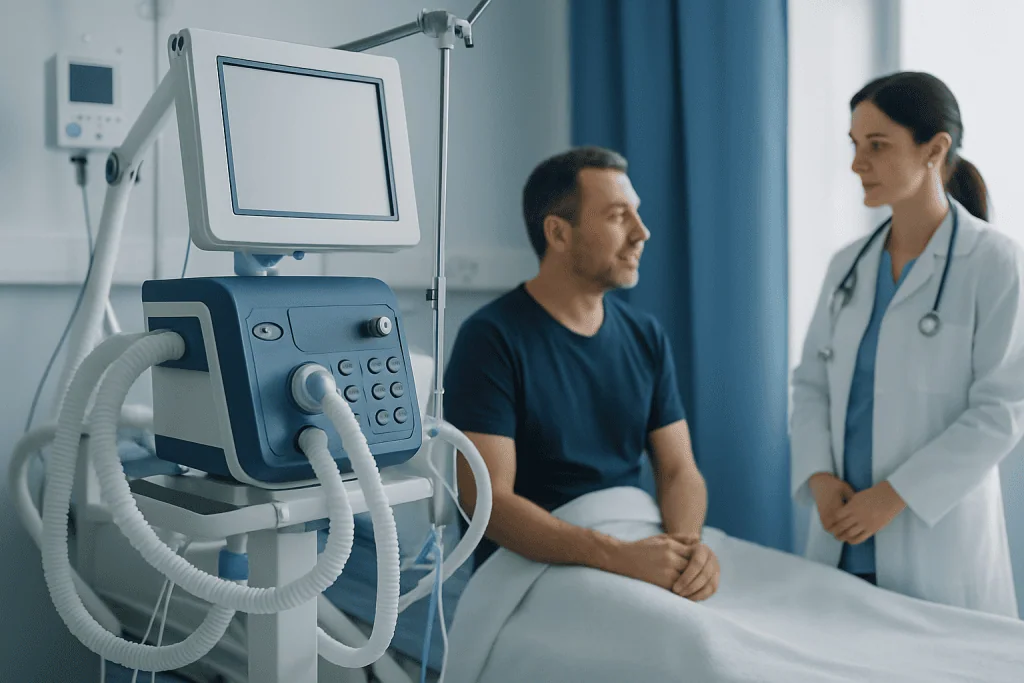
In many cases, no. When the estimate is built from documents you send in advance — reports, scan results, blood tests, a brief history — hospitals commonly prepare it without charging for the review itself. This is standard practice across much of the international patient sector, because the estimate is what allows you to decide whether to continue at all.
The distinction that catches people out is between a free estimate and paid medical services. A records-based review is one thing. A detailed written specialist opinion, a live video consultation with a doctor, a pathology re-review, or new imaging and laboratory tests are medical services in their own right, and they may be billed separately even when the quotation itself was free. Neither model is wrong; the problem is only when you are not told which one applies.
The cleanest way through is a direct question, asked before you send your files: is this quote based only on records, and will anything be charged before I arrive? A competent international patient coordinator will tell you what is complimentary, what is billable, and at what stage any payment is requested. And if a provider asks for money before any specific service has been defined, ask exactly what the payment covers and request the answer in writing before going further.
How treatment costs in Turkey are actually built
People searching for quotes often want a simple number for how much treatment in Turkey costs. There is no honest single answer, because the price of the same procedure varies with factors that are specific to you. Understanding those factors is more useful than any figure, because it tells you what to look for in the quote itself.
An estimate is typically shaped by:
- The diagnosis and proposed treatment. The specific procedure, technique, and any implants or materials involved.
- Diagnostic work. Which tests are expected before treatment, and whether existing imaging can be used or must be repeated.
- Length of stay. Expected days in hospital, including any intensive care time for complex procedures.
- Professional fees. Whether surgeon, anaesthesia, and consultation fees sit inside the estimate or are listed separately.
- Follow-up before discharge. Post-treatment checks, dressings, and medications during the stay.
Two quotes for the same procedure can differ simply because they include different things. One may bundle everything; another may list a lower headline figure with tests, anaesthesia, and materials billed on top. Before comparing figures, compare inclusions line by line — How to Compare Surgery Quotes from Turkey and Your Home Country shows how to do this fairly. And remember that the quote covers treatment, not the trip: flights, accommodation, and daily expenses sit outside it, so budget for those separately from the start.
Two common questions: available treatments and free healthcare
What medical treatments are available in Turkey?
Turkey’s larger hospital groups offer a broad range of specialties to international patients. Commonly requested areas include oncology, cardiology and cardiac surgery, orthopaedics, neurology and neurosurgery, fertility treatment, bariatric surgery, organ-specific surgery, ophthalmology, dental treatment, and plastic and reconstructive procedures. Whether a specific treatment suits your case is a clinical question that can only be answered after specialist review of your records — which is exactly what the quotation process is for.
Do tourists get free healthcare in Turkey?
No. Turkey’s public health insurance covers people enrolled in its national system; visitors are not covered by it. As a tourist or medical traveller, you pay for the care you receive, whether that is planned treatment or an unplanned visit. This is one reason travel insurance matters for any trip, though standard travel policies generally exclude planned medical treatment abroad — they are designed for emergencies, not the procedure you travelled for. Read your policy carefully and budget on the assumption that your planned treatment is paid privately.
Why quotes can change after you arrive

It is normal for an estimate to be revised after your first in-person visit. The specialist may confirm the original plan exactly as quoted. They may also recommend additional tests, a different technique, a longer or shorter stay, or input from another specialty. This is more likely in complex fields — cancer care, cardiac care, orthopaedics, bariatrics, neurology — where a physical examination and fresh, high-quality imaging genuinely change what the team can see.
A revised plan is not, by itself, a warning sign. It usually means the team is tailoring your care to what they found rather than to older records. What matters is how the change is handled: a well-organised hospital explains the reason for the revision, puts the updated estimate in writing, and gives you time to decide before anything irreversible happens. What that process looks like in practice is described in At Acibadem, What Happens If Your In-Person Evaluation Changes the Initial Plan.
The practical takeaway is simple: treat your first quote as a planning estimate, not a fixed final bill. Build a little flexibility into your travel dates and your budget, and ask in advance how the hospital communicates and prices changes. If extra tests are ordered after you land, they are often billed separately, because what is needed depends on your condition on the day rather than on the records you sent months earlier.
What to send for the most accurate estimate
The completeness of your records is the single biggest factor you control. A quote built on a two-line email will be vaguer than one built on a full file, and vague quotes are the ones most likely to change later. Prepare a short written summary of your diagnosis, main symptoms, current medications, allergies, and any treatment you have already had, with dates for surgery, biopsies, scans, and major results.
Quality matters as much as quantity. Send the most recent versions of your reports, make sure your name and the date are visible on each document, and ask whether the hospital needs the actual image files (for example on disc or via a transfer link) or whether written reports are enough. If your records are not in English, ask whether translation is needed before review — some hospitals handle this internally, others ask you to arrange it.
A useful file typically includes:
- A short diagnosis summary and description of current symptoms
- Recent imaging reports — MRI, CT, PET-CT, ultrasound, or endoscopy — and image files if requested
- Pathology reports, especially for cancer-related cases
- Recent blood test results
- A medication list and allergy information
- Previous operation notes or discharge summaries
- Practical details: preferred dates, whether a companion travels with you, and any mobility needs
Practical details are not padding. Whether you travel alone, need wheelchair assistance, or have fixed dates all affect how the international patient team plans your appointments, interpreter support, and accommodation guidance around the medical schedule.
What happens after you receive the quote
The quote arriving is the midpoint of the process, not the end. You now have a window to ask follow-up questions, and it is worth using it fully. Check how many hospital days the estimate assumes, whether surgeon and anaesthesia fees are inside it, which items are billed separately, and how long the quote remains valid. If anything is unclear, ask for a written breakdown in plain language — a serious provider will not resist this.
If you decide to proceed, the hospital moves into scheduling and pre-arrival planning. You will typically be asked to confirm passport details, travel dates, companion information, and a preferred payment method. Depending on the treatment, you may also receive pre-arrival instructions — tests to complete at home, or guidance to discuss timing and medications with your treating doctor. The full sequence from acceptance to departure is laid out in After You Accept a Treatment Quote: Your Next Planning Steps for Turkey.
For international patients, coordination is half the experience. Hospitals with dedicated international services, including Acibadem, commonly help with appointment scheduling, airport–hospital–hotel logistics, interpretation, and accommodation guidance, so the medical plan and the travel plan move together rather than in parallel confusion.
Questions to ask before you confirm
Before committing, make sure you understand both pathways: the medical one and the financial one. The goal is not to interrogate the hospital but to remove assumptions — most disputes in medical travel trace back to something one side assumed was included and the other assumed was extra.
- Is the quote free, and is it based only on records review?
- What exactly does the estimate include — consultations, hospital stay, operating theatre, anaesthesia, implants or materials, medications during the stay?
- Which services are commonly billed as extras?
- Could the plan change after in-person examination, and how would a revised estimate be communicated?
- How long is the quote valid?
- Is a deposit required, and if so, when and under what terms?
- Who is my single point of contact for documents, arrival questions, and payment guidance?
A fuller version of this list, with reasoning behind each question, is in Questions to Ask Before Accepting a Treatment Quote in Turkey. Having one named coordinator for everything is worth asking for explicitly — it makes the entire process feel more manageable, especially across time zones.
Step by step
- Send your medical records to the hospital you are considering. Share your diagnosis, reports, scans, medications, and previous treatment summaries. The more complete and recent your records are, the more useful your initial treatment quote for Turkey will be.
- Wait for medical review. The relevant specialist or department reviews your documents. If something important is missing, you may be asked for additional reports, image files, or a short clarification about your symptoms and history.
- Receive and review the estimate. You typically get a written estimate and a summary of the proposed next step. Check what is included, what is billed separately, and whether it is a preliminary estimate or a more structured package.
- Ask practical follow-up questions. Before booking anything, clarify timing, expected length of stay, interpreter support, companion arrangements, and payment timing — including whether any pre-arrival consultation or test carries a fee.
- Confirm your travel and appointment plan. If you decide to proceed, the international patient team aligns your arrival date with consultations, tests, and possible admission. Keep passport details and companion information ready to speed this up.
- Prepare for in-person reassessment. After arrival, your doctor may confirm the original plan or adjust it based on examination and fresh tests. This step ensures the final plan fits your current condition, not only your older records.
Your checklist
- Prepare a short summary of your diagnosis and current symptoms
- Gather recent reports, imaging, pathology, and blood test results
- List medications, allergies, and past surgeries with dates
- Ask whether the initial quote is free or tied to a paid consultation
- Request a written breakdown of inclusions and exclusions
- Check whether tests after arrival may be billed separately
- Confirm expected treatment dates, quote validity, and length of stay
- Keep passport and companion travel details ready
- Ask for one named contact for all coordination questions
Key takeaways
- A treatment quote for Turkey is often free when it is based only on records review; confirm this before sending files.
- A quote is a planning estimate, not a final bill — in-person assessment or new tests can revise it.
- Complete, recent, clearly labelled records are the best way to improve accuracy.
- Compare quotes by their inclusions, not their headline figures.
- Tourists are not covered by Turkey’s public health insurance; planned treatment is paid privately.
- International patient teams handle scheduling, interpreters, and travel logistics alongside the medical plan.
Frequently asked questions
Is a treatment quote for Turkey usually free?
Often, yes. Many hospitals provide the initial records-based estimate without a separate quotation fee. However, a live specialist consultation, video review, pathology re-review, or new diagnostic testing are medical services and may be charged separately. Confirm which model applies before you send your documents.
How much does medical treatment cost in Turkey?
There is no single answer, because the cost depends on your diagnosis, the specific procedure and technique, the tests required, the length of your hospital stay, and which professional fees the quote includes. The reliable way to find out is a records-based estimate for your own case, with a written breakdown of inclusions and exclusions.
Do tourists get free healthcare in Turkey?
No. Visitors are not covered by Turkey’s public health insurance and pay for the care they receive. Standard travel insurance generally covers emergencies rather than planned treatment abroad, so budget on the basis that your planned treatment is paid privately and read any policy’s exclusions carefully.
What medical treatments are available in Turkey?
Large hospital groups in Turkey treat international patients across many specialties, commonly including oncology, cardiology, orthopaedics, neurology, fertility treatment, bariatric surgery, ophthalmology, dental care, and plastic and reconstructive surgery. Whether a specific treatment fits your case is decided through specialist review of your records and, later, in-person assessment.
Why might my final cost differ from the first quote?
The first quote reflects the information available before travel. After examination or updated tests, your doctor may confirm the plan or adjust it — a different technique, extra tests, or a changed length of stay — and the estimate is revised accordingly. Ask in advance how revisions are communicated and documented.
What documents should I send for a more accurate quote?
Recent imaging and written reports, pathology where relevant, blood test results, a medication and allergy list, and summaries of previous operations or treatment, all with visible names and dates. Complete records help the reviewing team understand your case and reduce back-and-forth delays.
Does accepting a quote commit me to pay?
Receiving and reviewing a quote does not commit you to anything. Financial commitment usually begins at a defined step — such as a deposit or a signed confirmation — and the hospital should tell you exactly where that line sits before you reach it.
What happens after I accept the quote?
The hospital moves to scheduling, document confirmation, and travel planning. You typically receive appointment dates, pre-arrival instructions, payment guidance, and support with logistics such as interpreters and accommodation, so your arrival date lines up with consultations, tests, and any admission.
Add us as a Preferred Source to see more of our trusted health content across Google Search, AI Overviews and Discover.

Update history
- PublishedJuly 6, 2026
- Medical review approvedSeptember 1, 2026
- Last content updateSeptember 1, 2026
References2
- CDC Yellow Book — Medical Tourism — wwwnc.cdc.gov
- GOV.UK — Foreign travel advice: Turkey — gov.uk
More Patient Guides

Private MRI, CT and Check-Up Costs in Turkey: How Scans Are Priced
How private MRI, CT, PET-CT and full check-up packages are priced in Turkey — modality, region, contrast, reporting — and what a…

Cataract Surgery Cost in Turkey: Per-Eye Prices and Lens Options
Cataract surgery in Turkey is priced per eye and the lens decides the quote. Biometry, both eyes on one trip, and what…

Lip Filler Cost in Turkey: Per-ml Prices Explained
Lip filler in Turkey is priced per millilitre with licensed hyaluronic acid brands and physician injectors. Volume, product, dissolving, safety and what…

Botox Cost in Turkey: Per-Area and Per-Unit Prices
How Botox is priced in Turkey — per area or per unit, brand, physician injectors, medical indications — and what a serious…