

Hospital Fall Prevention Checklist for Patients Abroad
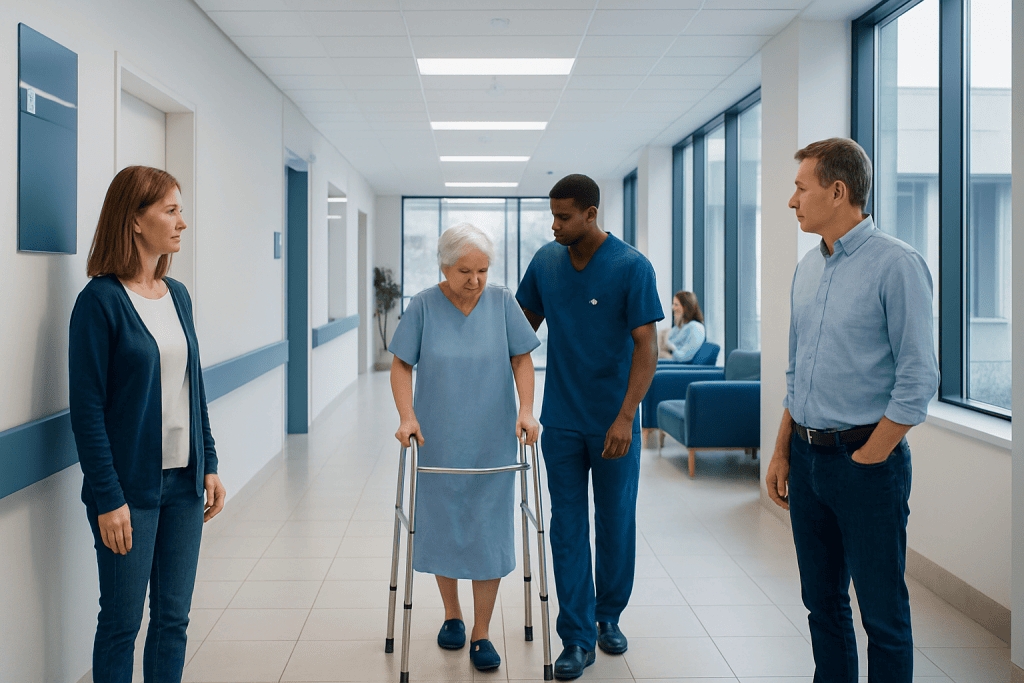
Before you travel, write down your fall history, mobility aids and any sedating medicines, and share the list with the hospital. On admission, learn the call bell, bathroom route and bed controls. Wear non-slip footwear, keep walking paths clear, and always call for help before standing, especially at night or after anaesthesia, sedation or new medicines. Confirm walking and shower guidance before discharge.
Worried about losing your footing in an unfamiliar hospital room, in a country where you may not speak the language? That worry is reasonable, and useful. Most hospital falls happen during ordinary moments: getting up at night, walking to the bathroom, standing too quickly after medication. A hospital fall prevention checklist for patients abroad gives you a plan for exactly those moments, starting before you board the plane.
At a glance
- Best for: Patients and companions preparing for hospital care abroad
- Main goal: Reduce avoidable slips, trips and unassisted movements during and after your stay
- When to start: Before travel, again at admission, and again after every procedure or new medicine
- Who can help: Nurses, doctors, physiotherapists, interpreters and international patient services
- The one habit that matters most: Press the call button before getting up, especially at night, after medication, or after any procedure
Why a hospital fall prevention checklist matters when you are abroad
A hospital fall usually takes less than a second. It happens getting out of bed in the dark, misjudging the distance to a chair, or standing up after fasting, sedation or a long flight. At home, you know your bedroom in the dark. In a foreign hospital, everything is new: the bed controls, the bathroom layout, the flooring, the call system, and often the language the instructions come in. That is exactly why a hospital fall prevention checklist for patients abroad is one of the most practical safety tools you can prepare.
Two things are worth saying plainly. First, fall prevention is not about restricting your independence. It is about moving at the right time, with the right support, using the right equipment. Second, your fall risk abroad is often temporarily higher than your risk at home, even if you are usually steady on your feet. Surgery, anaesthesia, pain, fasting, dehydration, jet lag, new medicines and simple fatigue can all change your balance for hours or days. Recognising that is not weakness; it is accurate self-assessment.
Hospitals build fall prevention into their routines, risk assessments at admission, reassessment after procedures, and staff trained to help you move. At Acibadem, international patient teams and interpreters are part of that picture, so language does not have to be a barrier to safety instructions. But no system replaces the patient who says clearly: I feel dizzy, I need help standing, please repeat that. This guide shows you how to be that patient.
Know your personal fall risks before admission
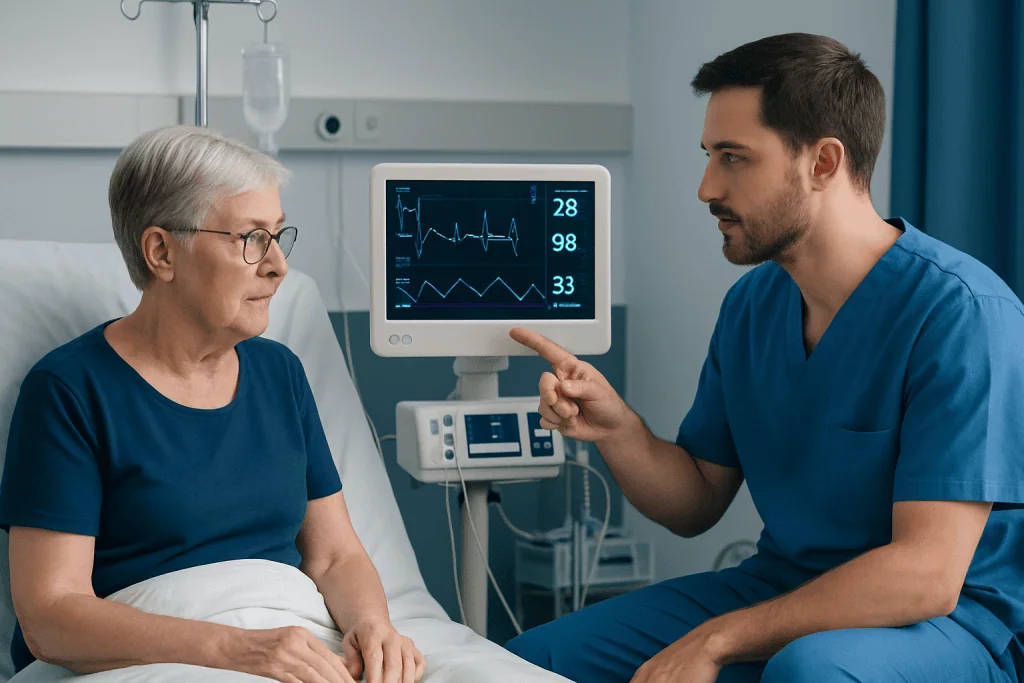
Before you travel, take ten honest minutes with these questions. Do you use a cane, walker, wheelchair, hearing aid, glasses or special shoes? Have you fallen in the past year, even without injury? Do you feel lightheaded when you stand quickly? Do you get up at night, or need the bathroom urgently? Do any of your medicines make you drowsy? The answers are not embarrassing details: they are planning information the hospital needs from day one.
Write it down. Bring a short list covering your medicines, allergies, mobility aids and any previous falls or fainting episodes, and keep it with your travel documents. If a companion is coming with you, make sure they know this information too. Companions often notice patterns you forget to mention: that you become unsteady when tired, or that long flights leave you stiff for a day. This preparation sits naturally alongside your wider pre-travel health checklist, so build both at the same time.
Fall-risk factors worth sharing with the care team include:
- Any fall, faint, dizziness or balance problem in the past year
- Sleeping tablets, blood pressure medicines, strong pain relief or sedatives
- Vision or hearing difficulties, even mild ones
- Urgent bathroom needs, or getting up more than once at night
- Numbness in the feet, leg weakness, or hip, knee or back problems
- Confusion, memory concerns, or anxiety in unfamiliar surroundings
None of these disqualifies you from treatment. They simply tell the team what support to arrange before you need it, rather than after.
The 5 P’s of falls prevention, and how they apply to you
If you search for fall prevention, you will meet the “5 P’s”. This is a memory aid used in nursing rounds, and the exact wording varies between hospitals, but the common version covers: Pain (is it controlled, so you do not move awkwardly or rush?), Personal needs (do you need the bathroom, water, or anything else that would otherwise make you get up alone?), Position (are you comfortable and safely positioned in bed or chair?), Possessions (are your call bell, glasses, phone and mobility aid within reach?), and Pumps and equipment (are IV lines, drains and cables tidy, and alarms working?).
You do not need to memorise the list. What helps is understanding the logic behind it: most falls happen when a patient gets up alone to fix something staff could have fixed. So when a nurse checks on you, use those five headings as prompts. Say if pain is building, how it will be managed is explained in our guide to pain control after surgery in Turkey. Say if you expect to need the bathroom soon. Ask for anything out of reach to be moved closer. Anticipating a need is always safer than reacting to one at 3 a.m.
Universal fall precautions: what every patient can expect
Alongside individual risk assessments, hospitals apply what are often called universal fall precautions, baseline measures for every patient, regardless of risk score. Recognising them helps you cooperate with them, and notice if something is missing. Typical universal precautions include:
- Showing you the room, call bell and bathroom route when you are admitted
- Keeping the call bell and your personal items within easy reach
- Keeping the bed in a low position with brakes locked
- Non-slip footwear for walking, and dry, clutter-free floors
- Adequate lighting, especially a night light or accessible switch
- Reassessing you after surgery, sedation, new medicines or any change in condition
Guidelines from patient-safety bodies broadly agree on the same structure: assess risk at admission, reassess after any change, build an individual plan, and involve the patient and family in it. Your part is the last piece, engaging with the plan rather than working around it. If you like preparing questions in advance, our surgical safety checklist of questions patients can ask pairs well with this guide.
Set up your room for safer movement
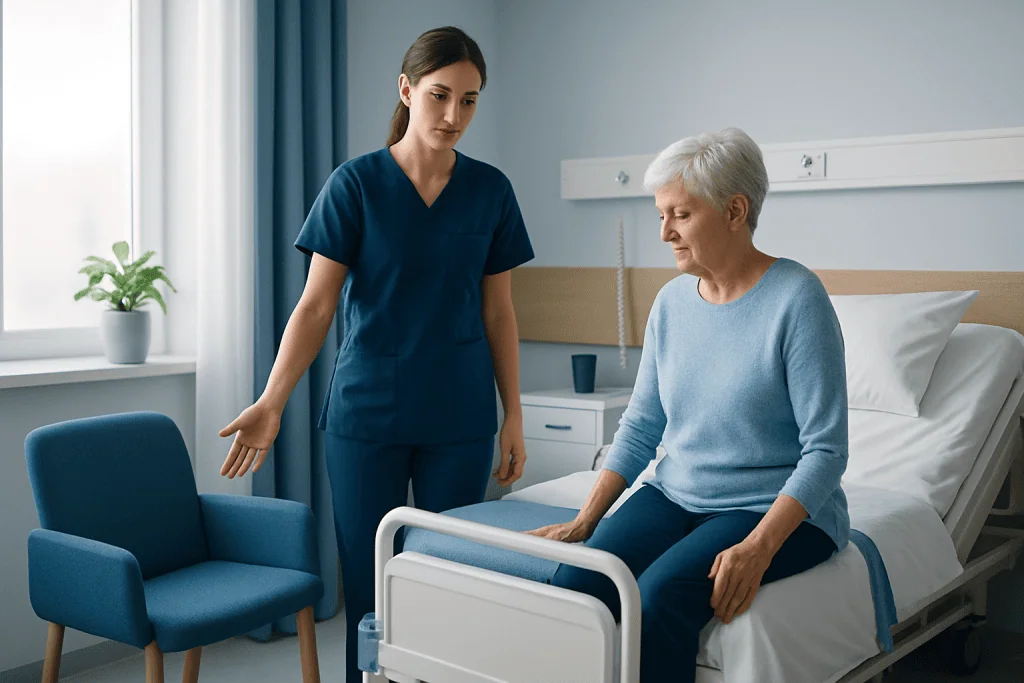
Your room should be easy to navigate before you are tired, medicated or in the dark. When you arrive, ideally as part of your check-in routine on treatment dayask the nurse to walk you through five things: the call button, the bed controls, the light switches, the route to the bathroom, and how to request help at night. If anything is unclear, ask again. Interpreters and international patient staff exist precisely so that safety instructions land in a language you fully understand.
Then arrange your possessions deliberately. Keep your phone, glasses, hearing aids, tissues, mobility aid and the call bell within arm’s reach, close enough that you never need to stretch, lean or stand to get them. Water too, if you are allowed to drink. Keep bags, shoes, charging cables and clothing off the walking path between bed and bathroom. At night, always use a light, even for the shortest distance. A familiar room in the dark is manageable; an unfamiliar one is not.
If anything feels wrong, bed too high, chair badly placed, bathroom threshold awkward, say so. These are small, fixable problems, and fixing them is routine work for the ward, not a favour. Lowering a bed, moving a table or agreeing a bathroom plan before medication takes effect removes exactly the rushed, uncertain movements that cause falls.
Ask for help before you stand, even if you feel fine
The single most protective habit in any hospital is also the simplest: do not get up alone until the care team has confirmed it is safe. This matters most after anaesthesia, sedation for imaging or endoscopy, strong pain relief, sleeping medication, or a long period lying flat. You can feel completely alert lying down and still become dizzy the moment you sit up or stand. That mismatch surprises people, and it is when many falls happen.
Use the call button early, not at the last second. If you know your body: that you usually need the bathroom after meals, or wake around 4 a.m., tell the nurse so help can be planned rather than improvised. If waiting worries you, say so openly; a workable routine can almost always be found.
A word about companions. Your companion is valuable: they can call staff, fetch your glasses, keep pathways clear and listen to instructions with you. What they should not do is lift, pull or physically transfer you unless staff have shown them exactly what is safe. A well-meaning family member who tries to catch a falling adult often ends up injured too. Trained staff with the right technique and equipment are always the safer option.
Footwear, glasses, hearing aids and mobility aids
Small items do heavy lifting in fall prevention. Wear non-slip footwear whenever you walk, not loose slippers, not smooth-soled socks, not bare feet unless staff say so. Put your glasses on before you stand, not after. Wear your hearing aids if you rely on them to catch instructions; a half-heard instruction is a risk in itself. If you walk with a cane, walker or brace at home, keep it beside the bed, not across the room. Add all of these to your packing list: our guide on what to pack for a hospital stay in Turkey covers the rest, and keeping these items in hand luggage means they are available the moment you arrive.
If you brought your own mobility aid, ask the team to check it is suitable for the ward, rubber tips wear down, and hospital flooring can behave differently from floors at home. If you need a different level of support during recovery, the physiotherapy team can advise. Never improvise: furniture, IV poles and a companion’s arm are not walking aids unless staff have specifically guided you.
Expect your walking pattern to change temporarily after treatment. You may need to sit at the edge of the bed first, move more slowly, or take short supervised walks before walking alone. This is your body adjusting, not your independence disappearing.
Communicate clearly across language and cultural differences
Abroad, communication is part of safety. Keep written versions of a few essential phrases where you can reach them: “I feel dizzy”, “I need the bathroom”, “I need help standing”, “Please call an interpreter”. At Acibadem, interpreter and international patient services can help you understand admission routines, mobility restrictions and discharge instructions in your preferred language, use them freely.
One firm rule: do not nod along when you are unsure. It is always better to ask for an instruction to be repeated slowly, translated or written down, particularly when it concerns standing, walking, eating, medication timing or bathroom use. Ask your companion to listen alongside you at key moments; two sets of ears catch more than one.
If asking for help feels embarrassing, reframe it. Hospitals expect patients to need support: the entire call-bell system exists for it. Nurses would far rather answer a bell than respond to a fall. Speaking up early is good self-care, not a burden.
Medicines, anaesthesia and the risky hours
Certain windows carry more risk than others: the first hours after anaesthesia or sedation, the first dose of a new medicine, the first night in an unfamiliar room, and the first time out of bed after any procedure. During these windows, treat “call before standing” as non-negotiable, even if you feel completely normal.
Tell the team about every medicine you take, including sleeping tablets and anything bought without prescription. Never adjust doses or stop a medicine yourself because you are worried about drowsiness, any change is a decision for your treating doctor, who can weigh it against the reason you take the medicine. Your job is simply to report: what you take, when you took it, and how you feel afterwards.
Plan for discharge and the first days outside the hospital
Fall prevention does not end at the ward door. Hotels, serviced apartments and airports have their own flooring, lighting, steps and shower arrangements, all unfamiliar. Before discharge, get clear answers to four questions: How much walking is safe? Do I need help on stairs? Should I use a mobility aid, and for how long? What symptoms mean I should stop and call for advice? Make sure both you and your companion can repeat the answers back.
Acibadem’s patient services can help coordinate transfers, accommodation considerations and follow-up communication with the care team. Between you and your companion, decide in advance who carries luggage, who manages medicines, and how you will avoid rushing through check-ins and airports. Rushing while recovering is how falls happen; a hospital fall prevention checklist for patients abroad should follow you into your hotel room, not stay behind on the ward.
In the first days: stand up slowly, keep floor space clear, use lifts rather than stairs where possible, and do not shower unsupported if you have been told to be cautious. If a bathroom, bed height or room layout feels unsafe, ask for help or a room change rather than managing around it. And if you do fall after discharge and lose consciousness, hit your head, cannot get up, or feel suddenly weak or confused, call your local emergency number or go to the nearest emergency department now.
Step by step
- Share your mobility history before arrival. Tell the international patient team about previous falls, dizziness, walking aids, vision or hearing needs, and medicines that affect alertness, so support is planned from admission onward.
- Pack for safe movement. Bring non-slip footwear, glasses, hearing aids, chargers and any mobility aid you use, in hand luggage where possible, so they are available immediately after travel.
- Learn your room before you need help. At admission, ask the nurse to show you the call bell, lights, bed controls and bathroom route. If there is any language barrier, ask for an interpreter rather than guessing.
- Use the 5 P’s at every nursing check. Mention pain, personal needs, position, possessions out of reach, and any tangled lines or equipment, before they become a reason to get up alone.
- Call before standing. Press the call button before getting out of bed, especially at night or after medication, anaesthesia, imaging or procedures. Sit up slowly and wait for staff if you have been told not to walk alone.
- Keep the pathway clear. Have bags, cables, shoes and furniture moved off walking routes. Keep your mobility aid, glasses and call bell close enough that you never stretch or lean.
- Involve your companion safely. They can remind you to call for help, keep items within reach and listen to instructions, but should not lift or transfer you unless staff have shown them how.
- Confirm discharge mobility instructions. Before leaving, ask how much walking is safe, whether you need help with stairs or showers, and which symptoms mean you should call for advice. Both you and your companion should understand the answers.
Your checklist
- Tell the hospital about previous falls, dizziness, balance problems or fainting.
- Bring non-slip footwear; avoid loose slippers and smooth socks without grip.
- Keep glasses, hearing aids, mobility aids and the call bell within arm’s reach.
- Ask for an interpreter whenever a safety instruction is not completely clear.
- Call for help before getting up, always at night, after medication or after procedures.
- Keep luggage, cables, shoes and personal items out of walking paths.
- Ask staff to demonstrate bed controls, bathroom access and lighting on arrival.
- Report every medicine you take; never adjust or stop one yourself.
- Do not let a companion lift or transfer you unless staff advise it is safe.
- Confirm walking, showering, stairs and transfer guidance before discharge.
Key takeaways
- Fall prevention matters more abroad because the room, language, routines and equipment are all unfamiliar at once.
- Your fall risk changes temporarily after travel, anaesthesia, procedures, new medicines, pain or fatigue, even if you are steady at home.
- The 5 P’s, pain, personal needs, position, possessions, pumps, sum up what to raise at every nursing check.
- Calling for help before standing is the single most protective habit during a hospital stay.
- Non-slip footwear, clear pathways, good lighting and reachable glasses, hearing aids and mobility aids all lower risk.
- Interpreters, nurses, physiotherapists and a well-briefed companion together make movement safer and instructions clearer.
Frequently asked questions
What are the 5 P’s of falls prevention?
The 5 P’s are a nursing memory aid used during routine patient checks. Wording varies between hospitals, but a common version is: pain (is it controlled?), personal needs (bathroom, water), position (comfortable and safe), possessions (call bell and essentials within reach), and pumps or equipment (lines and cables tidy). As a patient, you can use the same five headings as prompts whenever staff check on you.
What are the recommended fall prevention guidelines for hospitals?
Patient-safety guidance broadly follows the same structure: assess every patient’s fall risk at admission, reassess after surgery, sedation, new medicines or any change in condition, create an individual prevention plan, and involve the patient and family in it. Practical measures include low bed positions, non-slip footwear, clear pathways, good lighting and a call bell within reach. Ask your care team how your own risk has been assessed.
What are the universal fall precautions for all patients?
Universal precautions apply to every patient regardless of risk score: orientation to the room and call bell at admission, essentials kept within reach, the bed low with brakes locked, non-slip footwear for walking, dry and clutter-free floors, adequate lighting at night, and reassessment after any change in condition or medication. If any of these seems to be missing, it is reasonable to ask about it.
Where can I find a fall prevention handout for patients?
Public health bodies publish free patient handouts, for example, the CDC’s STEADI programme, the NHS falls pages and MedlinePlus all offer printable material in plain language. Many hospitals also provide their own leaflets at admission; at Acibadem you can ask the international patient team for safety information in your preferred language, or for an interpreter to go through it with you.
Should I still ask for help if I normally walk independently at home?
Yes, especially in the first hours after admission, medication, anaesthesia or a procedure. Your balance can be different in hospital even if you are usually steady, and you may feel fine lying down but dizzy on standing. Ask the team directly when it is safe to walk alone again, and treat that answer as your permission slip.
Can my companion help me walk to the bathroom?
Your companion can call the nurse, bring your glasses or shoes, keep the path clear and remind you to move slowly. They should not lift, pull or transfer you unless staff have shown them what is safe: a person trying to catch a falling adult is often injured too. Trained staff with the right technique and equipment are the safer choice.
Why do I feel dizzy when I stand up in hospital?
Dizziness on standing can have many causes in hospital: fasting, dehydration, pain, medicines, anaesthesia, blood pressure changes or simply resting in bed for a long period. Sit or lie down immediately and call for help if you feel lightheaded. The care team can assess the cause and tell you when and how to move safely.
How can I reduce fall risk after discharge to a hotel or accommodation?
Keep pathways clear, use lighting at night, stand up slowly, avoid rushing, and follow the hospital’s instructions on walking, stairs and showering. Let your companion handle luggage and plan transfers calmly. If the bathroom, bed height or layout feels unsafe, request assistance or a room change. If you fall and lose consciousness, hit your head or cannot get up, call your local emergency number or go to the nearest emergency department now.
Add us as a Preferred Source to see more of our trusted health content across Google Search, AI Overviews and Discover.

Update history
- PublishedJune 8, 2026
- Medical review approvedSeptember 13, 2026
- Last content updateSeptember 12, 2026
References3
- Falls (fact sheet): World Health Organization who.int
- Falls: NHS nhs.uk
- Falls: MedlinePlus medlineplus.gov
More Patient Guides

When to Delay Travel for Treatment in Turkey Because of Cold, Flu, or Fever
Delay travel for treatment in Turkey if you have fever, worsening flu symptoms, or breathing difficulty; contact your care team before flying.

Traveling to Turkey for Treatment While Pregnant: Safety Questions to Ask First
Traveling to Turkey while pregnant can be safe with medical clearance, airline checks and a tailored care plan. Ask these key safety…
When to Seek Urgent Help After Leaving the Hospital in Turkey
When to seek urgent help after leaving the hospital in Turkey: act fast for breathing trouble, chest pain, heavy bleeding, high fever,…
At Acibadem, How We Handle Consent, Privacy, and Patient Decision-Making
Consent, privacy, and patient decision-making at Acibadem in Turkey are handled with clear information, confidentiality, interpreters, and respect for your choices.