

How Acibadem Calculates Final Treatment Costs

There is no single formula. Acibadem calculates final treatment costs from the care you actually receive: the confirmed diagnosis, the agreed treatment plan, tests and consultations performed, materials or devices used, anaesthesia, medications during admission, and the number of hospital nights. Your first quote is a structured estimate built from the records available before travel; the final figure is confirmed once treatment is complete.
The number in your first email may not match the bill you sign at discharge. That is one of the most common worries for people planning treatment abroad, and it is easier to manage once you know exactly what sits behind each figure.
This guide explains how Acibadem calculates final treatment costs for international patients: how an estimate is built from your records, which factors carry the most weight, why the amount can move after you arrive, and what you can do before travelling to keep the gap between quote and bill as small as possible.
At a glance
- Best for: International patients who want to understand how a quote becomes a final bill
- What shapes the figure: Confirmed diagnosis, the agreed treatment plan, tests, procedure details, materials, anaesthesia, and length of stay
- What can change it later: Extra tests, a revised plan after in-person examination, longer hospitalisation, or unexpected medical needs
- Two quote formats: Packages with stated inclusions, or itemised estimates listing each service separately
- Useful to prepare: Recent medical records, imaging, medication list, passport details, and flexible travel dates
What a final treatment cost means, and how it is calculated
When you first contact a hospital abroad, the figure you receive is an estimate built from the information available at that moment. The final treatment cost is different: it is the amount calculated after your medical team has confirmed your diagnosis, agreed the treatment plan with you, delivered the care, and recorded every service you actually received. Acibadem calculates final treatment costs on that basis — the care delivered, not the care first predicted.
This distinction matters more for international patients than for local ones, because planning usually begins remotely. You may share reports, scans, pathology results, or a letter from your home doctor before anyone has examined you. Those documents allow the team to prepare a quote, but some details can only be confirmed after an in-person consultation, additional tests, or admission itself.
In practical terms, the final bill reflects both the planned parts of your care and any changes made for medical reasons along the way. Unless you have been given a clearly defined package with stated inclusions and exclusions, treat the first quote as a structured estimate rather than a fixed figure.
Is there a formula for the final treatment cost?
People often search for a formula, and the honest answer is that no single equation covers every case. The closest accurate description is this: final treatment cost = the services actually delivered, priced item by item, plus any separately billed extras. In other words, the calculation is additive. Each consultation, test, theatre hour, implant, medication, and hospital night carries its own charge, and the final figure is the sum of what your care genuinely required.
That is why the way Acibadem calculates final treatment costs is better understood as a process than a formula. The process has three stages: an estimate built from your records before travel, a confirmation stage after in-person examination and any pre-treatment tests, and a final calculation at discharge based on the delivered care. Each stage narrows the uncertainty of the one before it.
It also explains why no reputable hospital can quote a truly final number before seeing you. A figure quoted before examination is a forecast. A figure confirmed after your diagnostic work-up is far firmer. The only genuinely final number is the one produced when treatment is complete.
How your initial quote is prepared
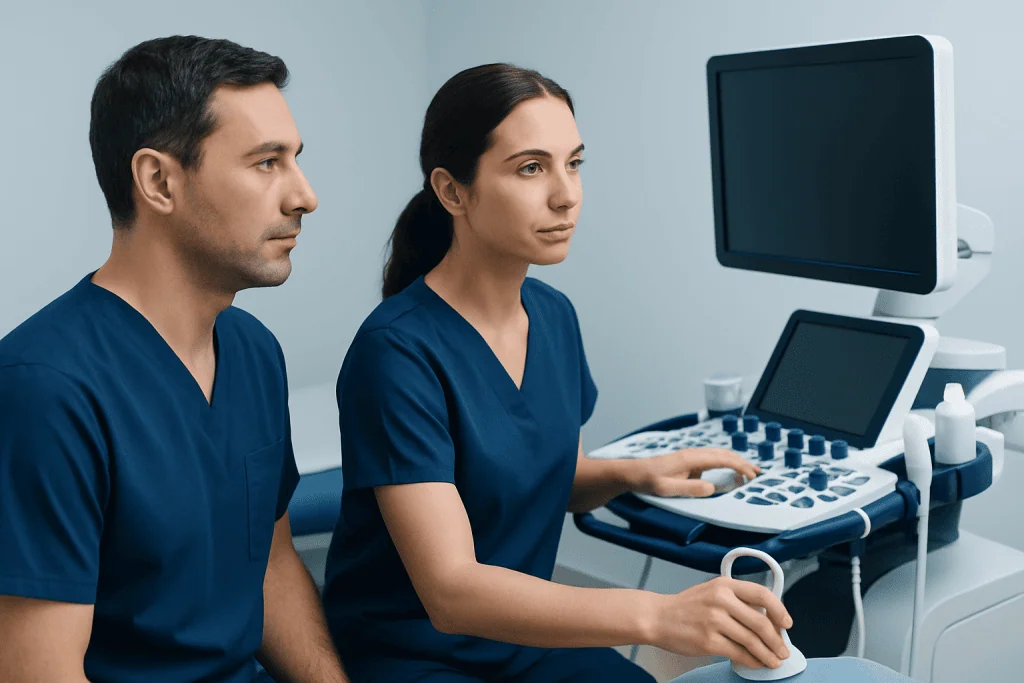
The initial quote is built from the medical information you share before travelling: your diagnosis, current symptoms, previous procedures, imaging, biopsy results, blood tests, and the treatment you are asking about. The more complete and current those records are, the more precisely the estimate can be prepared. Vague or outdated records force the team to quote broadly, and broad quotes are the ones most likely to shift later.
After review, your case is matched to the likely care pathway. That pathway may include specialist consultations, pre-treatment tests, the procedure itself, the hospital room type, anaesthesia, medications used during admission, and the expected number of nights. If your care involves more than one department, a multidisciplinary review may refine the estimate further before it reaches you.
Non-medical coordination — interpreter arrangements, scheduling, travel-related planning — sits alongside the medical quote rather than inside it. These services do not change your treatment, but they can affect your overall trip budget, so it is worth confirming early what the medical quote covers and what is handled separately.
The main factors that shape the final amount

The single biggest driver is your confirmed treatment plan. Two people asking about the same procedure can receive different final bills because they have different diagnoses, risk factors, test results, or recovery needs. A short, straightforward admission is costed differently from a complex case needing combined care or closer monitoring. Our guide on what affects the final price of treatment in Turkey covers these drivers in more depth.
- Complexity of your diagnosis and treatment pathway
- Number and type of consultations, including cross-specialty opinions
- Laboratory work and imaging needed to confirm the plan
- Operating theatre time and the technology used
- Implants, devices, or special materials where relevant
- Anaesthesia type and duration
- Medications given during your stay
- Level of monitoring, including intensive care if needed
- Number of nights you remain in hospital
The table below shows when each component typically stops being an estimate and becomes a confirmed part of the calculation.
| Component | What it depends on | When it firms up |
|---|---|---|
| Consultations | How many specialties your case involves | After in-person review |
| Tests and imaging | What is needed to confirm the diagnosis | During the diagnostic stage |
| Procedure | The confirmed plan and technique | Once the plan is agreed — occasionally adjusted in theatre for safety |
| Implants and materials | Type, brand, and quantity actually used | During or after the procedure |
| Hospital stay | Room type and how your recovery progresses | At discharge |
| Medications | What is administered during admission | At discharge |
Implants and devices deserve particular attention, because the model actually used can differ from the one assumed in the quote. Our separate guide on implant and medical device costs in Turkish treatment quotes explains how to check this line before you travel.
Packages versus itemised quotes: what to clarify
Quotes generally arrive in one of two formats. A package bundles a defined set of services — typically the planned procedure, standard hospitalisation, routine pre-operative tests, and basic inpatient medications — under one figure with stated inclusions and exclusions. An itemised estimate lists each service separately, which gives you more visibility but also more lines to read. Neither format is better in every case; what matters is that you understand which one you have been given. We explain the difference in detail in how we explain estimated costs, package scope, and final billing.
Whichever format you receive, clarify the boundaries before travelling. Useful questions include whether the figure covers all specialist fees, pathology, imaging, anaesthesia, room charges, discharge medications, interpreter support, airport transfers, and companion arrangements. Some of these commonly sit outside the medical quote, and knowing that in advance is what prevents surprises at discharge.
If a term in the quote is unclear, ask for it in simpler language. Coordinators working with international patients answer these questions routinely, and a five-minute clarification before travel is far easier than a dispute afterwards.
Why the final cost can change after you arrive
A change in the final amount does not mean something went wrong. Usually it means your doctors gathered new information after examining you in person. An updated diagnosis, a fresh test result, or a safer treatment recommendation can all change the resources your care requires.
Some changes are small: an extra blood test, one more consultation. Others are more significant: an added night for observation, further imaging, or a switch to a more suitable procedure. Changes cut both ways. If your care becomes more complex, the figure rises; if parts of the original plan turn out to be unnecessary, or your stay is shorter than expected, the final amount can come in below the estimate. Our guide on why your final hospital bill may differ from the quote walks through the most common scenarios.
Communication is the practical safeguard. Ask at the start to be informed whenever the treatment plan changes in a way that could affect your bill, and ask for the medical reason alongside the financial one. International patients are usually coordinating flights, accommodation, work leave, and family support at the same time, so a timely financial update matters as much as a medical one.
How insurance fits into the calculation
If you hold international health insurance or a policy that covers treatment abroad, the hospital’s calculation does not change — the same services are recorded and priced. What changes is who pays which part. Your out-of-pocket amount is, structurally, the final bill minus whatever your insurer agrees to cover, and that split is governed entirely by your policy: its covered treatments, exclusions, deductibles, pre-authorisation requirements, and any annual limits.
Two arrangements are common. Under direct billing, the insurer settles covered items with the hospital and you pay only the uncovered remainder. Under reimbursement, you pay the hospital yourself and claim back from your insurer afterwards using itemised invoices and medical reports. Which arrangement applies depends on whether your insurer has an agreement in place, so confirm this with your insurer before travelling — and ask them, in writing, exactly which parts of the proposed plan they will cover.
An itemised quote is genuinely useful here. Insurers assess claims line by line, so a quote that separates consultations, tests, the procedure, materials, and hospitalisation gives both you and your insurer a much clearer basis than a single bundled figure.
How to budget wisely as an international patient
Plan for both medical and non-medical spending. Even with a clear treatment quote, you will still need to cover flights, accommodation, meals, local transport, and possibly extra nights if your doctor advises against flying immediately after treatment. These trip costs sit entirely outside the hospital’s calculation, and they are the ones patients most often underestimate — our guide to hidden costs patients often miss in a medical travel budget for Turkey lists the usual gaps.
A practical approach is to split your budget into three parts: confirmed medical costs, likely travel and stay costs, and a contingency for unplanned needs. The contingency is not pessimism; it is what keeps an extra test, an added hospital night, or a postponed return flight from becoming a crisis. If someone is travelling with you, budget for them separately — companion costs for meals, transport, and extra nights add up faster than most people expect.
Finally, keep every quote, update, and invoice in one folder, digital or paper. If a figure changes, you want to see exactly which line moved and why.
How to make your estimate more accurate before travel
You can meaningfully improve the accuracy of a quote by sharing complete, recent records from the start: clear scan reports, image files where requested, pathology results, blood tests, a summary from your doctor, your current medication list, and details of any previous surgery or ongoing conditions. Incomplete records lead to broad estimates, and broad estimates are the ones that move.
Answer practical questions fully as well. Allergies, chronic illnesses, existing implants, blood-thinner use, mobility needs, and whether you will travel alone or with a companion can all influence pre-treatment preparation, hospital planning, and recovery recommendations. None of this is trivial detail; each item can change what the calculation includes.
Then ask for one written summary that brings everything together: the proposed plan, what is included, what may be extra, the expected length of stay, and when the final bill is usually confirmed. A single consolidated document gives you a firm basis for decisions and makes conversations with family, employer, or insurer considerably easier. It is also your reference point later — if the final bill differs from it, you can ask precisely which line changed.
Step by step
- Records are gathered. The process starts with your reports, scans, test results, and treatment history. The more complete and recent this information is, the more closely the estimate can reflect the care you are likely to need.
- A preliminary medical review takes place. A specialist team reviews your case and maps the likely diagnosis and treatment pathway. At this stage you receive an initial estimate based on the pre-travel information.
- Inclusions and exclusions are confirmed. Ask what the quote covers and what is billed separately: consultations, tests, the procedure, hospital stay, medications, interpreter support, and any travel-related services.
- In-person consultation and tests follow. After you arrive, your doctor examines you and may request confirmatory tests. These either validate the original plan or show that a different, more suitable approach is needed.
- Plan updates are explained. If the plan changes, ask for both the medical reason and the likely cost impact in writing, so you can make informed decisions during a busy treatment period.
- Treatment and hospital stay are completed. The final charges are shaped by the care actually delivered: procedure details, materials used, medications, monitoring, and hospital nights. A smoother or more complex course than expected changes the total accordingly.
- Final billing and discharge guidance are provided. Before discharge, review the final bill line by line and raise any remaining questions. Confirm follow-up arrangements, discharge medications, medical reports, and whether later check-ups are included or separate.
Your checklist
- Gather recent medical records, imaging reports, and test results before requesting a quote
- Confirm whether your estimate is a package or an itemised plan
- Check what is included: consultations, tests, procedure, hospital stay, and medications
- Check what is not included, such as extra tests, companion costs, or an extended stay
- If insured, confirm coverage and the billing arrangement with your insurer in writing
- Budget separately for flights, hotel, meals, and local transport in Turkey
- Keep a contingency fund for unplanned medical or travel changes
- Request written confirmation of any treatment plan change after arrival
- Ask when and how the final bill is confirmed
- Bring your passport, insurance documents if relevant, and your medication list
Key takeaways
- Your first quote is an estimate built from the records available before travel; the final figure reflects the care actually delivered.
- There is no single formula — the calculation is additive, summing each confirmed service, material, medication, and hospital night.
- Costs can move in both directions after arrival, depending on what in-person examination and tests reveal.
- Knowing whether your quote is a package or itemised, and exactly what it excludes, prevents most billing surprises.
- Insurance changes who pays, not how the hospital calculates — confirm your coverage and billing arrangement with your insurer before travelling.
Frequently asked questions
Is there a single formula for calculating the final treatment cost?
No. The final cost is the sum of the services actually delivered — consultations, tests, the procedure, materials, anaesthesia, medications, and hospital nights — plus any separately billed extras. It is a staged process rather than an equation: estimate before travel, confirmation after examination, and final calculation at discharge.
Is the first quote I receive the same as my final bill?
Not always. The first quote is based on the information shared before you travel, while the final bill reflects the care you actually receive after consultation, tests, and treatment. If your diagnosis or treatment plan changes, the final amount may change with it.
Why can two patients have different costs for the same treatment?
Even when the treatment name is the same, the medical needs behind it can differ. Diagnosis, complexity, previous surgeries, additional tests, implants or materials, anaesthesia needs, and recovery time all feed into the calculation, so two bills for the same-named procedure rarely match line for line.
How do I work out what a procedure will cost with insurance?
Structurally, your out-of-pocket amount is the final bill minus what your insurer covers. That split depends on your policy’s covered treatments, exclusions, deductibles, and pre-authorisation rules, and on whether direct billing or reimbursement applies. Confirm coverage with your insurer in writing before travelling, using an itemised quote as the basis.
Can the final cost go down as well as up?
Yes. If some planned services are not needed, or your stay is shorter than expected, the final amount may come in below the initial estimate. The final bill is based on the treatment and services actually provided, in both directions.
Are travel and accommodation usually part of the treatment cost?
They are usually separate from the medical bill unless clearly included in a defined arrangement. As an international patient, budget independently for flights, accommodation, meals, local transport, and companion expenses, and keep a contingency for changes to your return date.
How can I make my quote more accurate before coming to Turkey?
Share complete, recent, clearly labelled medical records, including reports and images where requested. Include your medication list, previous procedures, chronic conditions, and practical details such as allergies or mobility needs. Complete information lets the team quote against a specific pathway rather than a broad range.
Who can help me understand billing if I do not speak Turkish?
International patient services teams coordinate communication for overseas patients. At Acibadem, interpreters and coordinators assist with practical questions, including understanding quotes, plan updates, invoices, and discharge paperwork, so language does not stand between you and a clear bill.
Add us as a Preferred Source to see more of our trusted health content across Google Search, AI Overviews and Discover.

Update history
- PublishedJune 22, 2026
- Medical review approvedAugust 31, 2026
- Last content updateAugust 31, 2026
More Patient Guides

Medical Chaperones in Turkey: When Patients Can Request One
Medical chaperones in Turkey can be requested for sensitive exams or when you want added reassurance during care in Istanbul.
8 min read
Medical Interpreter or Family Member: Who Should Help During Appointments in Turkey?
Medical interpreter or family member in Turkey? Use a trained interpreter for clinical communication and keep family involved for support and notes.
8 min read
How to Plan for Prayer, Modesty, and Cultural Needs During Care in Turkey
Prayer, modesty, and cultural care needs in Turkey can be planned in advance by sharing your preferences with your care team and…
8 min read
ICU After Surgery in Turkey: What Patients and Families Should Expect
ICU after surgery in Turkey involves close monitoring, family updates and a planned step-down to recovery when you are stable.
8 min read