

ICU After Major Surgery in Turkey: When It Is Needed and What Families Should Expect
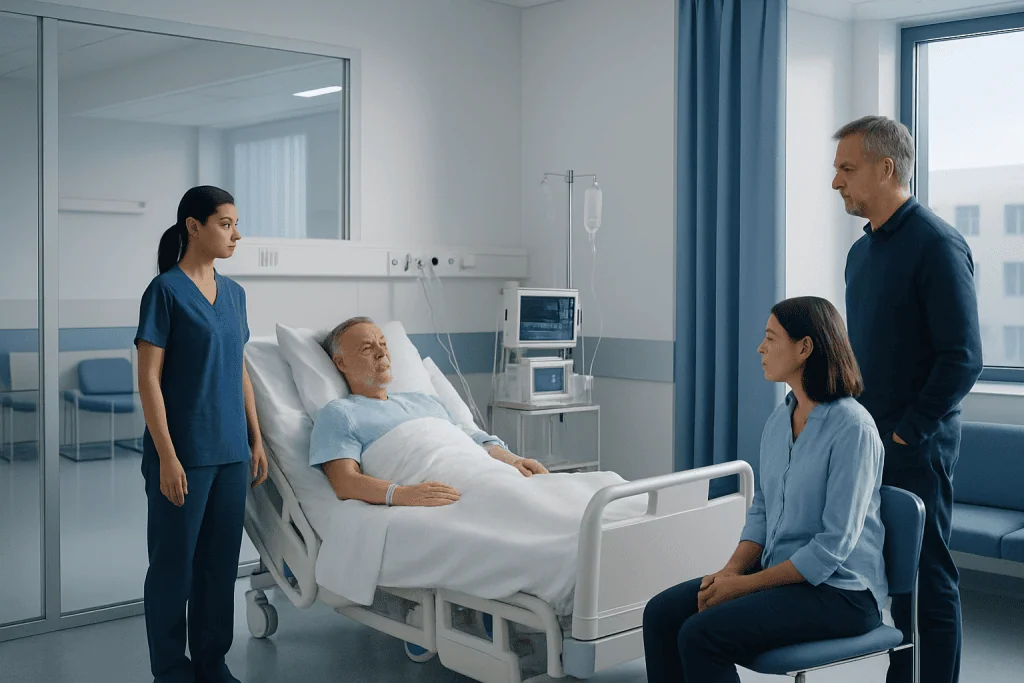
An ICU stay after major surgery is often a planned safety step, not a sign that something went wrong. It gives the team continuous monitoring of breathing, circulation, and pain control while anaesthesia wears off. Length of stay depends on the operation and the patient's condition — some people leave within hours, others need several days. Progress is measured in milestones, not fixed timetables.
Has the team mentioned that you or your relative may go straight to intensive care after the operation? That single sentence tends to worry families more than the surgery itself. In most cases, it should not. A planned ICU stay is a monitoring decision, not a verdict.
This guide explains when ICU after major surgery in Turkey is used, what the first hours and days usually look like, how long stays tend to last and why, how communication with families works, and how to prepare practically if you are travelling from abroad. It describes what intensive care is for, in plain terms, so that the sight of monitors and tubes does not catch you off guard.
At a glance
- Who this guide is for: Patients and families preparing for major surgery in Turkey, and those already at the bedside
- Main purpose of ICU: Continuous monitoring and rapid support during the earliest, least stable phase of recovery
- Planned or unplanned: Many ICU admissions are decided before the operation; some are decided in theatre or the recovery room
- Length of stay: No fixed timetable — hours for some patients, several days for others, guided by milestones rather than the calendar
- Family communication: Structured updates from the care team, with interpreter and coordinator support for international patients
- Best mindset: Treat ICU admission as a level of monitoring, not automatically a sign of complication
Why ICU care may be part of the surgical plan
An intensive care unit exists to do one thing a standard ward cannot: watch a patient continuously and respond within minutes. ICU after major surgery in Turkey is used when the operation itself, or the patient’s underlying health, means the first hours of recovery need that level of attention. One nurse looks after one or two patients rather than many, monitoring runs around the clock, and specialist doctors are close at hand.
Families often hear the word “ICU” and assume something has gone wrong. In reality, admission is frequently precautionary. After open-heart surgery, major cancer operations, brain and spine procedures, organ surgery, or any operation expected to involve significant blood loss, large fluid shifts, complex pain control, or a period of breathing support, a short ICU stay is often the safest and most organised next step. It is planned into the pathway before anyone picks up a scalpel.
The decision rests on a combination of factors: the type and length of the operation, how much anaesthesia and blood product were needed, the patient’s age, heart and lung function, other conditions such as diabetes or kidney disease, and how the patient looks in the operating theatre at the end of the procedure. Surgeons and anaesthetists weigh all of this together. The aim is simple — to place the patient in the level of care that matches their needs at each stage, then step down as soon as it is safe.
Planned admission versus an unexpected transfer
It helps to separate two situations that feel very different at the bedside.
A planned admission is agreed before surgery. The surgeon or anaesthetist tells you in the pre-operative consultation that the patient will go to intensive care afterwards, usually for a defined early period. Nothing about this changes the operation itself. It simply means the recovery starts under closer watch. If ICU is mentioned in your treatment plan, ask at that stage roughly how long stays typically last for this kind of operation and how updates will reach the family — those two answers remove most of the anxiety later.
An unplanned transfer happens when the team decides during or after surgery that the patient needs closer monitoring than expected — perhaps because the operation took longer, blood pressure needed support, or waking from anaesthesia was slower than usual. This is more unsettling for families, but it is still, at its core, the same decision: matching the level of care to the patient’s needs at that moment. A separate guide covers the unexpected ICU stay in Turkey in more detail, including how families usually hear about the change of plan.
What happens when you arrive in ICU after surgery

On arrival, the patient may still be sleepy, confused, or not fully awake. This is expected — anaesthetic drugs leave the body gradually, and strong pain relief adds to the drowsiness. The receiving team’s first hour is spent on handover from the operating theatre, connecting monitoring, checking blood tests, and confirming that breathing, blood pressure, heart rhythm, urine output, and pain control are where they should be. What to expect while anaesthesia wears off is covered separately in the guide on recovering after general anaesthesia in Turkey.
During this settling-in period, visits are often limited. This is not secrecy — it is the busiest and most task-heavy hour of the stay, and the team’s attention needs to be on the patient. For international families, interpreters and patient coordinators can explain the sequence of events so the wait feels less opaque.
The equipment, explained
Most of what alarms families at first sight is routine. Depending on the surgery, you may see:
- Monitors showing heart rate, blood pressure, oxygen levels, and breathing rate — these track normal recovery as much as problems, and alarms often sound for minor, self-correcting reasons.
- Oxygen support, from a simple mask to, in some cases, a ventilator. Some patients remain on a breathing machine for a period after very long or complex procedures; others are extubated soon after arrival. The timing varies from person to person and does not by itself indicate trouble.
- Intravenous lines for fluids, pain relief, and medications, sometimes including a central line in the neck or chest for larger operations.
- Surgical drains that remove fluid from the operation site, and a urinary catheter so the team can measure kidney output precisely.
Each of these is temporary. They come out one by one as the patient stabilises, and their removal is one of the clearest visible signs of progress.
The first 24 to 72 hours: what families usually see

The first one to three days are about careful observation and gradual gains. Progress shows up hour by hour rather than in dramatic leaps. It is normal for the patient to look pale, puffy, or swollen from fluids, to sleep most of the time, and to be attached to several devices at once. Unsettling to see — often entirely routine.
The team watches for stable breathing, improving alertness, controlled pain, steady blood pressure, and good urine output. Blood tests are repeated, fluids adjusted, and breathing exercises started when appropriate. Mobilisation begins earlier than most families expect — sitting on the edge of the bed or standing with help can happen surprisingly soon after major surgery, because early movement supports the lungs and circulation. Pain relief is adjusted continuously during this phase; the guide on pain control after surgery in Turkey explains the methods commonly used.
Some patients become temporarily confused or agitated in intensive care — a state clinicians call delirium. It is more common in older adults and after long operations, it distresses families more than almost anything else on the unit, and it usually settles as the patient recovers, sleeps better, and comes off stronger medications. Tell the nurses if you notice it; they will have seen it many times and can explain how it is managed.
- Expect close monitoring and frequent checks, including overnight.
- Expect visiting rules that are tighter than on a regular ward.
- Expect gradual progress, with good hours and tiring hours in the same day.
- Expect the plan to be reviewed every day and adjusted as the picture changes.
- Expect updates at set times or after key changes, rather than a running commentary.
How long do patients stay in intensive care?
There is no single answer, and any source that gives you one is simplifying. In an ICU after major surgery in Turkey, some patients stay only a few hours or overnight — common after planned admissions where recovery goes smoothly — while others need several days. The length of stay is set by milestones, not by a schedule: breathing without support, stable blood pressure without medication, pain under control, kidneys working well, and the patient alert enough to protect their own airway and participate in recovery.
A longer stay does not automatically mean a serious complication. It can reflect the need for continued breathing support, closer heart monitoring, more careful fluid balance, extra time to control pain, infection concerns being investigated, post-anaesthetic confusion, or simply a slower return of normal organ function. Older adults and patients with complex medical histories often need a more gradual step-down even when nothing has gone wrong.
If the stay runs longer than you expected, ask the team for an update in plain language. Three questions cut through most confusion: Is the stay precautionary or is there a specific issue? What milestones does the team want to see before transfer? What are the next 12 to 24 hours likely to involve? Asking for milestones rather than dates gives you a far more honest picture, and it is the same measure the doctors themselves use.
Which operations in Turkey commonly involve intensive care
Turkey’s hospitals carry out a broad range of complex surgery for international patients — cardiac and cardiovascular operations, major cancer surgery, organ transplantation, neurosurgery for brain and spine conditions, and major orthopaedic procedures among them. For many of these, a short ICU stay is a standard part of the pathway rather than an exception. Heart surgery patients, for example, routinely go to intensive care afterwards regardless of how well the operation went, because the heart and circulation are watched closely while they adjust.
By contrast, most cosmetic procedures, dental work, and day surgery do not involve intensive care at all. If your operation falls into that category and ICU has still been mentioned, it is usually because of a personal health factor — a heart or lung condition, for instance — rather than the procedure itself. What Acibadem’s own units do when intensive care is part of the plan is described in a separate guide on ICU care at Acibadem.
Stepping down: how transfers out of ICU happen
Leaving intensive care is a genuinely good sign, but it does not mean recovery is finished. Transfer happens when the patient no longer needs continuous one-to-one monitoring and can safely continue on a high-dependency unit or a standard ward. The timing follows stability, not a fixed schedule, and the decision is reviewed daily.
Before transfer, the team generally wants breathing stable without intensive support, pain reasonably controlled, vital signs acceptable, and any active concerns improving. Lines, drains, and catheters are reduced gradually, though some may stay in place on the ward for a while. Families should expect a second adjustment period after the move: the ward is quieter and less intensively staffed, which can feel like a loss of safety at first, even though it reflects real progress. The patient may still be weak and need substantial help with washing, moving, and eating.
The ward stage is when practical planning becomes realistic. Expected remaining hospital days, companion arrangements, physiotherapy, discharge teaching, and early aftercare can all be discussed. For international patients, this is also when travel planning starts in earnest — the treating team advises on fitness to fly, and the guide on warning signs to report before flying home covers what should be reviewed before departure.
Preparing emotionally and practically as a family
If ICU care is a possibility, preparation beats prediction. Before surgery, ask whether an ICU stay is planned, how long it typically lasts for this type of operation, how updates are shared, and whether the team prefers one family contact person. Nominating a single spokesperson is the most useful decision a family can make: it keeps information consistent, spares the medical team from repeating sensitive conversations, and stops the wider family receiving conflicting versions of the same update.
Organise the practical basics in advance: passports, insurance documents if relevant, an up-to-date medication and allergy list, charger cables, and comfortable clothes for the ward stage. If you are travelling from abroad, think about where companions will stay, how they will reach the hospital daily, and who at home can extend arrangements if the stay runs longer than planned. Hospital-based international patient services can usually advise on nearby accommodation and local logistics.
Emotionally, prepare for uncertainty rather than a smooth curve. ICU recovery is rarely linear — a strong morning can be followed by a tiring afternoon without anything being wrong. Measure progress in small steps, write questions down as they occur to you, and look after yourselves. Families make better decisions when they are fed, hydrated, and rested, and the patient will need you most in the weeks after intensive care, not during it.
Step by step
- Ask before surgery whether ICU is likely. During pre-operative planning, ask whether intensive care is expected, possible, or unlikely for this operation. Knowing in advance lets you prepare emotionally and organise transport, accommodation, and communication with family at home.
- Choose one main family contact. Agree on one person to receive updates and relay them to the wider family. This keeps communication clear and consistent during busy ICU hours.
- Keep key documents and contacts ready. Have the patient’s passport, medical summary, medication list, allergies, and emergency contacts easily available. Save the hospital, ward, and coordinator numbers on your phone.
- Expect limited visiting and short updates. ICU routines prioritise safety, monitoring, and infection control, so visits may be brief or scheduled. Short updates are timed around care tasks, not a sign that information is being withheld.
- Track milestones, not hours. Ask what has been achieved and what comes next — breathing without support, sitting up, drains removed, transfer planning — rather than counting time on the unit.
- Ask what must happen before transfer. If the stay runs long, ask which specific signs or results the team is waiting for. This gives a more honest picture than any estimate in days.
- Use the support available while you are in Turkey. Interpreters and international patient coordinators exist precisely for situations like this. Accepting help with language and logistics early leaves you free to focus on the patient.
Your checklist
- Ask whether ICU is planned, possible, or unlikely after this operation
- Save contact details for the surgeon, ward, ICU desk, and patient coordinator
- Prepare a current medication and allergy list
- Choose one family spokesperson for updates
- Pack essentials for several days, not just overnight
- Plan companion accommodation near the hospital if possible
- Keep phones charged and arrange roaming or local data
- Write down questions as they arise so nothing is forgotten at update time
- Leave flexibility in return travel plans in case the stay extends
Key takeaways
- ICU after major surgery in Turkey is frequently precautionary, planned before the operation for complex procedures such as cardiac, cancer, transplant, and neurosurgical operations.
- The first 24 to 72 hours focus on breathing, circulation, pain control, and gradual stabilisation, with progress measured in small milestones.
- A patient can look alarming — pale, swollen, attached to machines — while recovering in an entirely normal ICU pattern.
- Length of stay follows milestones, not a schedule; a longer stay does not automatically mean a serious setback.
- Structured updates, a single family spokesperson, and interpreter support make the stay far easier to manage from abroad.
Frequently asked questions
Is it normal to be placed in the ICU after surgery?
After major surgery, yes — for many complex operations an ICU stay is a standard, pre-planned part of the pathway rather than a reaction to a problem. It gives the team continuous monitoring during the least stable phase of recovery. Smaller procedures and day surgery rarely involve intensive care at all.
Does going to ICU after surgery mean something went wrong?
Not necessarily. Many admissions are decided before the operation as a monitoring precaution. Even an unplanned transfer often reflects caution — a longer operation or slower waking from anaesthesia — rather than a complication. The team can tell you which situation applies.
How long do you stay in intensive care after surgery?
There is no fixed timetable. Some patients stay a few hours or overnight; others need several days. Discharge from ICU depends on milestones — stable breathing and blood pressure, controlled pain, good kidney function, improving alertness — not on a set number of days. Asking the team which milestones remain gives the most realistic picture.
Will my family member be awake in ICU?
Sometimes, but not always immediately. Anaesthetic drugs and strong pain relief cause drowsiness, and some patients remain on breathing support for a period after long procedures, during which they cannot talk. Temporary confusion is also common and usually settles as recovery progresses. The bedside team will explain what is happening at each stage.
Can family members visit in ICU?
Usually yes, though visiting is more limited than on a standard ward. Times, visitor numbers, and infection-control rules vary by unit and by the patient’s condition. Confirm the current policy with the unit and follow staff guidance — restrictions exist to protect patients, not to exclude families.
How are updates given if we do not speak Turkish?
Hospitals that regularly treat international patients provide interpreter and coordination support, and medical staff in these units commonly speak English. It still helps to nominate one family contact person so updates stay consistent and the team is not repeating sensitive information across several conversations.
What should we ask the ICU team each day?
Useful daily questions: Is the patient stable? What support is still needed? What is the main concern right now? What must happen before transfer to the ward? What are the next 12 to 24 hours expected to look like? Writing answers down helps, because stress makes details hard to retain.
When can the patient travel home after ICU and major surgery?
Only after the treating team confirms it is safe. The timing depends on the type of surgery, overall recovery, mobility, wound healing, blood clot considerations, and whether follow-up checks are still needed. If ICU care is a possibility, avoid booking return travel tightly around the operation date.
Add us as a Preferred Source to see more of our trusted health content across Google Search, AI Overviews and Discover.

Update history
- PublishedJuly 8, 2026
- Medical review approvedSeptember 1, 2026
- Last content updateSeptember 1, 2026
References3
- NHS — Intensive care — nhs.uk
- MedlinePlus — Critical Care — medlineplus.gov
- MedlinePlus — After Surgery — medlineplus.gov
More Patient Guides

When a Hospital Stay in Turkey Becomes Longer Than Planned: What to Arrange
If your hospital stay in Turkey is longer than planned, arrange medical updates, accommodation, travel changes, insurance and support for your companion.
8 min read
How to Handle Laundry During a Longer Treatment Stay in Turkey
Laundry during a longer treatment stay in Turkey is manageable with hotel services, local laundries and support from your patient coordinator.
8 min read
Waiting for Test Results in Turkey: How to Use Time Between Appointments
Waiting for test results in Turkey is easier with a clear plan for appointments, rest, records, questions and support in Istanbul.
8 min read
Unexpected ICU Stay in Turkey: What Patients and Families Should Expect
Unexpected ICU stay in Turkey: learn what patients and families can expect, from communication and visiting to care updates and travel support.
8 min read