

Medical Photography Before and After Treatment in Turkey
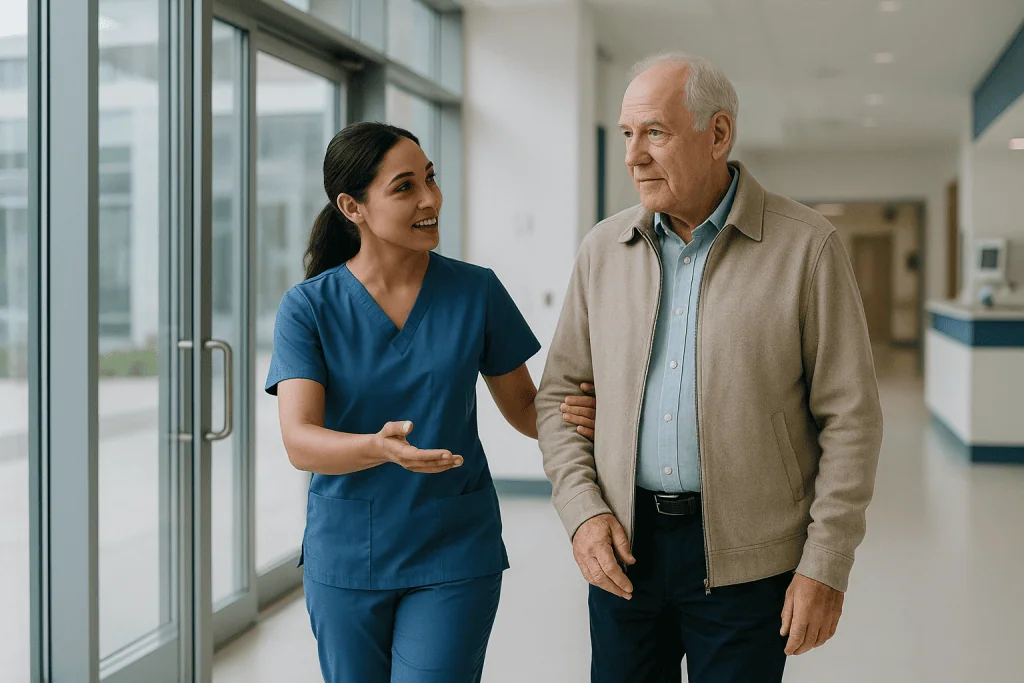
Medical photography documents your condition before, during and after treatment so your team can plan care and compare progress over time. Photos are taken with your consent, stored as part of your medical record, and protected like other health information. You can ask why images are needed, who will see them, and whether your consent covers anything beyond your own care.
At some point during treatment in Turkey, someone may ask to photograph you. It is a reasonable thing to wonder about before the camera comes out: why the images are needed, who will see them, and what happens to them afterwards. This guide answers those questions plainly.
Medical photography before and after treatment in Turkey serves one main purpose: documentation. Photographs record your starting point, support treatment planning, allow fair comparison at later stages, and make follow-up more practical once you have returned home. They are part of your medical record, not a casual snapshot, and they should be handled with the same care as any other sensitive health information.
Your part is simple. Give informed consent, follow the preparation instructions you receive, and ask how your images will be stored or used. If anything is unclear, you can pause the process and ask before a single photo is taken. This guide explains how sessions usually work, how consent and privacy operate, what before-and-after galleries can and cannot tell you, and how to prepare comfortably.
At a glance
- Main purpose: To document your starting point, support planning, allow fair comparison and assist follow-up after you return home
- When photos may be taken: Before treatment, at key stages during care, after treatment and at follow-up appointments
- Your role: Give informed consent, follow preparation instructions, and ask how images will be stored and used
- Privacy: Medical photographs are sensitive health information; use for teaching or publicity requires separate, explicit consent
- Consistency matters: Same lighting, distance, angle and position make later comparisons medically useful
- Support available: International patient teams can help with interpreters, chaperones, scheduling and secure file transfer
Why medical photography is part of treatment in Turkey
When you travel for care, much of the conversation with your medical team happens at a distance, before you arrive and after you leave. Clear visual documentation helps bridge that gap. Medical photography before and after treatment in Turkey is common in specialties where appearance, symmetry, skin condition, wound healing, dental alignment, posture or visible progress matters to the clinical picture. Plastic and reconstructive surgery, dermatology, dentistry, orthopaedics and wound care all rely on it in different ways.
Photographs taken to a consistent standard let your team compare the same area at different points in time. That comparison is more reliable than memory, yours or the doctor’s, and it gives distant follow-up something concrete to work with. Images can also support remote assessment before travel, and they often form part of the file that specialists review when they build a treatment plan. If you want to understand how that wider review works, see how Acibadem reviews your medical records before giving a treatment plan.
At Acibadem, medical photography is treated as part of coordinated care rather than a separate service. Depending on your plan, images may be reviewed by the relevant specialists, nurses or care coordinators under hospital privacy procedures. You can always ask why photographs are needed in your specific case, who will review them, and whether they are essential or optional.
What medical before and after photos actually do
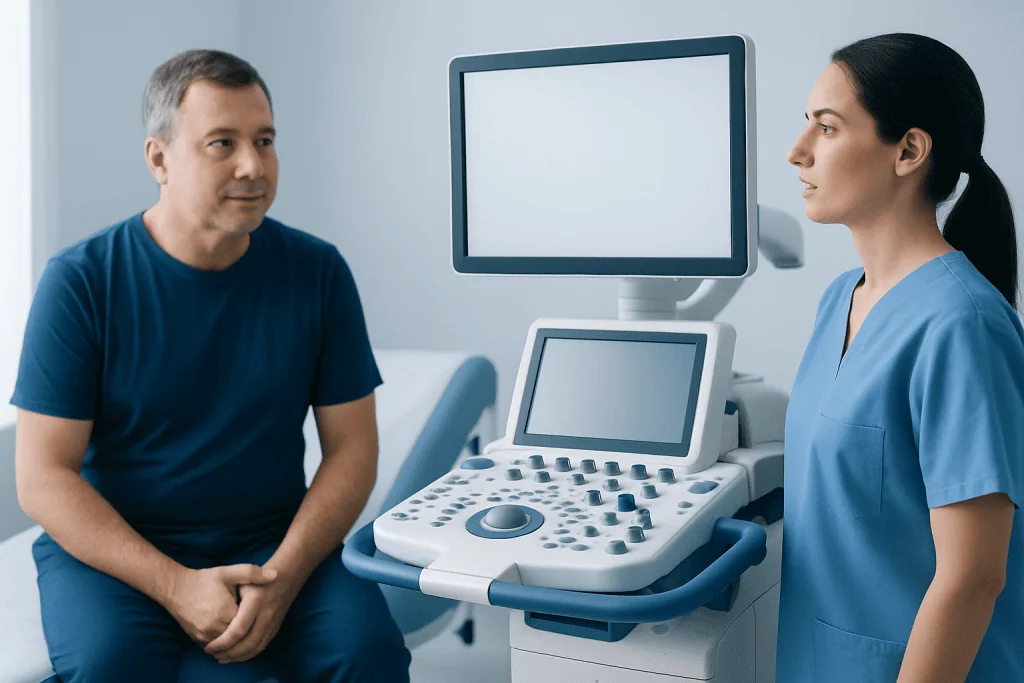
Medical photography does several practical jobs at once. It records your condition before treatment so there is an objective baseline. It gives the doctor a reference for planning and, in surgical specialties, for marking. It allows honest comparison after a procedure or a course of therapy. And it reduces misunderstanding, useful when you and your team speak through an interpreter, or when discussions happen across time zones.
Not every photograph is about appearance. A doctor may want consistent images of a scar, a wound, a skin lesion, swelling, dental alignment, limb position or a surgical site, purely to track clinical progress. The timing, angles and number of photographs depend on your individual plan and the department responsible for your care. Some treatments need no photography at all; scans, laboratory results and written notes carry the record instead.
One distinction is worth stating clearly: medical record photographs are not marketing images. Their first and usually only purpose is your care and documentation. If a hospital or clinic wants to use your images for education, publication or promotion, that requires a separate and explicit consent process, and you are entitled to full details before you decide, with no effect on your treatment if you decline.
How to read before-and-after pictures you see online
Many people searching for treatment in Turkey, liposuction, rhinoplasty, dental work, hair restoration, begin with before-and-after galleries. Those pictures can be informative, but they need careful reading. Every published image shows one patient, with one anatomy, one starting point and one healing pattern. It shows a moment in time, often chosen because the result photographed well. It cannot tell you what your own outcome will look like, because your tissue, health history and healing are your own.
There are also technical reasons to be cautious. Lighting, posture, camera distance, lens choice and timing after surgery all change how a result appears. Two photographs of the same person, taken an hour apart under different lighting, can look like two different results. Reputable providers publish images only with the patient’s separate consent and try to keep conditions consistent; even then, a gallery is an illustration of what a treatment can involve, not a promise of what it will deliver for you.
The more useful question to bring to a consultation is not “can I look like this photo?” but “what range of change is realistic for my anatomy, and what are the limits?” A careful surgeon will answer that question specifically, including what a treatment cannot do. We cover this in depth in what realistic before-and-after results mean for treatment in Turkey.
Consent, privacy and your rights
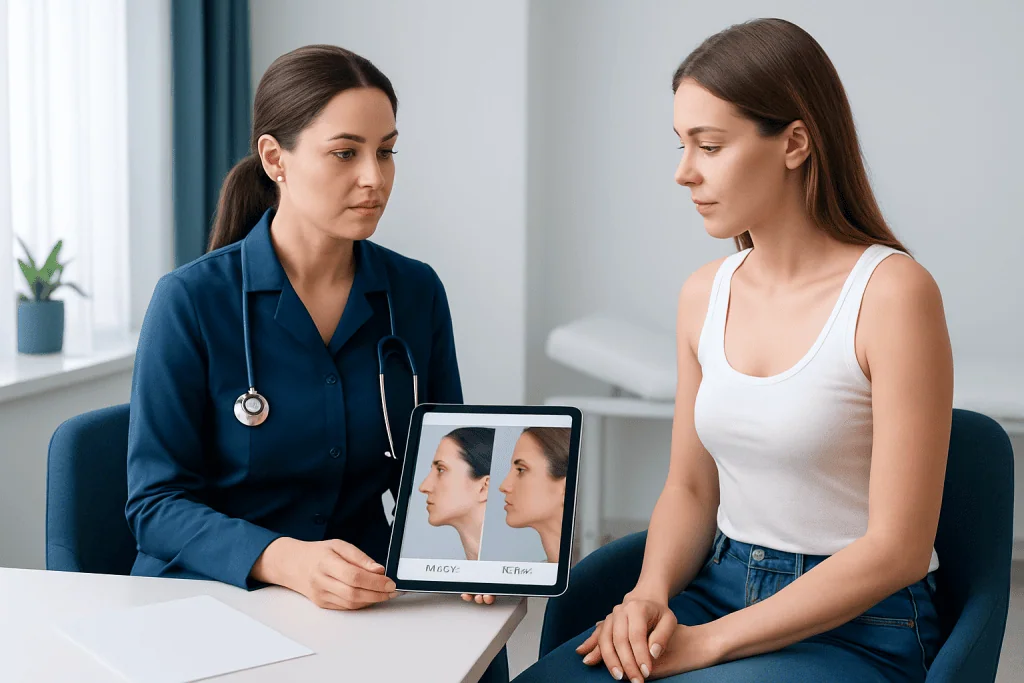
You should be informed before medical photographs are taken. The team should explain the purpose of the images, which body area will be photographed, whether your face or other identifying features will be visible, and how the photographs will be stored. If any of that is missing, it is entirely appropriate to pause and ask before the session begins.
Consent for medical photography usually comes in layers. Photographs necessary for your medical record are handled under the same rules as the rest of your file. Any use beyond your care, teaching, conferences, journal publication, or public before-and-after examples, needs separate agreement. You can consent to one and decline the other. If you do not want your images used outside your own care, say so clearly and ask that your preference is recorded in writing.
Because medical photographs are sensitive personal health information, they should be protected like any other part of your record. Practical questions worth asking before the session:
- Who will take the photographs, and who will have access to them afterwards?
- Will my face, tattoos, jewellery or birthmarks be visible, and can they be excluded or masked?
- Are the images stored inside my hospital record, on secure hospital devices?
- Can I receive copies for my own records and follow-up?
- If I agree to non-care use now, can I withdraw that permission later, and how?
You do not need to agree to educational or promotional use in order to receive treatment. If anyone suggests otherwise, ask for the specific clinical or legal reason in writing.
How to prepare before photos are taken
Preparation depends on the body area and the purpose of the images, but the goal is always the same: clear, consistent, medically useful photographs. You may be asked to remove makeup, jewellery, nail polish, compression garments, dressings or clothing that covers the treatment area. Skip creams, oils, self-tanner and heavy makeup on the relevant area on the day, unless your team tells you it is fine.
Arrive with enough time so you are not rushed. If earlier photographs, scans or reports were requested during your pre-arrival assessment, bring them or confirm they were uploaded through the approved channel. Your patient coordinator can tell you in advance whether the doctor needs recent photos before your first appointment or whether professional images will be taken after you arrive, knowing which saves you an awkward surprise.
If you have modesty, cultural or religious concerns, raise them before the appointment rather than in the room. Hospitals that regularly care for international patients are used to arranging gowns, drapes, same-gender staff where available, and interpreters. None of these requests is unusual, and none of them should be treated as an inconvenience.
What happens during the photography session
A medical photography session is usually brief and structured. You are positioned against a plain background under consistent lighting and asked to stand, sit or turn in specific directions. Images may be taken from the front, sides, back or close up, depending on the treatment area. The point of all this choreography is repeatability: later photographs must match the first set closely enough that any difference in the images reflects a difference in you, not in the camera setup.
Staff should explain each step, give you privacy to change, and photograph only the necessary area. For sensitive areas, you can ask who will be present, whether a chaperone is available, and whether non-essential staff can leave the room. Your dignity is not a courtesy extra; it is part of doing the job properly.
Depending on the department, images may be taken by trained clinical staff on secure hospital devices or in a dedicated medical photography area. What should not happen is informal photography on personal phones through unsecured channels. If a process feels casual in a way that worries you, ask how the image will be stored: a well-run team will have a ready answer.
Sending photos before you arrive in Turkey
Many international patients are asked to send photographs before travel so that specialists can assess suitability and sketch a plan. If this applies to you, ask for written guidance on lighting, distance, angles and background, natural daylight, a plain wall and no filters is the usual starting point, and, critically, ask which transfer method to use. Ordinary messaging apps and standard email are not designed for sensitive medical images.
Use only the channel your coordinator specifies. Our guide on how to send your medical files securely before treatment in Turkey explains the practical options and what makes a transfer method acceptable for health data. The same principles apply to reports, scans and photographs alike: label files clearly, keep your own copies, and confirm receipt.
Using photos for follow-up after you return home
After treatment, photographs help your doctor review healing, swelling, scarring, alignment or other visible changes from a distance. For international patients this makes follow-up far more practical: your team may ask for updated images at set time points or before a scheduled video consultation.
Consistency is what makes these photos useful. Take them in similar lighting, from the same distance, in the same position your team specified, against a plain background. No filters, no editing, no flattering angles: the camera is working for your medical record, not your feed. Keep the written photo instructions with your other paperwork; the guide on medical documents to collect before leaving Turkey covers what else belongs in that folder before you fly home.
One honest limit: photographs support follow-up, but they do not replace clinical examination. They are a review tool within a planned follow-up schedule, not a substitute for in-person assessment when one is needed.
Staying comfortable, informed and in control
It is normal to feel self-conscious when medical photographs are taken, especially of a personal area, and especially when you are already anxious about treatment. You can ask for an interpreter, request a short explanation before each step, and tell the team if you need a moment. A good photography process feels respectful, organised and focused on your care, and if it does not, you are allowed to say so.
Before giving consent, make sure you understand the difference between photographs for your medical record and photographs for wider use, and keep your own paper trail: consent forms, photo instructions, appointment dates and follow-up contacts in one folder. Having a single clear point of contact through the international patient team keeps the whole process, arrival, interpreting, documentation, follow-up, considerably simpler. Approached this way, medical photography before and after treatment in Turkey becomes what it should be: a quiet, well-organised part of your care rather than a source of anxiety.
Step by step
- Ask why photos are recommended. Before treatment, ask your doctor or coordinator what the photographs will be used for, planning, documentation, comparison or follow-up, and whether they are essential or optional in your case.
- Clarify consent and image use. Confirm whether your consent covers medical record documentation only, or also teaching, publication or public galleries. If you agree only to clinical use, say so and ask that your preference is recorded in writing.
- Prepare the treatment area. Follow the instructions you receive about makeup, creams, clothing, jewellery and dressings. Raise modesty, cultural or religious needs before the appointment so privacy arrangements can be made in advance.
- Bring or upload previous images if requested. Earlier photographs, scans and reports help your specialist understand change over time. Use the approved channel and keep your own copies of everything you send.
- Use secure channels only. Never send sensitive medical photos through informal apps or standard email unless your hospital has specifically approved the method. Ask your coordinator which channel to use before and after travel.
- Follow positioning instructions exactly. Standing still, turning and repeating precise positions may feel fussy, but it is what makes the before-and-after comparison medically meaningful.
- Keep follow-up photos consistent. At home, match the original lighting, distance and position, use a plain background, and never filter or retouch the images. Consistent photos give your team a fair basis for review at each scheduled time point.
Your checklist
- Ask what the photographs are needed for and whether they are essential for your care
- Confirm who will take the photos and who will have access to them
- Clarify whether your consent covers medical documentation only or any wider use
- Ask whether your face or identifying features can be excluded or masked
- Remove jewellery, makeup or creams from the area if instructed
- Request an interpreter if any part of the consent or process is unclear
- Raise modesty, religious or cultural privacy needs in advance
- Use only approved channels to send photos before arrival or after returning home
- Keep copies of consent forms, photo instructions, follow-up dates and contact details
- Never edit, filter or crop medical photos unless instructed
Key takeaways
- Medical photography documents your starting point, supports planning and makes international follow-up practical.
- Photographs for your medical record and photographs for public or educational use are separate consents: you can agree to one and decline the other.
- Consistent lighting, angles and positioning are what make before-and-after images medically useful.
- Published galleries illustrate what a treatment can involve for one patient; they do not predict your result.
- For sensitive areas you can ask for a chaperone, an interpreter, a gown or limited staff presence.
- Send medical images only through approved secure channels, and keep your own copies of instructions and consents.
Frequently asked questions
Can you show me pictures of liposuction before and after in Turkey?
Reputable providers publish before-and-after images only with each patient’s separate, explicit consent, which is why gallery availability varies. More importantly, any gallery shows one person’s anatomy and healing under specific lighting at a chosen moment. Such images can illustrate what a procedure involves, but they cannot predict your own result, which depends on your body and health history.
What medical treatment is Turkey famous for?
Turkey is widely known as a destination for plastic and cosmetic surgery, hair restoration, dental treatment and eye procedures, and its larger hospital groups also treat international patients across oncology, orthopaedics, cardiology and other specialties. What matters more than reputation is the specific hospital, team and plan for your case, which is exactly what medical documentation, including photography, is there to support.
What does medical photography do?
It creates an objective visual record of your condition. That record establishes a baseline before treatment, supports planning and surgical marking, allows fair comparison at later stages, and gives remote follow-up something concrete to review. Because the images sit in your medical record, they are protected like other health information.
Is it safe to go to Turkey for medical procedures?
Safety is never a property of a country; it depends on the specific hospital, the clinical team, how thoroughly your case is assessed before travel, and how follow-up is planned. Any medical procedure carries risk wherever it is performed. Careful documentation, records review, imaging and structured photography, is one marker of a provider that plans treatment properly rather than selling it.
Can I refuse medical photographs?
You can discuss any concerns before agreeing. In some cases photographs are important for safe planning or documentation; in others they are optional. You can also agree to photography with conditions, face excluded, limited staff present, clinical use only. Consent to public or educational use is always separate and never a requirement for treatment.
Will my photos be used on a website or social media?
Not without separate consent. Medical record photographs exist for your care. Any use for marketing, education, publication or social media requires an explicit additional agreement, explained clearly before you sign. If you decline, that choice should be recorded and respected without affecting your treatment.
How should I send photos before I arrive in Turkey?
Use the transfer method your hospital or coordinator specifies, and ask for written guidance on lighting, distance, angles and background. Avoid ordinary messaging apps and standard email for sensitive images. Keep copies of everything you send and confirm the files were received and are readable.
What if I feel embarrassed during the photo session?
That is completely understandable. You can ask who will be present, request a gown or drape, and ask for a chaperone or a same-gender staff member where available. Only the necessary area should be photographed, and staff should explain each step and give you privacy to change. A respectful, organised session is the standard you are entitled to expect.
Add us as a Preferred Source to see more of our trusted health content across Google Search, AI Overviews and Discover.

Update history
- PublishedJune 22, 2026
- Medical review approvedAugust 30, 2026
- Last content updateAugust 30, 2026
References2
- CDC Travelers' Health: Medical Tourism wwwnc.cdc.gov
- UK Government Foreign Travel Advice: Turkey gov.uk
More Patient Guides

How Long Does Anesthesia Last? Wear-Off Times by Type
Coming round from an operation, almost everyone asks the same two questions: when will my head feel normal, and how long is…

Flying to Turkey After a Recent Illness: When Is It Safe to Travel?
Flying to Turkey after a recent illness may be safe once you are medically stable and cleared to travel; plan airline support…
Braces, Retainers, and Dental Work Before Surgery in Turkey: What to Tell Your Team
Braces, retainers and dental work before surgery in Turkey should be shared with your care team early to plan safe anaesthesia and…
When to Stop Eating, Drinking, or Smoking Before a Procedure in Turkey
When to stop eating before a procedure in Turkey depends on your anesthesia plan; follow your care team’s exact fasting instructions for…