

Medical Travel to Turkey with Autism or Sensory Sensitivities

Medical travel to Turkey with autism or sensory sensitivities works best when you plan around the person, not just the appointments. Write a one-page support profile, share practical needs with the hospital before scheduling, choose flights and assistance services deliberately, keep the arrival day low-demand, and build rest into every hospital day. Predictability, not perfection, is the goal.
Worried about how your child will cope with a long airport queue, or how you will explain your own sensory needs to a hospital team in another country? Those are the right things to worry about, and the right things to plan for. Medical travel to Turkey with autism or sensory sensitivities becomes manageable when the sensory, communication, routine and support needs are arranged before anyone boards a plane.
This guide covers the whole journey: flights and airport assistance, insurance and documents, arrival and accommodation, hospital days, interpreters and consent, and the daily routine that keeps everything else workable. It also answers, honestly, a question many families search for: whether stem cell therapy for autism is something to travel for.
At a glance
- Best first step: Write a one-page support profile covering sensory triggers, communication style, food, sleep and distress signs
- Share it early: Hospitals can plan interpreters, appointment order and quieter arrangements only if they know in advance
- Flights: No single airline is “best” for autism, compare assistance programmes, direct routes and pre-boarding options
- Insurance: Autism is usually treated as a declarable pre-existing condition; check the policy wording, not assumptions
- Main focus: Reduce uncertainty, waiting, noise and last-minute changes, and protect rest on arrival and departure days
Planning medical travel to Turkey with autism or sensory sensitivities
Medical travel to Turkey with autism or sensory sensitivities needs more than flight tickets and appointment dates. If you or the person travelling with you is autistic, neurodivergent, or sensitive to noise, light, touch, crowds, smells or changes in routine, the useful planning starts with a plain description of what makes a day easier or harder, not with the diagnosis itself.
Write a short support profile before travel. One page is enough. Cover the person’s preferred communication style, known triggers, calming strategies, food needs and safe foods, sleep routine, mobility needs, medication schedule, and how distress usually shows itself. If the patient may not answer questions directly, note who can help interpret their needs, while making clear that the patient’s own choices come first wherever they can express them.
Hospitals that regularly treat international patients, including Acibadem, work through international patient teams that coordinate scheduling, interpreters and arrival guidance. These teams can only account for sensory and communication needs they know about, so the support profile is most useful when it arrives before appointments are scheduled, not on the day. There is a limit to what advance notice can do, every hospital visit involves some unpredictability, but it gives staff a genuinely better chance of reducing avoidable stress. If you are also weighing up where to be treated, how to recognise a reliable hospital in Turkey covers the structural signals worth checking.
Is it a good idea to travel to Turkey for medical reasons?
There is no universal answer, and any page that promises one is not being straight with you. Turkey has large hospital groups with established international patient departments, and Istanbul is well connected by direct flights from Europe, the Middle East, Africa and Central Asia, which matters when you want to avoid connections. Whether the trip is a good idea for your family depends on the specific treatment, how the person travelling handles transitions and unfamiliar environments, whether follow-up can be managed after you return home, and whether the hospital can accommodate the practical needs in your support profile. Ask those questions before you commit, and treat vague answers as information in themselves.
Preparing for the journey to Turkey
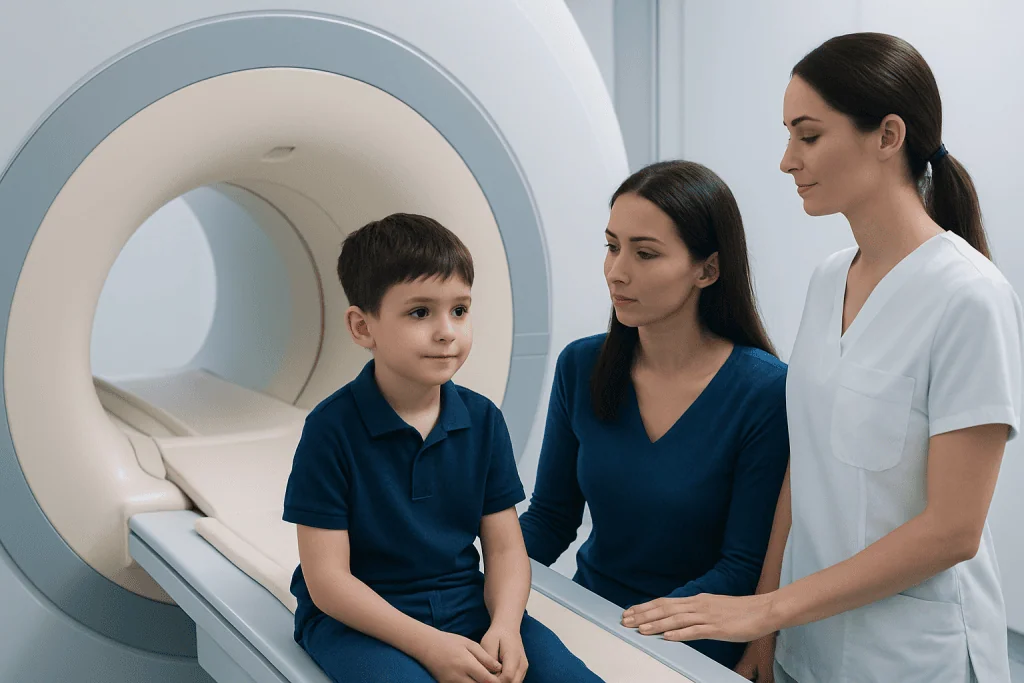
Airports are intense environments: bright lights, queues, announcements, security checks and sudden gate changes. Build a travel plan with generous time margins but without overfilling the day. Where possible, choose flight times that protect the person’s normal sleep window, and prefer direct flights over cheaper connections, rushing between gates is one of the most reliable triggers of sensory overload.
Which airline is most suitable for autistic children?
No airline is objectively “most suitable”, whatever ranking articles claim. What varies, and what you can actually compare, is the assistance infrastructure. Before booking, check whether the airline offers a special assistance service you can request in advance (most require notice at least 48 hours before departure), whether it allows pre-boarding or last-on boarding depending on what suits the child, and whether your departure airport participates in a hidden disabilities scheme such as the Sunflower lanyard, which signals to staff that a traveller may need extra time or reduced verbal pressure. Some airports run quiet rooms or familiarisation visits; ask directly rather than assuming. A direct flight on an airline with a modest assistance programme is usually better than a connecting itinerary on a highly rated one.
What to carry, and how
Pack a carry-on comfort kit that never leaves your side. Useful contents: noise-reducing headphones, sunglasses or a cap, familiar snacks, water bought after security, a favourite object, chewable or fidget tools if safe for the person, a change of clothes, wipes, a charged tablet, a visual schedule, all medications, and copies of medical letters. Keep prescriptions and medical items in original packaging where possiblekeeping regular medicines on schedule during medical travel explains the timing and documentation side in detail. Any decisions about adjusting a medication for the trip belong to the prescribing doctor, made before departure.
Prepare a short card in English and Turkish stating that the traveller is autistic or has sensory sensitivities and may need extra time, reduced verbal pressure, or caregiver support. Security staff cannot accommodate what they cannot see, and a card removes the need to explain repeatedly under stress. If the patient has a condition that could affect flying itself, medical fitness to fly covers when airline clearance is needed.
Insurance and documents: what autism means for the paperwork
Travel insurers generally treat autism and related diagnoses as pre-existing medical conditions that must be declared, even when the person takes no medication. Declaring rarely makes a policy unavailable, but failing to declare can void cover entirely, which matters if a claim arises for any reason during the trip. Read the policy wording on pre-existing conditions rather than relying on a comparison-site summary, and check whether companion cover, trip disruption and repatriation are included. What travel insurance for medical treatment in Turkey should cover goes through the categories in full.
Alongside insurance, assemble the medical record set the hospital will need: reports, imaging, prescriptions, allergy information and any previous specialist assessments. Presenting these clearly saves repeated questioning on the daysharing your medical history clearly when travelling for treatment shows how to organise it. If the patient is a minor, or an adult who needs legal support for medical decisions, bring guardianship documents, parental documentation or power of attorney. Requirements vary by situation, so ask before departure what will be expected rather than discovering a gap at a consent discussion.
Arrival, transfers, and accommodation choices

Arrival day is often the hardest of the whole trip. The patient is tired, the environment is entirely new, and routines have already been broken by the journey. Where the treatment schedule allows, avoid non-urgent appointments immediately after landing. A rest period at the accommodation, sleep, food, hydration, orientation, pays for itself many times over during the days that follow.
For transfers, get specifics in advance: the meeting point, the vehicle type, the estimated journey time, and who to reach if there is a delay. Companions absorb a great deal of the patient’s stress, and clear logistics reduce the load on them too. Hospital patient services typically provide arrival information, hospital directions and accommodation guidance as part of coordinating an international treatment plan.
When choosing where to stay, look past distance to the hospital. Ask about quiet rooms away from lifts and street noise, breakfast timing, kitchenette access, laundry, room temperature control, and whether housekeeping visits can be scheduled or skipped. If the patient eats only a small set of safe foods, a room with a fridge or basic cooking facilities, or a familiar supermarket nearby, prevents a category of distress that no hospital arrangement can fix.
Making hospital days predictable
A hospital day may include registration, tests, consultations, imaging, payment steps and waiting periods. Each step is routine for staff; the sequence can be overwhelming for someone who relies on predictability. Ask for the expected order of the day, approximate timings, where to go first, and whether breaks are possible between appointments. Even a rough map, “registration, then blood tests, then a wait, then the consultation”, lets you prepare the patient and pace the day.
It is reasonable to ask for practical adjustments: a quieter waiting area, permission for a companion to stay close, written explanations, fewer people speaking at once, extra transition time, or appointments clustered to reduce repeated journeys. Availability depends on the day’s schedule and on medical safety requirements, imaging suites and sterile areas have rules that cannot bend, but adjustments asked for early are far more likely to happen than adjustments asked for in the corridor.
For many autistic patients, the most valuable support is simple and human: knowing who will meet you, what happens next, where you can pause, and how to ask for help if things become too much. None of that requires special equipment. It requires information, which is exactly what you can request in advance.
Communication, interpreters, and consent
Language differences add pressure to medical travel to Turkey with autism or sensory sensitivities, particularly when the patient needs extra processing time or communicates in their own way. Interpreter support helps with appointments, instructions, documents and next steps. If the patient communicates through a companion, a device, gestures, writing or short answers, tell the care team before the consultation starts, not partway through, when the rhythm is already set.
You can shape the pace of a consultation. Ask clinicians and interpreters to speak one at a time, use short sentences, pause after important information, and provide written summaries where possible. If the patient is an adult, staff should address them directly to the extent they are able and willing, while trusted support people assist rather than replace them. Saying this explicitly at the start of the appointment sets the tone for everyone in the room.
Consent deserves particular care. Bring the legal documents mentioned earlier, and expect clinicians to check who can consent to what. This is not bureaucratic obstruction; it protects the patient. If decision-making support arrangements exist at home, find out before travel how they translate to a Turkish hospital setting.
A note on stem cell therapy and autism
Some families searching for autism-related travel to Turkey encounter marketing for stem cell therapy as an autism treatment. Be cautious here. Stem cell therapy is not an established or proven treatment for autism. Major health authorities do not recommend it for autism outside properly regulated clinical trials, and autism itself is a neurodevelopmental difference, not an illness with a cure. Any clinic, in any country, presenting stem cells as a reliable way to change autism is making a claim the evidence does not support. Established, evidence-informed support for autistic people centres on developmental, behavioural, educational and communication approaches, alongside treatment of any co-occurring medical conditions. If a provider leads with dramatic promises, treat that as a reason to look elsewhere.
Recovery, routine, and regulation while abroad
Recovery abroad is not only medical; it is sensory and emotional. After consultations, tests or procedures, plan quiet time rather than sightseeing or errands. Most people cope better when each day has a predictable rhythm: wake, food, hospital, rest, familiar activity, simple meal, sleep. Boring is the objective.
Recreate fragments of home where you can: the same bedtime audio, a preferred pillowcase, a familiar breakfast, a visual calendar, scheduled video calls with someone at home. If the patient takes medication for sleep, anxiety, epilepsy, ADHD or anything else, the travel timing and supply plan should be agreed with the prescribing doctor before leaving; the trip itself is never the moment to change a regimen.
Overload can look different from ordinary tiredness: withdrawal, agitation, repetitive questioning, refusal to move, stomach complaints, crying, shutdown, meltdown. Have a calm response plan ready. Reduce noise, stop non-urgent conversation, move to a quieter space, offer water or a familiar item, and allow recovery time without blame or debriefing. Recovery from overload is part of the schedule, not an interruption to it.
Step by step
- Create a one-page support profile. Communication style, sensory triggers, calming strategies, food needs, medication schedule, mobility needs and distress signs, in plain language, with no medical vocabulary required. Get it to the hospital’s international patient team before appointments are scheduled.
- Sort insurance and legal documents. Declare autism as a pre-existing condition on the travel policy, and gather guardianship or consent documents if the patient is a minor or needs decision-making support.
- Book flights around the person, not the fare. Prefer direct routes, protect sleep windows, request airline special assistance at least 48 hours ahead, and ask the departure airport about hidden-disability schemes and quiet areas.
- Prepare a sensory travel kit for hand luggage. Medications, documents, headphones, snacks, communication tools, chargers and whatever the patient uses to stay regulated in unfamiliar places. Nothing essential goes in checked baggage.
- Make arrival a low-demand day. Transfer, check-in, food, rest. If an appointment must happen soon after landing, ask whether waiting can be minimised and whether a quieter space is available.
- Ask for the appointment roadmap. The expected sequence of registration, tests, consultations and payment steps, plus interpreter arrangements and who may be present during consultations.
- Build recovery time into every day, and confirm the return plan. Before departure, collect discharge notes, medication instructions, warning signs to watch for, follow-up timing and contact channels, in the most accessible format the patient can use.
Your checklist
- One-page autism or sensory support profile
- Passport, visa information if required, and travel insurance with autism declared
- Medical reports, imaging, prescriptions and allergy information
- Medication supply in hand luggage, original packaging where possible
- Noise-reducing headphones, sunglasses, comfort item, fidget or regulation tools
- Preferred snacks, hydration plan, and food sensitivity notes
- Communication cards in English and Turkish, visual schedule, tablet, charger, power adapter
- Hotel details, transfer contact, hospital address and coordinator contact
- Legal documents for guardianship or consent if relevant
- Written return-home and follow-up plan
Key takeaways
- The best sensory support starts before travel, with a clear written profile of needs, triggers and calming strategies shared ahead of scheduling.
- No airline is “best” for autistic travellers, compare assistance programmes, direct routes and boarding options, and give 48 hours’ notice.
- Autism usually counts as a declarable pre-existing condition for travel insurance; check the wording, not the assumptions.
- Stem cell therapy is not a proven autism treatment anywhere, and dramatic promises are a warning sign, not a reason to book.
- Predictable routines, a familiar companion, a comfort kit and protected rest are often as decisive as the medical logistics themselves.
Frequently asked questions
Is autism a medical condition for travel insurance purposes?
Most insurers treat autism as a pre-existing condition that should be declared when buying a policy, even if the person takes no medication. Declaring it rarely prevents cover, but not declaring it can invalidate the whole policy if a claim arises. Read the pre-existing conditions section of the policy wording and check that companion cover and trip disruption are included.
Which airline is most suitable for autistic children?
There is no single best airline. Compare what you can verify: whether special assistance can be requested in advance (usually at least 48 hours before departure), whether flexible boarding is offered, whether your airports support hidden-disability schemes such as the Sunflower lanyard, and whether a direct flight is available. A direct route generally matters more than the airline’s brand.
Is stem cell therapy available for autistic children in Turkey?
Stem cell therapy is not an established or proven treatment for autism, in Turkey or anywhere else, and major health authorities do not recommend it for autism outside regulated clinical trials. Clinics in various countries market it regardless. Evidence-informed autism support centres on developmental, behavioural, educational and communication approaches, plus care for any co-occurring medical conditions.
Is it a good idea to travel to Turkey for medical reasons?
It depends on the treatment, the person and the plan. Turkey has large hospital groups with established international patient departments and good direct flight connections. The honest test is whether the specific hospital can answer detailed questions about your needs, whether follow-up works after you return home, and whether the person travelling can manage the journey with the supports you can arrange.
Can a companion stay with the patient during appointments?
In many outpatient situations a companion can help with communication, comfort and decision support. Some areas restrict companions for safety, privacy or infection-control reasons, imaging suites and sterile zones in particular. Ask when appointments are arranged and confirm again on the day.
What if the patient has a meltdown or shutdown in the hospital?
Reduce demands immediately: lower noise, stop unnecessary questions, move to a calmer area if one is available, and allow time. Give staff simple instructions such as “please give us ten quiet minutes” or “please speak only to the companion for now”. Recovery time afterwards is part of the plan, not a failure of it.
Is it better to schedule all appointments in one day or spread them out?
It depends on the patient. Some people prefer fewer hospital trips even if the days are long; others need shorter days with more rest between them. Weigh the person’s tolerance for transitions against the procedure requirements and the length of stay, and say clearly which pattern works when appointments are being arranged.
How should we prepare for returning home?
Before departure, collect written medical notes, medication instructions, follow-up recommendations and contact details for post-return questions, in a format the patient can actually use. Keep the travel day itself simple, protect rest, and restore familiar home routines as quickly as possible after landing.
Add us as a Preferred Source to see more of our trusted health content across Google Search, AI Overviews and Discover.

Update history
- PublishedJune 8, 2026
- Medical review approvedSeptember 13, 2026
- Last content updateSeptember 12, 2026
References3
- Travelers with Disabilities: CDC Yellow Book wwwnc.cdc.gov
- Autism: NHS nhs.uk
- Autism Spectrum Disorder: MedlinePlus medlineplus.gov
More Patient Guides

Airport Wheelchair Assistance: How to Book It for a Medical Trip
Airport wheelchair assistance is free, it exists at every commercial airport, and airlines are legally required to provide it, yet half…

Travelling With a Stoma: Flights, Supplies and Airport Screening
Traveling to Turkey with a stoma is manageable with the right supplies, airport screening plan, and recovery support in Istanbul or Turkey.
Mobility Aids in Turkey: Renting a Wheelchair, Walker, or Crutches
Mobility aids in Turkey can be rented through medical suppliers, pharmacies, and hospital-linked services in Istanbul and other cities.
Traveling to Turkey with Food Allergies or Special Diet Needs
Traveling to Turkey with food allergies or special diet needs is manageable with planning, translated allergy cards, and hotel and hospital support…