

Sending a Family Update During Surgery in Turkey: How Communication Usually Works

Hospitals in Turkey usually share surgery-day news at milestones — when the patient enters the operating area, while the procedure is progressing, and when they reach recovery — rather than continuously. Updates typically go to one nominated family contact, in person or by phone, often with interpreter support for international families. The detailed medical explanation normally comes after surgery, once the surgeon can speak accurately.
How long will you sit there before anyone tells you anything? That is the question on most families’ minds on surgery day, and it feels sharper when you are waiting in an unfamiliar hospital, in a country that is not your own, with relatives at home asking for news.
The waiting is easier to manage when you know how hospital communication actually works: who speaks to you, when the updates typically come, what the milestone phrases mean, and how to pass news on to family abroad without creating confusion. This guide explains the process step by step, including the parts hospitals cannot promise — such as exact timing — so that a quiet hour does not feel like an alarm.
At a glance
- Best for: Companions waiting during surgery in Turkey, and relatives following from abroad
- Main contact: Usually one nominated family spokesperson, agreed before surgery
- Typical updates: Entry to the operating area, procedure progressing, arrival in recovery, then a surgeon conversation
- How updates are shared: In person, by phone, or through international patient services and interpreters
- What to prepare: A working phone number with country code, language preferences, consent preferences, a plan for relaying news home
- Important note: Update timing shifts when theatre schedules change or the team is with the patient — silence is not a status report
How sending a family update during surgery in Turkey usually works
There are two sides to sending a family update during surgery in Turkey. The first is the hospital updating you, the companion on the ground. The second is you updating relatives at home, often across time zones. Both work best when they are planned before the patient changes into a gown, not improvised in a waiting area.
On the hospital side, the team usually agrees a communication plan in advance. In most cases one family member or companion is chosen as the main contact so that updates stay consistent and confidential. This matters more than it sounds. When three relatives in two countries each call a different department, the answers they receive will be phrased differently, and the differences get read as contradictions. One spokesperson, one channel, one version of events.
For international patients, communication rarely runs through the surgical team alone. Admissions staff, ward nurses, international patient coordinators, and interpreters may all play a part in explaining what is happening and when the next update is likely. At Acibadem, international patient services help bridge the language and logistics gaps for families who are far from home — the practical layer between the operating theatre and the person waiting with a phone in their hand.
Set your expectations on one point now: updates are milestone-based, not minute-by-minute. You will typically be told when the patient has gone to the operating area, that the procedure is underway, and when the patient has moved to recovery. The surgeon, or a designated member of the team, usually speaks with the main contact after the procedure — once there is accurate information worth sharing, rather than a rushed guess mid-operation.
Who usually gives the updates

Not every update comes from the surgeon, and that is normal, not a warning sign. Before surgery starts, the ward nurse, day-case team, or theatre staff may brief you on timing and next steps. During the procedure itself, updates are usually limited to logistical milestones, because the surgeon and the anaesthesiology team are with the patient — which is exactly where you want them.
After surgery, the first message often comes from a nurse or patient coordinator: the operation has finished, the patient is in recovery. The more detailed conversation comes later, once the surgeon has completed the immediate post-operative work and can explain things clearly and without rushing. This sequence feels slow from a waiting-room chair. It exists to keep the information accurate.
If your family does not speak Turkish, an interpreter or international patient representative may relay updates in English or another preferred language. It is worth deciding early who handles language on the day — a professional interpreter and a bilingual relative play different roles, and the guide on choosing between a medical interpreter and a family member explains the trade-offs. If anything about the day’s plan is unclear, ask the team directly: who is my point of contact today, and how will they reach me?
What kind of updates you should realistically expect
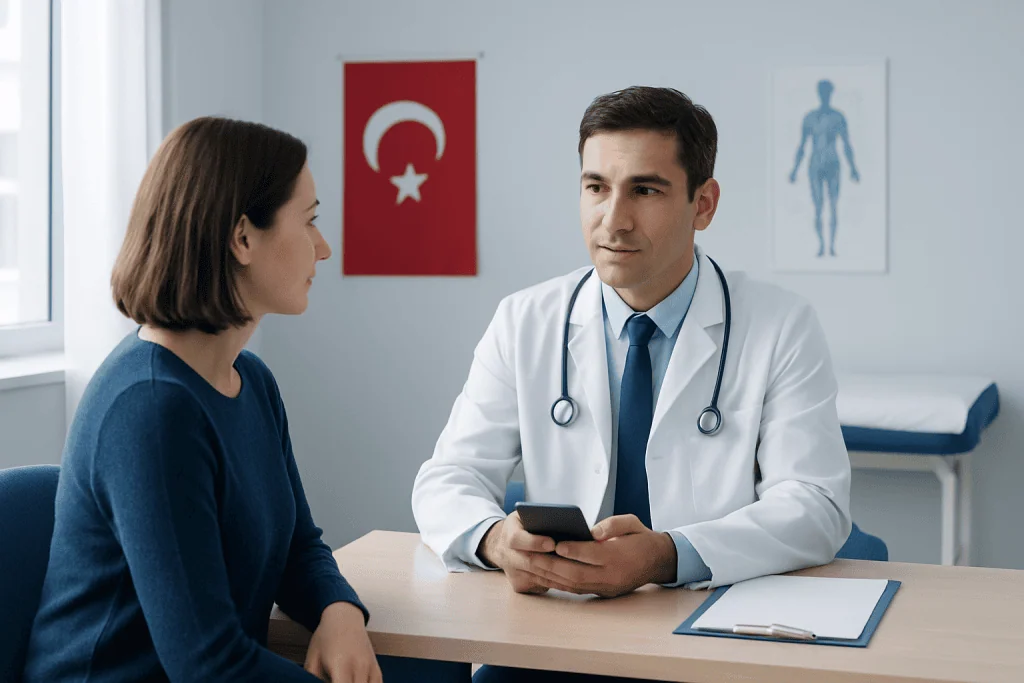
In most hospitals, updates during surgery are not continuous, and a quiet stretch does not usually mean something is wrong. Procedures vary in length, anaesthesia and positioning take time before the first incision, and theatre schedules shift for clinical reasons that have nothing to do with your patient. The table below shows the milestones most families hear, and what each one does and does not tell you.
| Milestone | What it means | What it does not mean |
|---|---|---|
| Taken to the operating area | The patient has left the ward; preparation and anaesthesia are beginning | The operation has started at that exact moment |
| Procedure progressing / underway | Surgery has begun and is continuing as the team works | Any judgement about how well it is going — it is a status, not an assessment |
| Taking longer than expected | The team is continuing work; theatre time estimates are always approximate | That a complication has occurred |
| In recovery | Surgery has finished; the patient is being monitored while waking from anaesthesia | That the patient can see you or take calls immediately |
| Surgeon will speak with you | The detailed explanation is coming once immediate duties are done | That the wait for this conversation reflects the result |
What does “procedure progressing” actually mean?
Families ask about this phrase more than any other. “Procedure progressing” or “surgery underway” is a logistical status, not a clinical opinion. It tells you the operation has started and has not finished — nothing more. Staff outside the theatre genuinely do not have a running commentary to share, so the phrase is deliberately neutral. Reading optimism or worry into it is understandable and not useful. The clinical assessment comes afterwards, from the surgeon.
It also helps to know that some details may only be shared with the patient directly, depending on the consent and privacy preferences recorded before surgery. If the patient has asked the team to update you fully, communication is straightforward. If consent is limited, the hospital may only be able to share general status information. That can feel frustrating in the moment, but it is patient confidentiality working as intended — for your relative today, and for you if you were ever the one on the table.
- Expected during surgery: timing updates and general status
- Less common during surgery: detailed medical discussion
- Most detailed update: after surgery, from the surgeon or a senior team member
- Common reasons for gaps: recovery-room checks, handover between teams, surgeon availability
How to prepare before the patient goes in
The single best way to reduce surgery-day stress is one conversation held before it starts. Ask the team who will contact you, from which number, and at which points in the day updates usually come. Confirm whether you should wait at the hospital or nearby, and how quickly you would need to return if asked. If you want a fuller framework for this, there is a dedicated guide on how to prepare a family update plan during treatment in Turkey.
Then make yourself reachable. Give the hospital the correct mobile number for the main contact, including the country code. If your home SIM may not work reliably in Turkey, arrange an alternative before surgery day: a local SIM, an eSIM, a roaming plan, a hotel phone, or a second relative’s number as backup. Keep the phone charged, keep the ringer on, and answer unfamiliar Turkish numbers — the call you are waiting for will come from one.
If language support matters, raise it early rather than on the morning of surgery. International patient teams can record your preferred language and help arrange interpreter support for the key conversations. Sorting this in advance means the post-operative discussion — the one conversation of the day that carries real detail — is not filtered through a stressed relative’s partial translation.
Waiting at the hospital or from outside
Some companions stay on-site for the whole procedure; others wait at a nearby hotel or apartment. Neither is wrong. Ask what the team recommends for this specific operation, especially if it may run several hours. Staying within easy reach is usually sensible, but you rarely need to sit directly outside the operating area all day unless the team advises it. If you are still arranging where to stay, the guide on family accommodation planning during treatment in Turkey covers the practical options.
If you wait in the hospital, scout the basics before surgery starts: the waiting area, toilets, food options, Wi-Fi, and charging points. Small comforts change the character of a long wait. If you leave the building, tell the team exactly where you will be and how fast you can get back — and do not schedule anything during the procedure window that would take you out of phone contact, such as a long taxi ride through patchy signal areas.
Established international patient services make this stage feel more organised: navigation, translation, and a named person to ask when the day drifts from the plan. That structure does not make updates instant — nothing does — but it means you always know who to ask and what the next realistic checkpoint is. Once the patient moves to a ward, the rhythm of information changes again; the guide on how companions stay informed during hospital care in Turkey covers those days.
Relaying news to relatives abroad
If you are the companion on the ground, you are also the one sending a family update during surgery in Turkey to everyone at home — and that role deserves a plan of its own. Decide before surgery day: one group chat rather than parallel private conversations, agreed check-in times that respect the time-zone gap, and an understanding that “no news yet” is itself an update worth sending. A message that says “still in theatre, next update expected around recovery, phone is on” prevents a dozen anxious replies.
Resist the urge to forward fragments as they arrive. Half-heard phrases relayed in real time tend to mutate — “taking a little longer” becomes “something is wrong” by the third retelling. Wait for a complete milestone, then send one clear message. If the wider family is following from several countries, the guide on building a remote family communication plan during treatment in Turkey sets out a structure that holds up under stress. It also helps to agree in advance what relatives should expect from the day; managing family expectations during treatment in Turkey is harder mid-operation than before it.
If there is a delay or you have not heard anything
Delays are the hardest part of surgery day, and they are also routine. Operations start later than scheduled, take longer than estimated, or need extra recovery-room time before the team can responsibly say anything. A longer wait usually reflects the ordinary realities of theatre lists and post-operative care, not a problem with your patient.
If the expected update window has passed, work through it in order. First, check your own phone: signal, volume, missed calls from unknown numbers. Second, contact the agreed point of contact — one call, not a round of calls to every department you can find. A ward nurse, patient coordinator, or the international patient desk can usually confirm whether the patient is still in theatre, in recovery, or waiting for the surgeon to become free. Third, ask for a realistic next update window and who will give it, then hold to that window.
Try not to build a story from timing alone. Calm, specific questions get you better information than repeated urgent calls, and they leave staff free to do the thing you actually want them doing — looking after the patient.
After surgery: the first conversation and what happens next
Once the procedure finishes, news usually arrives in two stages. The first is a basic status message: surgery is over, the patient is in recovery or being monitored. Depending on the operation and the anaesthesia, the patient may be drowsy, unable to use a phone, or under close observation for a while — so do not read anything into a delay before you can see them or hear their voice.
The fuller conversation happens when the surgeon or another senior team member is free. Keep your questions practical and few: is the patient stable, when can I see them, will they stay overnight, what do the next few hours look like? Write the answers down. First post-operative conversations are emotional, and detail evaporates within the hour. If anything is unclear, ask for it to be repeated or rephrased — interpreters and coordinators exist precisely for this moment.
Then send one clear, complete message home rather than a stream of partial ones. Your job is not to absorb every clinical detail immediately; it is to understand the essentials and the next step, and to pass those on once, accurately.
Step by step
- Choose one main family contact. Before surgery day, agree on one spokesperson who receives updates from the hospital and relays them to everyone else. This keeps messages consistent and spares the care team repeated calls.
- Confirm the communication plan at admission. Ask who will call you, when updates are usually given, and whether to wait on-site or nearby. Save the contact details of any coordinator or interpreter involved.
- Check phone access and language needs. Make sure the main contact number works in Turkey, with the correct country code, and request interpreter support before the patient goes in if you need updates in your language.
- Stay reachable for the full procedure window. Phone charged, ringer on, no long taxi rides or dead-signal zones. The team may not call often, but they need to be able to reach you quickly.
- Expect milestone updates, not constant messages. Typically: a message at or before the start, one when surgery is complete, then a fuller explanation after recovery or surgeon review.
- If timing slips, call the agreed person calmly. Ask for the patient’s current location, whether there is a delay, and when the next realistic update is likely — then wait for that window.
- Write down the first post-op information. Note whether the patient is in recovery, when you may see them, and the plan for the next few hours or overnight, before you relay anything home.
Your checklist
- Nominate one main family spokesperson
- Confirm the correct mobile number and country code
- Ask who will provide updates on surgery day
- Check whether interpreter support is needed
- Know where to wait and roughly how long the day may run
- Keep your phone charged, audible, and answered — including unknown numbers
- Bring the patient’s ID or file details if requested
- Agree one channel and check-in rhythm for relatives abroad
- Prepare a few practical post-op questions and something to write with
Key takeaways
- Family updates during surgery in Turkey come at milestones — start, progressing, recovery — not continuously.
- “Procedure progressing” is a status, not an assessment; the clinical explanation comes after surgery from the surgeon.
- One nominated contact keeps communication clear, consistent, and within the patient’s consent preferences.
- Delays in updates are common and are not, by themselves, a sign of a problem.
- Plan how you will relay news home before the day starts: one channel, complete milestones, no forwarded fragments.
Frequently asked questions
Will I get regular updates while my family member is in surgery in Turkey?
Usually you will receive milestone-based updates rather than constant messages: when the patient goes to the operating area, when the procedure is complete, and when they reach recovery, followed by a fuller discussion with the surgeon or a senior team member.
What does “procedure progressing” mean?
It is a logistical status meaning the operation has started and is continuing. It carries no clinical judgement about how the surgery is going — staff outside the theatre do not have that information to share. The medical assessment comes afterwards, from the surgeon.
Who normally speaks to the family during surgery?
During the procedure, updates typically come from a nurse, patient coordinator, or international patient representative rather than the surgeon, who is with the patient. After surgery, the surgeon or another senior clinician usually speaks with the main family contact once immediate post-operative duties are complete.
What kind of surgery is Turkey known for?
International patients travel to Turkey for a wide range of procedures, including cardiovascular, orthopaedic, bariatric, plastic and reconstructive, ophthalmic, and oncological surgery, as well as hair restoration and dental work. Large hospital groups treat international patients across most surgical specialties, so the sensible question is less about the country’s reputation and more about the specific hospital’s and team’s experience with your procedure.
Is it safe to go to Turkey for surgery?
Safety is not a property of a country; it depends on the specific hospital, the surgical team, the procedure, and your own health. Any surgery anywhere carries risk, and travelling adds practical considerations such as fitness to fly and follow-up arrangements. Bodies such as the CDC publish general guidance on planning medical travel carefully, and discussing your plans with your own doctor at home is a reasonable part of that preparation.
What is the average cost of surgery in Turkey?
There is no meaningful single figure, because quotes are built case by case. Price typically depends on the procedure and technique, the surgeon and hospital, anaesthesia, length of stay, any implants or materials, and the aftercare included. Hospitals normally provide an individual quote after reviewing the patient’s medical records, and a written, itemised quote is more useful than any published average.
What if surgery takes longer than expected and nobody has called?
A longer procedure or a delayed update does not by itself mean a complication — theatre schedules shift and time estimates are approximate. Check that your phone is working, then contact the agreed hospital point of contact and ask calmly for the patient’s current status and a realistic window for the next update.
Will the hospital tell me everything about the operation?
That depends partly on the patient’s consent and privacy preferences recorded before surgery. General status updates are usually shared during the procedure, while the detailed medical explanation comes afterwards, given to the patient and, where the patient has agreed, to the chosen family contact.
Add us as a Preferred Source to see more of our trusted health content across Google Search, AI Overviews and Discover.

Update history
- PublishedJuly 8, 2026
- Medical review approvedSeptember 1, 2026
- Last content updateSeptember 1, 2026
References3
- Medical Tourism: Travel to Another Country for Medical Care — CDC Travelers' Health — wwwnc.cdc.gov
- After Surgery — MedlinePlus — medlineplus.gov
- General anaesthesia — NHS — nhs.uk
More Patient Guides
Medical Travel with a Companion: Who Should Come and Why
Medical travel with a companion can make treatment in Turkey easier by providing practical help, communication support and reassurance before and after…
8 min read
How to Prepare a Child for Medical Treatment in Turkey
Prepare a child for medical treatment in Turkey with age-appropriate explanations, travel planning, comfort items and family support in Istanbul.
8 min read
When to Bring a Family Member to Medical Appointments in Turkey
Bring a family member to medical appointments in Turkey when support, communication or care decisions may be needed.
8 min read
How Family Members Can Help Without Disrupting Recovery
Family support during recovery helps when you listen, organize practical tasks and follow the care plan without taking over, in Turkey or…
8 min read