

Treatment Travel During Ramadan in Turkey: Patient Guide

Yes, you can travel to Turkey for treatment during Ramadan. Hospitals operate throughout the month, hotels and most restaurants in major cities stay open, and eating in public is not illegal. The real differences are rhythm: heavier traffic before iftar, livelier evenings, and busier flights around Eid. Plan appointments, transfers and meals around those patterns, and ask your treating doctor before fasting.
Your treatment dates fall in Ramadan and you are wondering whether to postpone. In almost every case, you do not need to. Hospitals in Turkey work through the month, and treatment travel during Ramadan in Turkey is routine: it simply runs to a slightly different daily rhythm. This guide explains what actually changes, what stays the same, and how to plan around both.
It covers fasting and medical safety, appointment timing, meals and hydration during recovery, traffic patterns around iftar, the Eid holiday at the end of the month, and the etiquette questions most visitors quietly worry about, including whether it is legal to eat in public. Where a decision is medical, this guide says so plainly: those calls belong to your treating doctor, not to a travel article.
At a glance
- Care continues: Hospitals in Turkey operate normally during Ramadan. Consultations, tests, procedures and inpatient care all go ahead.
- Fasting is a medical question first: Whether you can fast around treatment depends on your condition, your medicines and your recovery plan. Only your treating doctor can answer it.
- Eating in public is legal: Turkey is a secular country. Restaurants stay open and visitors are not expected to fast.
- Timing shifts: Traffic thickens in the hour before iftar (sunset), evenings are livelier, and the Eid holiday brings busy flights and hotels.
- Plan early for Eid: If your stay overlaps the end of Ramadan, book flights, accommodation and transfers sooner than you otherwise would.
What Ramadan changes, and what it doesn’t, for your treatment trip
Ramadan is the Islamic holy month, observed by many people in Turkey with fasting from dawn to sunset, a pre-dawn meal called suhoor, and an evening meal called iftar that breaks the fast. Because the Islamic calendar is lunar, Ramadan moves roughly ten to eleven days earlier each year, and the exact start and end dates are confirmed close to the time. If you are booking months ahead, check the dates for your travel year rather than relying on last year’s calendar.
For a patient, the most useful fact is this: treatment travel during Ramadan in Turkey does not require a different medical plan, only a slightly adjusted practical one. Hospitals keep normal clinical schedules. Pharmacies, hotels, airports and transport all keep running. Turkey is a secular country with a large tourism and medical travel sector, and cities such as Istanbul, Ankara and Izmir absorb Ramadan into ordinary life rather than pausing for it.
What you will notice is a change in tempo. Late afternoons get busy as people head home for iftar. Some smaller local restaurants open later in the day or focus on iftar service. Evenings feel more social and more crowded than usual, particularly around mosques, markets and waterfront districts. None of this prevents treatment; all of it rewards a bit of buffer in your daily schedule. A broader look at holiday-period planning is in our guide to planning a medical trip to Turkey during Ramadan or public holidays.
Fasting, medication and medical safety come first
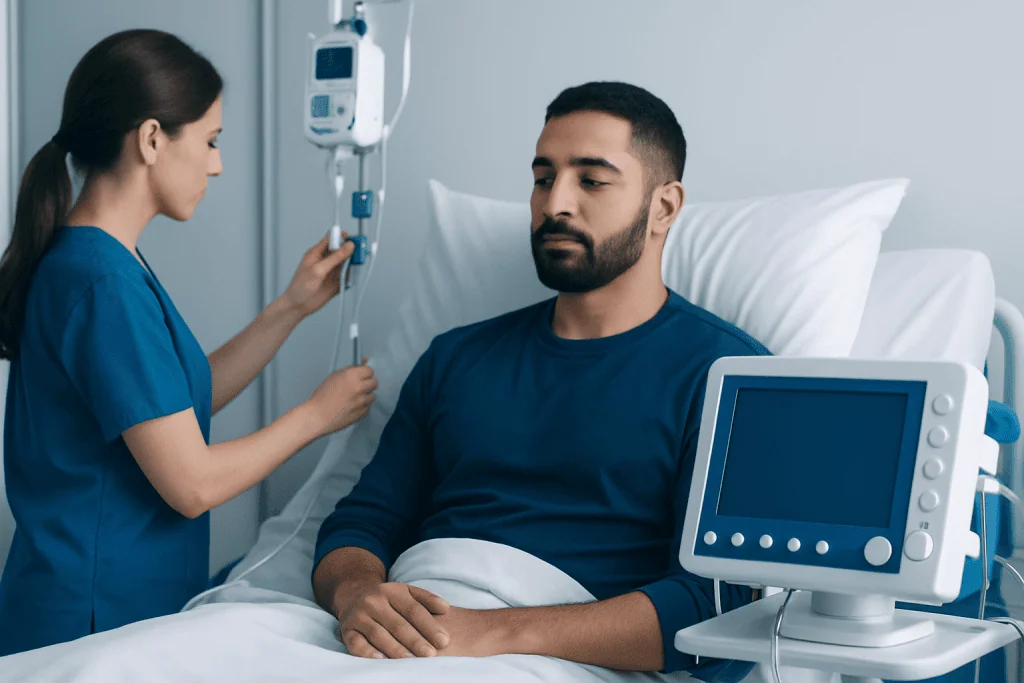
If you observe Ramadan, the question of whether to fast around your treatment is a medical one before it is a religious one. Islamic tradition itself exempts people who are ill or travelling, so there is no conflict between faith and following your doctor’s advice. Fasting affects hydration, blood sugar, blood pressure and the timing of anything taken by mouth. Depending on your diagnosis, your medicines and where you are in your treatment, before a procedure, immediately after one, or in longer recovery, your doctor may say fasting is fine, needs adjusting, or should wait until you are home and well.
Do not change medication times, skip doses or delay fluids and food after a procedure on your own. Even when you feel well, a treatment plan can depend on stable hydration, consistent blood sugar, antibiotics taken on schedule, or anticoagulants taken at fixed times. What is safe for one patient is unsafe for another, which is why this guide will not tell you what to do: your treating doctor will. If keeping doses on time across time zones and a changed daily rhythm is a concern, see how to keep your regular medicines on schedule during medical travel.
One distinction worth understanding before you arrive: clinical fasting is not religious fasting. Some blood tests and any procedure involving anaesthesia require you to stop eating and drinking for a defined period beforehand. Those instructions come from the medical team, override any other schedule, and usually include specifics about which medicines you may still take with a sip of water. Ask for the instructions in writing so there is no ambiguity on the day.
If you are not fasting, you do not need to hide the fact. Take your medicines, drink your water and eat when you need to. A discreet approach in crowded traditional areas is courteous, but health needs come first, and people in Turkey understand that, many locals are not fasting either.
Etiquette: eating in public, affection and what to avoid
Three questions come up constantly from visitors, so here are straight answers.
Is it illegal to eat in public during Ramadan in Turkey? No. There is no law against eating, drinking or smoking in public during Ramadan in Turkey. Restaurants and cafés in Istanbul and other large cities serve customers all day, especially in central, business and tourist districts. In smaller towns or conservative neighbourhoods, more places may close during daylight hours and eating openly on the street may draw glances, but it is a matter of courtesy, not law. Nobody expects a visitor, least of all a patient, to fast.
What about public affection? A related search question asks whether you can kiss your partner during Ramadan. For observant Muslims, the rules of the fast are a personal religious matter between them and their faith, not something a travel guide should rule on. For visitors, the practical answer is about etiquette rather than Ramadan: modest public affection, holding hands, a brief embrace, is unremarkable in Istanbul’s cosmopolitan districts year-round, while prolonged public displays are considered poor manners in conservative areas at any time of year. Ramadan simply makes restraint a little more appreciated.
What should you avoid? The list is short and mostly common sense: avoid eating or drinking conspicuously in front of a mosque at prayer time or in a visibly traditional area when a quieter option is nearby; be patient with staff who have been fasting since dawn, particularly in the tired hour before sunset; dress modestly when visiting mosques (covered shoulders and knees, headscarves for women, shoes off); and do not photograph people praying without permission. None of this is unique to Ramadan: it is ordinary respectful travel, slightly amplified.
Scheduling consultations, tests and procedures

Share your arrival date, departure date and any Ramadan preferences with your international patient coordinator before you book flights. Treatment travel during Ramadan in Turkey works best when the clinical sequence, consultation, imaging, laboratory tests, pre-operative assessment, procedure, follow-up, is arranged around the days you are actually in the country, with realistic gaps between steps. If you are fasting with your doctor’s agreement and would rather avoid late-afternoon appointments when energy is lowest, say so early; morning slots are usually the easiest to arrange.
Hospital clinical services run normally through the month. Where you may see adjusted hours is in some administrative or external services, courier deliveries, certain government offices, some businesses around the hospital. This rarely affects treatment, but if your trip depends on paperwork with a deadline, build in a margin.
The bigger scheduling consideration is the end of the month. Eid al-Fitr, the multi-day public holiday that closes Ramadan, is one of Turkey’s peak domestic travel periods. Flights fill, hotel availability tightens, intercity roads get busy, and many businesses close for the holiday days. Hospitals keep emergency and essential services running, but non-urgent appointments and discharge logistics are easier to arrange with lead time. If your treatment or follow-up lands near Eid, treat it like travelling at any other peak holiday season: confirm everything early and reconfirm before the holiday starts.
Meals, hydration and recovery comfort
Food is where Ramadan changes daily life most visibly, and where a small amount of planning removes all the friction. In Istanbul’s central and tourist districts, most hotels serve breakfast and room service as usual, and plenty of restaurants operate through the day. Outside those areas, some places open only towards iftar. If your hotel knows you are a patient, most will happily arrange early meals, late meals or in-room dining, ask when you book rather than on arrival.
If you are recovering after a procedure, nutrition and hydration may be part of your care plan rather than a matter of preference. Keep bottled water and any snacks your care team has approved in your room, especially if your mobility is limited or you take medicines that need food. After anaesthesia, digestive procedures or surgery, follow the medical team’s instructions on what and when to eat, do not fit meals to the Ramadan clock unless your doctor has confirmed that is safe for you. If you follow a restricted diet for medical or religious reasons, our guide to managing special diets during medical travel in Turkey covers the practical side.
Iftar itself is worth experiencing if your recovery allows it. Hotels and restaurants across the city serve iftar menus, and the moment the cannon or call to prayer signals sunset is genuinely atmospheric. Two cautions: book iftar tables ahead, because they fill quickly, and keep appointment-day evenings simple. Restaurant crowds and post-iftar streets are lively, which is wonderful for a companion and less wonderful for a patient who needs quiet. On treatment days, in-room dining near the hospital is usually the wiser choice.
Transport, airport arrival and moving around Istanbul
Transport runs normally during Ramadan; only the timing of congestion changes. The hour or so before sunset is the day’s traffic peak, as people travel home or to iftar gatherings. Roads that are ordinarily manageable can slow sharply, and taxis are harder to find just before and just after the fast breaks, when many drivers pause to eat. If your appointment, imaging slot or airport transfer falls anywhere near sunset, leave earlier than the map app suggests.
Istanbul is a very large city, and journey times swing widely with traffic, weather and district. Staying close to the hospital where your treatment is planned removes most of this problem, particularly after a long flight or in early recovery when repeated short journeys are tiring. Metro, tram and ferry services keep running through iftar hours and are often faster than road transport at peak times; our guide on how to travel around Istanbul during treatment goes into routes and practicalities.
For airport arrivals, coordinated transfers can be arranged for many international patients, which removes the timing question entirely. If you use your own taxi or a ride app, keep the hospital’s full address, your coordinator’s contact details and your appointment information saved on your phone in English and, ideally, Turkish. Drivers who are fasting may be quieter than usual in the late afternoon; a patient, friendly manner goes a long way.
Travel restrictions, Eid and travelling with a companion
A common search question asks whether travel to Turkey is restricted during Ramadan. It is not. Ramadan places no restrictions on entry, movement or tourism; visitors need only their usual passport and, depending on nationality, a visa or e-visa. Entry requirements and general travel advice can change for reasons unrelated to Ramadan, so check your own government’s current guidance for Turkey before you book: the references at the end of this guide point to official sources.
Eid al-Fitr deserves its own planning line. It is a festive, family-centred public holiday lasting several days, with visits, gifts and sweets: it is sometimes called the Sugar Feast in Turkey. For a medical traveller it means three practical things: airports and intercity transport are at their busiest, some pharmacies and businesses work holiday hours (duty pharmacies remain available in every district), and anything administrative is best completed before the holiday begins. Hospital emergency care continues throughout.
If a family member travels with you, think about their Ramadan too. A fasting companion supporting a patient has a demanding schedule: early appointments, waiting rooms, pharmacy runs, all on an empty stomach until sunset. Nearby accommodation, a light appointment-day plan and pre-arranged meals make a real difference. There is more on this in how families and companions are supported during treatment travel.
Step by step
- Check the Ramadan and Eid dates for your travel year. The month shifts earlier each year and exact dates are confirmed near the time. Note whether your consultation, procedure or follow-up overlaps Ramadan itself or the Eid holiday at its end: the two need different planning.
- Share your dates and preferences with your coordinator early. Arrival date, departure date, whether you intend to fast, and any preference for morning appointments. The earlier the clinical sequence is planned, the more scheduling options exist.
- Ask your doctor about fasting before you travel. Do not decide alone, and do not adjust eating, drinking or medicine times without medical guidance. This matters most with diabetes, heart or kidney conditions, pregnancy, recent surgery, or any medicine taken at fixed times.
- Get clinical fasting instructions in writing. If a test or anaesthesia requires fasting, confirm exactly when to stop eating and drinking, which medicines you may still take, and when you can resume: this is medical instruction, separate from religious fasting.
- Choose accommodation near your hospital. Short journeys beat iftar traffic and spare your energy in recovery. Ask about room service, early or late meals, lift access and companion beds when booking.
- Build buffers around sunset. Leave extra time for any journey in the hour before iftar, keep appointment-day evenings light, and book iftar restaurant tables in advance if you want the experience.
- Prepare medicines properly. Bring enough for the whole trip plus spare days, in original packaging, with a prescription or doctor’s letter where possible, and carry them in hand luggage rather than checked baggage.
- Reconfirm everything before Eid. If your stay touches the holiday, confirm follow-up appointments, discharge paperwork, pharmacy needs, hotel nights and airport transfers before the holiday begins, when everyone’s calendar is easier.
Your checklist
- Passport, visa or e-visa, and travel insurance details if applicable
- Medical records, recent test results, imaging files and a medication list, in English where possible
- Written answers from your doctor on fasting, hydration and medicine timing during the trip
- Written clinical fasting instructions for any test or procedure that requires them
- Your international patient coordinator’s contact details and the hospital address, saved offline
- Accommodation confirmed close to the hospital, with meal timing and mobility needs noted
- Airport transfer arrangements with extra buffer around iftar hours
- Enough prescription medication for the full trip plus several spare days, in original packaging
- Bottled water and doctor-approved snacks for your room during recovery
- Ramadan and Eid dates for your travel year noted against every appointment
- A shared schedule and emergency contacts for your companion, with their meals planned if they are fasting
Key takeaways
- Treatment travel during Ramadan in Turkey is routine: hospitals run normal clinical schedules all month.
- Whether you can fast around treatment is a medical decision, ask your treating doctor before travelling, and never adjust medicines on your own.
- Eating in public is legal; discretion in traditional areas is courtesy, not obligation.
- Expect heavy traffic before iftar and lively evenings; stay near your hospital and pad your journey times.
- Eid al-Fitr is peak travel, confirm flights, appointments, pharmacy needs and transfers before the holiday begins.
Frequently asked questions
Is it illegal to eat in public during Ramadan in Turkey?
No. Turkey is a secular country and there is no law against eating, drinking or smoking in public during Ramadan. Restaurants and cafés in major cities serve customers throughout the day. In conservative neighbourhoods and smaller towns, eating openly on the street may attract attention, so many visitors choose a café or a quieter spot as a courtesy, but that is manners, not law, and nobody expects a patient to fast.
Is travel to Turkey restricted right now?
Ramadan itself places no restrictions on travel to or within Turkey. Borders, airports, hotels and hospitals operate normally throughout the month. Entry requirements and general travel advisories can change for unrelated reasons, so check your own government’s current travel guidance for Turkey and confirm your visa or e-visa requirements before booking.
Can I kiss my girlfriend during Ramadan fasting?
For observant Muslims, what the fast permits is a personal religious question best asked of a religious authority, not a travel guide. For visitors, the practical point is public etiquette: modest affection such as holding hands is unremarkable in Istanbul’s cosmopolitan districts at any time of year, while prolonged public displays are considered poor manners in conservative areas year-round. During Ramadan, a little extra restraint in traditional neighbourhoods is simply polite.
What should I avoid when travelling to Turkey during Ramadan?
Very little beyond ordinary courtesy. Avoid eating or drinking conspicuously outside mosques or in visibly traditional areas when a quieter option is nearby, dress modestly when visiting mosques, be patient with staff who have been fasting since dawn, and do not schedule tight journeys in the hour before sunset, when traffic peaks. None of this restricts your treatment or daily needs as a patient.
Should I fast during my treatment trip?
Only if your treating doctor confirms it is safe for your condition and stage of treatment. Fasting affects hydration, blood sugar and the timing of anything taken by mouth, and what is fine for one patient is unsafe for another. Islamic tradition exempts the ill and the travelling, so following medical advice does not conflict with observance. Discuss it before you travel so your schedule can be planned around the answer.
Will restaurants and hotels be open during the day?
In Istanbul and other major cities, yes, hotels serve breakfast and room service as usual, and many restaurants operate all day, especially in central and international districts. Some local places open later or focus on iftar service. If you have medical dietary needs or want early or late meals, tell your hotel before you arrive; most accommodate patients readily.
Is traffic worse during Ramadan in Istanbul?
It shifts rather than worsens overall. The hour before sunset is the day’s peak, as people head to iftar, and taxis are scarce right around the fast breaking. Evenings in popular districts are crowded. For hospital appointments and airport transfers near sunset, leave earlier than usual, or use metro, tram and ferry services, which keep running and often beat road traffic.
What if I need to take medication with water during fasting hours?
Take it as your doctor prescribed. Medical needs are widely understood in Turkey, and many locals are not fasting either, so taking medicine with water in public is not a problem. If you prefer privacy, stepping into a café, your hotel or the hospital takes seconds. Never delay or skip a dose to fit the fasting clock, dose timing is set by your treating doctor.
Add us as a Preferred Source to see more of our trusted health content across Google Search, AI Overviews and Discover.

Update history
- PublishedJune 22, 2026
- Medical review approvedAugust 30, 2026
- Last content updateAugust 30, 2026
References2
More Patient Guides

GHIC and EHIC in Turkey: Why They Do Not Cover You
The blue card that quietly covers you across Europe stops working at the Turkish border, and every summer, travelers discover this…

Do You Need Vaccinations for Turkey?
Here is the answer travel clinics give every day: no vaccinations are required to enter Turkey from anywhere in the normal course…

Flying With a Broken Leg or Cast: Airline Rules and Comfort
A broken leg does not cancel a flight, airlines carry passengers in casts every single day. What surprises travelers is that…
Travel Insurance After Cancer: What Patients Should Know
A cancer diagnosis changes how insurers read your name, but it does not end your traveling life. Thousands of people with…