

Ultrasound in Turkey: Preparation and Exam Day Checklist

Preparation for an ultrasound in Turkey depends on the body area being scanned. Some abdominal scans require fasting, some pelvic scans need a full bladder, and many need no preparation at all. Confirm your written instructions before travelling, bring your passport, previous imaging and a medication list, arrive early for registration, and ask how and when your report will be delivered before you leave the hospital.
Do you need to fast? Should you arrive with a full bladder? These are the two questions most people turn over the night before an ultrasound, and the honest answer is: it depends on which part of the body is being scanned. There is no single preparation rule that covers every ultrasound, which is why your written appointment instructions matter more than anything you read in a general guide, including this one. What a guide can do is show you what to confirm, what to bring, and how the day usually unfolds, so that nothing on exam day comes as a surprise.
This guide walks you through an ultrasound in Turkey from the planning stage to the moment you receive your report. It covers what to check before you book flights, how to prepare the day before, what happens in the imaging room, and the practical points that matter most when you are managing the appointment from another country.
At a glance
- Typical timing: Usually an outpatient visit; the scan itself is often short, but registration, waiting and reporting add time
- Preparation: Varies by scan type, fasting, a full bladder, or no preparation at all; your written instructions are the authority
- Documents to bring: Passport, appointment confirmation, previous imaging and reports, a medication and allergy list, insurance or payment details
- Language support: Interpreter support can be arranged for international patients when requested in advance
- Results: Images are reviewed by qualified specialists; report timing varies with scan complexity and hospital workflow
How an ultrasound in Turkey works for international patients
An ultrasound uses high-frequency sound waves to build a moving image of organs, soft tissues, blood flow or a pregnancy. It does not use ionising radiation, and for most patients it involves nothing more than gel on the skin and a handheld probe. If you want the clinical detail, your doctor is the right source. What this guide focuses on is the part that guides rarely cover well: the practical flow of an ultrasound in Turkey when you have travelled for it, where to go, what to bring, whether to fast, and how the images reach the doctor who will act on them.
Your scan may stand alone, or it may be one step in a larger plan: part of a check-up, a pre-treatment evaluation, or a follow-up after surgery. That context changes the day. A standalone scan can be quick. A scan linked to a same-day specialist consultation means more waiting, more registration, and more reason to keep the rest of your day clear. Ask which of these applies to you before you plan anything else.
One more general point. If you are booking an ultrasound in Turkey around a trip to Istanbul or another city, treat the appointment time as the middle of your day, not the whole of it. Traffic, first-time registration, interpreter coordination and any additional tests your doctor requests can all stretch the schedule. Patients who plan a generous buffer tend to have a calmer visit, and calm patients ask better questions.
Before you travel: what to confirm in advance
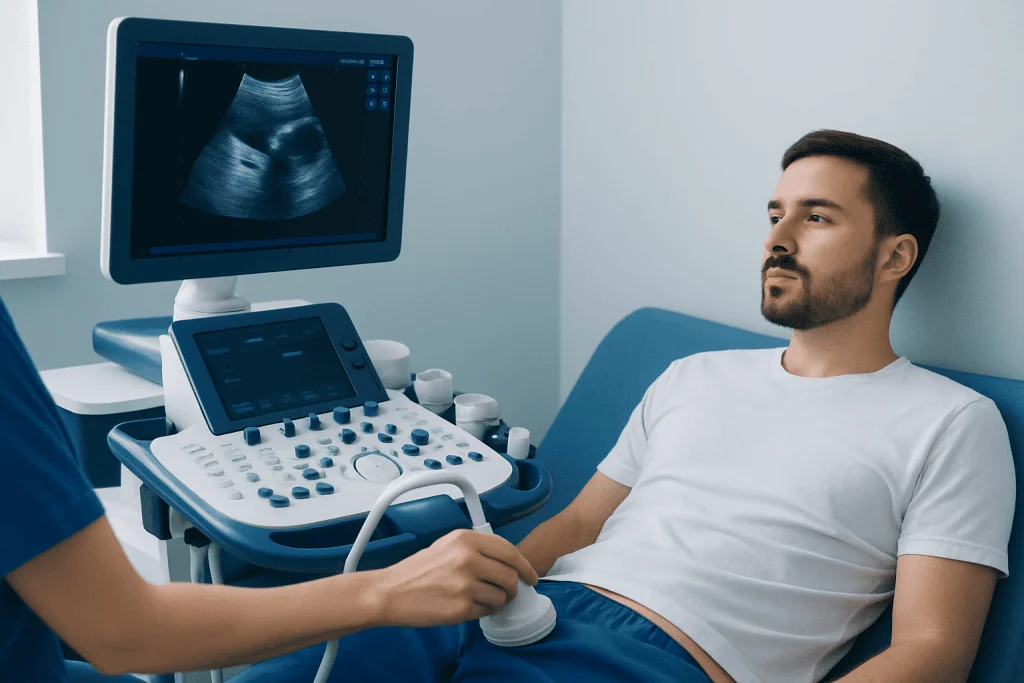
Before you commit to flights or accommodation, confirm four things in writing: the type of ultrasound requested, the hospital location, the appointment date, and whether the scan is linked to a same-day doctor consultation. These four facts shape everything else. A Doppler study of leg veins, a thyroid scan and an abdominal ultrasound are all called “an ultrasound”, but they have different preparation rules, different durations and sometimes different departments.
Confirm the preparation instructions in writing too, and keep them. As a general pattern: some abdominal scans require fasting so that gas and food do not obscure the organs; some pelvic and urinary scans require a full bladder because it acts as a window for the sound waves; breast, thyroid, vascular, musculoskeletal and most pregnancy scans usually need little or no preparation. But these are patterns, not rules. The instruction attached to your specific appointment overrides all of them. If the message you received is silent on preparation, ask the hospital to state it explicitly: a one-line answer before travel is far cheaper than a rescheduled scan after it.
Gather your medical history early. Previous ultrasound reports, CT or MRI reports, blood results, referral letters, discharge summaries and a current medication list all help the imaging team understand what they are looking at and what has changed. Comparison with earlier images is often the most valuable part of a scan. If your documents are not in English or Turkish, ask whether translation is recommended before the visit rather than discovering the gap at the registration desk. A structured run-through of these tasks sits in our 7-day preparation countdown, and the paperwork side, passport validity, entry requirements, appointment letters, is covered in the visa and entry documents checklist.
On cost: this guide does not quote figures, because there is no single figure to quote. What you pay for an ultrasound depends on the scan type, whether Doppler or additional regions are included, whether a specialist consultation is attached, and how your insurance or guarantee arrangement works. Ask for a written quote that states exactly what it covers, and read the budget checklist for the expenses that sit outside any medical quote, transport, accommodation, and the buffer days that imaging trips sometimes need.
How to prepare the day before your ultrasound
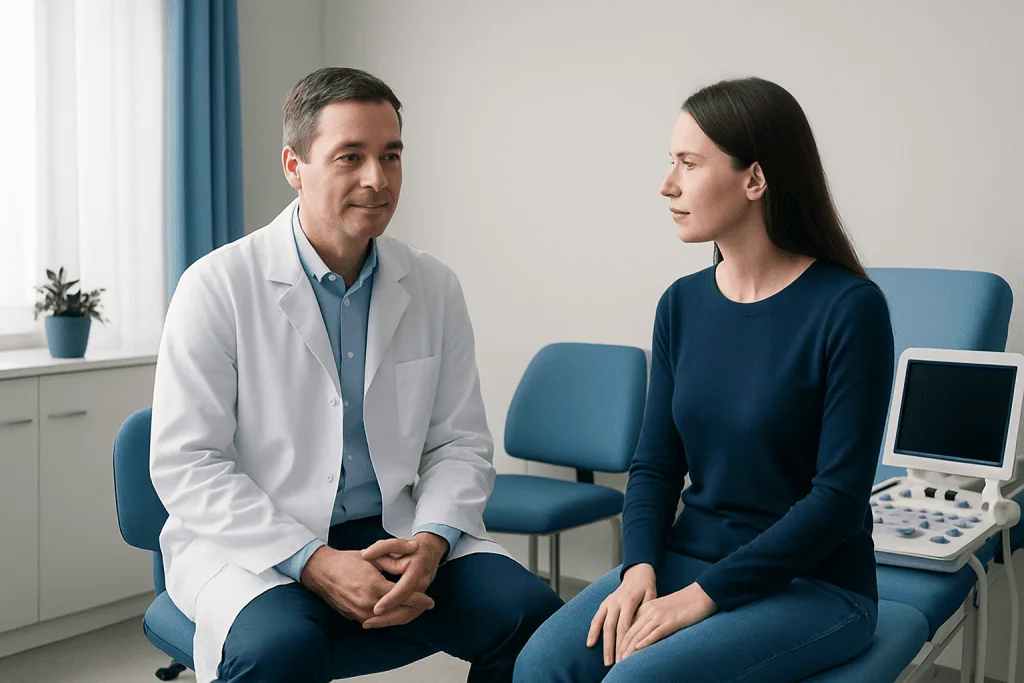
The evening before, re-read your appointment message slowly. Check the hospital name, hospital groups operate several sites in the same city, and arriving at the wrong one is a common and entirely avoidable mistake. Check the building or department, the arrival time as distinct from the scan time, and the preparation instruction. If you were asked to fast, check whether water is permitted during the fasting window.
Medication deserves its own sentence. Whether you take your regular medicines as usual during a fasting window is a decision for the doctor who requested the scan, not for a guide, a hotel receptionist or another patient. If the instruction is unclear, ask the hospital to clarify it before the morning of the exam. Do not make that call yourself.
Prepare a single folder, printed, digital, or both, holding your passport, appointment confirmation, previous imaging and reports, allergy list, medication names and doses, and any referral letters. If earlier imaging lives on a CD, a USB stick or an online portal, bring the physical media or the access details, and do not assume the hospital Wi-Fi will rescue a forgotten password. Files that open offline are worth more than links that might not.
Finally, plan clothing and transport. Loose, comfortable clothes that are easy to adjust make the exam simpler; leave valuable jewellery at the hotel if the scan involves the neck, chest or abdomen. Check the real travel time from your accommodation to the hospital at the hour you will actually travel: Istanbul traffic at 08:30 is not Istanbul traffic at 14:00, and add a margin on top.
Exam day: arrival, registration and comfort
Arrive earlier than your scan time, especially on a first visit. International patients typically need to complete registration, verify identity, confirm payment or insurance arrangements, and meet an interpreter or coordinator before the imaging department ever sees them. Your passport is the key document here: hospitals need accurate identification for the medical record, and the name on your file must match the name on your report. If your journey starts at the airport rather than a hotel, the arrival day checklist maps that first stretch in detail.
Once registered, you will be directed to the imaging department’s waiting area. Depending on the scan, you may be asked to change into a gown. Before the exam begins, the team will confirm your name, date of birth and the body area to be examined. This is a safety check, not bureaucracy, and it is your moment to speak. If the stated scan does not match what you expected, say so before the probe touches skin, not after.
Comfort is a legitimate topic, not a complaint. Tell the team if you have trouble lying flat, mobility limitations, pain in certain positions, pregnancy considerations, anxiety in medical settings, or hearing or vision needs. If you would like an interpreter to remain nearby where appropriate, say so when the appointment is arranged rather than on the day. Teams accommodate what they know about in advance far more easily than what they discover in the room.
What happens during the scan
You will usually lie on an examination couch while a trained professional applies gel to the skin and moves a handheld probe over the area under examination. The gel feels cool. You may be asked to turn onto your side, hold your breath briefly, or stay still while a particular image is captured. The examination is generally non-invasive, and most people find it undramatic, which is exactly what you want from an imaging test.
Duration varies. A focused scan of a single region can be brief; a Doppler study of blood flow or an examination covering several regions takes longer. If the examiner spends extra time on one area or calls a specialist to take additional views, do not read a diagnosis into it. Additional views are routinely part of obtaining a complete image set, and thoroughness at this stage is in your interest.
Ask practical questions freely: when you can eat if you fasted, whether you may use the restroom afterwards, where to wait for the next step. What the person at the couch usually cannot give you is a final interpretation on the spot. Reports are reviewed and issued according to hospital procedure, often by a radiologist who examines the full image set. A quiet examiner is following process, not withholding bad news.
After the ultrasound: reports, next steps and follow-up
Most patients return to normal activities immediately after an ultrasound unless their doctor has said otherwise. If you fasted, confirm when you may eat and drink, particularly if other tests or procedures are scheduled the same day. If the scan is part of a broader appointment, you may be directed onward to a consultation room, a laboratory, or the international patient desk.
Before you leave the building, ask three questions: when the report will be ready, in what language it can be issued, and in what format the images can be provided. If a doctor in your home country will act on the results, an English-language report and image files in a format their systems can open, commonly a disc, a USB stick or a secure download, will save weeks of back-and-forth. Requesting this on the day is straightforward; requesting it from another country later is slower.
If the findings lead to further testing or a treatment discussion, resist the urge to reorganise your travel in the corridor. Take time to understand what is being proposed and why. Patients sometimes book a scan close against their return flight and then discover that a follow-up consultation or an additional test would be useful before departure. Where you can, build a day or two of flexibility into the itinerary. Flexibility is the cheapest insurance a medical traveller can buy.
Travel and language logistics
When you arrange an ultrasound appointment from abroad, the logistics deserve the same care as the medicine. Confirm the hospital address and the nearest entrance for the imaging department, work out your transport option in advance, and know whom to notify if your flight is delayed. Keep the hospital or coordinator contact reachable during travel, and share a local Turkish phone number if you obtain one: it makes same-day communication far easier.
If you do not speak Turkish, request interpreter support when the appointment is scheduled, not on arrival. An interpreter smooths registration, helps you describe symptoms and history accurately, supports consent-related communication where applicable, and explains the flow between departments. Language support requested in advance is a planned service; language support improvised on the day is a scramble.
Acibadem’s international patient teams handle this kind of coordination routinely, appointment scheduling across departments, hospital navigation, and guidance on accommodation and transfers where available. If your ultrasound is one stop in a longer medical journey involving admission or surgery, the hospital admission checklist covers the check-in stage in the same practical detail.
Step by step
- Send your medical information before the appointment. The reason for the scan, previous reports and any referral notes help the hospital schedule the correct type of ultrasound and decide whether a specialist consultation should sit alongside it.
- Get preparation instructions in writing. Fasting, water intake, a full bladder, avoiding creams or lotions: the rules differ by scan type. Do not borrow instructions from another patient’s experience or an earlier appointment.
- Plan the route and arrival time. Confirm the exact hospital site, entrance and department before leaving your hotel. Budget for traffic, registration, interpreter coordination and finding the imaging unit.
- Bring identification and medical documents. Passport, appointment confirmation, medication and allergy lists, previous imaging and reports. Make digital files accessible without relying on internet access.
- State comfort and mobility needs early. Wheelchair support, help lying down, extra time, language assistance, early notice lets the team prepare and keeps the day on schedule.
- Ask how results will be delivered. Before leaving the hospital, confirm when the report will be ready, in what language, and whether images can be provided digitally or on physical media for a doctor at home.
- Keep your schedule flexible after the scan. A follow-up visit, additional imaging or laboratory tests may be requested. Avoid a return flight booked hard against the appointment unless the timing has been confirmed as realistic.
Your checklist
- Passport or official identification
- Appointment confirmation and hospital contact details
- Written ultrasound preparation instructions
- Previous ultrasound, CT, MRI, X-ray or laboratory reports
- Current medication list, including doses and supplements
- Allergy list and relevant medical history notes
- Insurance, payment or guarantee documentation if applicable
- Comfortable clothing that is easy to adjust
- Water, a snack and regular medication for after the scan if fasting is required
- Phone charger and offline copies of any digital medical files
Key takeaways
- An ultrasound in Turkey is usually an outpatient visit, but preparation depends entirely on the body area being examined: your written instructions are the authority.
- Confirm the scan type, hospital site, preparation rules, interpreter needs and report delivery before booking travel.
- Arrive early for registration and identity checks; your passport is the key document on the day.
- Bring previous imaging and reports so the team can compare findings against your history.
- Ask about report timing, language and image format before you leave the hospital, and keep flexibility in your itinerary in case follow-up is recommended.
Frequently asked questions
Do I need to fast before my ultrasound?
It depends on the type of scan. Some abdominal ultrasounds require fasting so that food and gas do not obscure the organs, while many other scans need no preparation at all. Follow the written instructions attached to your specific appointment, and ask the hospital to clarify in advance if the instruction is unclear, including whether water is permitted.
Can I have an ultrasound on the same day as my doctor consultation?
Often yes, depending on appointment availability, the scan type and the doctor’s plan. If you are travelling internationally, share your arrival and departure dates when scheduling so the hospital can build a realistic same-day sequence rather than an optimistic one.
Will an interpreter be available during my visit?
Interpreter support can usually be coordinated for international patients when requested in advance. Mention your preferred language at the scheduling stage, especially if you want help with registration, describing your history, or understanding follow-up instructions.
How long does an ultrasound appointment take?
The scan itself is often short, but your total hospital time is longer once registration, waiting, changing, reporting or a linked consultation are added. Doppler studies and multi-region examinations take longer than focused single-area scans. Plan a buffer rather than tight commitments immediately afterwards.
When will I receive my ultrasound report?
Timing varies with scan complexity, hospital workflow and whether a specialist consultation is involved. Before leaving the hospital, ask when the report will be ready, in what language it can be issued, and how you can access the images, digitally or on physical media.
Can I eat after the ultrasound if I was asked to fast?
Usually yes, if fasting was required only for the imaging itself. Confirm with the imaging team or your doctor before eating, particularly if you have other tests or procedures scheduled the same day that may carry their own fasting requirements.
What should I do if my flight is delayed or I miss my appointment?
Let the hospital or the team that arranged your appointment know your new arrival time as soon as you can. Depending on department availability, the appointment may be adjustable on the same day, or a new slot may be needed. The earlier you flag the delay, the more options remain open.
Should I bring previous imaging even if it was done in another country?
Yes. Earlier images and reports give the team a baseline for comparison, which is often the most valuable context a scan can have. Bring both the written report and the image files where possible, and make sure digital files open without internet access.
Add us as a Preferred Source to see more of our trusted health content across Google Search, AI Overviews and Discover.

Update history
- PublishedJune 16, 2026
- Medical review approvedSeptember 13, 2026
- Last content updateSeptember 12, 2026
References2
- Ultrasound: MedlinePlus, U.S. National Library of Medicine medlineplus.gov
- Ultrasound scan: NHS nhs.uk
More Patient Guides
Sleep Apnea Testing in Turkey: What Happens During Your Evaluation
Sleep apnea testing in Turkey may include a consultation, overnight sleep study or home test, and a clear review of your results…

How to Organize Your Test Results Before Traveling to Turkey
Organize your test results before traveling to Turkey by sorting records, images, medicines and timelines so your Istanbul care team can review…

When Extra Tests Are Needed Before Treatment in Turkey
Extra tests before treatment in Turkey may be needed to confirm diagnosis, timing, and safety. Here is what you can expect in…

At Acibadem, How to Prepare for Blood Tests, Scans, and Pre-Op Checks
Blood tests, scans, and pre-op checks at Acibadem in Turkey help confirm you are ready for treatment and avoid delays on the…