

What Companions Should Bring to Hospital Visits in Turkey

Bring both passports, the appointment confirmation, the patient's medical records and medication list, a charged phone with charger and power bank, water, layers and a small comfort kit. Keep documents in one flat folder you can open quickly at registration. Leave valuables, bulky luggage, strong fragrances and large amounts of cash at your accommodation, and ask staff before bringing food or gifts into patient areas.
You are standing by the door with a bag, wondering whether you have packed too much or forgotten the one document the registration desk will ask for first. Most companions do one or the other. This guide sorts it out before you leave.
A well-packed bag makes the hospital day calmer for both of you. Below you will find exactly what companions should bring to hospital visits in Turkey, what to leave behind, and how to prepare for consultations, tests, long waits and the possibility that an outpatient visit becomes something longer.
At a glance
- Best bag: one small day bag plus a separate flat folder for documents
- Highest-priority items: both passports, appointment confirmation, medical records, medication list, phone and charger
- For comfort: layers, water, permitted snacks, tissues, hand sanitiser and headphones
- For communication: saved hospital and coordinator numbers, interpreter contact, family update plan
- Leave behind: valuables, bulky luggage, strong fragrances and large amounts of cash
Why what companions bring to hospital visits in Turkey matters
When you accompany someone to hospital, you are not just a person in the waiting area. You hold the documents, remember the questions, notice how the patient is feeling before and after each step, and keep the practical side of the day moving so the patient can spend their energy on care rather than logistics.
Hospital days in Turkey, particularly at large international centres, can involve several stops: registration, consultation, laboratory, imaging, the payment or insurance desk, pharmacy and sometimes admission. At Acibadem, international patient services and interpreters help guide you between these steps, but you will still be the person carrying the folder, and the day goes better when you can find what you need in seconds. You can read more about how families and companions are supported during treatment travel before you arrive.
The goal is not to pack for every scenario. It is to prevent the predictable stress points: a missing document, a dead phone battery, hunger during a long wait, confusion about medicines, or not knowing whom to call when plans change. Think of your bag as a small mobile support station, not a suitcase.
Documents and information to keep within reach
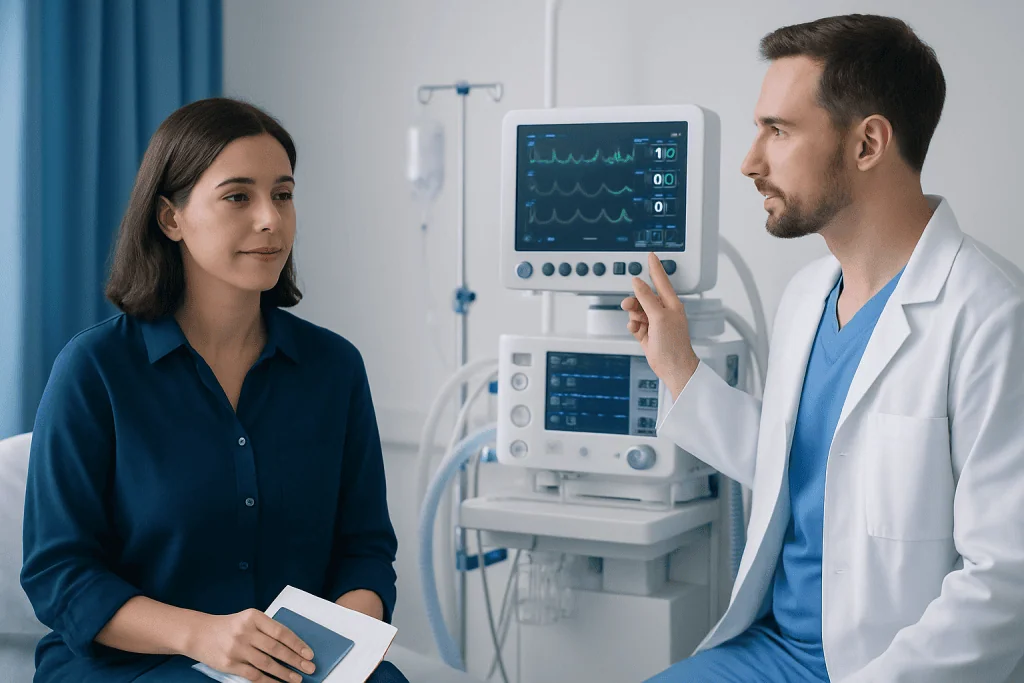
Documents are the single most important thing companions should bring to hospital visits in Turkey. Keep them in one flat folder or zip pouch so you can produce them at registration, consultation and billing desks without unpacking your whole bag. Carry printed copies where you can, plus digital versions stored securely on your phone or in a cloud account. Paper is faster at a busy desk; digital is your backup if paper goes missing.
Bring the patient’s passport, your own passport, the appointment confirmation, the hospital’s address and contact details, and any referral notes. If the visit relates to previous treatment, include recent test results, imaging reports, discharge summaries, pathology reports, a current medication list and allergy information. Imaging is usually accepted on CD, USB or via a secure digital link: it depends on what the previous provider can supply, so ask them before you travel. The full document picture, including translations and payer paperwork, is covered in our guide to documents international patients should bring for hospital admission in Turkey.
If insurance, embassy support, an employer or another third-party payer is involved, carry the authorisation letters, policy numbers and payer contact details. For children, elderly patients or anyone who needs decision support, bring any consent, guardianship or power-of-attorney documents that apply. Keep sensitive paperwork secure and share it only with authorised hospital staff.
- Passports or official IDs for patient and companion
- Appointment confirmation and hospital contact numbers
- Medical reports, test results and imaging records
- Medication list, allergy list and previous surgery details
- Insurance or payment authorisation documents, if applicable
Comfort items for waiting, walking and long appointment days

Hospital days often run longer than planned, even when everything is well organised. A doctor may request an extra scan, a laboratory slot may shift, or the patient may simply need time to rest between steps. Pack for comfort, but keep it to one small bag: you may carry it through several departments.
Choose soft, modest layers. Temperatures vary noticeably between waiting rooms, imaging suites and patient rooms, and air conditioning can feel cold if you have arrived from a warm climate. A light scarf, cardigan or zip-up jacket earns its place in the bag. Wear comfortable shoes: companions walk between departments and stand at desks more than they expect.
Add water, simple snacks if the setting allows them, tissues, hand sanitiser, lip balm, reading glasses, a pen and a small notebook. Headphones help during long waits, keep the volume low enough to hear your name or a staff instruction. If the patient is fasting for blood tests, imaging or anaesthesia, do not eat strong-smelling food beside them, and always ask staff before offering the patient anything to eat or drink.
The notebook deserves a special mention. Write your questions before the consultation and the answers during it. Hospital days generate a lot of instructions, and memory is unreliable when you are tired or worried.
Phone, charging and communication essentials
Your phone is your map, translator, document store, family update channel and emergency contact device, all at once. Bring it fully charged, with a cable, a power bank and the right plug adapter. Turkey generally uses European-style two-pin sockets; a universal adapter is the simplest solution if you are travelling from elsewhere.
Save the key numbers before you arrive rather than searching for them under pressure: the hospital, your international patient coordinator, the interpreter if one is assigned, your hotel, driver, embassy or consulate, travel insurer and close family members. If you are accompanying a patient to Acibadem, the coordination team can tell you where to go on arrival and whom to contact if you are delayed.
Set up a shared family message group in advance so you do not repeat the same update six times. Before you send anything, ask the patient what they want shared and with whom: their medical information is theirs to control. Translation apps are useful for simple practical phrases, but they should not replace a professional medical interpreter for diagnoses, consent discussions or complex instructions. When the conversation matters, ask for the interpreter.
Personal care, hygiene and respectful hospital etiquette
Hospitals are shared spaces where many people are recovering, anxious or immunocompromised. Bring what keeps you comfortable and considerate: hand sanitiser, a mask if requested or preferred, tissues, wet wipes and any personal medicines you need for the day. Skip strong perfume, aftershave and scented lotions: they genuinely bother patients with nausea, headaches or breathing sensitivity, and hospital corridors concentrate scent.
Turkish hospital culture is generally welcoming to family involvement, and companions are treated as part of the care experience rather than an inconvenience. Even so, each department sets its own rules on where companions wait, how many people may enter and when quiet is required. Follow staff instructions without negotiation in intensive care, procedure areas, imaging rooms and post-operative recovery zones: the rules exist for patient safety, not convenience.
Dress practically rather than formally: clothes you can move in and sit in for hours. If an overnight stay for you is possible and permitted, ask in advance what the hospital provides for companions and what you should bring yourself, such as sleepwear, toiletries and a change of clothes. Companion arrangements vary by room type and department, so a question asked early beats an assumption made late.
Money, valuables and daily logistics
Bring payment flexibility, not a wad of cash. A bank card, a small amount of Turkish lira for minor expenses and a secure way to access more funds cover most companion needs: transport, meals, pharmacy purchases and small errands. Keep receipts together in one envelope if you may need them for insurance reimbursement or your own records. For a structural explanation of how treatment payments and quotes work, see how much cash you should bring for treatment in Turkey.
Leave jewellery and other valuables in your accommodation safe. Hospitals are busy public buildings and you will be moving between floors and departments, sometimes in a hurry. Keep passport, wallet and phone close to your body: an inside pocket or a zipped cross-body bag, not an open tote left on a waiting-room chair.
Sort transport before the appointment day, not during it. Know whether you are using a hospital-arranged transfer, taxi, private driver or public transport, and allow generous margin for city traffic, particularly in Istanbul. If you are travelling with the patient from abroad, the planning steps in bringing a companion to Turkey for treatment are worth reading before you book anything.
Gifts and cheering someone up: what actually works
If you are visiting a friend or relative who is already admitted, the best gifts are small, practical and quiet. Good options include lip balm, unscented hand cream, a soft pair of socks with grip, an eye mask, earplugs, a magazine or light book in their language, a crossword or puzzle book, and photos or short voice messages from people at home. A phone charger with a long cable is one of the most appreciated items on any ward.
Some traditional gifts cause problems. Flowers are restricted in many clinical areas for infection-control and allergy reasons, and outside food may conflict with a prescribed diet or pre-procedure fasting. Balloons, candles and anything scented are usually poor choices. Ask the nursing desk before bringing any of these onto a ward, staff will tell you plainly what is allowed in that department.
Often the most valuable thing you bring is not an object. A calm presence, a short visit that ends before the patient tires, and a willingness to handle a small errand, topping up a phone plan, fetching a specific toiletry, updating family, tend to help more than anything wrapped.
If the visit may turn into an admission
Sometimes an outpatient visit leads to further tests, observation or admission. You do not need to arrive with a suitcase unless admission is already planned, but a backup plan costs nothing: keep a small overnight bag ready at your hotel or in the car if the patient’s condition makes admission plausible. Our guide to unexpected overnight stays in Turkey covers this scenario in detail.
For the patient, that bag might hold comfortable clothes, underwear, toiletries, slippers with grip, eyeglasses, hearing aids, any personal medical devices, a phone charger and their prescribed medicines in original packaging. For you, pack a change of clothes, basic toiletries, your own medicines and snacks that suit your needs, companions who forget to look after themselves become less useful by day two.
Before carrying anything into a patient room, ask staff what is permitted. Items can be restricted for infection control, electrical safety or department-specific reasons, and the restrictions differ between an ordinary ward, a post-operative unit and intensive care. Checking first is quicker than being turned back at the door.
Step by step
- Confirm the appointment plan. Before leaving your hotel or home, confirm the time, hospital campus, department and clinic name. If tests are planned, ask whether fasting or special preparation is required, and direct any medication questions to the treating doctor, not the internet.
- Prepare a document folder. Put passports, appointment confirmation, medical reports, imaging records and insurance papers in one flat folder. Keep it in the bag you carry, never in luggage stored elsewhere.
- Pack a small comfort kit. Water, permitted snacks, tissues, hand sanitiser, a light layer, notebook, pen and reading glasses. Everything should fit in one bag you can carry between departments without effort.
- Charge and save contacts. Charge phone and power bank the night before. Save the hospital, coordinator, interpreter, hotel, driver and family numbers so nothing needs searching under pressure.
- Carry the medicine information. Bring an up-to-date list of all medications, supplements and allergies, plus any needed medicines in original packaging. Ask the clinical team before the patient takes anything around tests or procedures.
- Plan route and arrival time. Allow extra margin for traffic, hospital entry, registration and finding the right department. Keep the driver’s details to hand if transport is arranged.
- Ask about companion rules on arrival. Find out where companions may wait and whether you can enter the consultation, imaging area or patient room. Rules vary by department, infection-control needs and the patient’s condition.
Your checklist
- Patient and companion passports or official IDs
- Appointment confirmation, hospital address and coordinator contact
- Medical reports, imaging files, lab results and discharge summaries
- Medication list, allergy list and essential prescribed medicines in original packaging
- Phone, charging cable, power bank and Turkey-compatible plug adapter
- Water, permitted light snacks, tissues and hand sanitiser
- Comfortable layers, practical shoes and your own personal medicines
- Notebook, pen and prepared questions for the medical team
- Bank card, small amount of Turkish lira and a receipt envelope
- Hotel details, transport plan and saved emergency contacts
Key takeaways
- Documents, the medication list and saved contacts are the highest-priority items companions should bring to hospital visits in Turkey.
- One small, organised day bag beats bulky luggage when you are moving between departments.
- Prepare for waiting time, temperature swings and schedule changes: they are normal, not a sign something is wrong.
- Use professional interpreters for medical discussions; translation apps are a backup for simple practical needs only.
- Ask staff before bringing food, flowers or gifts into patient areas, and before any overnight stay, rules vary by department.
Frequently asked questions
Can foreigners go to hospital in Turkey?
Yes. Foreign nationals can be treated in Turkish hospitals, and many private hospitals run dedicated international patient departments with interpreters and coordinators. As a companion, carry your own passport as well as the patient’s, since both may be requested at registration. Check the patient’s travel insurance terms before travel so you know what the policy covers.
What should I bring when visiting a friend in hospital?
Bring yourself first: a short, calm visit is the main gift. Beyond that, useful items include a phone charger with a long cable, lip balm, unscented hand cream, grip socks, earplugs, an eye mask and reading material in their language. Ask the nursing desk before bringing food, drinks or flowers, because ward rules and the patient’s diet may restrict them.
What is a good gift to take to someone in hospital?
Small, quiet and practical wins: puzzle books, a soft blanket or shawl, toiletries they actually use, photos or messages from home, or a top-up for their phone plan. Avoid scented products, balloons, candles and anything bulky. Flowers are restricted in many clinical areas, so check with staff before buying them.
Can I go into the consultation room with the patient?
Often yes, if the patient agrees and the department allows it. The doctor or nurse may ask to speak with the patient privately for part of the visit, particularly around sensitive information. Follow the team’s guidance and respect the patient’s preference: it is their consultation, not yours.
Should I bring the patient’s medications to the hospital?
Bring an accurate, current list and, where relevant, the medicines in their original packaging. Do not give the patient any medication around tests, anaesthesia or procedures unless the clinical team confirms it is appropriate: this includes supplements, herbal products and over-the-counter pain relievers. Any change to medicines is a decision for the treating doctor.
Do I need to speak Turkish during hospital visits in Turkey?
Not necessarily, especially at hospitals experienced in international care. Acibadem supports international patients with interpreter and coordination services, depending on the care plan and language needs. For important medical discussions, use a qualified interpreter rather than a phone app; save the app for taxis, cafés and corridors.
What should I avoid bringing to the hospital?
Avoid large luggage, valuable jewellery, strong fragrances, unnecessary cash and anything you cannot keep secured on your person. Do not bring flowers, outside food or electrical equipment into patient areas without asking staff first, restrictions exist for safety and infection control, and they vary by department.
What if the appointment takes much longer than expected?
Longer days happen when extra tests, specialist opinions or administrative steps are added. Keep your phone charged, have water and a light layer to hand, and ask the coordinator or department desk where to wait. If the delay affects transport or hotel timing, update the relevant contact early rather than at the last minute.
Add us as a Preferred Source to see more of our trusted health content across Google Search, AI Overviews and Discover.

Update history
- PublishedJune 9, 2026
- Medical review approvedSeptember 13, 2026
- Last content updateSeptember 12, 2026
References2
More Patient Guides
Medical Travel with a Companion: Who Should Come and Why
Medical travel with a companion can make treatment in Turkey easier by providing practical help, communication support and reassurance before and after…

How Family Members Can Help Without Disrupting Recovery
Family support during recovery helps when you listen, organize practical tasks and follow the care plan without taking over, in Turkey or…
Need a Family Member to Travel With You? A Companion Decision Guide
A companion travel guide for treatment in Turkey: decide who should travel with you, plan practical support, and prepare for Istanbul care.

Unexpected Overnight Stay in Turkey: What Patients and Companions Should Be Ready For
Unexpected overnight stay in Turkey? Here is what patients and companions should prepare for, from essentials and updates to hospital logistics in…