

When Can You Drive Again After Treatment in Turkey

You can drive again after treatment in Turkey only when your treating doctor clears you and you feel fully alert, comfortable, and physically able to control a car. There is no universal waiting time: anaesthesia, sedating medicines, pain, dressings, and restricted movement all delay the point at which driving is safe. Until then, plan transfers, taxis, or a companion driver instead.
Wondering whether you can pick up a rental car after your appointment, or whether someone will need to drive you back to the hotel? It is one of the first practical questions international patients ask, and the honest answer is: it depends. Your procedure, your medicines, your mobility, your vision, your pain level, and your doctor’s clearance all shape the timeline.
This guide explains how that decision is made, what the practical realities of driving in Turkey look like during recovery, and how to plan transport so that getting behind the wheel too soon never becomes necessary.
At a glance
- Best first step: Ask your treating doctor for written driving guidance before discharge
- Do not drive if: You feel drowsy, dizzy, in pain, weak, or are taking sedating medicine
- Common safer options: A companion driver, hospital-arranged transfer, taxi, or private driver
- Key ability test: You must be able to sit, steer, turn your head, brake firmly, and react without hesitation
- Paperwork to check: Licence validity, International Driving Permit rules, rental terms, and insurance cover before you plan to drive
So, can you drive again after treatment in Turkey?
The short answer: only when your doctor says it is safe, and when you personally feel alert, comfortable, and physically able to control a vehicle. There is no single number of hours or days that answers the question can you drive again after treatment in Turkey for every patient. A brief outpatient appointment with no sedation may need only a short pause. Surgery, anaesthesia, eye treatment, orthopaedic work, cardiac care, or strong pain medication may each require a longer one, and your treating team sets that timing based on your specific case.
It helps to separate two questions that often get merged. The first is medical: is your body ready to drive? The second is practical: does your trip actually require you to drive at all? For most international patients, the answer to the second question is no. Turkish city traffic, unfamiliar roads, toll systems, parking, and navigation in another language add load at exactly the time your body needs rest. Even confident drivers find that recovery quietly affects reaction time, concentration, range of movement, and judgement, often before they notice it themselves.
Before you leave the hospital or clinic, ask for clear discharge instructions about driving, ideally in writing. A written note is useful not only for you but also for a rental company, an insurer, or a family member who wants to understand why you are not driving yet. If your plans include flying as well, the timing questions are related but separate: a doctor may consider you fit to travel as a passenger well before you are fit to control a car. Our guide on when it is safe to fly after treatment in Turkey covers that side of the journey.
Why driving too soon can be unsafe
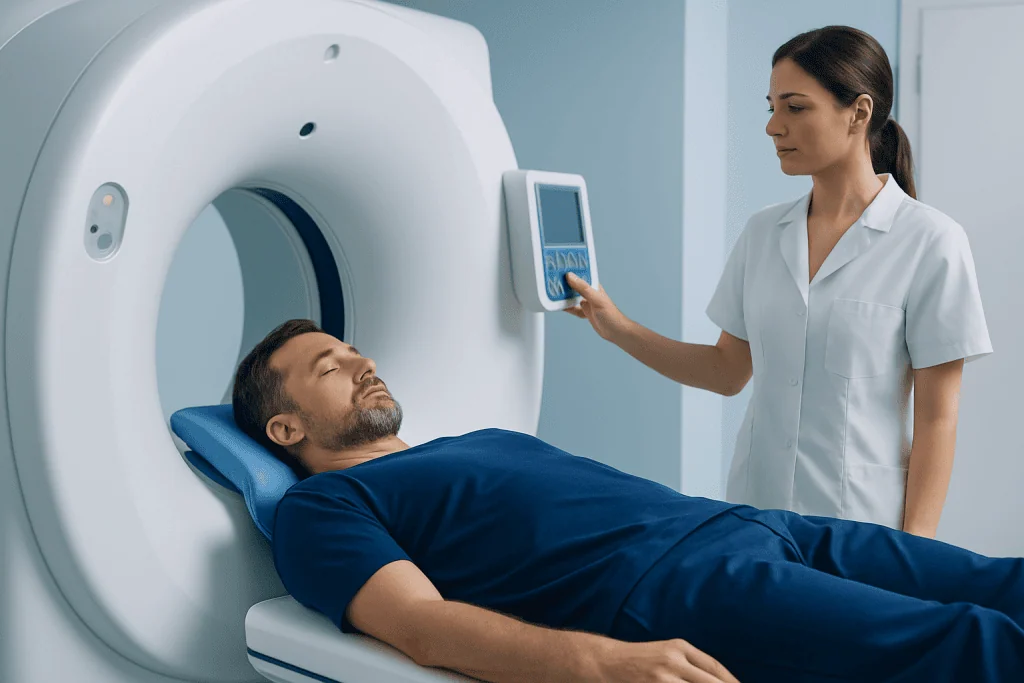
Driving is more demanding than it feels in daily life. It asks for quick decisions, sustained attention, clear vision, good balance, and free movement of your arms, legs, neck, and torso. After treatment, any one of these can be temporarily reduced, by the after-effects of anaesthesia, by pain, by swelling, by a dressing or brace that limits movement, by fatigue, or by medication.
Anaesthesia and sedation. The drugs used for general anaesthesia and sedation can affect memory, judgement, and reaction time for a period after you feel outwardly awake. This is why teams routinely tell patients not to drive, operate machinery, or make important decisions for a period after sedation, commonly at least the rest of that day, and often longer, depending on what was used and how you responded. Your anaesthesia team gives you the specific timing. If you want to understand this phase better, see our guide on what happens after general anaesthesia in Turkey.
Medicines. Some painkillers, sleep aids, muscle relaxants, anti-nausea tablets, anti-anxiety medicines, and certain allergy medicines cause drowsiness or slow your reactions. If a medication label or your discharge plan mentions sleepiness, dizziness, blurred vision, or reduced alertness, do not drive while taking it unless your doctor specifically confirms it is safe for you. Alcohol adds to these effects and should never be combined with driving; many post-treatment medicines also interact with it. Our guide on pain control after surgery in Turkey explains what to expect from typical post-operative medication plans.
Physical limits. An incision across the abdomen or chest can make a sudden emergency stop painful or hesitant. A shoulder, arm, or hand procedure can limit steering. A leg or foot procedure can affect braking. A neck or spine procedure can restrict the shoulder check you need at every junction. Eye treatment can change vision, glare tolerance, or depth perception for a time. None of these has to be dramatic to matter: a half-second of hesitation is significant at driving speeds.
The legal and insurance side. If you drive against medical advice or while impaired by medication, your vehicle insurance or travel insurance may not cover an accident. Rental companies set their own rules about medical fitness, licensing, and who may drive the car. When any of this is in doubt, a transfer service or a trusted driver is the simpler answer.
What your doctor considers before saying yes

Your doctor’s recommendation is based on more than the name of your procedure. They weigh the type of anaesthesia or sedation used, whether you have an incision or dressing, your current pain level, how freely you can move, whether your condition could produce sudden symptoms, and whether any of your medicines affect alertness. They may also distinguish between a short familiar route and a long journey through heavy traffic, clearance for one is not automatically clearance for the other.
In practical terms, before anyone should drive, they need to be able to: sit comfortably for the length of the journey, wear a seat belt correctly, check mirrors and blind spots by turning the head and torso, turn the steering wheel through its full range, brake firmly, and react suddenly without pain or hesitation. If your treatment involved the eyes, brain, spine, chest, abdomen, pelvis, arms, legs, or feet, expect specific restrictions, because these areas feed directly into driving ability.
Useful questions to ask at your discharge conversation:
- When may I drive locally, if my recovery goes as expected?
- Do any of my medicines make driving unsafe, and for how long will I be taking them?
- Can I sit in the front passenger seat, or is the back seat better for now?
- Are there movements I must avoid when getting in and out of a car?
- Is a longer road journey, for example, between cities or to the airport, different from a short local trip?
- Should I avoid driving until after my follow-up appointment?
Ask these questions before discharge rather than after, and keep the answers with your discharge paperwork. If you are taking new medicines home, the same paperwork matters at the border and at your home pharmacy: our guide on returning home with new medicines after treatment in Turkey explains what to carry and why.
How different treatments change the timeline
Every case is individual, but some patterns help you plan. These are general orientations, not personal clearances: your treating team’s instruction always takes priority.
- Outpatient procedures without sedation. If nothing was given that affects alertness and nothing restricts your movement or vision, the pause may be short. Confirm this explicitly rather than assuming it.
- Procedures with sedation or general anaesthesia. Expect a firm instruction not to drive for a period after the procedure, even if you feel clear-headed. The drugs can outlast the sensation of drowsiness.
- Eye procedures. Vision standards for driving are strict, and even temporary blurring, light sensitivity, or an eye shield rules driving out. Your ophthalmology team will tell you when your vision meets the standard again.
- Orthopaedic procedures, casts, and braces. Anything that limits the limb movements used for steering or braking delays driving, often until the cast or brace comes off and strength returns. If you will travel with restricted mobility, see our guide on flying home with a cast, brace, or limited mobility.
- Abdominal, chest, and cardiac procedures. Restrictions here often relate to seat belt pressure over a healing area, the strain of an emergency stop, and the small possibility of sudden symptoms. Timelines vary widely; only your team can set yours.
- Cosmetic and reconstructive procedures. Dressings, swelling, drains, and positioning requirements can all interfere with safe driving even when you feel generally well.
Whatever your procedure, driving clearance is one of several return-to-activity milestones your team tracks, alongside wound checks and follow-up visits. If your recovery plan asks you to remain nearby for a review before travelling, that same window usually answers the driving question too, see when to stay near the hospital after treatment in Turkey.
Driving in Turkey after treatment: practical realities
Even for a fully recovered driver, Turkey can feel different from home. Traffic drives on the right. In Istanbul especially, roads are dense, fast-changing, and tiring, with tunnels, bridges, electronic toll systems, complex intersections, and limited parking near hospitals and hotels. If you are recovering, a trip that looks short on the map can feel long in the seat.
If you still plan to drive at some point during your stay, sort out the paperwork before your trip, not after treatment. Depending on your home country and the rental provider, you may need a valid driving licence, an International Driving Permit, your passport, and a credit card, plus insurance that actually covers you. Rental companies set their own rules on minimum age, how long you must have held a licence, deposits, and coverage levels. Two points deserve particular attention after treatment:
- Second drivers. Ask whether a companion can be added to the rental agreement as a named second driver. This is often the single most useful arrangement for a recovering patient: the car is available, but you are not obliged to drive it.
- Declared conditions. Some insurance policies ask about recent procedures or medical fitness. Answer honestly; cover that fails at claim time is worse than no cover, because you will have relied on it.
For most patients, especially in the first days after a procedure, arranged transport is simpler and safer than self-driving: hospital transfers, hotel cars, reputable taxis, or a private driver. That lets you spend your energy on recovery rather than on route planning, parking, and luggage.
Safer transport options while you recover
Not being cleared to drive does not mean being stranded. A companion can drive if they are licensed, insured, rested, and comfortable with local driving conditions. Hospital-arranged transfers, hotel vehicles, taxis, and private drivers cover the rest. For some patients, the back seat is more comfortable than the front, especially if you need space for dressings, a drain, a brace, or a particular sitting position.
Plan journeys around comfort, not just distance. Allow extra time, avoid rush hour where you can, keep your medicines and water within reach, and, if your doctor permits, take short breaks on longer journeys to move gently. Wear your seat belt unless your medical team gives you specific alternative instructions. If the belt presses on a sensitive or healing area, ask your team how to pad it safely; do not skip the belt.
For airport journeys or travel between cities, share your needs in advance: wheelchair assistance, help with bags, a larger vehicle, or a seat that reclines slightly. If your procedure affects mobility, vision, balance, or pain control, do not rely on public transport immediately after discharge unless your care team agrees and you have support with you.
Signs you are not ready to drive yet
It is natural to want your independence back quickly, especially away from home. But recovery changes from hour to hour. You may feel well in the morning and heavy-limbed after a hospital visit, a meal, a shower, or a medication dose. The question can you drive again after treatment in Turkey therefore has to be answered fresh each time you consider a journey, not once at discharge.
Postpone driving and use other transport if you notice dizziness, sleepiness, blurred vision, nausea, significant pain, weakness, breathlessness, slowed reactions, faintness, or difficulty moving comfortably. The same applies if you cannot perform an emergency stop, cannot turn your head to check traffic, cannot fasten a seat belt correctly, or simply feel anxious about managing unfamiliar roads. Anxiety is information: a driver who is bracing against pain or worry is not a fully available driver.
A useful self-check before any first drive: sit in the parked car, belt on, and rehearse. Full steering turns in both directions. A hard press on the brake pedal. A shoulder check to each side. Reaching the gear lever, handbrake, and mirrors. If any of these movements produces sharp pain, hesitation, or a protective flinch, you have your answer for today, and the answer can change tomorrow.
Step by step
- Ask before discharge. Ask your treating doctor directly when you may drive again and what conditions must be met first. Request the instruction in writing if possible: it is useful for insurers, rental companies, airlines, and family members.
- Review every medication. Check whether any prescribed or over-the-counter medicine can cause drowsiness, dizziness, blurred vision, or slower reactions. If you are unsure about a specific medicine, ask your doctor, nurse, or pharmacist before driving, even for a short trip.
- Arrange transport for the early recovery period. Book the hospital-to-hotel journey, follow-up visits, and the airport transfer before you need them. A confirmed driver removes the temptation to make a risky last-minute decision while tired.
- Test comfort as a passenger first. Take a short journey in the passenger seat and notice whether sitting, cornering, braking movement, seat belt pressure, or road vibration increases pain, nausea, dizziness, or fatigue.
- Check your movement and reaction ability. You should be able to get in and out of the car unaided, sit upright, steer through the full range, look over each shoulder, use the mirrors, and brake firmly without hesitation. Any sharp pain or delay means not yet.
- Confirm licence, rental, and insurance rules. If you plan to drive in Turkey, verify your licence validity, whether your country’s licence holders need an International Driving Permit, and what your rental agreement and insurance require. Do this before booking a vehicle, not after treatment.
- Start with a low-risk journey only once cleared. When your doctor has cleared you and every safety condition is met, begin with a short, simple route in daylight and good weather. Avoid heavy traffic, motorways, long distances, and driving alone until you are fully confident.
Your checklist
- Written or clearly understood medical advice about driving
- No sedating or reaction-slowing medicines currently affecting you
- Pain controlled without impairing medication
- Able to sit, steer, turn your head, brake, and check blind spots comfortably
- No dizziness, faintness, blurred vision, nausea, confusion, or heavy fatigue
- Seat belt worn safely and comfortably, with padding arranged if needed
- Valid licence, International Driving Permit if required, rental terms, and insurance cover confirmed
- Alternative transport arranged for hospital visits and the airport transfer
- Companion or driver has your discharge instructions and contact numbers
- Follow-up appointment completed or scheduled as advised
Key takeaways
- You can drive again after treatment in Turkey only after your doctor clears you and you feel fully alert and physically capable: there is no universal waiting time.
- Sedating medicines, pain, restricted movement, fatigue, and vision changes can each make driving unsafe, even when you feel generally well.
- Fitness to fly and fitness to drive are separate judgements; being cleared for one does not clear you for the other.
- Plan transfers and a possible second driver in advance so that self-driving never becomes necessary during early recovery.
- Check licence, International Driving Permit, rental, and insurance requirements before your trip, not after your procedure.
Frequently asked questions
Can I drive myself from the hospital after treatment in Turkey?
In most cases, no, not immediately, and especially not after sedation, anaesthesia, surgery, strong pain medicine, or any procedure affecting movement or vision. Plan for a companion, taxi, or arranged transfer for the journey from the hospital, and let your care team tell you when driving may be considered.
How long after anaesthesia can I drive?
It depends on the type of anaesthesia or sedation, your procedure, your recovery, and your other medicines. Patients are commonly told not to drive for at least the rest of the day after sedation, and some need considerably longer. The specific timing comes from your anaesthesia and treating team, not from a general rule.
Can I drive if I am only taking painkillers?
It depends on which painkiller and how it affects you personally. Some cause sleepiness, dizziness, slower reactions, or reduced concentration even when you feel awake. Check the label, and ask your doctor or pharmacist whether your exact medicine, at your dose, is compatible with driving.
Is it safe to rent a car in Istanbul after a procedure?
It may be possible later in your recovery, once your doctor clears you and you meet the legal and insurance requirements. Istanbul traffic is busy and demanding, though, so many patients prefer arranged transfers or a driver for the treatment trip and save self-driving for a future visit.
Do I need an International Driving Permit to drive in Turkey?
It depends on which country issued your licence and on the rental company’s own rules. Some drivers can use their national licence for short visits; others need an International Driving Permit alongside it. Check your home country’s guidance and the rental provider’s requirements before you travel.
What if my doctor says I can fly home but not drive?
That is a common and consistent combination. Flying as a passenger and controlling a vehicle demand different things from your body. You may be fit to sit in an aircraft seat while pain, medication, mobility, or reaction time still rule out driving. Arrange airport assistance and a driver at both ends of the journey.
Should my companion drive for me in Turkey?
A companion can be a good option if they are legally allowed to drive, covered by insurance, rested, and comfortable with local road conditions. Add them to the rental agreement as a named driver, and make sure they understand your discharge instructions, including when you need breaks and how you should be positioned in the car.
Does insurance cover me if I drive against medical advice?
Possibly not. Vehicle insurance and travel insurance policies can exclude cover where the driver was impaired by medication or drove against documented medical guidance. Read your policy terms, answer any medical fitness questions honestly, and treat unclear cover as a reason not to drive rather than a risk to absorb.
Add us as a Preferred Source to see more of our trusted health content across Google Search, AI Overviews and Discover.

Update history
- PublishedJune 22, 2026
- Medical review approvedSeptember 13, 2026
- Last content updateSeptember 12, 2026
References3
- General anaesthesia: NHS nhs.uk
- International Driving Permits: GOV.UK gov.uk
- After surgery: MedlinePlus medlineplus.gov
More Patient Guides

Flying After a C-Section: Timing for New Mothers
A C-section is real abdominal surgery that happens to come with a newborn attached, so the flying question has two clocks…

When Can You Drive After Anesthesia or Sedation?
You feel fine an hour after the procedure. You are chatting, you walked to the car unaided, you could obviously drive it.…

Flying After Hip Replacement: When Is It Safe?
Hip replacement recovers famously well, many patients walk further at three weeks than they had in three years. Flying is part…

Flying After Knee Replacement: When Is It Safe?
The knee is new, the physio is going well, and there is a boarding pass with your name on it. Flying after…