

When Should You Arrive at the Hospital Before Your Procedure in Turkey?

For most procedures in Turkey, you should arrive two to three hours before the scheduled start, unless your hospital gives you a different check-in time. Registration, consent forms, nursing checks, any same-day tests and the anaesthesia review all happen before the procedure itself. Confirm your exact arrival time the day before and add extra travel time, especially in Istanbul traffic.
Your procedure is booked for 10 a.m. So what time should you actually walk through the hospital doors? For most patients travelling to Turkey, the honest answer is: earlier than you think — and earlier than the procedure time printed on your confirmation.
So, when should you arrive at the hospital before your procedure in Turkey? The right timing depends on your treatment plan, the type of anaesthesia, the paperwork involved, and whether any tests are planned for the same day. There is no single number that fits every patient, which is why the safest approach is also the simplest one. Follow your hospital’s exact instructions, and build in a margin for traffic and check-in. This guide explains what that instruction usually looks like, why the buffer exists, and how to plan the morning so nothing about it feels rushed.
At a glance
- Typical arrival window: Often 2–3 hours before the procedure start, unless your care team gives you a different time
- Why the buffer exists: Registration, identity checks, consent forms, nursing assessment, any same-day blood tests or imaging, and the anaesthesia review
- If you have sedation or general anaesthesia: Expect an earlier check-in — the procedure time is not your arrival time
- Best practice: Confirm your arrival time and department the day before, and allow generous travel time in Istanbul
- What to bring: Passport, medical reports and imaging, a written medication list, insurance or payment documents, and your coordinator’s contact details
The short answer: arrive well before the procedure time
For most procedures in Turkey, international patients are asked to check in around two to three hours before the scheduled start. Your exact window may be shorter or longer. A minor procedure under local anaesthetic may need less lead time. A surgery under general anaesthesia, or a day that includes final blood tests or imaging, usually needs more. The only figure that counts is the one your hospital gives you for your specific case.
If you are asking whether you should arrive at the hospital before your procedure in Turkey at all, or simply turn up at the listed start time, the answer is clear: the start time is when the medical team plans to begin treatment, not when you should walk in. Before that point, the hospital needs to verify your identity, review your medical history, confirm your fasting status, complete consent forms, check your vital signs and prepare you physically for treatment. If sedation or general anaesthesia is involved, there is usually an additional pre-anaesthesia review as well.
At larger international hospitals, including Acibadem, the patient services team normally communicates your check-in time separately from your procedure time. That distinction matters. The operating room may be booked for later in the day, but your preparation starts the moment you arrive. Much of the groundwork — record review, treatment planning, quotes — happens before you even fly; you can read how that works in how doctors review medical records before you arrive. The day-of-procedure timeline is the final stretch of that longer process, not the whole of it.
Why hospitals ask you to come early
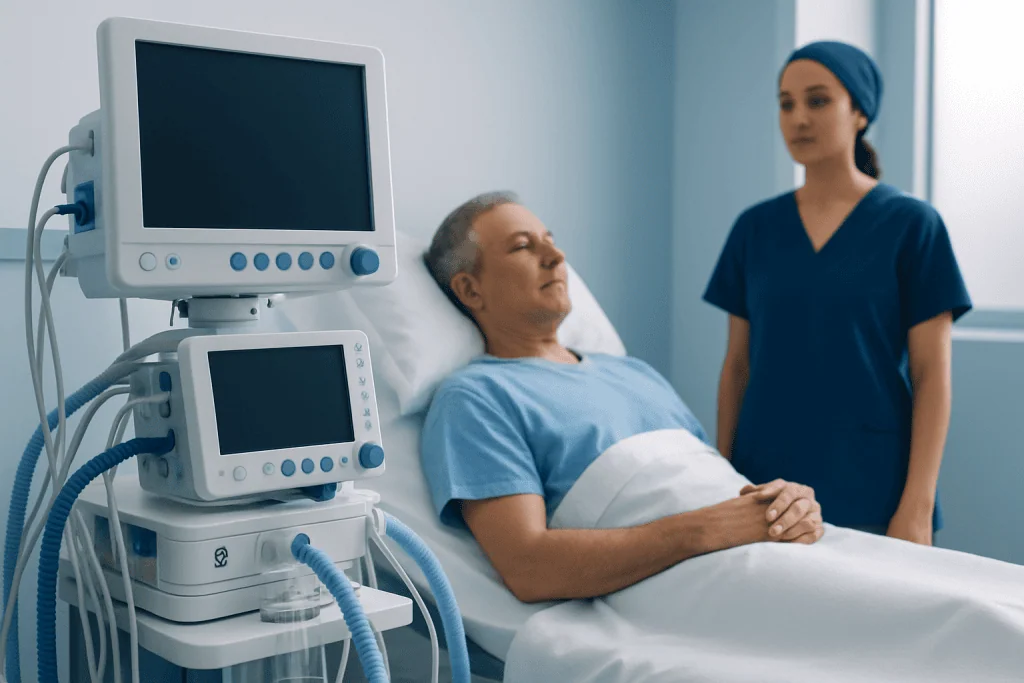
Early arrival is not an administrative habit. It is how the hospital keeps your day safe, ordered and unhurried. Even when everything has been arranged weeks in advance, several steps still have to happen in sequence on the day itself, and each one takes real time. Arriving early lets the team work through them carefully rather than compressing them.
Depending on your procedure, you may go through some or all of the following before treatment begins:
- Registration and identity checks against your passport and booking
- Review of your reports, imaging and treatment plan
- Consent forms, plus billing or insurance confirmation
- Blood tests, an ECG, imaging or other final assessments, if your doctor ordered them
- A nursing assessment covering allergies, medications and your last food or drink
- A conversation with the anaesthesiologist, where anaesthesia is planned
- Changing into hospital clothing and removing jewellery, contact lenses or dentures if advised
For international patients there is one more layer: language support. Interpreters and international patient coordinators help you move through check-in, forms and preparation, and at Acibadem this support is a routine part of the day. It makes the process smoother, but it does not make it instant. Interpretation of consent forms, in particular, is done properly rather than quickly — one more reason not to cut your arrival fine.
The anaesthesia difference
Anaesthesia is the single biggest factor in how early you need to be there. A procedure under local anaesthetic may involve little more than registration and a nursing check. Sedation or general anaesthesia adds a fasting confirmation, a review of your airway and medical history, and often a final discussion of the anaesthetic plan. Fasting rules themselves are strict and specific — including how they treat water, chewing gum and cigarettes — and they are covered in detail in when to stop eating, drinking or smoking before a procedure in Turkey. If your day also includes fasting blood tests, the separate guide to fasting before tests and procedures explains how those rules differ.
What can change your arrival time

Not every procedure follows the same schedule, and not every patient needs the same preparation. The factors below are the ones that most often move a check-in time earlier.
Medical factors
Your age, medical history, current medications and the freshness of your test results all shape the timetable. If you take blood thinners, insulin or several regular medicines, the team needs time to review them with you on the day — the decisions about whether and how to adjust any medication are made by your treating doctor, never by you alone. If you have heart, lung or kidney conditions, additional safety checks may be built into the morning. If your doctor requested same-day imaging or laboratory work, your arrival time will usually be set earlier to fit it in before the procedure slot.
Logistics
Travel is the other variable, and in Istanbul it is a serious one. Traffic in the city is genuinely unpredictable; a hotel that looks close to the hospital on a map can be a long journey at peak hours. Weather, building entry procedures and simply finding the right department inside a large hospital all add minutes. If the hospital is arranging your transfer, confirm the pick-up time and location the evening before. If you are choosing where to stay for your recovery, proximity to the hospital is one of the practical points covered in booking recovery accommodation in Turkey.
Common questions international patients ask alongside timing
If you are researching when you should arrive at the hospital before your procedure in Turkey, you probably have two or three broader questions running in parallel. It is worth answering them plainly.
Is it safe to travel to Turkey for a medical procedure?
Turkey has a large hospital sector that treats a high volume of international patients across many specialties. As with medical travel to any country, safety depends less on the destination in general and more on the specific hospital, the specific team, and how thoroughly your case is assessed before anyone operates. Public health bodies such as the CDC advise medical travellers everywhere to research the facility, share complete medical records in advance, understand the follow-up plan, and allow adequate recovery time before flying home. Those principles apply to Turkey exactly as they apply anywhere else. A hospital that asks detailed questions before quoting, and gives you a structured arrival and preparation plan, is showing you how it manages risk.
What procedures do international patients commonly have in Turkey?
International patients travel to Turkey for a wide range of care: dental treatment, eye surgery, hair restoration, plastic and reconstructive surgery, bariatric surgery, orthopaedics, cardiology, oncology and fertility treatment among them. The arrival-time logic in this guide applies across all of them, though the specific window varies with the anaesthesia and preparation each one needs. If you are still weighing options, how to compare procedure options before traveling to Turkey sets out a structured way to do it.
What does a procedure cost?
This guide will not quote figures, because a meaningful answer does not exist without your case details. What a procedure costs depends on the treatment itself, the anaesthesia type, how long you stay in hospital, which tests and consultations are included, and what the quote bundles in — transfers, accommodation, follow-up visits. The useful question is not “what is the average cost” but “what exactly does this written quote include, and what would sit outside it”. Ask for that breakdown in writing before you travel, and treat any price given without a review of your medical information as provisional.
How to plan your morning without stress
The easiest way to make the day go smoothly is to treat the hospital arrival time as fixed and build everything else around it. Do not schedule breakfast plans, shopping, sightseeing or a hotel change for the same morning unless your team has clearly said it is fine. If you were told to fast, follow those instructions exactly, including the rules on water, gum and smoking — they exist for anaesthesia safety, not convenience.
Prepare your documents the night before so you are not searching for them in a hotel lobby or the back of a taxi. Keep your passport, hospital confirmation, test reports, imaging discs or links, medication list, and payment or insurance paperwork together in one bag. Wear comfortable clothes that are easy to change out of, and leave valuables in the hotel safe where possible.
If you feel nervous, that is entirely normal. Hospitals with international patient departments see arriving patients who are tired, jet-lagged and unsure of the process every day. If you need an interpreter, wheelchair assistance, or arrangements for an accompanying family member, telling your coordinator in advance means it is ready when you walk in rather than organised on the spot.
What happens after you arrive
Once you arrive, the team guides you through a sequence of checkpoints. Registration comes first: your identity and appointment details are confirmed and your file is opened for the day. From there you move to a waiting area, day unit or inpatient floor, depending on the type of procedure and whether you are staying overnight.
A nurse then reviews your medical information, allergies, medications, and when you last ate or drank. Your vital signs are checked, and you change into a gown if the procedure requires it. Where anaesthesia is planned, the anaesthesia team usually speaks with you, answers your remaining questions and confirms the plan before you go through to the procedure area.
Do not read anything into a wait after you have checked in on time. Hospitals coordinate operating rooms, staff and equipment across many patients, and your early arrival is precisely what gives the team flexibility to keep everything safe and in order. If you want an update at any point, your nurse or international patient representative can tell you where things stand.
It also helps to think one step past the procedure while you are still planning. Before you eventually fly home, you should leave with proper written documentation of what was done — the guide to what your discharge summary should include before you fly home explains what to look for.
If something changes before the day
Plans shift, and hospitals are built for that. Three kinds of change matter most to a procedure schedule, and the hospital will always want to hear about them early rather than discover them at check-in.
The first is health. A new fever, vomiting, a fresh cough or breathing symptoms in the days before a procedure can change whether it is safe to proceed as planned, particularly where anaesthesia is involved — the anaesthesia team weighs this, and an early phone call gives them time to do so properly. The second is fasting: if you accidentally ate or drank after the cut-off, the team needs to know, because timings may have to move for safety. The third is logistics — a sudden medication change made by another doctor, a forgotten document, or transport trouble that will make you late. In every case, hospitals would far rather adjust a schedule than have a patient arrive late, unprepared or unwell without warning. Keep the hospital’s number and your coordinator’s number saved in your phone and written down separately, in case your battery runs out in transit.
Step by step
- Read your hospital instructions carefully. Look for your arrival time, not just your procedure time. Check whether there are fasting rules, medication instructions from your treating doctor, or same-day tests that affect when you need to be there.
- Confirm the exact time and place the day before. Verify when and where you should check in — building, floor and department, not just the hospital name. This matters most if your schedule changed after consultation or you are travelling across a busy city.
- Prepare documents and essentials the night before. Pack your passport, reports, scans, medication list and hospital contact details in one place. Choose comfortable clothing and keep valuables to a minimum.
- Allow extra travel time. Leave earlier than you think you need to, especially in Istanbul. Traffic, weather, security at the entrance and finding the right department all add time.
- Check in and complete the pre-procedure steps. Registration, consent forms, the nursing assessment and the anaesthesia review may feel routine, but each is part of making sure your procedure is carried out safely.
- Ask your questions before you go through. If anything about the plan, the recovery process or your companion’s role is unclear, raise it before you enter the procedure area. This is also the right moment to mention allergies or anything that has changed since your last consultation.
Your checklist
- Confirm your hospital arrival time and department location
- Follow fasting instructions exactly, if given
- Bring your passport or ID and appointment confirmation
- Pack your medical reports, imaging and medication list
- Leave early and allow extra time for traffic
- Wear comfortable, easy-to-change clothing
- Keep your coordinator’s phone number with you, saved and written down
- Let the hospital know early about illness, fasting slips or delays
Key takeaways
- Most patients should arrive before the procedure start time — often by two to three hours, unless told otherwise.
- Your exact window depends on anaesthesia, tests, paperwork and your medical history; only your hospital’s instruction is authoritative.
- The procedure time is when treatment begins, not when you should walk in.
- In Istanbul, traffic can add significant delay, so plan generous travel time.
- Follow fasting and medication instructions from your treating doctor exactly, and tell the hospital early if anything changes.
- International patient teams, including at Acibadem, handle interpreters, transfers and day-of-arrival coordination — arranged in advance, not on the morning.
Frequently asked questions
How long before surgery should I arrive at the hospital?
Commonly two to three hours before the scheduled start, though the exact window depends on the procedure, the anaesthesia type and whether same-day tests are planned. The hospital sets a specific check-in time for your case, and that instruction overrides any general rule.
Is 2 hours early enough for a procedure in Turkey?
Often, but not always. Two hours may cover a straightforward day procedure, while surgery under general anaesthesia or a morning that includes blood tests or imaging usually needs more. Follow the specific time your hospital gives you rather than a general estimate.
Should I arrive at the procedure time or before it?
Before it. The procedure time is when the medical team plans to begin treatment. Your registration, consent forms, nursing assessment and anaesthesia review all happen earlier, which is why hospitals issue a separate check-in time.
Do I need to arrive earlier if I will have anaesthesia?
Usually, yes. Sedation and general anaesthesia add extra preparation: fasting confirmation, a nursing review and often a discussion with the anaesthesiologist before the procedure begins. Local anaesthetic procedures typically need less lead time.
What if I am late because of traffic in Istanbul?
Hospitals expect this to happen occasionally and would always rather know early. Phone the hospital or your coordinator as soon as a delay looks likely; depending on the schedule and the procedure, timings can sometimes be adjusted, but that flexibility shrinks the later the warning comes.
Is it safe to go to Turkey for medical procedures?
Turkey treats large numbers of international patients, and safety comes down to the specific hospital and team rather than the country in general. Standard medical-travel guidance applies: research the facility, share complete records in advance, understand the follow-up plan, and allow proper recovery time before flying home.
What is the average cost of surgery in Turkey?
There is no meaningful average, and any figure quoted without your medical details is provisional. Cost depends on the procedure, anaesthesia, length of stay, tests, and what the quote bundles in, such as transfers or follow-up. Ask for a written quote with an itemised scope before you travel.
What documents should I bring on the day of the procedure?
Bring your passport or ID, appointment confirmation, medical reports, imaging results if you have them, and a written list of your medicines and allergies. Insurance or payment documents may also be needed, so confirm the exact list for your case in advance.
Add us as a Preferred Source to see more of our trusted health content across Google Search, AI Overviews and Discover.

Update history
- PublishedJuly 8, 2026
- Medical review approvedSeptember 1, 2026
- Last content updateSeptember 1, 2026
References3
- Medical Tourism — CDC Travelers' Health — wwwnc.cdc.gov
- Having an operation (surgery) — NHS — nhs.uk
- Surgery — MedlinePlus — medlineplus.gov
More Patient Guides

When a Hospital Stay in Turkey Becomes Longer Than Planned: What to Arrange
If your hospital stay in Turkey is longer than planned, arrange medical updates, accommodation, travel changes, insurance and support for your companion.
8 min read
How to Handle Laundry During a Longer Treatment Stay in Turkey
Laundry during a longer treatment stay in Turkey is manageable with hotel services, local laundries and support from your patient coordinator.
8 min read
Waiting for Test Results in Turkey: How to Use Time Between Appointments
Waiting for test results in Turkey is easier with a clear plan for appointments, rest, records, questions and support in Istanbul.
8 min read
Unexpected ICU Stay in Turkey: What Patients and Families Should Expect
Unexpected ICU stay in Turkey: learn what patients and families can expect, from communication and visiting to care updates and travel support.
8 min read