

When to Stop Smoking Before Surgery in Turkey and Why It Matters

Stop as early as you can, several weeks before your operation gives your body the most time to improve circulation, lung function and tissue oxygen delivery. If your date is close, stopping now still helps. Tell your surgical team exactly what you use, including vaping and shisha, and when you last used it, so they can plan your anaesthetic safely.
Your surgery date in Turkey is booked, and somewhere in the paperwork a question appears: do you smoke? If that question makes you uneasy, here is the plain answer. The best time to stop is as early as possible before your operation, and if your procedure is soon, stopping now is still worth it. This guide explains when to stop smoking before surgery in Turkey and why it matters, what your team needs to know, and how to plan the smoke-free stretches of your trip.
At a glance
- Best timing: Stopping several weeks before surgery is usually best
- If surgery is soon: Stopping now can still help, even in the final days
- Main reason: Smoking affects breathing, circulation and wound healing
- What to disclose: Cigarettes, vaping, heated tobacco, nicotine pouches and shisha all count
- Nicotine replacement: A decision for your surgeon or anaesthetist, not for you alone
- Travel point: Plan for no-smoking periods at the airport, hotel and hospital
Why you should stop smoking before surgery in Turkey, and why it matters
Smoking affects far more than your lungs. Before an operation, it reduces the oxygen your blood can carry, narrows blood vessels, irritates the lining of your airways, and makes it harder for cut or repaired tissue to heal. Carbon monoxide from smoke occupies space on red blood cells that would otherwise carry oxygen. Nicotine tightens the small vessels that feed skin and muscle. Neither is helpful when your body is about to do the hardest healing work it will face all year.
This is why surgical teams ask about smoking as a routine part of preoperative planning, not as a judgement. The anaesthetist wants to know how reactive your airways are likely to be under general anaesthesia. The surgeon wants to know how well the tissue at the operation site will be supplied with blood. Both answers change depending on whether you smoke and how recently.
For international patients, the question of when to stop smoking before surgery in Turkey, and why it matters, usually comes up during the medical review before travel. Your smoking status forms part of the same picture as your medication list, allergies and medical history. Accurate answers early on give the surgical and anaesthetic teams time to plan properly, rather than discovering something on the morning of admission. It sits alongside the other preparation rules covered in our guide on when to stop eating, drinking, or smoking before a procedure in Turkey.
When should you stop smoking before surgery?
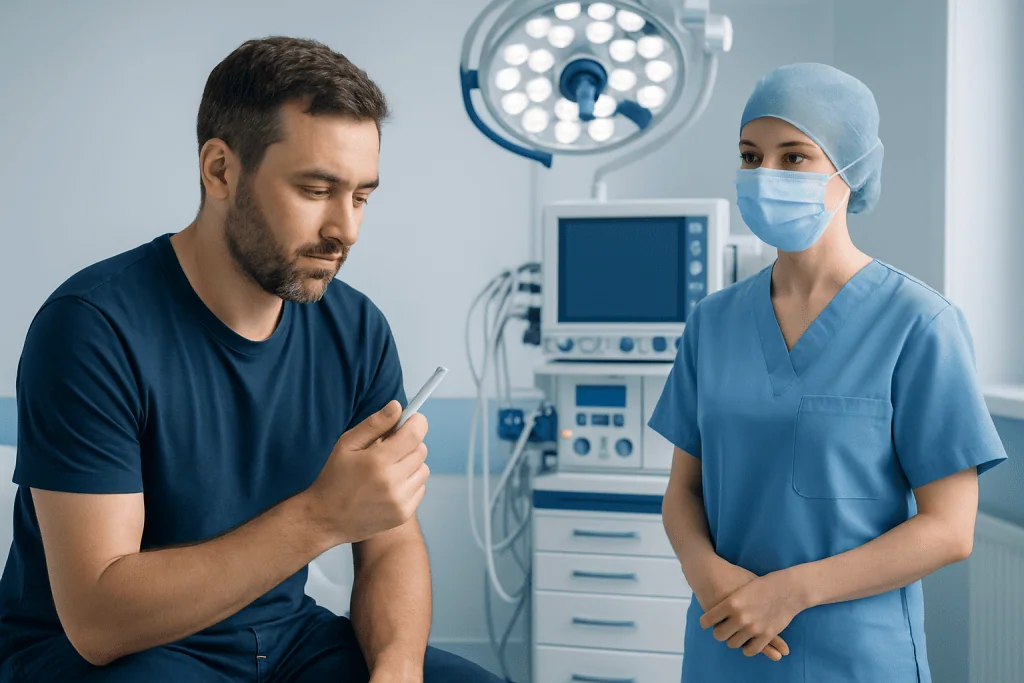
The short answer: as early as possible. Stopping several weeks before your operation gives your body the most time to improve circulation, calm irritated airways and restore better oxygen delivery to tissue. That window matters for the operation itself, how your airways behave under anaesthesia, and for what happens afterwards, when your wounds need a reliable blood supply to close and heal.
The longer answer is that different timeframes bring different changes, and none of them is wasted.
| Time since last cigarette | What changes in your body |
|---|---|
| Hours | Carbon monoxide levels in the blood begin to fall, so red blood cells can carry more oxygen |
| Days | Airway irritation starts to settle; the tiny hairs that clear mucus from the lungs begin to recover |
| Weeks | Circulation and lung function improve; healing tissue receives a better oxygen supply |
| Several weeks or more | The window most surgical teams prefer, particularly for procedures where healing is critical |
If your surgery date is very close, do not assume it is too late to matter. Even stopping in the final days before your procedure is generally better than continuing to smoke, and it is certainly better than smoking on the morning of admission. What your care team values most is honesty: they would far rather know exactly when you last smoked than hear the answer you think they want.
The exact stop date for you depends on your health, the type of operation, whether you will have general anaesthesia, and what you use, cigarettes only, or also vaping, heated tobacco, nicotine pouches or shisha. General guidance is a starting point. The timeline given by your own surgeon or anaesthetist comes first, because your situation may differ from the average case.
What risks does smoking increase around surgery?

Under anaesthesia, a smoker’s airways tend to be more reactive. They may spasm more easily, produce more mucus, and exchange oxygen less efficiently. After the operation, that can translate into more coughing, which strains fresh surgical sites, and a harder few days for your lungs while your body is already busy healing.
Circulation is the second concern. Nicotine and other chemicals in smoke narrow blood vessels, which can reduce blood flow to healing tissue. In practice, that may mean wounds take longer to close, scars behave less predictably, and infection or tissue problems become more likely in some operations. None of this is certain to happen to any individual patient, but the direction of the risk is well understood, which is why surgical teams take the question seriously.
- Airway irritation and breathing problems during and after anaesthesia
- Lower oxygen delivery to healing tissue
- Slower or less predictable wound healing
- Higher risk of infection in some operations
- More coughing, which can strain fresh surgical sites
- A potentially longer or less comfortable recovery
Which procedures are most sensitive to smoking?
Any operation is affected to some degree, but some are more sensitive than others. Procedures that rely on skin flaps, grafts or long incisions, common in plastic, reconstructive and aesthetic surgerydepend heavily on the blood supply that nicotine restricts. Bone and joint surgery needs good circulation for bone to knit. Chest and heart procedures, including those handled by cardiovascular surgery teams, involve both the airway and the vascular concerns at once. Abdominal operations in general surgery and weight-loss procedures also carry healing considerations of their own.
A sensitive procedure does not automatically mean surgery cannot go ahead if you smoke. It usually means your team will set stricter stop-smoking instructions, ask more detailed questions at pre-assessment, or build extra preparation into your plan.
What counts as smoking, and what should you disclose?
When the hospital asks whether you smoke, do not think only of cigarettes. The honest answer includes:
- Vaping and e-cigarettes, whatever the nicotine strength
- Heated tobacco products
- Cigars and pipe tobacco
- Shisha or hookah, even occasional social use
- Nicotine pouches, gum or other smokeless nicotine products
Each of these can affect breathing, circulation or medication planning in its own way, and each is worth mentioning. Be specific about how much you use and when you last used it. If you are cutting down rather than stopping completely, say so: a reduced but honest number is far more useful to your anaesthetist than a clean-sounding zero.
Your team is not there to judge you. They need accurate information to keep you safe and to decide whether any extra testing, breathing preparation or schedule adjustment makes sense. Smoking status is one of the standard items reviewed before any operation, alongside the points in our patient safety checklist before surgery in Turkey.
Can you use nicotine replacement or switch to vaping instead?
Not without asking first. Some alternatives may be preferable to continued smoking in certain situations, but the right choice depends on your operation, your health conditions and your anaesthetic plan. Decisions about nicotine replacement, patches, gum, lozenges or prescribed quit aids, belong with your surgeon, anaesthetist or pre-assessment team, not with a forum thread or a pharmacy shelf.
The reason is nicotine itself. Even without smoke, nicotine narrows blood vessels, which matters for operations where healing tissue depends on good blood flow. Vaping removes some of the combustion products of cigarettes but can still irritate the airways, and it does not remove the perioperative concerns entirely. Different surgeons weigh these trade-offs differently depending on the procedure, which is exactly why the question deserves a personal answer rather than a general rule.
If stopping is proving hard, say so honestly at pre-assessment. Your team can tell you what to avoid on the day of surgery, whether any quit aids are appropriate in your case, and how to handle the days around your operation. Clear advice from the people responsible for your anaesthetic is worth more than any general travel tip.
Practical planning if you are travelling to Turkey for surgery
Stopping smoking is a medical issue, but for an international patient it is also a logistics issue. Think through the smoke-free stretches of your trip in advance: the flight itself, airport transfers, the pre-op waiting period, the hospital stay, and your first recovery days, when smoking will be restricted or strongly discouraged. Patients who plan for these gaps find them far easier than patients who rely on willpower in the moment.
Before you fly, confirm the hospital’s no-smoking rules and any specific instructions for the night before surgery or the morning of admission: these usually sit alongside the eating and drinking rules explained in our guide to fasting before surgery in Turkey. If you normally reach for a cigarette during stressful moments, decide now what you will reach for instead on travel days: sugar-free gum, water, a breathing exercise, a distraction app, or the company of the person travelling with you.
Build your quit plan into your travel timeline too. Arriving with a little margin before your procedure gives you calmer, less rushed days: our guide on when to arrive before surgery in Turkey covers how much time to allow. A tired, jet-lagged traveller facing an unplanned nicotine gap is not set up to succeed; a rested one with a plan usually is.
What happens if you smoked recently before your operation?
If you smoked closer to your operation than instructed, the safest course is accurate disclosure. Do not hide it out of fear that the surgery will automatically be cancelled. In many cases the team simply reassesses your situation, confirms when you last smoked, and decides whether it is safe to proceed as planned.
Sometimes the operation goes ahead. In other situations, especially where healing is critical or the anaesthetic risks are higher, the surgeon or anaesthetist may recommend delaying the procedure. That is a disappointing conversation to have far from home, but it is done to protect your safety and the quality of your result, and it is a decision made case by case rather than by a blanket rule.
Preoperative checks exist to catch exactly this kind of issue before an anaesthetic starts. The most helpful things you can do are simple: give accurate information early, follow the instructions you are given, and ask questions whenever something is unclear.
Step by step
- Tell your care team exactly what you use. List all tobacco and nicotine products, cigarettes, vapes, shisha, heated tobacco, pouches, plus how often you use them and when you last did. Precision here shapes every safety decision that follows.
- Stop as early as you can. Do not wait for a perfect quit date. Several weeks before surgery is the strongest position, but even a late stop can still help your anaesthetic and your recovery.
- Ask for procedure-specific guidance. Different operations carry different smoking-related risks. Ask your surgeon or anaesthetist how long they want you smoke-free and whether the same rules apply to vaping or nicotine replacement.
- Plan your travel triggers. Long flights, waiting rooms and pre-op nerves make urges stronger. Prepare alternatives in advance for the airport, hotel and hospital so willpower is not your only tool.
- Follow day-before and day-of instructions exactly. Your team will give specific rules covering food, drink, medications, and smoking or nicotine use before anaesthesia. Treat those instructions as fixed, not flexible.
- Be honest if you slip. If you smoked after being told not to, tell the team promptly. That gives them time to decide safely whether to continue, adjust the plan, or delay the operation.
- Stay smoke-free after surgery if you can. The benefits do not end when the operation does. Remaining smoke-free during early recovery supports breathing, comfort and wound healing in the days and weeks that follow, and for many patients, surgery becomes the quit date that finally sticks.
Your checklist
- Tell your surgeon and anaesthetist if you smoke, vape, or use shisha or nicotine pouches
- State when you last used any nicotine or tobacco product
- Ask how long before surgery you should completely stop
- Confirm whether nicotine replacement is appropriate in your case
- Plan for smoke-free time during flights, transfers and your hospital stay
- Bring a full medication and supplement list to pre-assessment
- Tell the team promptly if you smoke again before surgery
- Arrange support from your travel companion during quitting
- Follow all admission and fasting instructions exactly
Key takeaways
- Stopping several weeks before surgery is generally best, but stopping at any point can still help.
- Smoking affects anaesthesia, breathing, wound healing and recovery, which is why the question is asked so early.
- Disclose everything: cigarettes, vaping, heated tobacco, shisha and nicotine pouches all count.
- Nicotine replacement is a decision for your surgeon or anaesthetist, because nicotine itself affects healing.
- Plan for the smoke-free stretches of your trip, flights, admission and early recovery, before you fly.
- Your own team’s instructions always override general online advice.
Frequently asked questions
How long before surgery should you stop smoking?
As early as possible, ideally several weeks before your operation. That window gives circulation, lung function and tissue oxygen delivery the most time to improve. Your exact timeline depends on your procedure, your general health and your anaesthetic plan, so the advice from your own surgeon or anaesthetist comes first.
Is it still worth stopping if surgery is only a few days away?
Yes. Even a late stop is generally better than continuing to smoke, because carbon monoxide levels begin to fall within hours and airway irritation starts to settle over days. Whatever you decide, tell your medical team exactly when you last smoked so they can make safe decisions.
Can smoking cause my surgery in Turkey to be postponed?
Sometimes, depending on the type of surgery and your overall risk. If the team believes recent smoking significantly increases anaesthetic or healing concerns, they may recommend delaying the procedure. This is a case-by-case safety decision, not an automatic rule.
Does vaping count the same as smoking before surgery?
Report it exactly as you would report smoking. Vaping differs from cigarettes, but it can still irritate the airways and it delivers nicotine, which affects blood vessels and healing. Your team needs the full picture to plan your anaesthetic.
Can I use nicotine patches or gum before surgery?
Ask your care team before starting or continuing any nicotine replacement. It may be acceptable in some cases, but nicotine itself narrows blood vessels, so your surgeon or anaesthetist may prefer a different approach depending on the operation.
What if I smoked the night before surgery?
Tell the team, even if you are embarrassed. They need accurate information to assess your anaesthetic safely, and honest disclosure is far safer than hiding it. In many cases the operation still proceeds after the team reviews your situation.
Does shisha or occasional social smoking count?
Yes. Shisha, hookah, cigars and occasional cigarettes all expose your airways and circulation to smoke and nicotine, and they all belong in your answer when the hospital asks about smoking, even if you do not think of yourself as a smoker.
Why do hospitals ask about smoking so early in the process?
Because smoking status shapes preoperative planning, anaesthetic preparation and recovery advice. Early, accurate answers give the surgical and anaesthetic teams time to review your case properly and set the right stop-smoking timeline before you travel.
Add us as a Preferred Source to see more of our trusted health content across Google Search, AI Overviews and Discover.

Update history
- PublishedAugust 1, 2026
- Medical review approvedSeptember 13, 2026
- Last content updateSeptember 12, 2026
References2
- NHS: Quit smoking nhs.uk
- MedlinePlus: Quitting Smoking medlineplus.gov
More Patient Guides

How Long Does Anesthesia Last? Wear-Off Times by Type
Coming round from an operation, almost everyone asks the same two questions: when will my head feel normal, and how long is…

Flying to Turkey After a Recent Illness: When Is It Safe to Travel?
Flying to Turkey after a recent illness may be safe once you are medically stable and cleared to travel; plan airline support…
Braces, Retainers, and Dental Work Before Surgery in Turkey: What to Tell Your Team
Braces, retainers and dental work before surgery in Turkey should be shared with your care team early to plan safe anaesthesia and…

When to Stop Eating, Drinking, or Smoking Before a Procedure in Turkey
When to stop eating before a procedure in Turkey depends on your anesthesia plan; follow your care team’s exact fasting instructions for…