

Flying to Turkey for Surgery with a Companion: Who Should Come and Why

Most people having surgery in Turkey benefit from bringing one calm, dependable adult — a spouse, sibling, adult child or close friend who can manage logistics, take notes and help with daily tasks after the operation. A companion matters most when anaesthesia, reduced mobility or a recovery stay is expected. Some patients travel alone for shorter procedures, but the decision should reflect how independent you will realistically be afterwards.
One seat or two? It is one of the first practical decisions when planning surgery abroad, and it deserves more thought than it usually gets. The right companion makes the trip calmer, better organised and easier to recover from. The wrong one — or none at all, when you genuinely needed help — makes everything harder. This guide sets out who should come, what they can realistically do, and how to plan the stay so that it works for both of you.
At a glance
- Best for: Patients having anaesthesia, expecting reduced mobility, or staying in Turkey for a recovery period before flying home
- Ideal companion: One calm, reliable adult who can handle logistics, take notes and support you day to day without needing care themselves
- Main benefits: A second set of ears at consultations, help with transport and luggage, and steady practical support during early recovery
- When to reconsider: If your companion is very anxious, unwell, unavailable for the whole key period, or treating the trip as a holiday
- What to plan early: Passports and any visas for both travellers, accommodation near the hospital, visiting rules, and post-operative transport
- Support on site: International patient coordinators and interpreter support at Acibadem reduce the pressure on your companion to manage everything alone
Do you need a companion when flying to Turkey for surgery?
Not every patient must bring someone. But if you are weighing up flying to Turkey for surgery with a companion, understand what the second person actually adds. It is not company on the plane. It is a trusted adult who can keep documents in order, listen when you are too tired or medicated to absorb instructions, and do the physical things — carrying bags, hailing transport, fetching food — that you may not manage in the first days after an operation.
A companion becomes clearly valuable when your treatment involves general anaesthesia, when pain or fatigue is expected afterwards, when your mobility will be limited, when you do not speak English or Turkish confidently, or when you are travelling a long way and staying for a recovery period before you are cleared to fly. In those situations, one capable adult beside you changes the character of the whole trip.
Some patients do travel alone, particularly for shorter, less physically demanding procedures — the kind covered in our guide to day surgery in Turkey for international patients. Even then, it is worth being honest with yourself about the hours immediately after anaesthesia, when almost everyone needs some help. Hospitals with international patient teams can explain in advance what support exists on site, so you can judge how much of the gap a companion needs to fill.
Who should come with you?

The best companion is not always the closest relative, and it is rarely the person who most wants a trip to Istanbul. The right person is dependable, calm under pressure, and able to put your needs first for the duration of the stay. Ideally they are comfortable with travel, capable of managing basic logistics in an unfamiliar city, and willing to follow hospital routines rather than argue with them.
Good choices are often a spouse or partner, an adult child, a sibling, or a close friend. If you have mobility limitations, a language barrier, significant anxiety, or a larger operation planned, your companion should also be physically able to help — steadying you when you walk, carrying both suitcases through an airport, staying close by when you need them.
Think twice before bringing someone who becomes distressed easily, needs considerable attention themselves, or cannot adapt when schedules shift. Surgical timetables do shift. A well-meaning but overwhelmed companion can make recovery harder, not easier.
- Choose someone patient and practical rather than simply available.
- Confirm they can stay for the whole key period — arrival, surgery day, discharge and early recovery — not just the flight out.
- Prefer an adult who can make small decisions calmly if plans change.
- Make sure they understand this is a support role, not a holiday with a hospital visit attached.
If several family members want to come, keep the group simple. One suitable adult is usually easier to coordinate around hospital schedules than three relatives with different expectations.
How a companion helps before, during and after surgery

Before surgery
Your companion can keep documents organised, attend consultations with you and take notes. Pre-operative appointments deliver a lot of information quickly: fasting instructions, arrival times, what to bring, what to expect at discharge. A second person catches the details you miss and can repeat them back to you later, when it matters.
On surgery day
They become your steady point of contact. They help you reach the hospital on time, keep your phone, glasses and valuables safe while you are in theatre, update family at home, and wait through the stages of admission, surgery and recovery. Depending on hospital policy and your clinical situation, they may sit in on parts of discharge planning. Whether they can stay overnight depends on your room type and the ward’s rules — our guide to booking a companion room in Turkey covers what to check before you arrive.
After surgery
This is usually where a companion earns the second airfare. They help you move carefully, remind you about hydration and the medication schedule your doctors have set, assist with meals and dressing, and notice when you are struggling with something you would not mention yourself. They do not replace the medical team, and they should not try to. Their job is to help you follow the instructions you were given and to make it easy for you to raise concerns with the clinical team promptly rather than waiting to see if things settle.
When a companion matters most
Some situations tilt the decision firmly towards bringing someone. Patients who are older or frail, who travel with reduced mobility, who are having major surgery, or who face a longer recovery stay before flying home will usually find solo travel genuinely difficult. The same applies if you will not be able to carry luggage, manage stairs and taxis, or move independently between hospital and accommodation in the days after treatment.
Hearing difficulties, vision limitations, memory problems, high anxiety and chronic conditions that affect daily functioning all strengthen the case further. In these situations a companion is not emotional comfort — they are the mechanism by which instructions get understood, appointments get kept and the environment stays safe.
Parents travelling with a child in tow should plan carefully. If the patient is also the person responsible for childcare, a second adult is close to essential; one person cannot recover from surgery and look after a child at the same time. And every patient, accompanied or not, should be prepared for plans to stretch: recovery does not always follow the itinerary, and our guide on unexpected overnight stays in Turkey explains what that can mean for flights, hotels and a companion’s own schedule.
What surgeries do people travel to Turkey for?
Turkey receives international patients across a wide range of specialties. Aesthetic procedures are the most visible — rhinoplasty, breast surgery, body contouring and hair restoration through plastic, reconstructive and aesthetic surgery departments — but they are only part of the picture. Patients also travel for bariatric and metabolic surgery, orthopaedic operations such as joint replacement, cardiac and cardiovascular procedures, eye surgery, dental treatment, fertility care and oncology.
The type of surgery shapes the companion decision. A short aesthetic procedure with a few days of local recovery asks less of a companion than major abdominal or cardiac surgery with a hospital stay and a carefully staged journey home. When you know your procedure, ask the treating team two questions: how independent will I be in the first week, and how long must I remain in Turkey before flying? The answers tell you most of what you need to know about who should come and for how long.
Is Turkey safe to travel to for surgery?
Turkey is one of the world’s largest destinations for international patients, but the honest answer is that safety in medical travel depends far more on the specific hospital and surgeon than on the country. Standards vary between providers everywhere, and Turkey is no exception.
What you can control is your own verification. Check that the hospital is a licensed institution rather than a booking agency reselling access to one. Ask who will perform your surgery, what their qualifications are, and where you will be treated if a complication arises. Read your home government’s travel advice for Turkey before booking, and make sure your travel insurance position is clear — many standard policies exclude planned treatment abroad, so ask insurers directly what is and is not covered. A companion adds a layer of practical safety too: someone who knows your plan, holds copies of your documents and can communicate on your behalf if you cannot.
How long will you both stay?
Length of stay is set by your surgeon, not by your airline booking, and it varies with the procedure. Minor treatments may need only a short stay with one follow-up check. Breast surgery and other common aesthetic operations typically require you to remain in Turkey until the surgical team has reviewed the wound and cleared you to travel — often around a week, sometimes longer if healing needs more time. Larger operations can mean a hospital stay followed by a further local recovery period. Book flexible flights where you can, because the clearance to fly comes from your surgeon’s assessment, not the calendar.
The flight home deserves specific planning. Long-haul travel soon after surgery carries a raised risk of blood clots, and both of you should understand the basics before departure — our guide on lowering DVT risk on long-haul trips covers this in detail. Equally important: before you leave Turkey, make sure any lingering concern about your wound or general condition has been reported to and reviewed by the treating team. Our guide to warning signs to report before flying home explains why that conversation should happen while you are still in the same city as your surgeon.
What your companion should plan for
Your companion should prepare almost as carefully as you do. They need a valid passport, any visa their nationality requires (check this separately — requirements differ between you), a clear picture of the itinerary, and realistic expectations about how much of the trip will be spent in or near a hospital. They should save the key contacts — hospital, patient coordinator, hotel, airline, family at home — in their own phone, not just yours.
Accommodation is where good planning shows. If you will not be in hospital for the whole recovery period, choose somewhere practical rather than ambitious: close to the hospital, minimal stairs, a lift if possible, reliable transport, and enough space for you to rest while your companion comes and goes for food, pharmacy runs and fresh air. Ask in advance how far the accommodation is from the hospital in travel time, not just kilometres — Istanbul traffic makes the difference matter.
At Acibadem, international patient services help with the surrounding logistics: appointment coordination, interpreter support and general travel guidance. That support matters for companions as much as patients, because it means one person is not carrying every conversation, every direction and every schedule change alone.
Set expectations before you fly
Flying to Turkey for surgery with a companion works best when roles are agreed before departure. Decide who carries the documents, who deals with the hotel or driver if plans change, how updates reach family at home, and what help you may need with walking, showering, meals and reminders. Vague expectations become friction at exactly the moment neither of you has energy for it.
Talk about the emotional side too. Surgery makes people more tired, more sensitive and more dependent than usual, and companions get fatigued as well. If you both know in advance that this trip is about treatment and recovery — not sightseeing — nobody ends up disappointed or stretched thin.
Finally, be clear that your companion supports your care but does not direct it. Medical questions and decisions stay between you and the clinical team, unless you specifically ask your companion to be part of those conversations. Coordinators and interpreters exist precisely so that everyone stays informed without a family member having to become the go-between for everything.
Step by step
- Decide whether you truly need a companion. Weigh the procedure, your mobility, your anxiety level, your language comfort and how independent you will realistically be in the first week. If transport, daily tasks or medication routines look difficult, bring someone.
- Choose the right person, not the nearest person. Reliable, calm and practically useful beats emotionally close but easily overwhelmed. They must stay focused on your needs and adapt when schedules move.
- Confirm the plan together. Review flight dates, hospital dates, accommodation, transfers and the expected length of stay. Your companion should know exactly when you will need them most: surgery day, discharge and the first days after.
- Prepare shared documents and contacts. Passports, bookings, hospital contacts, your medication list and emergency numbers should be accessible to both of you — digitally and on paper, in case a phone dies at the wrong moment.
- Plan for recovery, not just arrival. Practical accommodation near the hospital, loose comfortable clothing, easy meals, transport back for follow-up checks, and a simple routine built around rest.
- Use the hospital’s support services. Interpreter support and coordination assistance exist so your companion does not have to manage every communication alone. Know what is available before you land.
- Agree on communication and boundaries. Decide how family updates are shared and who handles practical questions, so your companion can support you without speaking over you or becoming responsible for decisions that are yours.
Your checklist
- Choose one calm, dependable adult companion
- Check both passports and any visa requirements — they may differ
- Share the full travel and treatment itinerary with your companion
- Prepare copies of medical records and your current medication list
- Book practical accommodation near the hospital, with minimal stairs
- Confirm companion room or visiting policies with the hospital in advance
- Pack comfortable clothes and easy footwear for both of you
- Save hospital, coordinator, hotel and airline numbers in both phones
- Book flexible return flights — clearance to fly comes from your surgeon
- Talk through roles, support needs and expectations before departure
Key takeaways
- A companion is worth the second airfare whenever anaesthesia, fatigue, limited mobility or a recovery stay in Turkey is expected.
- Pick a calm, practical, reliable adult — not simply the person closest to you or keenest to travel.
- Companions support communication, transport, organisation and daily recovery; they never replace the medical team.
- Length of stay is set by your surgeon’s clearance to fly, not your original booking, so build in flexibility.
- Clear planning around documents, accommodation, transport and roles keeps the trip manageable for both of you, and Acibadem’s international patient services can carry part of the logistical load.
Frequently asked questions
Can I travel to Turkey for surgery alone?
Sometimes, particularly for shorter, less physically demanding treatments. But if your plan involves general anaesthesia, limited mobility or a recovery period before flying home, travelling with a companion is usually more comfortable and more practical. Be honest about the hours after anaesthesia, when nearly everyone needs some help, and check what on-site support the hospital provides before deciding to come alone.
Is Turkey safe to travel to for surgery?
Turkey is one of the largest destinations worldwide for international patients, and safety depends more on the specific hospital and surgeon than on the country. Verify that you are dealing with a licensed hospital, confirm who will operate and what happens if complications arise, read your government’s travel advice, and clarify your insurance position — many standard policies exclude planned treatment abroad.
How long do you stay in Turkey after breast surgery?
Your surgeon sets the timeline, not the airline. Most breast surgery patients remain in Turkey until the team has reviewed the wound and cleared them to fly — often around a week, sometimes longer if healing needs more time. Book flexible return flights and do not plan a fixed departure before your surgeon has confirmed you are fit to travel.
Which hospital in Turkey is best for plastic surgery?
There is no single “best” hospital, and any provider claiming that title should prompt caution. What matters is whether the specific institution is a licensed hospital, whether the named surgeon’s credentials can be verified, and whether the facility can manage complications on site. Judge providers on what they can document, not on how they market themselves.
Does my companion need to speak Turkish?
No. Many international patients manage well with English, and hospitals that treat international patients provide interpreter support. At Acibadem, patient coordinators and interpreters handle much of the communication, which takes considerable pressure off your companion.
What will my companion actually do during the trip?
Typically: help with travel logistics, keep documents organised, attend consultations and take notes if you want them there, and assist with everyday tasks after surgery — moving safely, meals, reminders about the routine your doctors set, and getting between hospital and accommodation. They support your recovery; they do not replace professional care or make medical decisions.
How long should my companion stay with me?
Through the stages that matter most: arrival, surgery day, discharge and the early recovery period. The exact span depends on the procedure and how independent you will be afterwards. Avoid any plan where your companion flies home before you are confidently mobile and settled — that is precisely when you need them.
Can my companion stay with me at the hospital?
It depends on hospital policy, your room type and your clinical situation. Some rooms accommodate a companion overnight; in other settings companions wait in designated areas and support you mainly before admission and after discharge. Confirm the current policy for your specific ward and room before you travel, so neither of you is surprised on the day.
Add us as a Preferred Source to see more of our trusted health content across Google Search, AI Overviews and Discover.

Update history
- PublishedAugust 1, 2026
- Medical review approvedSeptember 2, 2026
- Last content updateSeptember 2, 2026
References2
- CDC Travelers' Health — Medical Tourism — wwwnc.cdc.gov
- GOV.UK — Foreign travel advice: Turkey — gov.uk
More Patient Guides
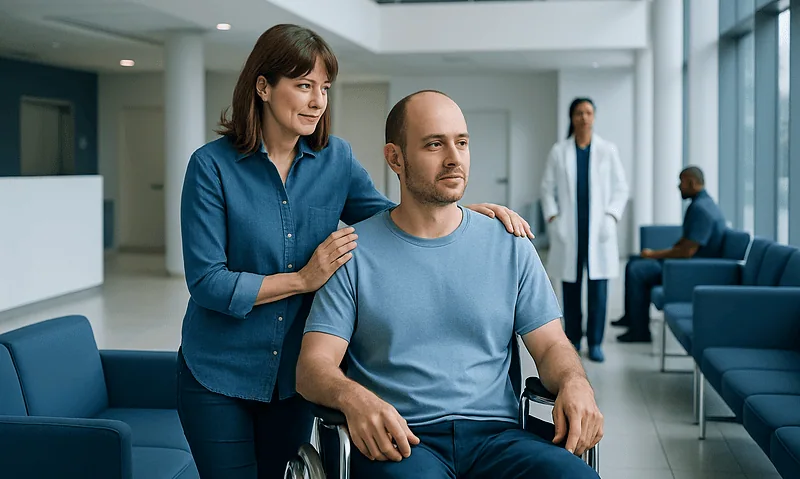
Medical Travel with a Companion: Who Should Come and Why
Medical travel with a companion can make treatment in Turkey easier by providing practical help, communication support and reassurance before and after…

How Family Members Can Help Without Disrupting Recovery
Family support during recovery helps when you listen, organize practical tasks and follow the care plan without taking over, in Turkey or…

Need a Family Member to Travel With You? A Companion Decision Guide
A companion travel guide for treatment in Turkey: decide who should travel with you, plan practical support, and prepare for Istanbul care.

Unexpected Overnight Stay in Turkey: What Patients and Companions Should Be Ready For
Unexpected overnight stay in Turkey? Here is what patients and companions should prepare for, from essentials and updates to hospital logistics in…