Quadriceps: An Evidence-Based Guide for Patients

The quadriceps are four muscles on the front of the thigh that work together to extend the knee. Quadriceps symptoms may include pain, weakness, stiffness, swelling, or difficulty walking and climbing stairs.
Key Takeaways
- The quadriceps are four muscles on the front of the thigh that work together to extend the knee.
- Quadriceps symptoms may include pain, weakness, stiffness, swelling, or difficulty walking and climbing stairs.
- Common problems include muscle strain, tendon irritation, bruising, and weakness after inactivity or knee injury.
- Diagnosis usually depends on medical history, physical examination, and sometimes imaging such as ultrasound or MRI.
- Treatment often includes rest, activity changes, physical therapy, and gradual strengthening.
- Sudden severe pain, inability to bear weight, marked swelling, or a visible gap above the kneecap needs prompt medical care.
Quadriceps are the four large muscles at the front of the thigh that straighten the knee and help control hip movement. They are essential for walking, climbing stairs, standing up, balance, and many sports, and they can be affected by strain, tendon problems, weakness, or overuse.
Overview: what the quadriceps do
The quadriceps are a group of four muscles at the front of the thigh: the rectus femoris, vastus lateralis, vastus medialis, and vastus intermedius. Together, they straighten the knee and help stabilize the leg during standing, walking, climbing stairs, rising from a chair, and landing from a step or jump. One of these muscles, the rectus femoris, also helps bend the hip.
In daily life, healthy quadriceps make movement more efficient and help protect the knee joint. These muscles absorb force when a person slows down, walks downhill, or descends stairs. They also work closely with the hamstrings, gluteal muscles, and calf muscles to keep the lower limb balanced and coordinated.
People often search for “quadriceps” when they have front thigh pain, weakness, tightness, or a sports injury. However, quadriceps concerns are not limited to athletes. Older adults, office workers returning to exercise, and people recovering from knee problems may also develop quadriceps weakness or discomfort that affects mobility and confidence.
Common symptoms linked to quadriceps problems
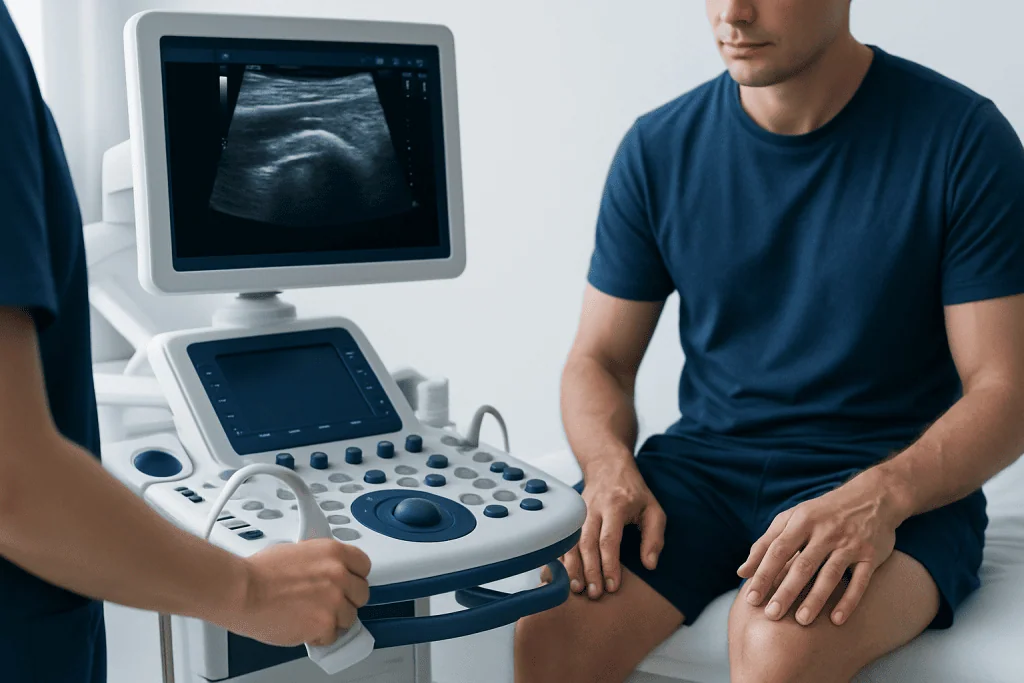
Quadriceps symptoms vary depending on the cause. Some people notice a dull ache in the front of the thigh after exercise, while others feel a sudden sharp pain during sprinting, kicking, or jumping. Symptoms can involve the muscle belly, the tendon above the kneecap, or the area where the muscle connects to the hip.
Typical symptoms may include pain, tenderness, swelling, bruising, cramping, stiffness, or weakness. A person may feel discomfort when straightening the knee, walking uphill, standing from a seated position, or climbing stairs. In mild cases, the leg may still function fairly well, but more severe injuries can make weight-bearing difficult.
Some signs suggest a more significant injury. These include a popping sensation at the time of injury, a visible deformity, inability to actively straighten the knee, or a feeling that the leg gives way. When quadriceps weakness occurs after knee pain or surgery, it may be part of a broader recovery issue rather than a new muscle injury.
- Front thigh pain during activity or stretching
- Weakness when standing, squatting, or climbing stairs
- Swelling or bruising after a direct blow or strain
- Stiffness after rest or in the morning
- Reduced range of motion in the hip or knee
Why quadriceps problems happen
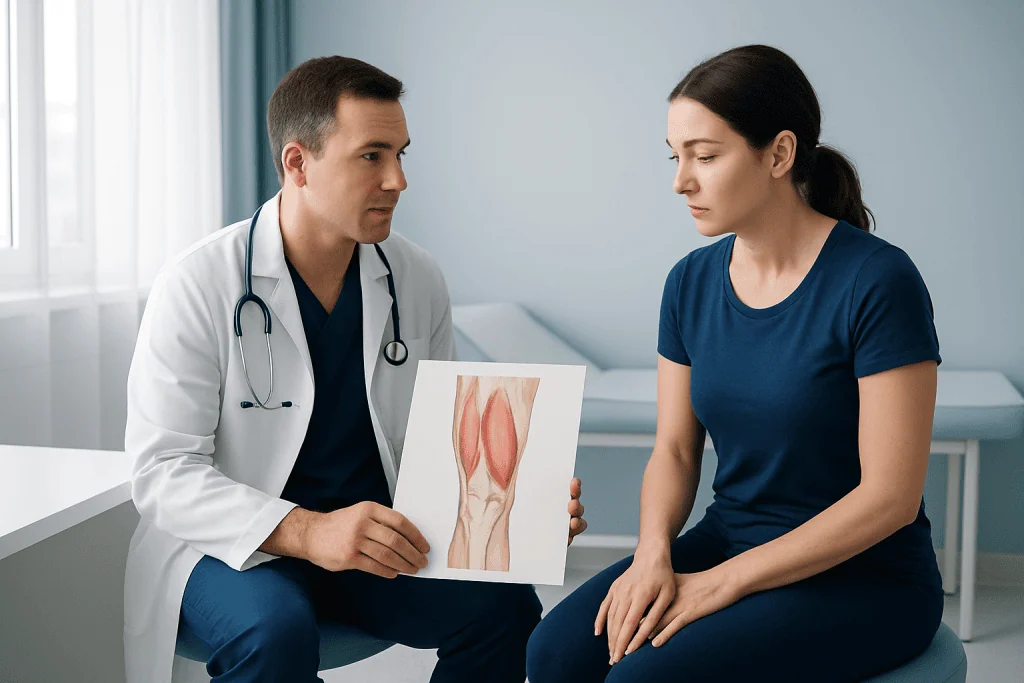
Quadriceps problems can develop suddenly or gradually. A sudden injury often happens when the muscle is overloaded during sprinting, jumping, kicking, or a rapid change of direction. This may lead to a quadriceps strain, which means the muscle fibers are overstretched or torn. A direct impact to the thigh, such as in contact sports, can also cause a deep muscle bruise.
Gradual symptoms are often related to overuse, muscle imbalance, poor training progression, or reduced flexibility. Repeating the same movement without enough recovery can irritate the quadriceps tendon above the kneecap. Weak hip muscles, limited ankle mobility, or altered walking mechanics may increase strain on the front of the thigh and knee.
Risk can also rise with age, deconditioning, previous injury, inadequate warm-up, and return to exercise after a long break. In some cases, knee conditions can contribute to quadriceps weakness because pain and swelling interfere with normal muscle activation. For example, quadriceps function may be reduced in people with knee pain or during recovery from anterior cruciate ligament injury.
Certain medicines, nerve problems, or general medical conditions can also affect muscle performance, although these are less common causes of isolated quadriceps symptoms. Persistent weakness, repeated falls, or symptoms in both legs should be assessed by a qualified clinician.
How doctors evaluate quadriceps pain or weakness
Assessment usually starts with a careful history. A doctor or physical therapist may ask when symptoms began, whether there was a sudden injury, what movements trigger pain, and whether there is swelling, bruising, numbness, or instability. Understanding a person’s activity level, recent changes in training, and past injuries is important because these details often point to the cause.
The physical examination focuses on walking pattern, tenderness, muscle strength, range of motion, and the ability to straighten the knee. The clinician may compare both legs, look for swelling or muscle wasting, and check whether the quadriceps tendon and kneecap move normally. The hip, knee, lower back, and hamstrings may also be examined because pain can sometimes come from another area.
Imaging is not always needed for mild symptoms. However, ultrasound or MRI may help if a muscle tear, tendon injury, or significant bruise is suspected. X-rays may be used if there was trauma or concern about a bone injury near the knee or hip. In more complex cases, a person may be referred for MRI scanning or a broader orthopedic evaluation.
Treatment options and recovery
Treatment depends on the specific problem, its severity, and the person’s overall health and goals. For many mild to moderate quadriceps issues, early care includes reducing activities that worsen pain, short-term rest, ice, compression, and gentle movement within comfort. The aim is not complete inactivity, but protection of the injured area while stiffness and weakness are prevented.
Physical therapy is often a central part of recovery. A structured program may include pain-free range-of-motion exercises, gradual strengthening, balance work, and correction of movement patterns. As symptoms improve, the quadriceps are usually retrained with step exercises, sit-to-stand movements, controlled squats, and functional tasks. Return to running or sport should be gradual and guided by strength, pain level, and control.
When tendon irritation is present, recovery may take time because tendons respond best to gradual loading rather than prolonged rest. If knee problems are contributing to poor quadriceps function, treatment may also address the joint itself. Depending on the diagnosis, this can include physical therapy and rehabilitation, orthopedic assessment, or care for related conditions such as meniscus tear.
Severe injuries are less common but may need more intensive treatment. A large muscle tear, tendon rupture, or major trauma can require immobilization, specialist review, and sometimes surgery. In selected cases, people may need orthopedic surgery followed by rehabilitation. Recovery time varies widely, so it is best estimated by the treating clinician rather than by general timelines.
Prevention and self-care for healthier quadriceps
Most quadriceps problems cannot be prevented completely, but risk can often be reduced. A gradual approach to exercise is one of the most effective steps. Sudden increases in sprinting, hills, jumping, or resistance training place extra demand on the front thigh muscles and tendons. Building load progressively gives tissues more time to adapt.
Regular strength and flexibility work can support better movement. Helpful strategies include warming up before intense activity, strengthening the hips and core, and maintaining comfortable mobility in the hips, knees, and ankles. Recovery habits also matter. Sleep, hydration, and adequate rest between hard sessions may lower the chance of overuse symptoms.
For people with desk-based lifestyles or after illness or surgery, simple daily movement can help preserve quadriceps strength. Chair rises, short walks, and prescribed exercises may improve confidence and function. Self-care should stay within a comfortable range; pushing through sharp pain is usually not helpful.
- Warm up before sports or strenuous exercise
- Increase intensity and distance gradually
- Strengthen the quadriceps, hips, and core together
- Use proper technique for squats, stairs, and running drills
- Allow recovery time after heavy activity
- Seek guidance if pain keeps returning
When to seek medical care
Medical advice is appropriate if quadriceps pain lasts more than a few days, keeps returning, or interferes with walking, work, exercise, or sleep. A clinician should also assess symptoms if there is noticeable swelling, bruising, weakness, or reduced ability to straighten the knee. Ongoing front thigh pain may look simple at first but can involve the muscle, tendon, knee joint, or even the lower back.
Prompt medical care is especially important after a sudden injury with a popping sensation, severe pain, inability to bear weight, or a visible gap above the kneecap. Fever, redness, progressive numbness, or symptoms affecting both legs also deserve timely assessment because they can point to causes beyond a routine strain.
For international patients who need assessment or treatment, Acibadem International’s multidisciplinary specialists and JCI-accredited hospitals diagnose and treat muscle, tendon, and knee-related conditions with imaging, rehabilitation, and orthopedic care when needed.
Frequently asked questions
What are the quadriceps?
The quadriceps are four muscles at the front of the thigh. They work together to straighten the knee and help with walking, standing, climbing stairs, and many athletic movements.
Why do the quadriceps hurt after exercise?
Quadriceps pain after exercise may happen because of muscle fatigue, delayed-onset muscle soreness, overuse, or a mild strain. Pain that is severe, one-sided, associated with swelling, or does not improve with rest should be checked by a doctor.
How can someone tell if it is a quadriceps strain?
A quadriceps strain often causes sudden front thigh pain during running, kicking, or jumping. There may also be tenderness, weakness, swelling, bruising, or pain when trying to bend the knee or contract the muscle.
Can weak quadriceps affect the knees?
Yes. Weak quadriceps can reduce knee support and may make activities like stair climbing, standing up, or walking downhill harder. They can also contribute to poor movement control around the knee, especially during recovery from injury.
Should quadriceps pain be stretched out?
Gentle stretching may help some mild tightness, but stretching an acutely injured muscle too aggressively can worsen symptoms. If pain is sharp or follows a sudden injury, it is safer to reduce load and seek professional advice before starting stretches.
How long does quadriceps recovery take?
Recovery time depends on the cause and severity. Mild soreness may settle within days, while a strain, tendon problem, or weakness after surgery may take weeks or longer with guided rehabilitation.
References
- American Academy of Orthopaedic Surgeons
- National Institute of Arthritis and Musculoskeletal and Skin Diseases
- American College of Sports Medicine
- National Health Service
- MedlinePlus
This article is for general information only and is not a substitute for professional medical advice. Please consult a qualified doctor about your individual situation.
Joint and spine care in Turkey — expert assessment & treatment
JCI-accredited · board-certified surgeons · reply within 24h
Add us as a Preferred Source to see more of our trusted health content across Google Search, AI Overviews and Discover.