It Band: A Complete Medical Overview

The IT band helps stabilize the hip and knee during walking, running, and other movement. IT band pain most commonly affects the outer knee, but it can also be felt near the outer hip.
Key Takeaways
- The IT band helps stabilize the hip and knee during walking, running, and other movement.
- IT band pain most commonly affects the outer knee, but it can also be felt near the outer hip.
- Repetitive overuse, training changes, muscle imbalance, and movement mechanics can all contribute.
- Diagnosis is usually based on symptoms, activity history, and a physical examination.
- Treatment often includes activity modification, physical therapy, stretching, and gradual return to exercise.
- Medical review is important if pain persists, worsens, or makes normal walking difficult.
The IT band is a strong band of connective tissue that runs along the outside of the thigh from the hip to the knee. When it becomes irritated, it can cause pain on the outer side of the knee or hip, most often during repetitive activities such as running, cycling, or climbing stairs.
Overview: what the IT band is and why it can hurt
The IT band, or iliotibial band, is a thick strip of connective tissue that runs down the outer side of the thigh. It starts near muscles around the hip and pelvis and continues toward the outer part of the knee. Its main role is to help stabilize the leg during movement, especially when a person walks, runs, bends the knee, or stands on one leg.
Although the IT band itself is not a muscle, it works closely with the muscles of the hip and thigh. If these muscles become tight, weak, or overworked, tension through the IT band can increase. This may lead to irritation in the tissues around it, particularly near the outer knee. The result is commonly called iliotibial band syndrome, one of the better-known causes of lateral knee pain in active people.
IT band problems are often related to repeated motion rather than a single major injury. For that reason, symptoms may begin gradually and worsen over time. Early recognition matters because continuing the same activity through pain can make recovery slower and more frustrating.
Symptoms and how IT band pain feels
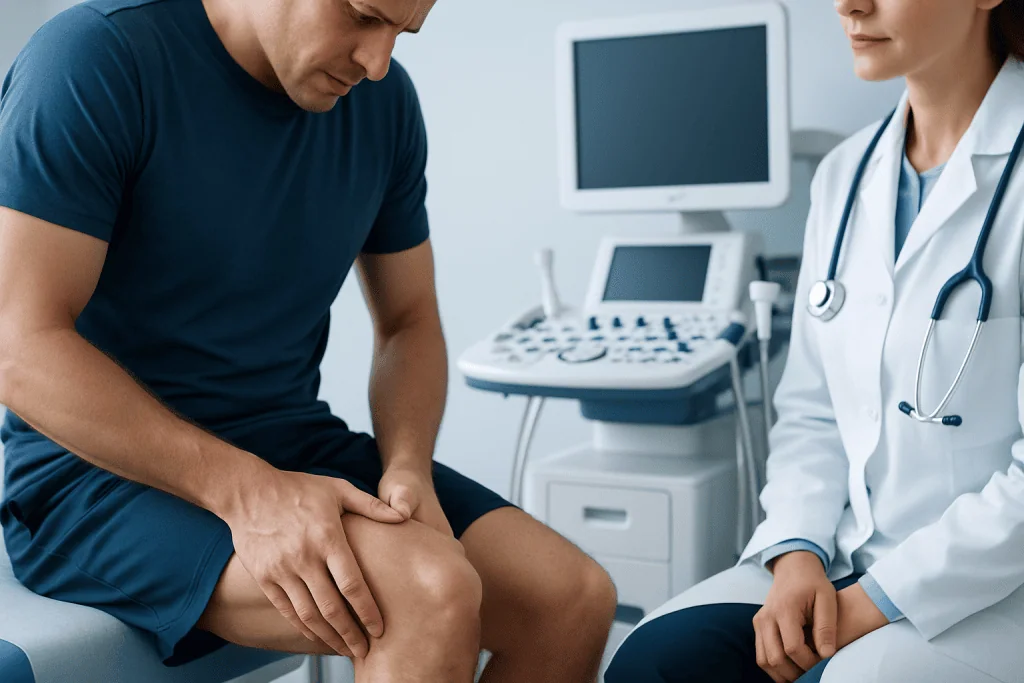
The most common symptom of an IT band problem is pain on the outside of the knee. Some people describe it as sharp, burning, or stinging, especially during running or when the foot strikes the ground. Others notice an aching discomfort that appears after exercise and becomes easier with rest, at least in the early stages.
Pain may also develop at the outer hip. This can feel like tenderness, tightness, or discomfort when lying on that side, climbing stairs, or getting up from a chair. In some cases, a person may feel a snapping sensation over the outside of the hip, although this does not always mean a serious problem.
Symptoms often follow a pattern. They may start after a certain distance or duration of activity, then return sooner and sooner if the irritation continues. Common signs include:
- Pain on the outside of the knee during or after exercise
- Tenderness when pressing the outer knee or outer hip
- Tightness along the outer thigh
- Pain that worsens downhill, on stairs, or during repeated bending
- Reduced comfort with running, cycling, hiking, or long walks
Because outer knee pain can have several causes, including tendon, cartilage, or joint problems, a proper assessment is helpful if symptoms are ongoing. Conditions such as knee pain may overlap in symptoms, so the exact source of pain is important to identify.
Causes and risk factors

IT band irritation usually develops from a combination of training load and body mechanics. A sudden increase in running distance, speed, hill work, cycling intensity, or overall activity can overload the tissues before they have adapted. This is why symptoms often appear after a change in routine rather than without warning.
Muscle weakness or imbalance can also contribute. Weakness in the hip abductors and gluteal muscles may allow the leg to move inward more than usual during activity, increasing stress along the outside of the thigh and knee. Tightness in the hip, thigh, or surrounding connective tissue may add to this problem. Footwear, running surface, bike fit, and leg alignment can also influence strain.
Risk factors may include:
- Running or cycling frequently without enough recovery
- Rapid increases in training volume or intensity
- Weak hip and pelvic stabilizing muscles
- Poor movement mechanics during exercise
- Very tight thigh or hip muscles
- Uneven surfaces, repeated downhill running, or worn shoes
Not every person with a tight IT band develops pain, and not everyone with pain has the same underlying cause. That is why treatment should focus on the broader movement pattern rather than only on the painful area itself.
How doctors diagnose IT band problems
Diagnosis usually begins with a discussion of symptoms, exercise habits, and the timing of pain. A doctor or physiotherapist will ask when the discomfort started, what activities bring it on, and whether there has been any recent change in training, equipment, or daily movement. The pattern of pain during repetitive activity often provides an important clue.
A physical examination typically includes checking the hip, thigh, and knee. The clinician may look for tenderness at the outer knee or hip, assess flexibility and strength, and observe standing posture, walking, squatting, or single-leg balance. These tests help show whether the issue is mainly overload, muscle imbalance, or another musculoskeletal condition.
Imaging is not always needed for straightforward IT band symptoms. However, ultrasound, X-ray, or MRI may be considered if the diagnosis is uncertain, symptoms are severe, or another injury needs to be ruled out. This can be useful when pain is persistent or when there is concern about other causes of hip pain or knee problems.
When symptoms are complex, a more detailed musculoskeletal assessment may help guide care, especially before returning to sport. In some cases, MRI or other orthopedic rehabilitation services may be part of a broader evaluation and recovery plan.
Treatment options and recovery
Treatment usually starts with reducing the activity that triggers pain. This does not always mean complete rest, but it often means pausing running, cycling, or similar movements long enough for irritation to settle. Ice, short-term use of simple pain relief if recommended by a doctor, and avoiding aggravating exercises may help with early symptom control.
Physical therapy is a central part of recovery. Treatment often focuses on improving hip and core strength, correcting movement patterns, and gradually restoring load tolerance. Stretching may help some people feel less tight, but strengthening and technique work are usually more important for long-term improvement than stretching alone.
Doctors may recommend a plan that includes:
- Temporary activity modification
- Targeted strengthening for the hips, gluteal muscles, and core
- Guided flexibility and mobility exercises
- Assessment of footwear, training routine, or bike fit
- Step-by-step return to running or sport
If pain does not improve with conservative treatment, further assessment may be needed to confirm the diagnosis and look for other causes. Specialist care in orthopedics or rehabilitation can be useful when symptoms are prolonged, recurrent, or affecting daily function.
Prevention and self-care
Preventing IT band irritation is usually less about the band itself and more about how the whole lower limb moves. A gradual training schedule is one of the most effective steps. Sudden changes in mileage, intensity, terrain, or workout frequency are a common trigger, so increasing activity in a measured way gives muscles and connective tissue time to adapt.
Strength training can also reduce risk. Exercises that target the gluteal muscles, hips, and core may help control leg alignment during running, walking, and stair climbing. Warm-up routines, recovery days, and attention to technique are also valuable, particularly for people returning to exercise after a break.
Useful self-care habits include:
- Building activity levels gradually
- Including regular hip and core strengthening
- Wearing supportive, well-fitting exercise shoes
- Varying terrain and avoiding excessive downhill sessions
- Allowing time for recovery between demanding workouts
- Stopping early if pain begins rather than pushing through it
Foam rolling and stretching may feel helpful for some people, but they work best as supportive tools rather than the entire treatment plan. If pain keeps returning despite these measures, professional assessment is the safest next step.
When to seek medical care
Many mild IT band symptoms improve with a short period of activity modification and guided exercise. However, medical evaluation is important if pain lasts more than a few weeks, returns repeatedly, or starts to interfere with daily walking, sleep, work, or exercise. Persistent symptoms may mean the diagnosis needs to be confirmed or the treatment plan adjusted.
A doctor should also assess pain that begins suddenly after a fall or twist, causes noticeable swelling, makes the knee feel unstable, or prevents weight-bearing. These features may point to a different injury and should not automatically be assumed to be an IT band problem.
People with ongoing symptoms often benefit from a structured evaluation by musculoskeletal specialists. Near the end of care planning, it may be helpful to know that Acibadem International’s multidisciplinary specialists and JCI-accredited hospitals diagnose and treat IT band-related conditions for international patients, especially when rehabilitation, imaging, and orthopedic review need to be coordinated.
Frequently asked questions
What does the IT band do?
The IT band helps stabilize the outer side of the hip and knee during movement. It works with nearby muscles to support walking, running, climbing stairs, and balancing on one leg.
Where is IT band pain usually felt?
It is most often felt on the outside of the knee. Some people also feel pain, tightness, or tenderness on the outside of the hip or along the outer thigh.
Is IT band syndrome the same as a knee injury?
Not exactly. IT band syndrome is a specific cause of outer knee pain related to irritation of tissues along the outside of the thigh and knee, but other knee injuries can cause similar symptoms. That is why an accurate diagnosis is important if symptoms do not improve.
Can someone exercise with IT band pain?
Sometimes, but it depends on the severity of symptoms and the activity involved. Exercises that increase pain usually need to be reduced or changed, while a clinician can suggest safer alternatives during recovery.
Do stretching and foam rolling cure IT band problems?
They may help reduce the feeling of tightness for some people, but they are usually not enough on their own. Recovery often depends more on load management, hip and core strengthening, and correcting movement patterns.
How long does IT band recovery take?
Recovery time varies depending on how long symptoms have been present, how severe they are, and whether the underlying causes are addressed. Mild cases may improve within weeks, while longer-standing problems can take more time and guided rehabilitation.
References
- American Academy of Orthopaedic Surgeons
- National Institute of Arthritis and Musculoskeletal and Skin Diseases
- American College of Sports Medicine
- National Health Service
- Mayo Clinic
This article is for general information only and is not a substitute for professional medical advice. Please consult a qualified doctor about your individual situation.
Joint and spine care in Turkey — expert assessment & treatment
JCI-accredited · board-certified surgeons · reply within 24h
Add us as a Preferred Source to see more of our trusted health content across Google Search, AI Overviews and Discover.