Breathalyzer: A Complete Medical Overview
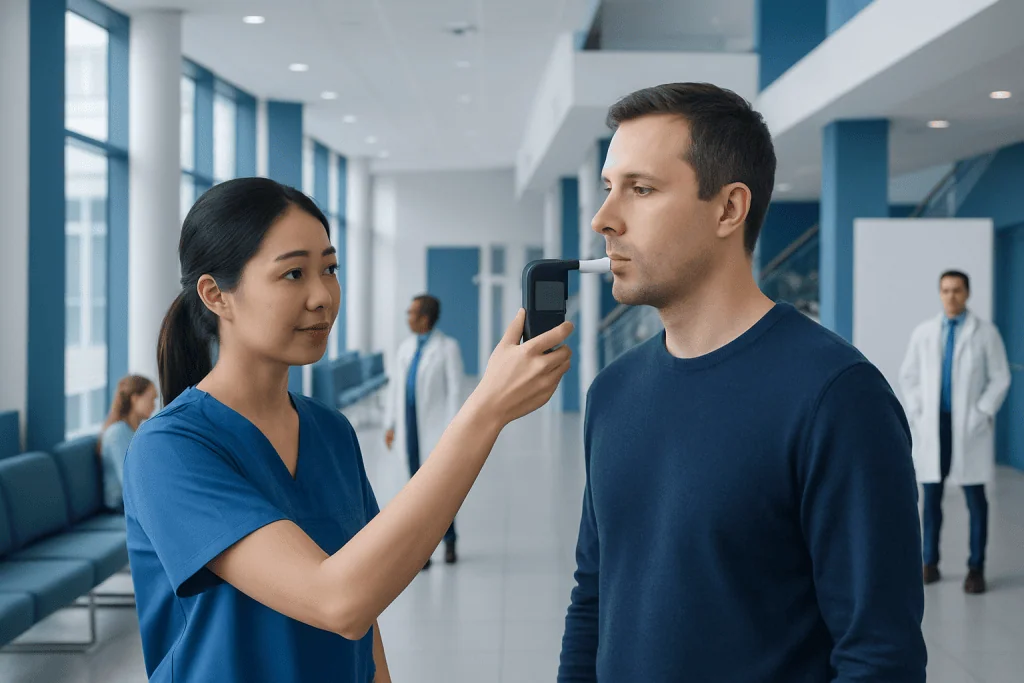
A breathalyzer measures alcohol in exhaled breath and estimates blood alcohol concentration rather than diagnosing intoxication on its own. Results can be affected by recent drinking, mouth alcohol, device calibration, temperature, and breathing technique.
Key Takeaways
- A breathalyzer measures alcohol in exhaled breath and estimates blood alcohol concentration rather than diagnosing intoxication on its own.
- Results can be affected by recent drinking, mouth alcohol, device calibration, temperature, and breathing technique.
- A positive or high reading should be interpreted alongside symptoms, examination findings, and the clinical situation.
- Breathalyzer devices are used in law enforcement, workplaces, emergency settings, and some personal safety situations, but medical-grade testing is more controlled.
- Certain illnesses or emergencies can mimic alcohol intoxication and require prompt medical assessment.
- Anyone with confusion, difficulty breathing, chest pain, injury, or loss of consciousness needs urgent medical care, regardless of a breathalyzer result.
A breathalyzer is a device that estimates how much alcohol is in a person’s breath and uses that information to approximate blood alcohol concentration. It can be useful for screening and safety, but results are not the same as a full medical evaluation and may be influenced by timing, device quality, and certain health factors.
Overview: what a breathalyzer does
A breathalyzer is a test device that measures alcohol in exhaled breath. It does not directly measure alcohol in the blood; instead, it estimates blood alcohol concentration based on the amount of alcohol vapor in deep lung air. In everyday use, people often refer to all breath alcohol devices as breathalyzers, although there are different technologies and levels of accuracy.
Alcohol is absorbed from the stomach and small intestine into the bloodstream. As blood passes through the lungs, a small portion of alcohol moves into the air sacs and is exhaled. Breath alcohol testing relies on this exchange. Because of this relationship, a breath sample taken correctly can provide a practical estimate of current alcohol exposure.
Breathalyzers are used in several settings, including roadside screening, workplaces with safety-sensitive roles, emergency departments, addiction treatment programs, and personal self-checking. Their usefulness depends on the device quality, the testing method, and whether the result is interpreted in context. A number alone does not show how impaired a person is, and it should never replace professional medical judgment when symptoms are concerning.
How breathalyzer devices work
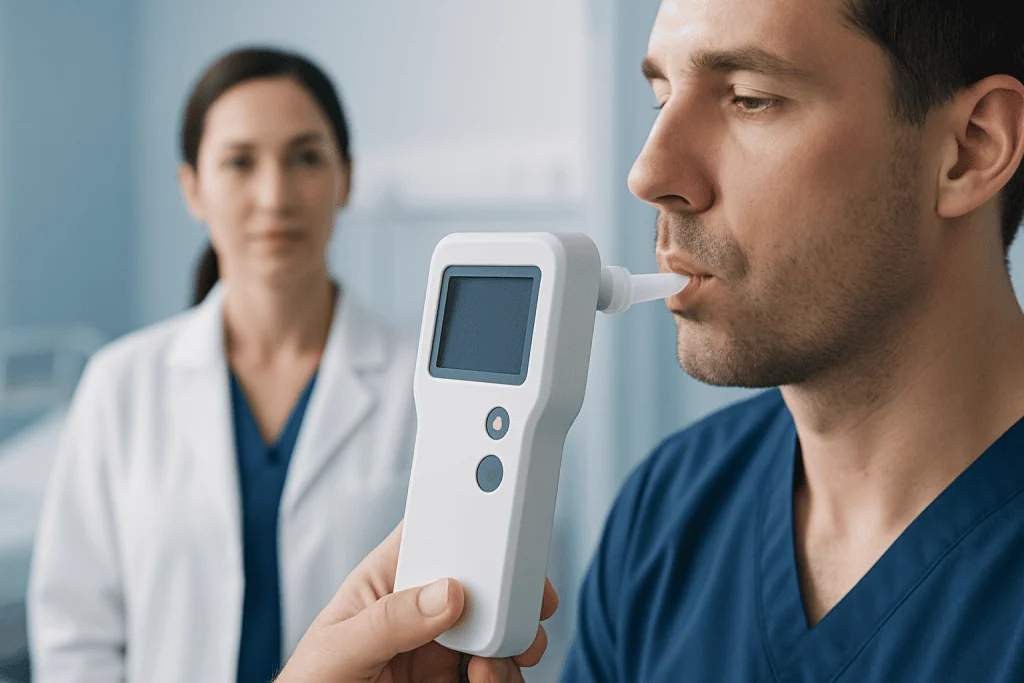
Different devices use different sensors to detect alcohol. Common technologies include semiconductor sensors, fuel cell sensors, and infrared analysis. Fuel cell devices are generally more specific for ethanol and are often preferred for professional use, while some lower-cost personal devices may be more vulnerable to environmental interference and less consistent results.
To obtain a meaningful sample, the person usually blows steadily into the mouthpiece for several seconds. The goal is to capture alveolar air, which comes from deeper in the lungs and better reflects alcohol in the bloodstream. If the sample is too short, too weak, or taken too soon after a drink, the result may be less reliable.
Calibration and maintenance are important. Breathalyzer sensors can drift over time, and a poorly maintained device may overestimate or underestimate alcohol. Temperature, humidity, residual alcohol in the mouth, and recent use of some products such as mouthwash can also affect a reading. For this reason, professionally supervised testing usually follows standard waiting periods and operating procedures.
- Semiconductor devices are common in consumer products but may be less specific.
- Fuel cell devices are widely used for more accurate breath alcohol screening.
- Infrared systems are often used in evidential or laboratory-style environments.
What results mean and what can affect them
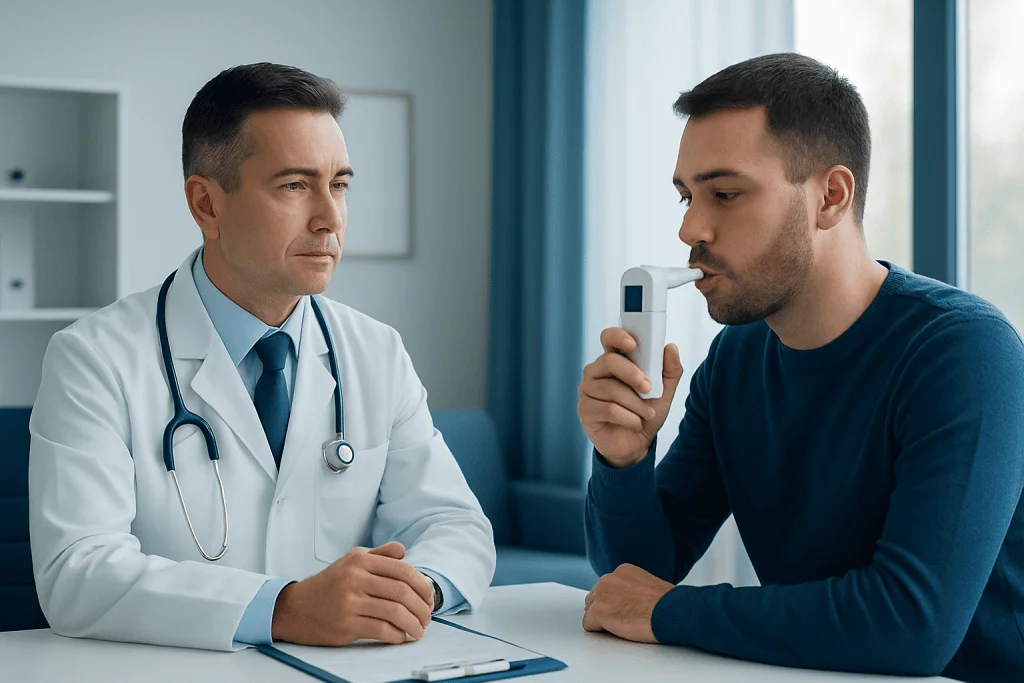
A breathalyzer result is an estimate, not a diagnosis. It suggests that alcohol is present in the breath and gives an approximate level, but it does not assess coordination, judgment, reaction time, or medical stability by itself. Two people with similar readings may appear very different because body size, alcohol tolerance, food intake, medications, fatigue, and underlying illness can all change how alcohol affects them.
One of the most common sources of misleading readings is testing too soon after drinking. Small amounts of alcohol can remain in the mouth and throat for a short time, producing a reading that does not match deeper lung air. Belching, vomiting, or using alcohol-containing mouth products shortly before a test may have a similar effect. Waiting an appropriate period before testing improves reliability.
Some medical conditions can complicate interpretation. Severe dehydration, prolonged fasting, low blood sugar, head injury, stroke, or certain metabolic conditions may cause confusion, dizziness, or altered behavior that can be mistaken for alcohol intoxication. In people with diabetes, symptoms from high or low blood sugar may be especially important to recognize. If there is concern about a serious underlying problem, a medical assessment and tests such as blood tests may be needed rather than relying on a breath reading alone.
In healthcare settings, doctors consider the whole picture: symptoms, vital signs, examination findings, and sometimes laboratory testing. Breathalyzer readings can support an assessment, but they are only one piece of information.
Common uses in healthcare and daily life
In emergency and urgent care settings, breath alcohol testing may be used as a rapid screening tool when a person arrives with altered behavior, an injury, or a possible intoxication-related event. It can help clinicians understand whether alcohol may be contributing to symptoms, but it does not rule out other urgent causes such as infection, bleeding, seizure, or poisoning. When needed, doctors may also perform imaging such as MRI scan or CT scan to evaluate other causes of confusion, falls, or head trauma.
Outside healthcare, breathalyzers are used by law enforcement, some employers, rehabilitation programs, and individuals who want a safety check after drinking. Personal devices may be convenient, but they should be treated as rough screening tools rather than proof that a person is safe to drive or work. Even when alcohol levels are falling, attention and reaction time may still be impaired.
Breath testing can also play a role in discussions about alcohol use disorder, treatment adherence, and relapse prevention. In these situations, the goal is not punishment but objective monitoring within a broader care plan. People who are worried about repeated heavy drinking, withdrawal symptoms, or health effects may benefit from discussing alcohol use with a qualified clinician.
Limitations, safety concerns, and related medical issues
A breathalyzer has clear limitations. It cannot determine why someone is drowsy, confused, unsteady, or short of breath. It cannot detect most other substances, and it cannot exclude dangerous conditions that may happen alongside alcohol use, such as internal injury, infection, or overdose. A normal or low breath alcohol reading should never reassure someone if serious symptoms are present.
Alcohol can also worsen existing illnesses or interact with medicines. Sedatives, sleep medicines, some pain medications, and certain psychiatric medications may increase drowsiness and slow breathing when combined with alcohol. People with chronic liver disease, seizure disorders, diabetes, or respiratory disease may be at higher risk of complications and may need more careful evaluation.
When breath alcohol testing raises concern about broader health problems, clinicians may evaluate for related conditions including alcohol use disorder or complications involving the liver and nervous system. In a person with severe confusion, slurred speech, weakness on one side, or a sudden severe headache, doctors may also need to urgently assess for stroke or other neurologic emergencies rather than assuming alcohol is the cause.
For families and caregivers, the safest approach is to watch the person rather than the device alone. Reduced responsiveness, repeated vomiting, bluish lips, seizures, or difficulty waking someone are medical emergencies, regardless of any breathalyzer number.
Prevention, practical self-care, and safer testing
The most important safety message is simple: a breathalyzer should never be used to decide that driving is safe after drinking. Alcohol affects concentration, vision, and reaction time, and impairment may continue even when a personal device shows a lower reading than expected. The safest plan is to avoid driving, cycling, swimming, operating machinery, or making high-risk decisions after drinking alcohol.
For those who use a personal breathalyzer, following instructions carefully can reduce error. It is usually best to avoid testing immediately after a drink, after vomiting, or after using alcohol-containing mouth products. Devices should be cleaned and calibrated according to the manufacturer’s guidance. Readings should be seen as approximate and not as medical clearance.
General self-care after alcohol use includes drinking water, resting, eating when appropriate, and staying with a trusted person if symptoms are more than mild. However, home care is not suitable for severe sleepiness, breathing problems, injury, chest pain, severe dehydration, or any concern about self-harm. People with repeated binge drinking, withdrawal symptoms, or difficulty cutting down should seek professional advice, as early support can help prevent complications.
Near the end of the care journey, some people may also need help evaluating long-term effects of alcohol on organs such as the liver, brain, and digestive system. A multidisciplinary assessment can identify treatable issues and guide next steps in a supportive way.
When to seek medical care
Medical care is needed urgently if a person has trouble breathing, cannot be awakened, has a seizure, faints, develops chest pain, or has signs of a head injury. Immediate help is also important for severe confusion, blue or pale skin, repeated vomiting, or choking. These symptoms may reflect alcohol poisoning or another serious emergency.
Prompt medical review is also sensible when symptoms do not match the breathalyzer result, such as significant confusion with a low reading, or when there may be another explanation like low blood sugar, dehydration, medication interaction, or infection. Persistent jaundice, abdominal swelling, memory problems, tremor, or numbness may suggest longer-term alcohol-related harm and deserve assessment.
Anyone who experiences cravings, loss of control over drinking, withdrawal symptoms, or repeated alcohol-related injuries should consider speaking with a doctor. At Acibadem International, multidisciplinary specialists in JCI-accredited hospitals evaluate alcohol-related health concerns and associated emergencies for international patients, using appropriate laboratory tests, imaging, and specialist care when needed.
Frequently asked questions
Is a breathalyzer the same as a blood alcohol test?
No. A breathalyzer estimates alcohol concentration by measuring alcohol in exhaled breath, while a blood test measures alcohol directly in the bloodstream. Breath testing is practical and fast, but a blood test is a different method and may be used when doctors need more detailed medical information.
How long after drinking can a breathalyzer detect alcohol?
Alcohol may be detectable for several hours, but the exact timing varies from person to person. It depends on factors such as how much was consumed, how quickly it was consumed, body size, food intake, and how the person’s body processes alcohol.
Can mouthwash or other products affect a breathalyzer result?
Yes. Alcohol-containing mouthwash, breath sprays, or recent drinks can leave residual alcohol in the mouth and temporarily raise a reading. That is one reason proper testing usually includes waiting a short period after eating, drinking, vomiting, or using oral products.
Can someone seem very impaired even with a low breathalyzer reading?
Yes. Low blood sugar, head injury, stroke, infection, sedating medications, and other medical problems can cause symptoms that resemble intoxication. If behavior or alertness seems unusually abnormal, medical evaluation is more important than the device reading.
Are personal breathalyzers reliable?
Some personal devices can provide a rough estimate, but reliability varies by sensor type, maintenance, and proper use. They should not be treated as proof that a person is safe to drive or that a medical issue is not serious.
What should be done if someone is hard to wake after drinking?
This is a medical emergency. Emergency services should be contacted right away, and the person should not be left alone. If they are breathing, placing them on their side may help reduce the risk of choking while waiting for help.
References
- World Health Organization
- National Institute on Alcohol Abuse and Alcoholism
- Centers for Disease Control and Prevention
- U.S. National Library of Medicine
- Mayo Clinic
This article is for general information only and is not a substitute for professional medical advice. Please consult a qualified doctor about your individual situation.
Explore treatments in Turkey — costs, top hospitals & a free quote
JCI-accredited · board-certified surgeons · reply within 24h
Add us as a Preferred Source to see more of our trusted health content across Google Search, AI Overviews and Discover.