Bump Underside Tongue: An Evidence-Based Guide for Patients

Many bumps under the tongue are benign and related to irritation, ulcers, or salivary gland blockage. The underside of the tongue has delicate tissue and visible veins, so normal anatomy can sometimes feel unusual.
Key Takeaways
- Many bumps under the tongue are benign and related to irritation, ulcers, or salivary gland blockage.
- The underside of the tongue has delicate tissue and visible veins, so normal anatomy can sometimes feel unusual.
- Red flags include a lump lasting longer than two weeks, increasing size, unexplained bleeding, numbness, or trouble swallowing.
- Diagnosis usually begins with a mouth exam and may include imaging or a biopsy if the cause is unclear.
- Treatment depends on the cause and may range from observation and mouth care to drainage, medication, or surgery.
A bump underside tongue is commonly caused by minor irritation, a canker sore, a blocked salivary gland, or normal blood vessels. Most bumps are harmless and improve on their own, but a lump that lasts more than two weeks, grows, bleeds, or makes swallowing difficult should be evaluated by a doctor or dentist.
Overview: what a bump on the underside of the tongue may mean
A bump underside tongue is usually not a medical emergency. In many people, it is caused by a small injury from biting, rubbing against a tooth, a canker sore, a mucus cyst, or swelling related to a salivary gland. Because the tissue under the tongue is thin and sensitive, even minor changes can feel prominent.
The underside of the tongue also contains structures that are part of normal anatomy, including small folds of tissue and visible veins. These can be mistaken for abnormal growths, especially if a person notices them for the first time. A doctor or dentist can often tell the difference during a careful oral examination.
Even so, not every lump should be ignored. A bump that does not heal, becomes firmer, grows, or causes persistent pain deserves attention. The goal is not to assume the worst, but to recognize when a simple irritation is more likely and when a professional assessment is the safer next step.
Common symptoms and how these bumps can feel

The symptoms vary depending on the cause. Some people notice a smooth, round bump that feels soft and movable, while others feel a tender sore, a fluid-filled swelling, or a firm nodule. The area may be painful only when eating spicy or acidic foods, or it may ache constantly if it is inflamed.
Color can also provide clues. A bump may look white, red, yellowish, bluish, or the same color as the surrounding tissue. A bluish or purple area can sometimes reflect a dilated vein under the tongue, while a white or yellow center with a red border is more typical of an ulcer.
Other symptoms may include:
- Burning or stinging when eating
- A feeling that something is under the tongue
- Swelling that comes and goes, especially at mealtimes
- Dry mouth or a change in saliva flow
- Bad taste in the mouth
- Difficulty moving the tongue, speaking, or swallowing if the bump is larger
If symptoms are mild and short-lived, careful self-care is often enough. If they persist or interfere with normal eating or speaking, medical review is appropriate.
Possible causes: from irritation to salivary gland problems
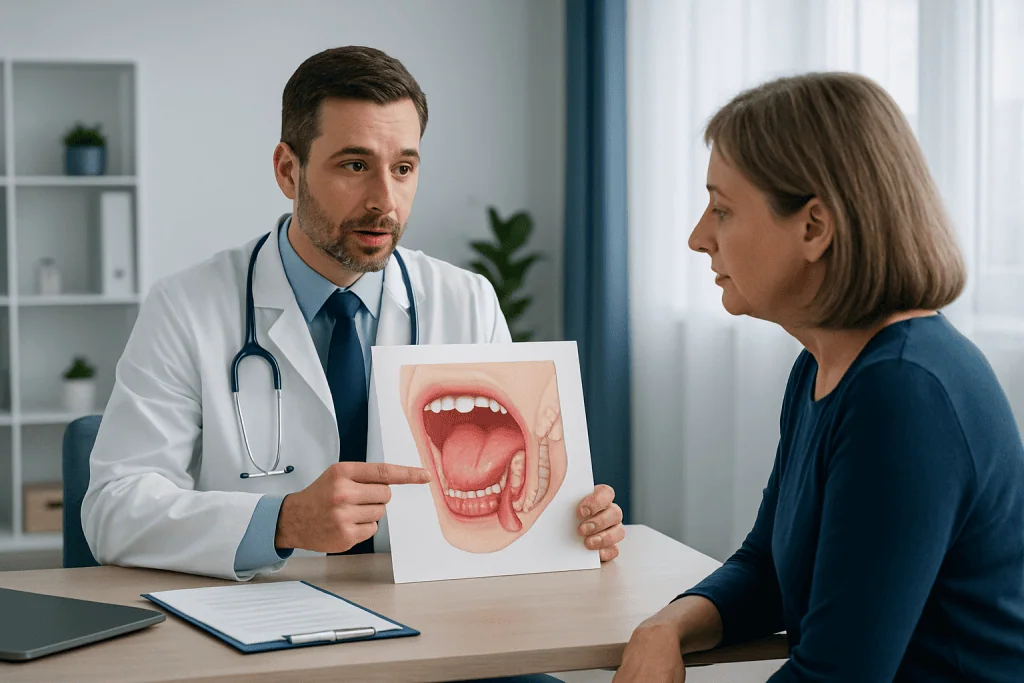
The most common causes of a bump under the tongue are benign. Minor trauma is a frequent reason. Accidentally biting the tongue, irritation from a sharp tooth edge, dental appliance friction, or burns from hot foods can lead to swelling or a sore spot. Aphthous ulcers, often called canker sores, may also develop on the underside of the tongue and can be especially uncomfortable because this area is sensitive.
Blocked salivary glands are another important cause. The floor of the mouth contains ducts that drain saliva. If a duct becomes blocked, a mucus-filled swelling can form. A ranula is one example of a cyst-like swelling in this area, and some people notice that it enlarges during meals. Small salivary stones can also block flow and cause pain or swelling under the tongue.
Less commonly, bumps may be related to infection, inflammation, or vascular changes. Enlarged blood vessels under the tongue may appear as soft blue or purple lumps and are often harmless. Viral infections can cause mouth sores, and bacterial infections may lead to painful swelling. In some cases, doctors evaluate persistent oral changes alongside other mouth conditions such as oral cancer, especially when a lesion does not heal or has concerning features.
Rarely, a bump may represent a benign tumor, a precancerous change, or a cancerous lesion. This is not the most likely explanation for a new small bump, but it is one reason a persistent lesion should not be self-diagnosed for too long.
Risk factors and warning signs that deserve closer attention
Anyone can develop a bump on the underside of the tongue, but some factors increase the chance of irritation or disease. These include smoking or tobacco use, frequent alcohol use, poor-fitting dental appliances, chronic dry mouth, poor oral hygiene, recent mouth injury, and a history of recurrent ulcers. Certain medical conditions and medications can also affect the mouth and salivary glands.
A short-lived sore after trauma is usually less concerning than a lesion with no clear cause that lasts more than two weeks. Pain alone does not always indicate seriousness, and some important lesions may be painless. For this reason, duration and change over time matter as much as discomfort.
Warning signs include:
- A bump that persists beyond two weeks
- Steady growth or increasing firmness
- Repeated bleeding or ulceration
- Numbness, tongue movement problems, or jaw pain
- Difficulty swallowing or speaking
- Swelling under the jaw or enlarged neck glands
- Unexplained weight loss or ongoing bad breath
These features do not confirm a serious condition, but they do mean the area should be examined by a qualified clinician without unnecessary delay.
How doctors diagnose a bump under the tongue
Diagnosis starts with a history and physical examination. A doctor, dentist, or ENT specialist will ask when the bump appeared, whether it changes in size, whether there has been trauma, and whether there are symptoms such as pain, bleeding, dry mouth, or trouble swallowing. They will also ask about smoking, alcohol use, oral hygiene, and any past mouth lesions.
During the exam, the clinician will inspect the floor of the mouth, underside of the tongue, teeth, gums, and salivary duct openings. They may gently feel the bump to assess texture, mobility, tenderness, and whether nearby lymph nodes are enlarged. In many cases, this exam provides a strong clue to the cause.
If the diagnosis remains uncertain, further tests may be needed. Imaging such as ultrasound, MRI, or CT can help evaluate deeper lesions or salivary gland problems. If a suspicious area needs confirmation, the clinician may recommend a tissue sample through biopsy or referral for specialist assessment. In selected cases, endoscopic evaluation or imaging may be used alongside ENT evaluation and care to examine related structures of the mouth and throat.
Treatment options depend on the cause
Treatment is guided by the underlying problem. If the bump is caused by irritation or a small traumatic ulcer, it may improve with time, gentle oral care, and removal of the trigger. That can mean smoothing a sharp tooth edge, adjusting a dental appliance, or avoiding foods that worsen pain while the area heals.
For ulcers or inflamed lesions, clinicians may suggest topical treatments to reduce discomfort and support healing. If an infection is present, treatment may involve medication appropriate to the cause. A blocked salivary duct may improve with hydration, saliva stimulation, and warm compresses, but persistent cysts or stones sometimes need a procedure.
When a mucus cyst, ranula, stone, or another structural problem is confirmed, treatment may include drainage or surgery. If imaging or examination raises concern about a growth, removal or a targeted procedure may be recommended. Depending on the findings, care may involve oral and maxillofacial surgery or related services such as head and neck surgery.
If a lesion is linked to cancer or a precancerous change, treatment planning is individualized and may involve a multidisciplinary team. Patients who need further assessment may also be referred for evaluation of tongue cancer or other oral cavity conditions when clinically appropriate.
Self-care and prevention
Many minor tongue bumps improve with simple measures. Good oral hygiene, gentle brushing, and regular dental care reduce irritation and help clinicians spot problems early. If the area is sore, bland foods, cool liquids, and avoidance of spicy, acidic, or very hot foods can make eating more comfortable.
Helpful self-care steps include:
- Rinsing gently with salt water if a clinician has said this is suitable
- Drinking enough fluids to reduce dryness
- Avoiding tobacco and limiting alcohol
- Checking for sharp teeth edges or appliance irritation
- Not picking, squeezing, or repeatedly touching the bump
Prevention is not always possible, especially for ulcers that tend to recur, but lowering local irritation often helps. People who frequently develop mouth sores may benefit from discussing possible triggers with a dentist or doctor, including stress, injury, nutritional issues, or underlying health conditions.
Near the end of the care pathway, some patients may seek specialist review for persistent or complex oral lesions. Acibadem International’s multidisciplinary specialists and JCI-accredited hospitals diagnose and treat oral, salivary, and ENT-related conditions for international patients.
When to seek medical care
It is reasonable to monitor a small, clearly irritated area for a short time if it is already improving. However, a bump under the tongue should be assessed if it lasts longer than two weeks, keeps returning in the same place, or has no obvious explanation. This is especially important if the bump is firm, enlarging, or associated with persistent ulceration.
Prompt medical care is also recommended if there is significant pain, fever, pus, rapid swelling, trouble swallowing, voice change, or difficulty breathing. These features can point to infection or deeper swelling that needs timely treatment.
For children, older adults, and anyone with a weakened immune system, lower thresholds for assessment are sensible. When in doubt, a dentist, primary care doctor, or ENT specialist can help decide whether the change is harmless, needs treatment, or requires further investigation.
Frequently asked questions
Is a bump on the underside of the tongue usually serious?
Most bumps under the tongue are not serious and are often related to irritation, ulcers, blocked salivary ducts, or normal blood vessels. The main concern is a bump that does not go away, changes over time, or causes symptoms such as bleeding or swallowing difficulty.
How long should a bump under the tongue last before it is checked?
A mouth lesion that lasts more than two weeks should generally be examined by a doctor or dentist. Minor injuries may heal sooner, but persistent changes deserve professional assessment even if they are not very painful.
Can stress cause a bump under the tongue?
Stress does not usually cause a lump directly, but it can contribute to recurrent canker sores in some people. If the bump is actually an ulcer, stress may be one of several triggers rather than the only reason.
What does a salivary gland cyst under the tongue feel like?
A salivary gland cyst or ranula often feels like a smooth, soft swelling in the floor of the mouth. It may seem to enlarge during meals or fluctuate if saliva flow changes.
Should a bump under the tongue be squeezed or popped?
No. Squeezing or trying to pop a bump can worsen irritation, introduce infection, or delay proper diagnosis. It is better to leave the area alone and have it checked if it persists.
Which specialist should evaluate a bump under the tongue?
A dentist, primary care doctor, oral surgeon, or ENT specialist may evaluate this problem depending on the suspected cause. Persistent, unexplained, or suspicious lesions are often referred to oral medicine, oral surgery, or ENT for further assessment.
This article is for general information only and is not a substitute for professional medical advice. Please consult a qualified doctor about your individual situation.
Explore treatments in Turkey — costs, top hospitals & a free quote
JCI-accredited · board-certified surgeons · reply within 24h
Add us as a Preferred Source to see more of our trusted health content across Google Search, AI Overviews and Discover.

More from the Health Library

Chest Itching — Explained by Medical Evidence, Not Myths

Autistic Traits in 4 Year Olds — Explained by Medical Evidence, Not Myths

Modafinil Interactions: What Patients Need to Know

Chills Shivering No Fever: A Complete Medical Overview

Abilify — Explained by Medical Evidence, Not Myths