Pubic Symphysis: What Patients Need to Know

The pubic symphysis is a fibrocartilaginous joint that helps stabilize the pelvis and absorb force during walking and movement. Pain in this area may be linked to pregnancy, sports overuse, trauma, surgery, or inflammation such as osteitis pubis.
Key Takeaways
- The pubic symphysis is a fibrocartilaginous joint that helps stabilize the pelvis and absorb force during walking and movement.
- Pain in this area may be linked to pregnancy, sports overuse, trauma, surgery, or inflammation such as osteitis pubis.
- Diagnosis is based on symptoms, physical examination, and sometimes imaging tests to rule out other causes of pelvic pain.
- Treatment often includes rest, activity changes, physical therapy, pain relief measures, and treatment of the underlying cause.
- Prompt medical care is important if pain is severe, follows an injury, causes difficulty walking, or occurs with fever or swelling.
The pubic symphysis is the small joint at the front of the pelvis that connects the left and right pubic bones. When it becomes irritated, unstable, or injured, it can cause pain in the groin or lower pelvis, but the cause can usually be identified and managed with the right evaluation.
Overview: what the pubic symphysis is and why it matters
The pubic symphysis is the joint at the front of the pelvis where the two pubic bones meet. It is made of strong ligaments and a pad of fibrocartilage, which allows very limited movement while helping the pelvis stay stable. Although it is small, it plays an important role in standing, walking, transferring weight from one leg to the other, and supporting the pelvic ring.
Many people only become aware of the pubic symphysis when pain develops in the lower pelvis, groin, or inner thigh. This discomfort can come from inflammation, strain, injury, joint instability, or pressure changes during pregnancy. Sometimes the pain starts gradually with activity, while in other cases it appears after a fall, sports injury, or childbirth.
The pubic symphysis should not be viewed as an isolated structure. It works together with the hips, sacroiliac joints, abdominal muscles, pelvic floor, and adductor muscles of the inner thigh. Because of this, pain in the area can overlap with other conditions, including muscle strain, hernia, hip problems, or osteitis pubis. A careful assessment helps identify the true source of symptoms.
Symptoms and how pain may feel
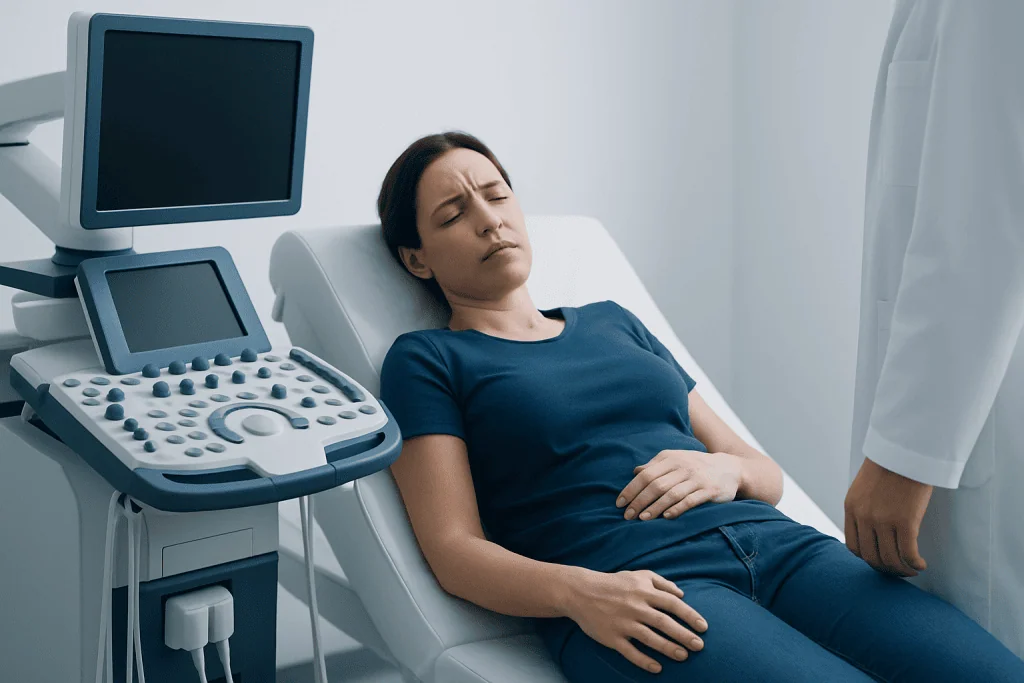
Pubic symphysis problems most often cause pain in the center front of the pelvis. The pain may feel sharp, aching, tender, or pressure-like. Some people can point to one exact spot, while others describe discomfort spreading into the groin, lower abdomen, perineum, inner thighs, hips, or lower back.
Symptoms often become more noticeable with activities that load one side of the pelvis or twist the trunk. Walking, climbing stairs, getting out of a car, turning in bed, running, kicking, lifting, or standing on one leg may worsen symptoms. In pregnancy-related cases, discomfort may increase later in the day or after prolonged activity.
Other features can include clicking, grinding, or a feeling of instability in the pelvis. Some patients notice stiffness in the morning, tenderness to touch over the pubic bone, or difficulty widening the legs. If symptoms are severe, walking may become painful enough to change gait and reduce daily function.
- Front pelvic or groin pain
- Pain that worsens with walking, stairs, running, or turning
- Tenderness over the pubic bone
- Clicking or a sense of pelvic instability
- Pain radiating to the inner thigh, hips, or lower abdomen
Causes and risk factors
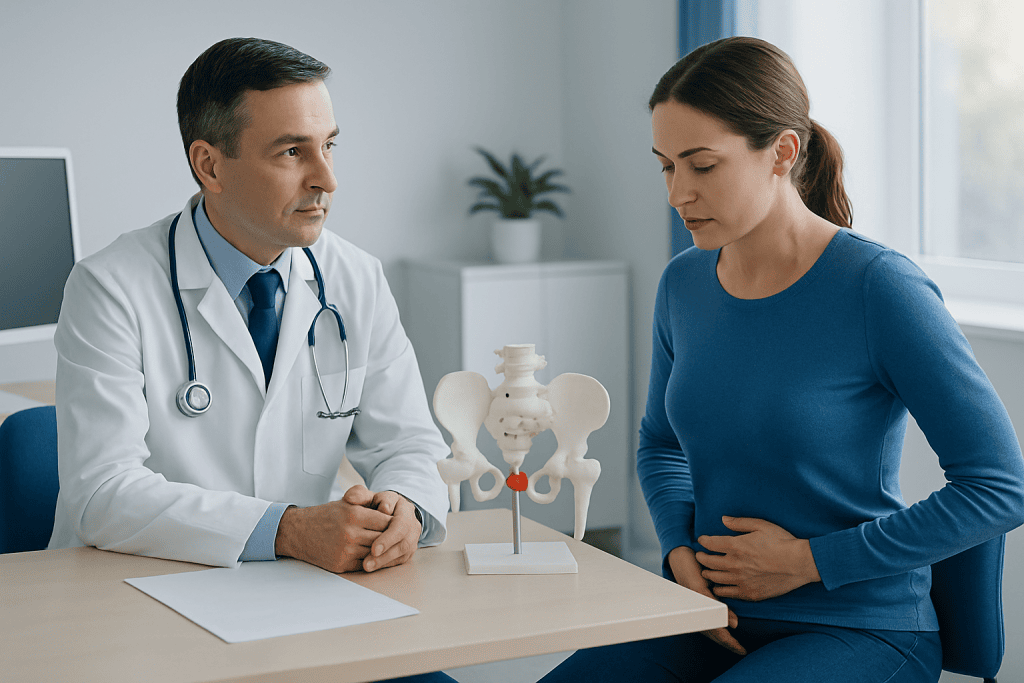
There is no single cause of pubic symphysis pain. In many cases, the problem develops when stress on the joint exceeds what surrounding muscles and ligaments can comfortably support. This can happen with repetitive sports movements, sudden increases in training, direct trauma, or biomechanical issues that affect how force travels through the pelvis.
Pregnancy is a common reason for symptoms. Hormonal changes can increase ligament laxity, and the growing uterus changes posture and load across the pelvic ring. Some people develop symphysis pubis dysfunction or pelvic girdle pain during pregnancy or after delivery. These changes are often temporary, but they can still be quite uncomfortable and deserve assessment if symptoms interfere with daily life.
Inflammation of the joint, known as osteitis pubis, may occur in athletes, after pelvic surgery, or after repetitive stress. Football, hockey, running, and sports involving sudden direction changes can strain the attachment sites of the abdominal and adductor muscles. Less commonly, infection, rheumatologic disease, or fractures may affect the area and require more urgent evaluation.
Risk factors may include weak core or pelvic stabilizing muscles, hip movement problems, previous pelvic surgery, childbirth, high-impact sport, leg-length differences, or recent trauma. Because several nearby structures can mimic pubic symphysis pain, doctors may also consider related causes such as hip pain and muscle-tendon injuries around the groin.
How doctors diagnose pubic symphysis problems
Diagnosis begins with a detailed history. A doctor will ask where the pain is felt, what movements trigger it, whether there was an injury, and if the patient is pregnant, postpartum, or active in sports. Information about fever, urinary symptoms, abdominal pain, numbness, or leg weakness is also important because these may suggest a different cause.
During the physical examination, the clinician checks tenderness over the pubic symphysis and assesses gait, hip motion, abdominal and adductor strength, and pelvic stability. Simple movement tests may help reproduce symptoms and show whether the problem is likely coming from the joint itself or from nearby structures such as the hip, tendons, or sacroiliac joints.
Imaging is not always needed, but it can be useful when symptoms are persistent, severe, or unclear. X-rays may show joint widening, degenerative change, or fracture. Ultrasound can sometimes assess surrounding soft tissues. MRI is especially helpful when doctors need to look for inflammation, stress injury, tendon involvement, or other pelvic causes. In selected cases, blood tests may be ordered if infection or inflammatory disease is a concern.
When imaging or procedures are necessary, a patient may be referred for an MRI scan or orthopedic evaluation to clarify the diagnosis and guide treatment. The goal is not only to confirm pubic symphysis involvement, but also to rule out less common but important conditions.
Treatment options and recovery
Treatment depends on the cause, symptom severity, and how much the pain affects daily activities. Many patients improve with conservative care. This usually includes reducing aggravating activities for a period, using pain relief measures recommended by a doctor, and beginning a structured rehabilitation program to improve pelvic stability and muscle balance.
Physical therapy is often central to recovery. Exercises may focus on the core, pelvic floor, gluteal muscles, and inner thigh muscles, while also correcting posture, gait, and training errors. In pregnancy-related cases, therapists may suggest movement strategies, support belts, and ways to reduce strain during walking, standing, and getting in or out of bed.
If symptoms are related to osteitis pubis, overuse, or muscle-tendon imbalance, recovery can take time. A gradual return to sport or exercise is important because pushing through pain may delay healing. Some patients benefit from image-guided injections or other interventions when symptoms do not improve with rehabilitation, but this decision should be individualized.
Surgery is uncommon and usually reserved for selected cases, such as severe instability, certain traumatic injuries, or persistent symptoms after appropriate non-surgical treatment. In more complex situations, care may involve specialists in physical therapy and rehabilitation or sports medicine to tailor treatment to the patient’s needs and activity level.
Self-care, prevention, and everyday support
Self-care can help reduce strain on the pubic symphysis while the underlying problem is being treated. Rest does not always mean complete inactivity; instead, it usually means temporarily avoiding movements that trigger pain, such as sprinting, heavy lifting, wide-leg positions, or repeated twisting. Gentle activity within comfortable limits is often preferable to prolonged immobility.
Applying ice or heat may help some people, depending on what feels best and what a clinician recommends. Good footwear, attention to posture, and avoiding sudden increases in exercise intensity may also reduce symptoms. During pregnancy, practical adjustments such as taking smaller steps, keeping the knees together when getting out of bed or a car, and using supportive pillows can make daily movement easier.
Prevention focuses on balanced conditioning and load management. Strengthening the hips, core, and pelvic stabilizers may improve force distribution across the pelvis. Athletes may need coaching on training volume, warm-up routines, movement mechanics, and recovery. People who have had symptoms before should return gradually to higher-impact activity rather than trying to resume full intensity too soon.
If pain persists despite simple measures, self-treatment alone is not enough. A proper evaluation can identify whether the issue is joint irritation, tendon overload, hip pathology, or another cause of pelvic pain. Near the end of the care pathway, patients who need more specialized assessment may also consider multidisciplinary evaluation; Acibadem International’s specialists in JCI-accredited hospitals diagnose and treat musculoskeletal and pelvic conditions for international patients.
When to seek medical care
Medical assessment is advisable if pubic symphysis pain lasts more than a few days, keeps returning, or interferes with walking, work, exercise, sleep, or pregnancy-related daily activities. A doctor should also evaluate symptoms that begin after a fall, collision, or other injury, especially if there is difficulty standing or bearing weight.
Urgent medical care is important if the pain is severe, if there is marked swelling or bruising, or if symptoms are accompanied by fever, redness, numbness, weakness, bladder or bowel changes, or significant abdominal pain. These features may suggest infection, fracture, nerve involvement, or another condition that needs prompt attention.
It is also wise to seek care when the diagnosis is uncertain. Groin and pelvic pain can come from several structures, and the right treatment depends on the exact cause. Early guidance often helps patients stay active safely and may shorten recovery time.
Frequently asked questions
What is the pubic symphysis?
The pubic symphysis is the joint at the front of the pelvis where the two pubic bones meet. It contains fibrocartilage and strong ligaments that provide stability while allowing a very small amount of movement.
Can the pubic symphysis cause groin pain?
Yes. Irritation or injury of the pubic symphysis can cause pain in the groin, lower pelvis, inner thighs, or lower abdomen. The discomfort often worsens with walking, stairs, running, or standing on one leg.
Is pubic symphysis pain common in pregnancy?
It can be. Pregnancy-related hormonal and postural changes may increase strain on the pelvic joints and ligaments, which can lead to pelvic girdle pain or symphysis pubis dysfunction. Many patients improve with activity modification, support, and guided exercises.
How is pubic symphysis pain diagnosed?
Doctors diagnose it through a medical history and physical examination, focusing on where the pain is located and what movements trigger it. If needed, imaging such as X-rays or MRI may be used to confirm the cause and exclude other pelvic or hip problems.
What is osteitis pubis?
Osteitis pubis is inflammation around the pubic symphysis, often related to repetitive stress, sports activity, surgery, or pelvic strain. It usually causes central pelvic or groin pain and may require rest, rehabilitation, and medical follow-up.
Does pubic symphysis pain always need surgery?
No. Most cases are treated without surgery using rest, activity changes, physical therapy, and treatment of the underlying cause. Surgery is usually considered only in specific situations, such as major instability, trauma, or symptoms that do not improve with appropriate conservative care.
References
- American Academy of Orthopaedic Surgeons
- American College of Obstetricians and Gynecologists
- National Health Service
- National Institute of Arthritis and Musculoskeletal and Skin Diseases
- Cleveland Clinic
This article is for general information only and is not a substitute for professional medical advice. Please consult a qualified doctor about your individual situation.
Joint and spine care in Turkey — expert assessment & treatment
JCI-accredited · board-certified surgeons · reply within 24h
Add us as a Preferred Source to see more of our trusted health content across Google Search, AI Overviews and Discover.