Cervicogenic Headache: Common Causes, Related Conditions, and When to See a Doctor

Cervicogenic headache starts from the neck and is felt in the head. Pain is often one-sided and may worsen with certain neck movements or posture.
Key Takeaways
- Cervicogenic headache starts from the neck and is felt in the head.
- Pain is often one-sided and may worsen with certain neck movements or posture.
- Diagnosis is based on symptoms, physical examination, and sometimes imaging or diagnostic blocks.
- Treatment may include physical therapy, posture changes, medicines, and selected procedures.
- Urgent evaluation is needed for sudden severe headache, neurological symptoms, fever, or headache after major injury.
Cervicogenic headache is a type of head pain that begins in the structures of the neck rather than in the head itself. It often causes one-sided pain with neck stiffness or reduced movement, and treatment usually focuses on the underlying cervical spine problem.
Overview
Cervicogenic headache is a headache caused by a problem in the cervical spine, which includes the neck bones, joints, muscles, discs, and surrounding nerves. Although the pain is felt in the head, the source is in the neck. This is why many people notice both headache and neck pain at the same time.
The pain is often felt on one side and may start in the back of the head or upper neck before spreading toward the forehead, temple, or around the eye. Some people describe a steady, non-throbbing pain, while others notice tenderness and stiffness that make turning the head uncomfortable.
Cervicogenic headache is different from migraine and tension-type headache, though symptoms can overlap. The key feature is that neck movement, posture, or pressure on certain neck structures can trigger or worsen the pain. Because headache can have many causes, a careful assessment is important to identify whether the neck is truly the source.
Symptoms and How It Feels
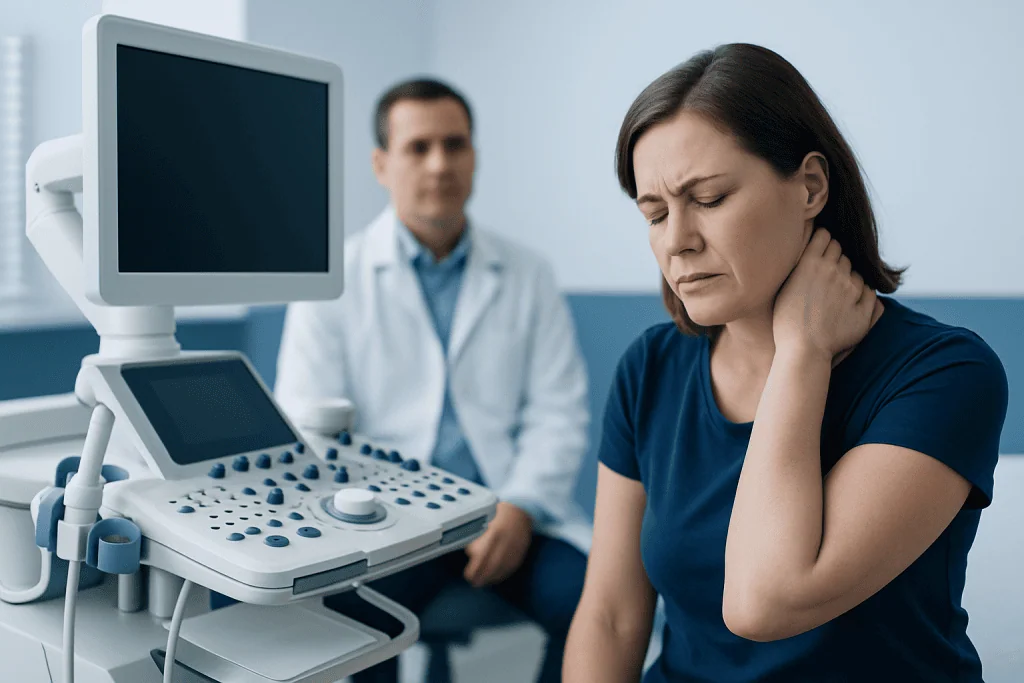
The most common symptom of cervicogenic headache is head pain linked to neck discomfort or restricted neck movement. The pain often begins in the neck or base of the skull and radiates forward. It may be continuous or come in episodes, and it usually affects the same side consistently, though this is not always the case.
People may also notice that the headache becomes worse after long periods of sitting, working at a computer, sleeping in an awkward position, or turning the head repeatedly. Pressing on certain areas of the upper neck may reproduce the pain. Shoulder or upper back tightness can occur alongside the headache.
Other symptoms can include:
- Reduced range of neck motion
- Neck stiffness or tenderness
- Pain around the eye, temple, forehead, or back of the head
- Headache triggered by posture or neck movement
- Occasional nausea or light sensitivity, though these are usually less prominent than in migraine
Because migraine, tension headache, and neck-related headache can sometimes occur together, symptoms do not always fit into a single simple pattern. A clinician looks at the whole picture rather than one symptom alone.
Common Causes and Related Conditions

Cervicogenic headache can arise when pain-sensitive structures in the neck refer pain to the head. Common sources include the upper cervical facet joints, discs, muscles, ligaments, and nerves. Problems affecting the upper part of the cervical spine are especially likely to create this pattern because neck and head pain pathways connect in the nervous system.
Several related conditions can contribute. These include degenerative changes in the cervical spine, joint irritation after a minor injury, muscle imbalance, poor posture, and prolonged strain from desk work or device use. Headache may also appear after whiplash or other neck trauma, even when initial imaging is normal.
Examples of associated conditions include cervical herniated disc and cervical spondylosis, both of which can irritate structures in the neck and contribute to pain patterns that reach the head. In some patients, muscle tension and joint dysfunction coexist, making symptoms more persistent.
Risk factors may include previous neck injury, repetitive neck positioning, arthritis, reduced muscle strength or flexibility, and occupations that involve long hours of static posture. These factors do not guarantee cervicogenic headache, but they can make it more likely.
How Doctors Diagnose Cervicogenic Headache
Diagnosis begins with a detailed medical history and physical examination. The doctor asks where the pain starts, whether neck movement triggers it, how often it occurs, and whether there are warning signs that suggest another cause of headache. The neck is then examined for tenderness, posture, muscle tightness, and limits in movement.
A diagnosis of cervicogenic headache is usually clinical, meaning it is based mainly on the pattern of symptoms and exam findings. Imaging such as X-ray, CT, or MRI may be used when the history suggests structural neck disease, nerve compression, trauma, or another condition that needs to be ruled out. Imaging can support the evaluation, but it does not by itself confirm that a neck finding is the cause of the headache.
In selected cases, specialists may consider diagnostic nerve or joint blocks to help identify the pain source. These are not needed for everyone, but they can be helpful when symptoms are persistent, unclear, or being considered for an interventional treatment plan.
Doctors also make sure the headache is not better explained by other disorders, such as migraine, tension-type headache, neuralgia, infection, or a vascular problem. This step is important because treatment works best when directed at the true cause.
Treatment Options
Treatment for cervicogenic headache focuses on the underlying neck problem and on relieving pain while restoring movement. Many people improve with a combination of physical therapy, activity modification, and posture correction. A physical therapist may work on mobility, deep neck flexor strength, shoulder mechanics, and ergonomic habits that reduce strain on the cervical spine.
Doctors may also recommend medications to help with pain and inflammation, depending on the person’s symptoms and overall health. Heat, gentle stretching, and a temporary reduction in aggravating activities can be useful during flare-ups. Because long-term overuse of pain medicines can cause rebound headaches in some people, medication plans should be individualized and reviewed by a clinician.
When symptoms persist or there is a clear structural cause, additional options may be considered. These can include physical therapy and rehabilitation programs, image-guided injections, or treatment for a specific cervical disorder. If there is significant nerve compression or spinal pathology, doctors may evaluate whether spine surgery is appropriate, although surgery is not needed for most patients with cervicogenic headache.
Care is often multidisciplinary, involving neurology, pain medicine, rehabilitation, and spine specialists. Near the end of the care pathway, international patients may also seek evaluation at Acibadem International, where multidisciplinary specialists in JCI-accredited hospitals diagnose and treat cervical spine and headache-related conditions.
Self-care, Posture, and Prevention
Self-care can play an important role in reducing symptoms and preventing recurrence. Since cervicogenic headache is often linked to mechanical strain in the neck, daily habits matter. Small changes in workstation setup, screen height, sitting posture, and sleep position may reduce repeated stress on the cervical spine.
Helpful strategies may include regular movement breaks, gentle range-of-motion exercises, and strengthening programs recommended by a clinician or therapist. Avoiding long periods with the head bent forward, such as during phone or tablet use, can also help. A supportive pillow and a sleep position that keeps the neck in a neutral position may improve morning symptoms.
Practical self-care steps include:
- Taking short breaks from desk work or driving
- Adjusting screens to eye level
- Using chairs and workstations that support upright posture
- Following a guided exercise plan for neck and shoulder muscles
- Seeking early care after a neck injury if pain or headaches develop
Prevention does not always eliminate headache completely, especially when arthritis or prior injury is involved. Still, consistent neck care often reduces the frequency and intensity of episodes over time.
When to Seek Medical Care
A non-urgent medical review is appropriate when headaches keep returning, interfere with daily life, or are consistently linked to neck pain or reduced neck movement. Evaluation is also helpful when over-the-counter measures are no longer enough, symptoms follow a neck injury, or the diagnosis is uncertain.
Urgent medical care is needed if a headache starts suddenly and is extremely severe, follows a major trauma, or occurs with weakness, numbness, confusion, fainting, seizures, fever, stiff neck, vision loss, or trouble speaking. These features can point to causes that are not cervicogenic and require prompt assessment.
It is also important to seek care if the headache pattern changes significantly, becomes progressively worse, or wakes a person from sleep regularly. Children, older adults with new headaches, and people with cancer, immune system problems, or blood-thinning medication should be evaluated promptly when new or unusual headaches appear.
Frequently asked questions
What is a cervicogenic headache?
A cervicogenic headache is head pain that comes from a problem in the neck. The pain is felt in the head, but the source may be the cervical joints, discs, muscles, ligaments, or nerves.
How is cervicogenic headache different from migraine?
Cervicogenic headache is usually linked to neck pain, neck stiffness, or pain triggered by neck movement or posture. Migraine more often includes throbbing pain, stronger sensitivity to light or sound, and symptoms such as nausea, although some overlap can occur.
Can poor posture cause cervicogenic headache?
Poor posture can contribute by placing repeated strain on the neck muscles and joints. It is not the only cause, but it can worsen symptoms or make headaches more frequent, especially during prolonged desk work or device use.
Do I need an MRI for cervicogenic headache?
Not always. Many people are diagnosed based on their medical history and physical examination, while imaging is used when there are warning signs, trauma, nerve symptoms, or a need to look for a structural neck problem.
What is the best treatment for cervicogenic headache?
Treatment depends on the cause, but many people improve with physical therapy, posture correction, activity changes, and appropriate pain relief. If symptoms persist, a doctor may consider injections or treatment for an underlying cervical spine condition.
Can cervicogenic headache go away on its own?
Some episodes improve with rest, posture changes, and short-term self-care. However, recurring headaches should be evaluated so the underlying neck issue can be identified and treated appropriately.
References
- International Classification of Headache Disorders
- National Institute of Neurological Disorders and Stroke
- American Migraine Foundation
- American Academy of Neurology
- National Institute for Health and Care Excellence
This article is for general information only and is not a substitute for professional medical advice. Please consult a qualified doctor about your individual situation.
Joint and spine care in Turkey — expert assessment & treatment
JCI-accredited · board-certified surgeons · reply within 24h
Add us as a Preferred Source to see more of our trusted health content across Google Search, AI Overviews and Discover.