How Long Does Alcohol Stay in Urine? Causes, Explanations, and Next Steps
Alcohol itself usually stays detectable in urine for about 12 to 24 hours. EtG and EtS urine tests can detect alcohol byproducts for longer than standard alcohol tests.
Key Takeaways
- Alcohol itself usually stays detectable in urine for about 12 to 24 hours.
- EtG and EtS urine tests can detect alcohol byproducts for longer than standard alcohol tests.
- Detection time varies based on how much a person drank, how quickly they drank, and individual metabolism.
- A positive urine result does not always show current impairment; it may reflect recent alcohol use.
- Medical care is important if alcohol use is linked with confusion, repeated vomiting, injury, chest pain, or withdrawal symptoms.
In most cases, alcohol itself is detectable in urine for about 12 to 24 hours after drinking, although this can vary with the amount consumed, hydration, body size, and overall health. Some specialized urine tests look for alcohol byproducts, which may remain detectable longer, so the answer depends on the type of test being used.
Overview: how long alcohol stays in urine
For many people, this question comes up after a social event, a workplace screening, or a routine health concern. In most situations, alcohol leaves the urine within about 12 to 24 hours. That said, the exact answer depends on what is being measured: the alcohol itself or chemical byproducts the body produces after drinking.
Standard urine alcohol testing usually detects ethanol for a relatively short period. However, specialized tests such as ethyl glucuronide (EtG) or ethyl sulfate (EtS) can detect alcohol metabolites for longer. This is why two people who drank the same amount may receive different test results depending on the type of test, the timing, and their individual body chemistry.
Most brief episodes of recent alcohol use are not a medical emergency. Still, if alcohol use is followed by severe drowsiness, breathing problems, repeated vomiting, fainting, or unusual behavior, urgent medical assessment is important. A doctor can also help when a person is concerned about heavy drinking patterns, possible alcohol use disorder, or the effects of alcohol on the liver, kidneys, or mental health.
What affects urine detection time?
Alcohol detection in urine is influenced by several factors, and there is no single timeline that applies to everyone. The amount consumed is one of the biggest factors. Drinking more alcohol, drinking quickly, or drinking on an empty stomach can increase blood alcohol levels and extend the time the body needs to process it.
Body size, age, sex, liver function, hydration, and general metabolism also matter. A person with slower alcohol metabolism may take longer to clear alcohol and its byproducts. Certain medical conditions, including liver disease, may change how the body handles alcohol. Other substances, including some medications, may also affect alertness or health risks even if they do not directly prolong urine detection.
The type of urine test makes a major difference:
- Standard urine ethanol test: usually detects alcohol for about 12 to 24 hours after drinking.
- EtG or EtS urine test: may detect alcohol byproducts for longer, sometimes beyond the period of intoxication.
- Testing context: emergency care, employment screening, and medical follow-up may use different methods.
Because of these variables, test results should be interpreted carefully. A longer detection window does not necessarily mean a person is still intoxicated, and a shorter window does not always rule out recent alcohol use.
How the body processes alcohol

After a person drinks, alcohol is absorbed through the stomach and small intestine into the bloodstream. The liver does most of the work of breaking alcohol down. Enzymes convert ethanol into other compounds, which are then processed further and eventually removed from the body.
Most alcohol is metabolized by the liver, but a small amount leaves the body unchanged through breath, sweat, and urine. This is why alcohol can be measured in breath tests and urine tests. Once blood alcohol levels begin to fall, alcohol may still be detectable in some body fluids for a limited period.
The body also creates metabolites such as EtG and EtS after alcohol exposure. These are not the same as active alcohol and do not indicate current intoxication on their own. Instead, they show that alcohol was consumed recently enough for the body to have processed it. If there are concerns about broader health effects from heavy drinking, doctors may also assess organs commonly affected by alcohol, including the liver and nervous system.
Urine tests, timing, and what results mean
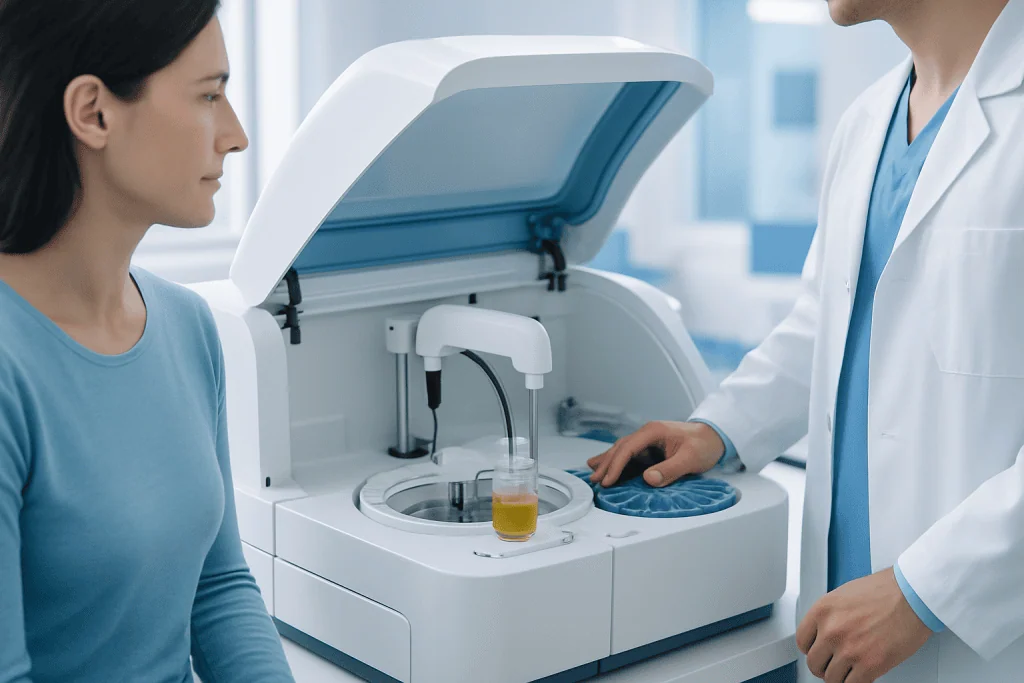
A urine test for alcohol may be ordered in different settings, including emergency care, routine medical evaluation, substance use treatment, legal situations, or employment-related screening. The meaning of the result depends heavily on the type of test and the reason it was ordered.
A standard urine ethanol test is better for identifying relatively recent drinking. If enough time has passed, it may be negative even though alcohol was consumed the day before. By contrast, an EtG or EtS test may remain positive after the direct effects of alcohol have worn off. This can sometimes confuse people who feel normal but still have a positive urine screen.
Doctors do not rely on a urine test alone to judge a person’s current condition. They also ask about timing, amount consumed, symptoms, medications, and medical history. If needed, they may use a combination of evaluations such as blood work, a breath test, or general health check-up assessment to understand whether the issue is simply recent alcohol use or part of a larger health problem.
Interpretation can be especially important when symptoms seem out of proportion to the amount consumed. In that situation, clinicians may look for dehydration, low blood sugar, head injury, infection, or other causes of confusion or weakness.
Symptoms that may need medical review
In many cases, concern about alcohol in urine is practical rather than dangerous. However, symptoms matter more than the test result itself. A person should seek medical advice if alcohol use is associated with severe nausea, repeated vomiting, confusion, poor coordination, blackouts, injury, or symptoms that last longer than expected.
Urgent medical attention is especially important if there is slow or difficult breathing, inability to wake the person, seizures, bluish skin or lips, chest pain, or suspected overdose involving alcohol and other substances. Alcohol combined with sedatives, opioids, or certain sleeping tablets can be particularly risky.
Medical review is also appropriate when someone has signs of withdrawal after stopping alcohol, such as tremor, sweating, anxiety, agitation, fast heartbeat, hallucinations, or seizures. These symptoms can be serious and should not be managed alone. In some situations, doctors may recommend supervised alcohol detoxification or ongoing support for dependence.
How doctors evaluate concerns about alcohol use
When someone seeks medical care, the first step is usually a clear history. The doctor asks when the person last drank, how much they drank, whether other substances were involved, and what symptoms are present. They will also ask about liver disease, kidney problems, medications, pregnancy, sleep, mental health, and any past episodes of withdrawal.
A physical examination may check alertness, hydration, pulse, blood pressure, breathing, temperature, abdominal tenderness, and signs of injury. If there are warning signs, additional testing may be needed. This may include blood glucose, blood alcohol testing, liver function tests, kidney function tests, or screening for complications related to heavy or long-term use.
If the issue appears to be recurring alcohol misuse rather than a one-time episode, the doctor may explore patterns of drinking and discuss next steps in a supportive, nonjudgmental way. Treatment can range from counseling and lifestyle changes to structured rehabilitation. Some patients benefit from mental health support when anxiety, depression, trauma, or stress is linked with alcohol use.
Near the end of the evaluation, the clinician usually explains what the urine result can and cannot show. This helps people understand that a positive result may reflect recent exposure, while symptoms and safety concerns guide the need for treatment. Acibadem International’s multidisciplinary specialists and JCI-accredited hospitals also evaluate and treat alcohol-related health concerns for international patients when needed.
Prevention and self-care after drinking
The most reliable way to avoid alcohol appearing in urine is not drinking alcohol. After drinking, time is what allows the body to clear alcohol. Common myths such as taking a cold shower, exercising intensely, or drinking large amounts of coffee do not speed up alcohol metabolism in a meaningful way.
For general self-care, it may help to rest, drink water regularly, and eat simple foods if tolerated. People should avoid driving, operating machinery, or making important decisions after drinking. They should also avoid mixing alcohol with medications unless a doctor has confirmed it is safe.
Longer-term prevention focuses on safer drinking habits and recognizing unhealthy patterns early. Helpful steps may include setting personal limits, avoiding binge drinking, not drinking on an empty stomach, and reaching out for support if alcohol starts affecting work, relationships, sleep, or mood. If urinary symptoms such as burning, urgency, or blood in the urine occur, the issue may be unrelated to alcohol and could need assessment for a urinary tract infection or another urinary condition.
When to seek medical care
Medical care should be sought promptly if there is trouble breathing, repeated vomiting, severe confusion, seizure activity, fainting, chest pain, signs of dehydration, or concern about mixed substance use. Pregnant people, older adults, and those with chronic liver, kidney, heart, or mental health conditions may need earlier assessment even with milder symptoms.
A non-urgent doctor visit is a good idea if questions about alcohol in urine are happening often, if test results are affecting daily life, or if drinking feels difficult to control. A clinician can explain the likely detection window, review the right type of test, and help identify whether there is a broader health issue to address.
People who notice tolerance, withdrawal symptoms, morning drinking, memory lapses, or repeated alcohol-related problems may benefit from professional support. Early help is often simpler and more effective than waiting for complications to develop.
Frequently asked questions
How long does alcohol stay in urine after one night of drinking?
In many cases, alcohol itself can be detected in urine for about 12 to 24 hours after drinking. If a specialized test such as EtG or EtS is used, detection may last longer because these tests look for alcohol byproducts rather than active alcohol.
Can drinking water flush alcohol out of urine faster?
Drinking water may help with hydration, but it does not quickly remove alcohol from the body. The liver still needs time to metabolize alcohol, and urine testing may remain positive until that process is complete.
Does a positive urine alcohol test mean a person is still drunk?
Not always. A urine test may stay positive after the immediate effects of alcohol have passed, especially if the test detects metabolites such as EtG or EtS. Doctors look at symptoms, timing, and sometimes other tests to assess current impairment.
What is the difference between a standard urine alcohol test and an EtG test?
A standard urine alcohol test looks for ethanol, the alcohol itself, and usually has a shorter detection window. An EtG test looks for a byproduct formed after drinking, so it can remain positive for longer than ethanol testing.
Can medications or health problems affect how long alcohol stays in urine?
Yes. Liver function, body size, hydration, age, and overall metabolism can all influence how quickly alcohol is processed. Medications may not always change the urine detection window directly, but they can increase side effects or health risks when combined with alcohol.
When should someone worry about alcohol-related symptoms?
Emergency care is important if there is difficulty breathing, inability to wake the person, seizures, severe confusion, repeated vomiting, or suspected overdose. A routine medical visit is also helpful if drinking is becoming hard to control or causing problems at home, work, or school.
References
- National Institute on Alcohol Abuse and Alcoholism
- Centers for Disease Control and Prevention
- Substance Abuse and Mental Health Services Administration
- MedlinePlus
- Mayo Clinic
This article is for general information only and is not a substitute for professional medical advice. Please consult a qualified doctor about your individual situation.
Explore treatments in Turkey — costs, top hospitals & a free quote
JCI-accredited · board-certified surgeons · reply within 24h
Add us as a Preferred Source to see more of our trusted health content across Google Search, AI Overviews and Discover.