Pericoronitis: Symptoms, Causes, and Treatment Options

Pericoronitis most often affects partially erupted wisdom teeth where food and bacteria collect under a gum flap. Common symptoms include pain, swollen gums, bad breath, unpleasant taste, and discomfort when chewing or opening the mouth.
Key Takeaways
- Pericoronitis most often affects partially erupted wisdom teeth where food and bacteria collect under a gum flap.
- Common symptoms include pain, swollen gums, bad breath, unpleasant taste, and discomfort when chewing or opening the mouth.
- Mild cases may improve with professional cleaning and careful oral hygiene, while more severe cases may need medication or dental procedures.
- Repeated episodes are common if the tooth remains partly trapped, so a dentist may recommend removal or treatment of the opposing tooth.
- Prompt dental care is important if there is facial swelling, fever, worsening pain, or trouble swallowing.
Pericoronitis is inflammation of the gum tissue around a partially erupted tooth, most often a lower wisdom tooth. It can cause pain, swelling, bad taste, and difficulty opening the mouth, and treatment usually focuses on cleaning the area, controlling infection when needed, and addressing the tooth if the problem keeps returning.
Overview
Pericoronitis is inflammation, and sometimes infection, of the soft gum tissue surrounding a tooth that has only partly come through the gum. It happens most often around third molars, also called wisdom teeth, especially the lower ones. Because part of the tooth remains covered by gum tissue, a small pocket can form where food debris and bacteria become trapped.
This condition may begin suddenly or come and go over time. In some people it causes mild tenderness for a few days; in others it leads to more significant pain, swelling, and difficulty eating. The severity depends on how much the tooth has erupted, how easily the area can be cleaned, and whether infection has spread beyond the local gum tissue.
Pericoronitis is not the same as a cavity or generalized gum disease, although those conditions can occur at the same time. It is a localized problem related to eruption and the shape of the surrounding gum flap. Understanding that pattern helps explain why symptoms may return if the tooth remains partly impacted.
Symptoms of pericoronitis
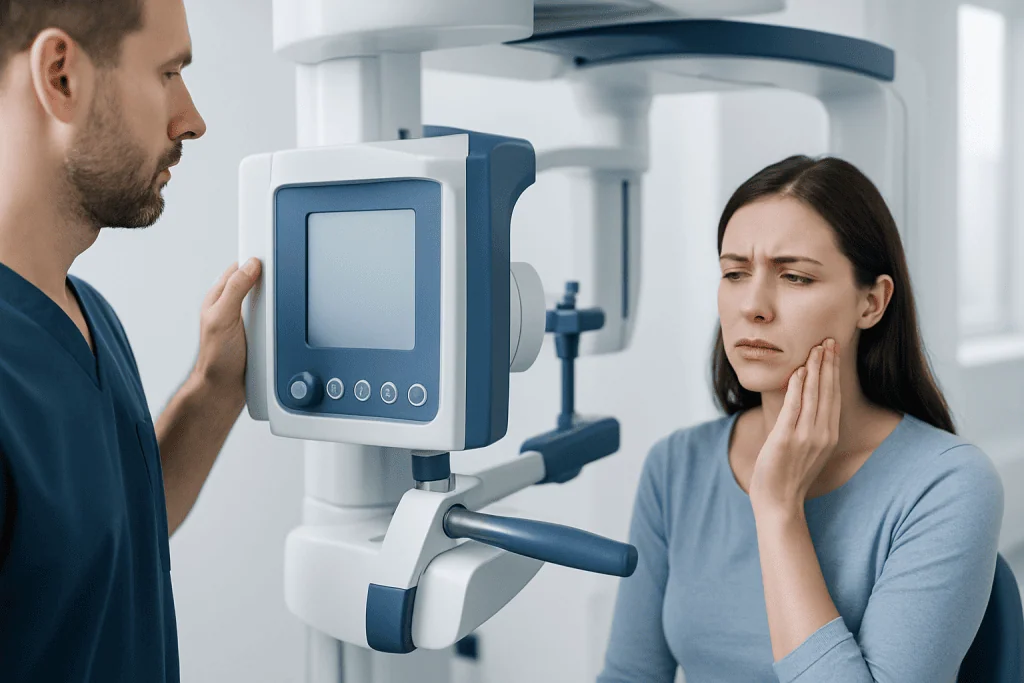
The symptoms of pericoronitis can range from mild irritation to more noticeable inflammation. Many people first notice soreness behind the last molar, especially while chewing. The gum over or around the tooth may look red, puffy, or tender to the touch.
As inflammation increases, symptoms can include pain that spreads to the jaw, ear, or throat on the same side. Swelling may make it uncomfortable to bite down or clean the area. Some people notice a bad taste in the mouth, bad breath, or discharge if infected material drains from around the tooth.
More advanced cases can cause limited mouth opening, sometimes called trismus, because nearby muscles become irritated. There may also be swollen lymph nodes under the jaw, general discomfort, or fever. Symptoms can be made worse if the opposing tooth bites down on the swollen gum flap, repeatedly traumatizing the tissue.
- Pain or tenderness behind the last molar
- Red, swollen gum around a partially erupted tooth
- Bad taste or bad breath
- Discomfort when chewing or swallowing
- Jaw stiffness or difficulty opening the mouth fully
- Sometimes fever or facial swelling
Causes and risk factors

The main cause of pericoronitis is bacterial buildup beneath a flap of gum tissue over a partially erupted tooth. This flap, known as an operculum, can trap food particles and plaque in a place that is difficult to reach with normal brushing. The body responds with inflammation, and in some cases a localized infection develops.
Wisdom teeth are the teeth most often involved because they commonly erupt late and may not have enough space to come in fully. A tooth that erupts at an angle or remains partially impacted creates an environment where cleaning is difficult. This is why pericoronitis is closely linked to wisdom tooth problems and may coexist with an impacted tooth.
Several factors can increase the risk of a flare-up. Poor access for oral hygiene, repeated irritation from the opposing upper tooth, stress, fatigue, smoking, and previous episodes of local gum inflammation may all play a role. In some cases, pericoronitis appears during periods when the immune system is under strain, although the mechanical issue around the erupting tooth usually remains the central trigger.
How dentists diagnose it
Diagnosis usually starts with a dental history and an examination of the painful area. A dentist looks for a partially erupted tooth, a swollen gum flap, trapped debris, pus, tenderness, and signs that the upper tooth may be biting into the inflamed tissue. The pattern of symptoms often helps distinguish pericoronitis from other causes of tooth and jaw pain.
Dental X-rays are often useful to show the position of the wisdom tooth, whether it is impacted, how much space is available for eruption, and whether nearby teeth are affected. Imaging can also help identify other problems such as decay, cyst formation, or infection around the roots. If needed, the dentist may also consider related conditions such as wisdom tooth problems more broadly.
Other conditions can mimic pericoronitis, including tooth abscess, severe gingivitis, temporomandibular joint disorders, and throat or salivary gland infections. A careful exam is important because treatment differs depending on the cause. If swelling is significant or the person has fever or difficulty swallowing, urgent evaluation is especially important.
Treatment options
Treatment depends on how severe the inflammation is and whether the problem is likely to recur. In many cases, the first step is local care: the dentist gently cleans the area under the gum flap, removes trapped debris, and irrigates the pocket. This often reduces irritation and allows the tissue to settle. Pain relief and improved oral hygiene are also important parts of early management.
If there are signs of spreading infection, marked swelling, fever, or swollen lymph nodes, a dentist may prescribe medication in addition to cleaning the area. Medication choice depends on the person’s health history and the clinical findings. People should use medicines only as prescribed by a qualified professional, since not every painful wisdom tooth problem needs antibiotics.
When episodes keep coming back, definitive treatment may be recommended. This may involve removing the overlying gum tissue in selected cases, treating the opposing tooth if it is traumatizing the gum, or arranging wisdom tooth extraction if the tooth is unlikely to erupt normally. If imaging shows the tooth is trapped or poorly positioned, a clinician may discuss options related to treatment for an impacted tooth. In some situations, dentists may also evaluate whether broader oral and dental surgery planning is appropriate.
The goal of treatment is not only to calm the current inflammation but also to prevent repeat attacks. For many people, symptoms improve quickly once the area is cleaned and the source of irritation is addressed. A dentist can explain whether observation, supportive care, or a procedure offers the best long-term approach.
Self-care and prevention
Good home care can help reduce discomfort and support healing, but it should not replace professional assessment when symptoms are significant. Gentle brushing around the area, careful rinsing as advised by a dentist, and avoiding forceful poking under the gum can help limit further irritation. Soft foods may be easier to manage during a flare-up, particularly if chewing is painful.
Preventing recurrence often depends on making the area easier to keep clean or removing the source of repeated trapping and inflammation. Regular dental checkups are useful for monitoring wisdom teeth before they become problematic. Early evaluation can identify teeth that are partially erupted, crowded, or angled in a way that increases the risk of infection.
General oral health habits also matter. Brushing twice daily, cleaning between teeth, avoiding tobacco, and seeking care promptly for ongoing dental pain can lower the chance of complications. If the problem is caused by a tooth that cannot erupt properly, home measures may help temporarily but usually will not resolve the underlying issue on their own.
When to seek medical care
People should arrange dental care if pain around a partially erupted wisdom tooth lasts more than a day or two, keeps returning, or interferes with eating and cleaning the mouth. Ongoing swelling, a bad taste, or discharge from the area also deserves evaluation. Early treatment can often relieve symptoms and prevent the inflammation from becoming more severe.
More urgent assessment is important if there is fever, worsening facial swelling, difficulty opening the mouth, trouble swallowing, or any sense that breathing is affected. These symptoms may suggest a more significant infection that needs prompt professional care. People with diabetes, immune suppression, or other medical conditions should be especially cautious about delaying treatment.
Near the end of the care pathway, some patients may wish to seek coordinated evaluation if extraction or surgical management is being considered. Acibadem International’s multidisciplinary specialists in JCI-accredited hospitals diagnose and treat dental and oral conditions for international patients. The most appropriate next step should always be guided by a qualified dentist or oral surgeon after examination.
Frequently asked questions
Is pericoronitis a dental emergency?
Pericoronitis is not always an emergency, but it should not be ignored. Mild cases may be managed promptly by a dentist, while fever, facial swelling, trouble swallowing, or difficulty opening the mouth call for urgent care.
Can pericoronitis go away on its own?
Symptoms can sometimes settle temporarily, especially if trapped food is removed and the area is kept clean. However, if the tooth remains partially erupted, the problem may return because the underlying pocket is still present.
Does pericoronitis always mean the wisdom tooth must be removed?
Not always. Some cases improve with cleaning, monitoring, and better access for oral hygiene, but repeated episodes often lead dentists to recommend extraction if the tooth is unlikely to erupt properly.
Are antibiotics always needed for pericoronitis?
No. Antibiotics are usually reserved for cases with signs of spreading infection or significant swelling, fever, or lymph node involvement. Local cleaning and dental treatment are often the most important first steps.
How is pericoronitis different from a tooth abscess?
Pericoronitis affects the gum tissue around a partially erupted tooth, while a tooth abscess usually begins deeper within or around the tooth because of infection. The symptoms can overlap, which is why a dental examination is important.
What can make pericoronitis worse?
Food trapping, poor access for brushing, and repeated biting on the swollen gum flap can all worsen symptoms. Smoking and delaying treatment may also make inflammation harder to control.
References
- American Dental Association
- National Institute of Dental and Craniofacial Research
- Mayo Clinic
- Merck Manual Professional Edition
This article is for general information only and is not a substitute for professional medical advice. Please consult a qualified doctor about your individual situation.
Explore treatments in Turkey — costs, top hospitals & a free quote
JCI-accredited · board-certified surgeons · reply within 24h
Add us as a Preferred Source to see more of our trusted health content across Google Search, AI Overviews and Discover.

More from the Health Library



Related Specialists

Prof. Dr. Hakan Ümit Ünal
Gastroenterology
Ebru Uzun Saral
Physical Medicine & Rehabilitation
Prof. Dr. Fuat Bilgen
Cardiovascular Surgery
Fzt. Merve Cingöz
Physical Medicine & Rehabilitation