Neurons: An Evidence-Based Guide for Patients
Neurons are the basic communication cells of the nervous system. They send signals using electrical impulses and chemical messengers called neurotransmitters.
Key Takeaways
- Neurons are the basic communication cells of the nervous system.
- They send signals using electrical impulses and chemical messengers called neurotransmitters.
- Different types of neurons help with sensation, movement, and internal body regulation.
- Neuron health can be affected by aging, injury, stroke, infections, toxins, and neurological diseases.
- Healthy sleep, exercise, blood pressure control, and avoiding smoking support brain and nerve health.
- Persistent weakness, numbness, seizures, or sudden speech or vision changes need prompt medical evaluation.
Neurons are specialized nerve cells that carry electrical and chemical messages throughout the brain, spinal cord, and body. They are essential for movement, sensation, memory, thinking, and automatic functions such as breathing and heartbeat.
What Are Neurons?
Neurons are specialized cells that make communication possible within the nervous system. In simple terms, they are the body’s message-carrying cells. They receive information, process it, and pass it along to other neurons, muscles, or glands so that the body can think, feel, move, and respond to the world.
These cells are found in the brain, spinal cord, and peripheral nerves. Every activity that depends on the nervous system—from remembering a name to pulling a hand away from a hot surface—relies on neurons working in organized networks. Although support cells such as glia are also essential, neurons are the cells most directly responsible for transmitting signals.
Neurons are not all the same. Some carry sensory information from the skin, eyes, ears, or internal organs to the brain. Others send commands from the brain to muscles. Still others connect different parts of the brain and spinal cord, helping create complex functions such as language, judgment, learning, and emotion.
How Neurons Are Built and How They Work
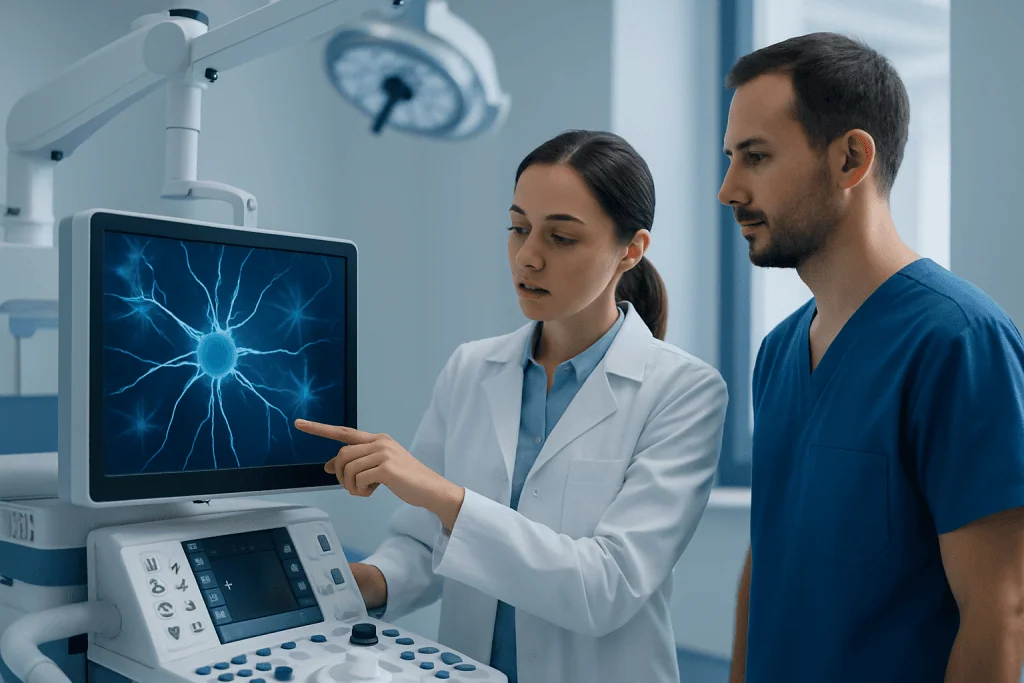
Most neurons have three main parts: dendrites, a cell body, and an axon. Dendrites receive incoming signals from other cells. The cell body contains the nucleus and the machinery needed to keep the neuron alive. The axon carries an outgoing electrical signal away from the cell body toward another neuron, a muscle, or a gland.
Many axons are covered by myelin, a fatty insulating layer that helps signals travel more quickly and efficiently. Damage to myelin can slow or disrupt communication in the nervous system. At the end of the axon are terminal branches that release chemical messengers called neurotransmitters into a tiny gap known as a synapse.
Neuron communication involves both electricity and chemistry. An electrical impulse, often called an action potential, travels down the axon. When it reaches the end, neurotransmitters are released and bind to receptors on the next cell. This process allows neurons to form circuits that support everything from reflexes to memory formation.
- Dendrites: receive messages
- Cell body: maintains the cell and integrates signals
- Axon: sends messages onward
- Synapse: point where one cell communicates with another
- Myelin: insulation that improves signal speed
Types of Neurons and What They Do

Neurons are often grouped by function. Sensory neurons detect information such as touch, pain, temperature, light, sound, and body position. They carry these messages from the body to the brain and spinal cord. Motor neurons do the reverse: they transmit commands from the central nervous system to muscles, allowing movement, posture, and many automatic actions.
Interneurons connect neurons to one another inside the brain and spinal cord. They are especially important for processing information, decision-making, and coordinating responses. Many of the brain’s most sophisticated tasks depend on large networks of interneurons communicating rapidly and precisely.
Neurons can also be described by their shape or location. For example, some have one long axon and many branching dendrites, while others have more specialized forms adapted to the retina, spinal cord, or autonomic nervous system. This diversity helps the nervous system manage a wide range of jobs, from balance and coordination to emotion and attention.
Specific groups of neurons use particular neurotransmitters, such as dopamine, serotonin, acetylcholine, glutamate, or GABA. These chemicals help regulate movement, mood, alertness, memory, and sleep. When these systems are disrupted, symptoms can affect both body and mind.
Why Neuron Health Matters
Healthy neurons are essential for normal daily life. They allow a person to speak, swallow, concentrate, remember, feel sensations, and control movement. They also support automatic functions that usually happen without conscious effort, such as breathing, digestion, blood pressure regulation, and bladder control.
Because neurons are highly specialized, some types do not easily regenerate after significant damage. This is one reason why neurological injuries or diseases can have lasting effects. The impact depends on which neurons are affected and how severe the damage is. A problem in one area may cause numbness or weakness, while a problem elsewhere may affect memory, speech, or coordination.
Neuron damage may occur suddenly, as with trauma or stroke, or gradually over time, as in some neurodegenerative conditions. Infections, autoimmune diseases, poor blood flow, metabolic disorders, toxins, vitamin deficiencies, and uncontrolled chronic conditions can also affect how neurons function.
At the same time, the nervous system has some ability to adapt, often called neuroplasticity. This means surviving neurons and neural networks can sometimes reorganize to support recovery. Rehabilitation, treatment of the underlying cause, and healthy lifestyle measures can all help support this process.
What Can Damage Neurons?
Neurons can be affected by many different medical problems. Reduced blood flow can deprive nerve cells of oxygen and nutrients, leading to injury in conditions such as stroke. Physical trauma can directly damage brain tissue, the spinal cord, or peripheral nerves. Infections involving the nervous system may inflame or injure neurons and surrounding tissues.
Long-term health conditions can also place neurons at risk. Poorly controlled diabetes may damage peripheral nerves. High blood pressure, high cholesterol, and smoking can contribute to vascular disease that reduces blood supply to the brain. Vitamin deficiencies, excessive alcohol use, exposure to certain toxins, and some medications may also affect nerve function.
Immune-mediated and degenerative disorders can interfere with neurons or the myelin that supports them. Examples include multiple sclerosis, some forms of neuropathy, and diseases that affect movement or memory. When the problem involves the peripheral nerves, symptoms may include burning, tingling, or weakness; when it involves the brain, symptoms can include changes in speech, thinking, balance, or behavior.
Common warning signs of possible nervous system problems include:
- Persistent numbness or tingling
- Muscle weakness or loss of coordination
- Tremor or involuntary movements
- Memory or concentration problems
- Headaches with new neurological symptoms
- Seizures or fainting episodes
- Changes in speech, vision, or balance
How Doctors Evaluate Neuron-Related Problems
Doctors do not usually test a single neuron directly in routine care. Instead, they evaluate how groups of neurons and nerve pathways are functioning. The process often begins with a medical history and neurological examination. This may include checks of strength, sensation, reflexes, balance, eye movements, coordination, speech, and memory.
If a structural problem is suspected, imaging tests may be recommended. MRI scanning can help show changes in the brain, spinal cord, or nerves. In urgent situations, other imaging may be used to look for bleeding, stroke, or trauma. Blood tests may help identify contributing issues such as infection, inflammation, vitamin deficiency, thyroid disease, or metabolic disorders.
When symptoms suggest a problem in the peripheral nerves or muscles, doctors may recommend electromyography (EMG) and nerve conduction studies. These tests assess how well nerves send signals and how muscles respond. In some cases, electroencephalography, lumbar puncture, genetic testing, or neuropsychological assessment may also be useful depending on the symptoms and suspected cause.
The aim of diagnosis is not only to name a condition but also to understand where the problem is located, how severe it is, and whether it is reversible, treatable, or likely to require long-term management.
Treatment and Ways to Support Neuron Health
Treatment depends on the underlying cause rather than on neurons alone as an isolated topic. For example, restoring blood flow quickly is a priority in some stroke cases, while an infection may require antimicrobial treatment, and a vitamin deficiency may improve with nutritional correction. Inflammatory or autoimmune conditions may need medicines that reduce immune system activity. Some people benefit from physical therapy and rehabilitation to improve movement, function, and independence after neurological injury.
Symptom management is also important. Depending on the condition, treatment may target pain, spasticity, seizures, tremor, mood changes, sleep disturbance, or cognitive difficulties. Occupational, speech, and swallowing therapy can be useful when daily function is affected. A rehabilitation plan is often individualized and may continue over time as recovery progresses.
Daily habits can support overall neuron and brain health. Regular physical activity improves blood flow and supports cardiovascular health, which benefits the brain. Good sleep helps memory consolidation and normal brain function. A balanced diet that includes fruits, vegetables, whole grains, lean protein, and healthy fats supports general health and may help reduce vascular risk factors.
Other helpful measures include managing blood pressure, blood sugar, and cholesterol; limiting alcohol; avoiding tobacco; using safety precautions to prevent head injury; and keeping vaccinations up to date when appropriate. Near the end of the care journey, some patients may seek assessment at specialized centers; Acibadem International’s multidisciplinary specialists and JCI-accredited hospitals diagnose and treat neurological conditions for international patients.
When to Seek Medical Care
Medical care is important when symptoms suggest that neurons or nerve pathways may not be working normally. A person should arrange a medical evaluation for persistent numbness, tingling, weakness, balance problems, memory decline, tremor, or nerve pain that does not improve. Symptoms that interfere with daily activities or continue to worsen should not be ignored.
Urgent medical attention is needed for sudden weakness on one side of the body, facial drooping, trouble speaking, new confusion, severe sudden headache, loss of vision, a seizure, or loss of consciousness. These can be signs of a neurological emergency and should be assessed promptly.
After diagnosis, regular follow-up helps monitor symptoms, treatment response, and any changes over time. Early evaluation often makes it easier to identify treatable causes and to start supportive care before complications develop.
Frequently asked questions
Are neurons the same as nerves?
Not exactly. A neuron is a single nerve cell, while a nerve is a bundle of many nerve fibers, usually axons, wrapped together outside the brain and spinal cord. In everyday conversation the terms are often used loosely, but medically they are not identical.
Can neurons repair themselves?
Some nerve cells and nerve pathways can recover to a degree, especially if the cause of injury is treated and rehabilitation is started. However, many neurons in the brain and spinal cord do not regenerate easily after major damage. Recovery often depends on the location and extent of injury and the body's ability to reorganize neural networks.
What helps keep neurons healthy?
General brain and nerve health is supported by regular exercise, enough sleep, good blood pressure and blood sugar control, a balanced diet, and avoiding smoking. Protecting the head from injury and limiting excessive alcohol use are also important. Anyone with ongoing neurological symptoms should speak with a qualified doctor rather than rely only on self-care.
Do neurons die with normal aging?
Aging can change how the nervous system functions, including slower processing speed and changes in some neural connections. But not every memory lapse or change in attention means significant neuron loss or disease. Healthy aging and treatment of vascular risk factors can help support brain function over time.
What happens when neurotransmitters are out of balance?
Neurotransmitters help neurons communicate, so changes in these chemicals can affect movement, mood, sleep, memory, or pain. The effects depend on which signaling system is involved and whether the problem is temporary or part of a medical condition. A healthcare professional can help determine the cause and whether treatment is needed.
When should tingling or numbness be checked by a doctor?
Tingling or numbness should be assessed if it persists, keeps returning, spreads, or is associated with weakness, pain, or balance problems. It also deserves prompt attention if it starts suddenly, affects one side of the body, or comes with trouble speaking or seeing. These patterns can point to a nerve, spinal, or brain problem.
This article is for general information only and is not a substitute for professional medical advice. Please consult a qualified doctor about your individual situation.
Joint and spine care in Turkey — expert assessment & treatment
JCI-accredited · board-certified surgeons · reply within 24h
Add us as a Preferred Source to see more of our trusted health content across Google Search, AI Overviews and Discover.
Check your numbers in seconds
BMI, calories, due date, blood pressure and 30+ more clinical calculators — free, instant, doctor-reviewed ranges.

More from the Health Library

Lipedema Versus Cellulite: An Evidence-Based Guide for Patients

Squatting: What Patients Need to Know

Phlegm Color: What Patients Need to Know

Ionic Foot Detox — Explained by Medical Evidence, Not Myths

Erythema Annulare Centrifugum — Explained by Medical Evidence, Not Myths