Pulmonary Function Test — Explained by Medical Evidence, Not Myths
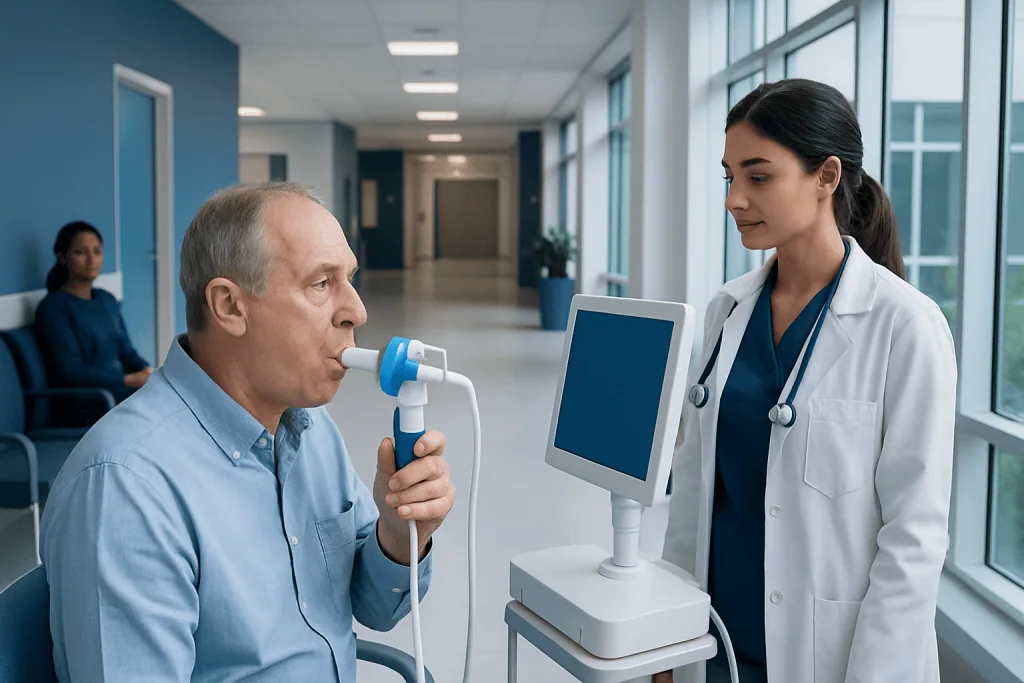
A pulmonary function test is a noninvasive way to measure airflow, lung volume, and gas exchange. Spirometry is the most common type and helps assess conditions such as asthma and COPD.
Key Takeaways
- A pulmonary function test is a noninvasive way to measure airflow, lung volume, and gas exchange.
- Spirometry is the most common type and helps assess conditions such as asthma and COPD.
- Results are interpreted alongside symptoms, exam findings, and sometimes imaging or blood tests.
- Most tests are safe, though they may briefly cause coughing, lightheadedness, or shortness of breath.
- Good preparation, including following medication instructions, helps make results more accurate.
A pulmonary function test is a group of breathing tests that shows how well the lungs take in air, move it out, and transfer oxygen. It is commonly used to evaluate symptoms such as shortness of breath, cough, or wheezing and to help diagnose or monitor lung conditions.
Overview: what a pulmonary function test actually does
A pulmonary function test is not a single test but a set of measurements that show how the lungs work in real life. It can assess how much air a person can breathe in and out, how quickly air moves through the airways, and how efficiently oxygen passes from the lungs into the blood. In clinical practice, it helps doctors move beyond guesswork when someone has breathing symptoms.
These tests are often ordered for shortness of breath, chronic cough, wheezing, chest tightness, or reduced exercise tolerance. They may also be used before surgery, after certain workplace exposures, or to monitor known lung conditions over time. Rather than proving one diagnosis on their own, they provide objective data that can support or rule out common causes of breathing difficulty.
The term most people know is spirometry, but full pulmonary function testing may also include lung volume measurement and diffusion capacity testing. Each part answers a slightly different question. Together, they help show whether the problem is mainly narrowed airways, reduced lung expansion, impaired gas transfer, or a combination of these patterns.
Types of pulmonary function tests and what they measure
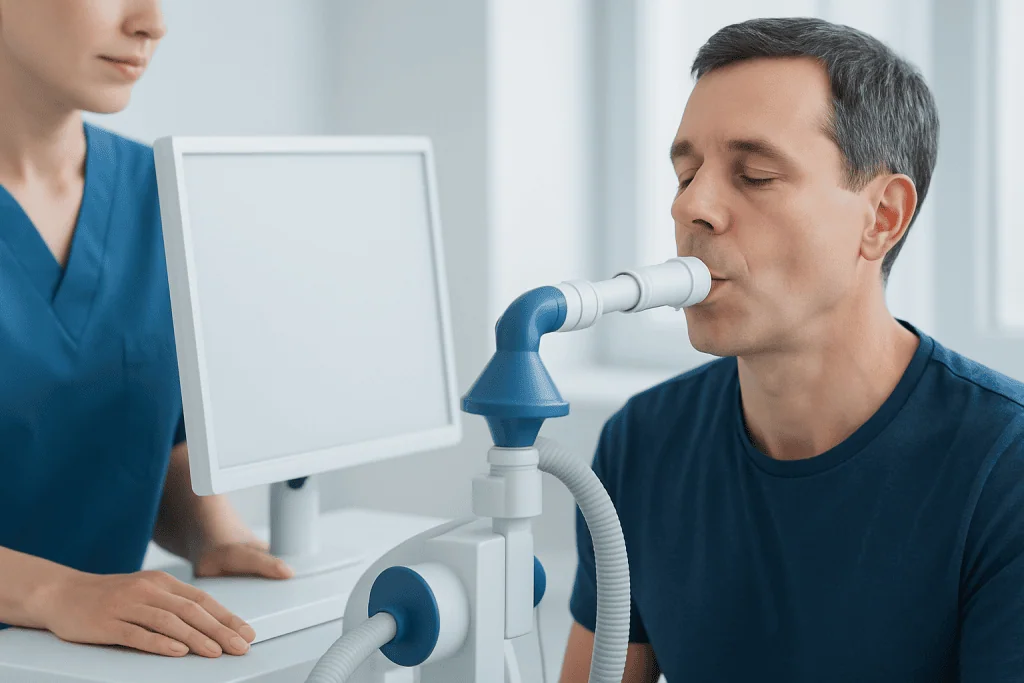
Spirometry is the best-known pulmonary function test. During spirometry, a person takes a deep breath and blows out forcefully into a mouthpiece. The machine measures values such as how much air is exhaled in one second and the total amount blown out, which can help identify obstructive patterns seen in conditions like asthma or chronic obstructive lung disease.
Lung volume testing measures the total amount of air in the lungs, including the air that remains after exhalation. This can help detect restrictive patterns, in which the lungs cannot fully expand, and can also show air trapping. Depending on the center, these measurements may be done in a body plethysmography booth or with gas dilution methods.
Diffusing capacity, often called DLCO, estimates how well oxygen-like gases move from the air sacs into the bloodstream. This can be useful when a doctor suspects problems affecting the lung tissue, pulmonary blood vessels, or the interface where gas exchange happens. In some cases, the clinician may also request a bronchodilator response test, exercise testing, or pulse oximetry before and after exertion.
- Spirometry: airflow and exhaled volume
- Lung volumes: total lung size and air trapping
- Diffusion capacity: gas transfer efficiency
- Bronchodilator testing: whether breathing improves after inhaled medication
Why doctors order it: symptoms, conditions, and common myths
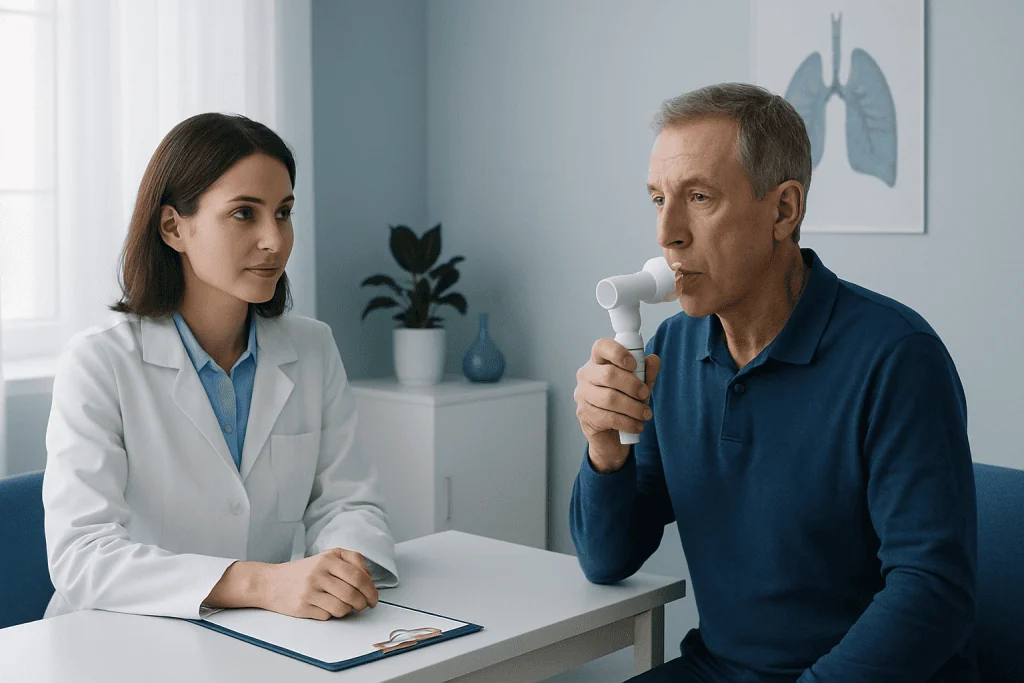
A pulmonary function test is commonly used when someone reports ongoing breathlessness, wheezing, a persistent cough, or reduced stamina. It may also be recommended when symptoms are hard to explain, when treatment does not seem to be working as expected, or when a doctor needs a baseline before surgery or certain medications. In people with a known diagnosis, repeat testing helps show whether lung function is stable, improving, or declining.
These tests are relevant for several conditions, including asthma, COPD, bronchiectasis, interstitial lung diseases, and some neuromuscular or chest wall disorders. They can also help evaluate the effects of smoking, air pollution, occupational dusts, and prior respiratory infections. However, they do not diagnose every cause of shortness of breath, because heart disease, anemia, anxiety, and deconditioning can also affect breathing.
One common myth is that a normal spirometry result means the lungs are definitely healthy. In reality, symptoms can still come from small airway disease, intermittent asthma, early lung disease, or non-lung causes that require other tests. Another myth is that pulmonary function testing is painful or dangerous for most people. For the majority of patients, it is safe, brief, and well tolerated when done under proper supervision.
How to prepare and what to expect during the test
Preparation matters because effort and technique affect the results. Patients are usually asked to wear comfortable clothing, avoid heavy meals right before testing, and arrive ready to follow repeated breathing instructions. The ordering doctor or lung lab may also give specific advice about whether to pause inhalers or other respiratory medicines before the test, since this depends on the reason for testing.
During the test, a technician explains each step carefully. A nose clip may be used, and the patient seals the lips around a mouthpiece to avoid air leaks. Several breathing maneuvers are repeated to make sure the measurements are reliable, because the goal is to compare consistent efforts rather than a single blow.
Some people feel temporary coughing, chest tightness, mild lightheadedness, or shortness of breath during forceful exhalation, especially if they already have lung symptoms. These effects usually settle quickly after a short rest. In selected cases, a doctor may arrange more advanced testing such as bronchoscopy or imaging if pulmonary function results raise questions that breathing tests alone cannot answer.
Understanding the results without oversimplifying them
Pulmonary function results are usually compared with reference values based on factors such as age, sex, height, and sometimes ethnicity, depending on the laboratory standards used. A report may describe an obstructive pattern, a restrictive pattern, reduced diffusion capacity, or a mixed pattern. These terms are helpful, but they are not the whole diagnosis.
For example, obstructive results suggest difficulty moving air out of the lungs and are often seen in asthma or COPD. Restrictive findings suggest smaller-than-expected lung volumes and can occur when the lungs, chest wall, or breathing muscles cannot expand normally. A low diffusion capacity may point toward problems affecting the lung tissue or blood vessels, but interpretation depends on the full clinical picture.
Doctors usually review pulmonary function test results together with symptoms, medical history, physical examination, oxygen levels, and other tests. A chest X-ray or chest X-ray may help if infection, scarring, or another structural problem is suspected, while CT scan imaging can provide more detail when needed. This combined approach is one reason patients should avoid interpreting isolated numbers without medical guidance.
Treatment and follow-up after abnormal pulmonary function tests
An abnormal pulmonary function test does not automatically mean severe disease. It means the doctor has useful information to guide the next step. Depending on the pattern seen, treatment may involve inhaled medications, smoking cessation support, pulmonary rehabilitation, allergy management, treatment of infections, or investigation of another cause outside the lungs.
In asthma, for example, test results may support a plan that includes reliever and controller inhalers plus trigger avoidance. In COPD, management often focuses on bronchodilator therapy, vaccinations, exercise-based rehabilitation, and reducing exposure to smoke or pollutants. If the pattern suggests restriction or impaired diffusion, the clinician may evaluate for interstitial lung disease, prior lung injury, autoimmune disease, obesity-related breathing limitation, or neuromuscular conditions.
Follow-up testing can be just as important as the first test. Repeating spirometry or full pulmonary function testing helps show whether treatment is working and whether lung function is stable over time. Near the end of a patient’s care pathway, it may be helpful to know that Acibadem International’s multidisciplinary specialists and JCI-accredited hospitals diagnose and treat respiratory conditions for international patients.
Self-care, prevention, and when to seek medical care
People cannot prevent every cause of abnormal pulmonary function, but several habits support lung health. Avoiding smoking and secondhand smoke is one of the most important steps. Keeping vaccinations up to date, using protective equipment around occupational dusts or chemicals, staying physically active within personal limits, and managing allergies or reflux when relevant can also help reduce breathing-related symptoms.
Patients who already have a lung condition should take medicines exactly as prescribed and use inhaler devices correctly. It is also useful to track symptoms over time, such as cough frequency, nighttime waking, exercise tolerance, and rescue inhaler use. Small changes in day-to-day breathing may provide context that helps the doctor interpret future pulmonary function test results.
Medical care should be sought promptly if breathing symptoms are new, worsening, or interfering with daily life. Urgent assessment is especially important for severe shortness of breath, bluish lips, confusion, chest pain, coughing up blood, or symptoms that do not improve with usual rescue treatment. Even when symptoms seem mild, a qualified doctor should evaluate ongoing cough, wheeze, or unexplained breathlessness rather than relying on home assumptions or internet myths.
Frequently asked questions
What is a pulmonary function test used for?
A pulmonary function test is used to measure how well the lungs work. Doctors use it to investigate symptoms such as shortness of breath, wheezing, or chronic cough, and to monitor known lung conditions over time.
Is a pulmonary function test the same as spirometry?
Not exactly. Spirometry is the most common part of pulmonary function testing, but a full assessment may also include lung volume measurements and diffusion capacity testing. Each part gives different information about breathing and lung performance.
How long does a pulmonary function test take?
The timing depends on which tests are ordered. Simple spirometry may take only a short visit, while full pulmonary function testing can take longer because several breathing maneuvers need to be repeated for accurate results.
Do pulmonary function tests hurt?
These tests are generally not painful. Some people may cough, feel briefly lightheaded, or become a little short of breath during forceful breathing, but this usually passes quickly with rest.
Can I eat or use my inhaler before the test?
Light eating is often fine, but a very heavy meal may make deep breathing less comfortable. Inhaler instructions vary depending on the purpose of the test, so patients should follow the specific advice given by their doctor or lung lab.
Can a pulmonary function test diagnose asthma or COPD by itself?
It can strongly support the diagnosis, but it is usually not the only piece of information. Doctors interpret the results together with symptoms, examination findings, medical history, and sometimes imaging or other laboratory tests.
References
- American Thoracic Society
- European Respiratory Society
- National Heart, Lung, and Blood Institute
- Centers for Disease Control and Prevention
- Merck Manual Professional Edition
This article is for general information only and is not a substitute for professional medical advice. Please consult a qualified doctor about your individual situation.
Explore treatments in Turkey — costs, top hospitals & a free quote
JCI-accredited · board-certified surgeons · reply within 24h
Add us as a Preferred Source to see more of our trusted health content across Google Search, AI Overviews and Discover.