Under Tongue — Explained by Medical Evidence, Not Myths

The space under tongue contains salivary glands, ducts, nerves, blood vessels, and soft tissue, so different problems can affect it. Common causes include irritation, canker sores, blocked salivary ducts, infections, cysts, and less commonly tumors.
Key Takeaways
- The space under tongue contains salivary glands, ducts, nerves, blood vessels, and soft tissue, so different problems can affect it.
- Common causes include irritation, canker sores, blocked salivary ducts, infections, cysts, and less commonly tumors.
- Red flags include symptoms lasting more than two weeks, trouble swallowing, fever, spreading swelling, bleeding, or a firm persistent lump.
- Diagnosis usually relies on a physical exam, medical history, and sometimes imaging, blood tests, or biopsy.
- Treatment depends on the cause and may include self-care, medications, dental treatment, or a procedure for salivary gland stones or masses.
The area under tongue includes thin, sensitive tissue, salivary gland openings, blood vessels, and muscles, so symptoms there can have several causes. Many are minor and temporary, but persistent pain, swelling, ulcers, or lumps should be assessed by a qualified doctor or dentist.
What “under tongue” symptoms usually mean
The phrase under tongue often refers to discomfort, swelling, a sore, or a lump in the floor of the mouth. This area is medically important because it contains the openings of the salivary ducts, the sublingual and submandibular glands nearby, small blood vessels, nerves, and delicate lining tissue. Symptoms can come from any of these structures.
In many people, under tongue symptoms are caused by a minor issue such as irritation from sharp teeth, accidental biting, a canker sore, dehydration, or a temporary blockage of a salivary duct. These problems often improve with time and basic care. However, persistent symptoms need proper evaluation because similar complaints can also be linked to infection, cysts, salivary stones, autoimmune disease, or rarely oral cancer.
Rather than assuming one explanation, it helps to think of the under-tongue area as a small space with several possible sources of symptoms. A careful exam by a dentist, primary care doctor, or ear, nose, and throat specialist can usually narrow down the cause and guide the right treatment.
Normal anatomy under the tongue
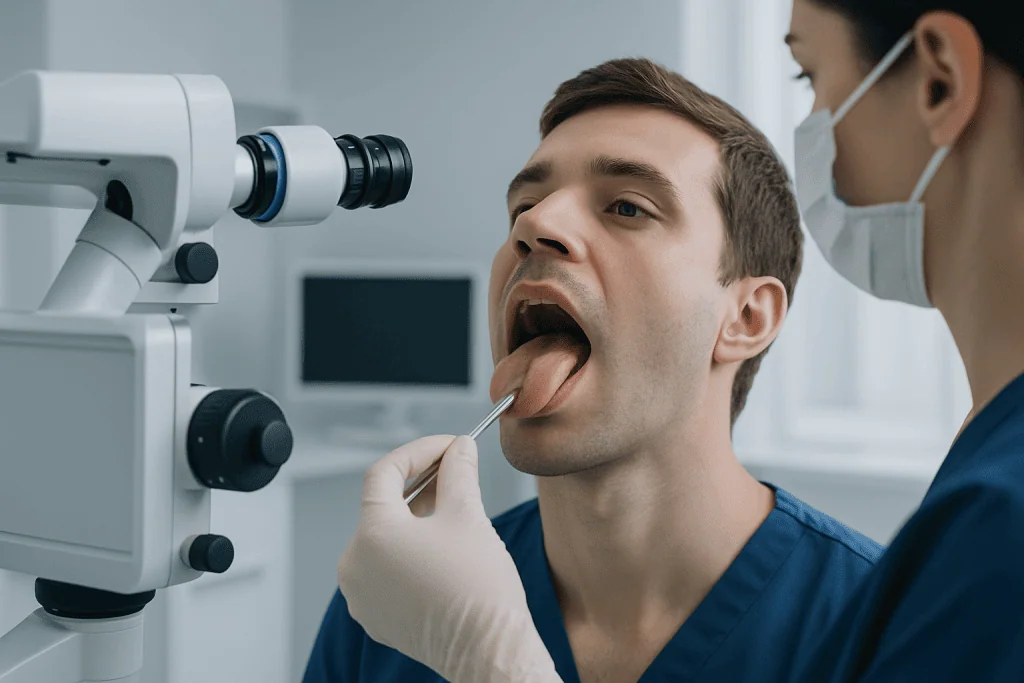
The tissue under the tongue is called the floor of the mouth. It is lined by a thin mucous membrane, which makes it more sensitive than some other parts of the mouth. A small fold of tissue in the center, the lingual frenulum, connects the tongue to the floor of the mouth.
On either side of the frenulum are tiny openings where saliva enters the mouth. Saliva is produced by several glands, including the sublingual glands under the tongue and the submandibular glands beneath the jaw. If one of these ducts becomes blocked, saliva may back up and cause pain or swelling, especially during meals.
Because the area has a rich blood supply and many nerve endings, symptoms here can feel noticeable even when the problem is small. Knowing that normal anatomy can include visible veins, small folds, and salivary duct openings may also help reduce unnecessary worry when there is no pain, ulcer, or growing lump.
Common signs and symptoms to notice

Symptoms under tongue can vary depending on the cause. Some people notice a sharp sore spot, while others feel pressure, swelling, or a smooth lump. Pain may be constant or may happen mainly when eating, especially sour foods that stimulate saliva flow.
Common symptoms include:
- Pain or tenderness under the tongue
- A white, yellow, or red sore
- Swelling in the floor of the mouth
- A small lump or cyst-like bump
- Dry mouth or reduced saliva
- Bad taste in the mouth
- Pain when chewing, swallowing, or moving the tongue
- Redness, warmth, or pus if infection is present
Some symptoms point more strongly toward certain causes. For example, pain and swelling that worsen at mealtimes can suggest a blocked salivary duct or stone. A shallow painful ulcer may be a canker sore. A firm lump that does not heal or go away deserves prompt assessment, especially if it lasts more than two weeks.
Possible causes: from irritation to salivary gland problems
One of the most frequent causes of under tongue discomfort is local irritation. This can happen from accidentally biting the area, friction from a broken tooth or dental appliance, hot food burns, tobacco exposure, or strong mouth products. These problems often cause short-lived soreness or a raw patch.
Mouth ulcers are another common reason. Aphthous ulcers, often called canker sores, can appear under the tongue and may be quite painful. Viral infections, including cold sores in some cases, may also affect oral tissue. Fungal infection such as oral thrush can cause soreness and white patches, especially in people who use inhaled steroids, wear dentures, or have weakened immunity.
Salivary gland conditions are especially relevant in this location. A salivary stone can block a duct and cause swelling and pain, particularly during meals. Infection may develop behind the blockage. A fluid-filled swelling called a ranula can form from the sublingual gland. Doctors may evaluate these symptoms alongside other oral or throat concerns such as oral cancer when a lesion is persistent or suspicious.
Less commonly, under tongue symptoms may be related to nutritional deficiencies, autoimmune disorders, cysts, benign growths, or cancers of the mouth or salivary glands. This does not mean every lump is serious, but it is why persistent or unexplained changes should not be ignored.
How doctors diagnose an under-tongue problem
Diagnosis starts with a medical and dental history. A clinician will usually ask when the symptom began, whether it changes with eating, whether there is fever or dry mouth, and whether there are risk factors such as smoking, recent dental trauma, new medicines, or immune problems. They will also ask if the lesion has healed, changed color, or grown over time.
The physical exam is very important. The doctor or dentist looks at the floor of the mouth, tongue, teeth, gums, and throat and may gently feel the area under the jaw. This helps identify ulcers, stones, infection, salivary flow problems, or a mass. If the concern involves broader ear, nose, and throat structures, specialist assessment may be recommended, sometimes alongside ENT evaluation and treatment.
Additional tests depend on the suspected cause. Imaging such as ultrasound, CT, or MRI may be used for a lump, salivary gland problem, or deeper swelling. Swabs or blood tests are occasionally needed for infection or systemic illness. If a lesion does not heal or looks suspicious, a biopsy may be recommended to confirm the diagnosis.
Treatment options based on the cause
Treatment under tongue is not one-size-fits-all. Minor irritation may only need time, avoiding the trigger, and gentle oral care. Canker sores often improve on their own, though clinicians may suggest topical treatments to reduce pain and inflammation. If a rough tooth edge or dental appliance is causing repeated trauma, dental correction is important.
Infections may be treated with antifungal, antiviral, or antibacterial medication depending on the cause. A blocked salivary duct may improve with hydration, warm compresses, gentle gland massage, and stimulating saliva flow with sour candy if a clinician considers that appropriate. If there is a stone, persistent blockage, or repeated infection, a specialist may consider a procedure. In selected cases this may involve salivary gland surgery.
If an abnormal growth, cyst, or persistent lesion is found, treatment depends on pathology results and location. Some lesions simply need monitoring, while others need removal or targeted care. When symptoms involve the mouth more broadly, coordinated management with dental, oral surgery, or head and neck specialists may be recommended. In more complex cases, doctors may also use advanced MRI imaging to define the anatomy before planning treatment.
Self-care and prevention
Basic oral care can reduce irritation and support healing in many mild cases. Drinking enough water helps keep saliva flowing. Gentle toothbrushing, regular flossing, and routine dental visits can lower the chance of trauma and infection. It is also wise to avoid very hot foods and to limit products that sting or dry out the mouth.
Helpful self-care steps may include:
- Rinsing with plain water or a mild saltwater solution
- Avoiding tobacco and limiting alcohol
- Choosing soft foods if chewing is painful
- Checking for sharp teeth, broken fillings, or poorly fitting dentures
- Managing dry mouth if present, with guidance from a clinician
- Seeking care for recurrent sores or repeated salivary swelling
Prevention also includes paying attention to patterns. Recurrent under-tongue pain during meals may suggest a salivary gland issue rather than a simple sore. Repeated ulcers may be linked to stress, irritation, or an underlying health problem. If symptoms keep returning, a professional evaluation is more useful than repeated self-treatment.
When to seek medical care
Medical or dental assessment is appropriate if under tongue symptoms last more than two weeks, keep returning, or are getting worse. A clinician should also evaluate a lump, an ulcer that does not heal, or swelling that interferes with speech, chewing, or swallowing.
Urgent care is needed if there is fever, spreading redness, pus, rapidly increasing swelling, dehydration, difficulty swallowing, difficulty breathing, or severe pain. These signs can point to infection or significant blockage and should not be managed at home alone.
If a biopsy, imaging study, or specialist treatment is needed, multidisciplinary care can help clarify the diagnosis and plan. Acibadem International’s multidisciplinary specialists and JCI-accredited hospitals diagnose and treat oral, salivary gland, and ENT-related conditions for international patients.
Frequently asked questions
Is it normal to have tissue and veins under the tongue?
Yes. The floor of the mouth normally contains thin tissue folds, visible veins, and salivary duct openings. If these structures are not painful, swollen, bleeding, or changing over time, they are often normal anatomy.
Why does it hurt under my tongue when I eat?
Pain that gets worse during meals can happen when a salivary duct is blocked, often by a small stone. Eating stimulates saliva production, which can increase pressure behind the blockage. A doctor or dentist can examine the area and decide if imaging or treatment is needed.
Can a lump under the tongue be harmless?
Yes, some lumps are harmless and may be caused by a cyst, swelling of a salivary gland, or local irritation. However, any lump that is firm, persistent, growing, or associated with an ulcer should be professionally evaluated. A clinician may recommend imaging or biopsy if the cause is unclear.
How long should a sore under the tongue last?
A minor sore from irritation or a canker sore often improves within one to two weeks. If the sore lasts longer than two weeks, keeps returning, or becomes larger or harder, it should be checked by a healthcare professional.
What can be done at home for mild under-tongue discomfort?
Gentle oral care, hydration, and avoiding spicy, acidic, or very hot foods may help. A mild saltwater rinse can also soothe the area. Home care is not a substitute for medical assessment if symptoms are severe, persistent, or associated with swelling or fever.
Can under-tongue symptoms be a sign of cancer?
They can be, but this is not the most common explanation. Persistent ulcers, firm lumps, unexplained bleeding, numbness, or changes lasting more than two weeks deserve prompt evaluation because early diagnosis matters. Many under-tongue symptoms turn out to have non-cancerous causes.
This article is for general information only and is not a substitute for professional medical advice. Please consult a qualified doctor about your individual situation.
Persistent digestive symptoms? Get evaluated in Turkey
JCI-accredited · board-certified surgeons · reply within 24h
Add us as a Preferred Source to see more of our trusted health content across Google Search, AI Overviews and Discover.

More from the Health Library

Neck Rolls: A Complete Medical Overview

STD Oral Gonorrhea: A Complete Medical Overview

Arterial Blood Gas — Explained by Medical Evidence, Not Myths

Noom Reviews: What Patients Need to Know

Antacid: What Patients Need to Know