Tommy John Surgery: Benefits, Risks, and Recovery — A Complete Guide

Tommy John surgery reconstructs a torn or severely damaged UCL, usually in athletes who place repeated stress on the elbow. Not every UCL injury needs surgery; rest, physical therapy, and activity changes may help some patients.
Key Takeaways
- Tommy John surgery reconstructs a torn or severely damaged UCL, usually in athletes who place repeated stress on the elbow.
- Not every UCL injury needs surgery; rest, physical therapy, and activity changes may help some patients.
- The procedure typically uses a tendon graft to create a new ligament and may be paired with treatment for nerve irritation or bone spurs.
- Recovery usually takes many months and follows a staged rehabilitation plan before a return to throwing or competition.
- Benefits include improved stability and reduced pain, while risks include stiffness, infection, nerve symptoms, and graft problems.
- Early medical evaluation is important if elbow pain, instability, or loss of throwing performance continues.
Tommy John surgery is a procedure used to reconstruct the ulnar collateral ligament (UCL) on the inner side of the elbow, most often after a significant throwing-related injury. It can improve elbow stability and function, but recovery is gradual and depends on careful rehabilitation as well as the severity of the original injury.
Overview: what Tommy John surgery is
Tommy John surgery is a surgical procedure that reconstructs the ulnar collateral ligament, or UCL, on the inner side of the elbow. This ligament helps stabilize the elbow during activities that place strong valgus stress on the joint, especially overhead throwing. The operation is best known in baseball pitchers, but it may also be considered in other athletes and in some non-athletes with significant UCL injury.
In simple terms, the damaged ligament is usually not stitched back together directly. Instead, a surgeon creates a new ligament using a tendon graft taken from the patient or from a donor. The graft is positioned through small bone tunnels or anchors in a way that allows the elbow to regain stability over time as the tissue heals.
Tommy John surgery does not automatically improve sports performance, and it is not a preventive procedure. Its main goals are to reduce pain, restore stability, and help the patient return to desired daily activities or sports when non-surgical care is no longer enough. For people with persistent elbow instability from a UCL injury, it can be an important treatment option.
Symptoms and who may be a candidate
A UCL injury often causes pain on the inner side of the elbow, especially during throwing. Some people feel a sudden pop at the time of injury, while others notice a gradual decline in throwing velocity, control, or endurance. There may also be swelling, tenderness, or a sense that the elbow is unstable during high-force movements.
Some patients develop numbness or tingling in the ring and little fingers because the nearby ulnar nerve can become irritated. Others mainly notice that they can no longer perform overhead sports at the same level. In non-athletes, heavy repetitive arm use can also trigger symptoms, though the problem is less common.
A person may be a candidate for Tommy John surgery if symptoms continue despite rest, structured rehabilitation, and changes in activity. Surgery is considered more often in competitive throwers, younger active individuals with complete tears, and patients whose goals require strong elbow stability. The decision depends on age, activity level, degree of ligament damage, elbow mechanics, and whether non-surgical treatment has already been tried.
Causes, risk factors, and how the injury develops
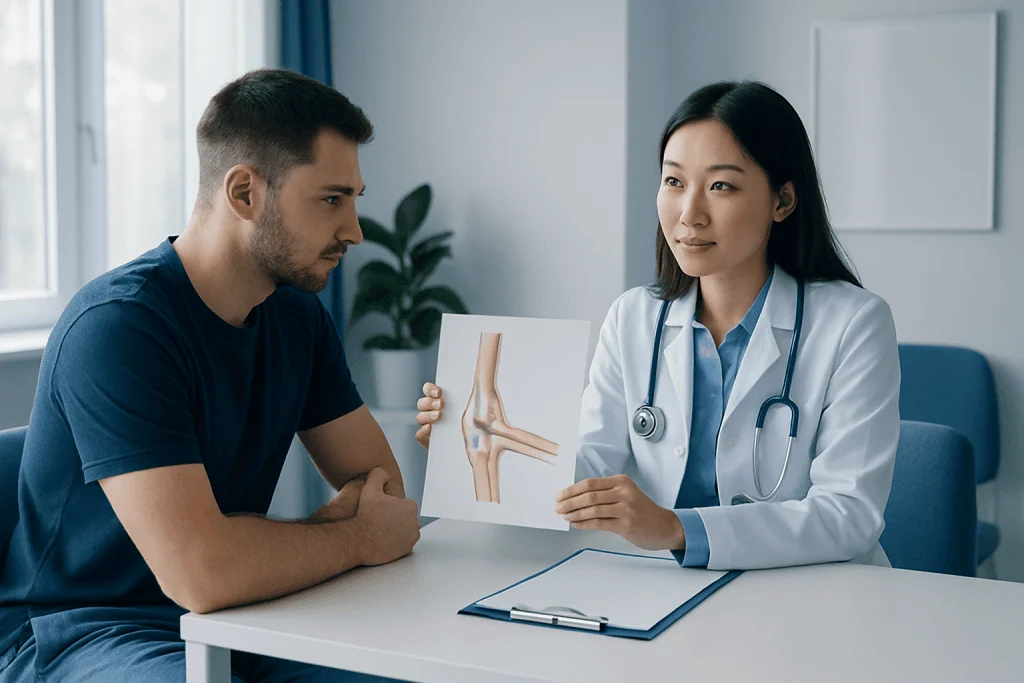
The UCL can be injured by a single traumatic event, but more often it is damaged gradually by repetitive stress. Overhead throwing places very high forces across the inner elbow. When these forces are repeated over months or years, tiny areas of ligament damage may build up faster than the body can repair them.
Risk factors include high throwing volume, inadequate rest, poor mechanics, sudden increases in training intensity, and throwing while fatigued. Pitchers are especially vulnerable, but catchers, javelin throwers, tennis players, and some other athletes may also be affected. Muscle weakness around the shoulder, trunk, and forearm can increase stress on the elbow as well.
Associated problems may include flexor-pronator muscle strain, cartilage wear, bone spurs, or nerve irritation. Because several structures can be involved at the same time, a full orthopedic evaluation is important. This helps confirm whether the UCL is the main source of symptoms and whether surgery would address the actual cause of the problem.
Diagnosis and the step-by-step procedure
Diagnosis begins with a detailed history and physical examination. A doctor asks when symptoms started, whether there was a sudden injury, and how the elbow feels during throwing or lifting. The exam looks for tenderness along the inner elbow, signs of looseness, range-of-motion limits, and possible ulnar nerve irritation.
Imaging may include X-rays to check the bones and look for spurs or other changes. MRI, sometimes with contrast, is commonly used to assess the UCL and surrounding tissues. Ultrasound may also help in experienced hands. These tests help determine whether the ligament is partially torn, completely torn, or affected along with other elbow problems.
If surgery is recommended, the operation is usually performed by an orthopedic surgeon with sports medicine or upper-extremity expertise. After anesthesia, an incision is made near the inner elbow. The surgeon carefully protects the nearby nerves and examines the damaged ligament. A tendon graft is then prepared, often from the patient’s forearm, hamstring, or another suitable source, or from donor tissue.
The graft is passed through bone tunnels or fixed with anchors in the ulna and humerus to recreate the path of the original ligament. Depending on the case, the surgeon may also treat associated issues such as ulnar nerve irritation or bone spurs. Patients who are exploring orthopedic rehabilitation before and after surgery often benefit from understanding the full care pathway early in the process.
Benefits, risks, and treatment options
The main benefit of Tommy John surgery is improved elbow stability when the original UCL can no longer support high-demand movement. For the right patient, this can reduce pain, restore function, and create a path back to throwing, work, or other activities. It may also help prevent repeated episodes of elbow giving way under stress.
However, surgery is not the first step for every UCL injury. Some partial tears and lower-demand cases improve with rest, a guided strengthening program, temporary activity restriction, and a gradual return to sport. In selected situations, doctors may discuss biologic injections or other non-operative strategies, although these are not suitable for everyone and do not replace a full rehabilitation plan.
Risks of Tommy John surgery include infection, bleeding, elbow stiffness, ongoing pain, graft stretching or failure, blood clots, and problems related to anesthesia. Because the ulnar nerve runs close to the surgical area, some patients may have temporary or persistent numbness, tingling, or weakness in the hand. A careful surgical technique and a well-structured recovery plan help reduce these risks, but no operation can guarantee a return to previous performance.
Patients considering surgery may benefit from review by specialists in orthopedics and traumatology to compare non-surgical care with reconstruction. If pain is linked to other conditions, treatment may focus on those problems instead of or in addition to surgery.
Recovery timeline and rehabilitation
Recovery after Tommy John surgery is gradual. In the early weeks, the elbow is usually protected in a brace while swelling and pain settle. Gentle movement begins under medical guidance, followed by progressive strengthening of the forearm, shoulder, and core. Protecting the graft during this phase is essential.
Over the next few months, therapy focuses on restoring range of motion, improving muscle control, and correcting movement patterns that may have contributed to the injury. Many patients feel better well before the ligament is fully ready for heavy use, so it is important not to rush the process. Even when day-to-day pain improves, high-level throwing usually remains restricted for a significant period.
A structured return-to-throwing program is often introduced later in recovery. This progresses from light tosses to more intense throwing based on symptoms, strength, and clinical review. Return to competitive pitching commonly takes many months, and some athletes need a year or more before they are cleared for full competition.
Adherence to physical therapy and rehabilitation is one of the strongest influences on outcome. Sleep, nutrition, load management, and attention to throwing mechanics also matter. Near the end of the recovery journey, patients seeking coordinated international care may wish to know that Acibadem International’s multidisciplinary specialists and JCI-accredited hospitals diagnose and treat this condition for international patients.
Prevention, self-care, and when to seek medical care
Although not all UCL injuries can be prevented, good training habits can reduce risk. Athletes should avoid sudden increases in throwing volume, respect rest days, and stop throwing through significant pain. Strength and mobility work for the shoulder, trunk, hips, and forearm can improve mechanics and reduce stress on the elbow.
Self-care for early symptoms often includes temporary rest from throwing, ice after activity if advised by a clinician, and a gradual return only when pain allows. A sports medicine assessment may identify technique issues, overuse patterns, or related shoulder problems that need attention. Starting evaluation early can sometimes prevent a minor injury from becoming a more serious one.
Medical care should be sought if inner elbow pain keeps returning, if there is a pop followed by weakness, or if throwing performance drops noticeably. A doctor should also assess numbness or tingling in the hand, loss of elbow motion, swelling that does not improve, or pain that interferes with normal daily activity. Prompt evaluation helps clarify whether the problem is a UCL tear, another elbow condition, or a combination of injuries.
Frequently asked questions
Is Tommy John surgery only for professional baseball players?
No. Although the procedure is strongly associated with baseball pitchers, it may also be used for other athletes and for some non-athletes with significant UCL damage. The decision depends on symptoms, elbow instability, activity goals, and response to non-surgical treatment.
Can a partial UCL tear heal without surgery?
In some cases, yes. Partial tears may improve with rest, rehabilitation, and activity modification, especially in patients who do not need high-level throwing. A doctor can help determine whether conservative treatment is reasonable or whether reconstruction is more likely to restore function.
How long does recovery from Tommy John surgery take?
Recovery usually takes many months and varies by the patient's goals and the exact procedure performed. Returning to daily activities happens much sooner than returning to throwing sports. Competitive overhead athletes often need a long, staged rehabilitation program before full return is considered safe.
Does Tommy John surgery make people throw harder?
No. The purpose of surgery is to restore elbow stability and reduce symptoms after a UCL injury. Some athletes return to a high level of performance, but the operation itself is not designed to increase speed, strength, or skill beyond a person's pre-injury potential.
What tendon is used in Tommy John surgery?
Surgeons commonly use a tendon graft from the patient's own body, such as from the forearm or hamstring, or they may use donor tissue. The best choice depends on the patient's anatomy, surgical plan, and the surgeon's judgment. The graft acts as the framework for a new ligament.
What are the main warning signs of a UCL injury?
Common signs include pain on the inner side of the elbow, loss of throwing velocity or control, and a sense of instability during overhead motion. Some patients also notice a popping sensation at the time of injury or numbness and tingling in the ring and little fingers.
References
- American Academy of Orthopaedic Surgeons
- American Orthopaedic Society for Sports Medicine
- National Institute of Arthritis and Musculoskeletal and Skin Diseases
- American Medical Society for Sports Medicine
This article is for general information only and is not a substitute for professional medical advice. Please consult a qualified doctor about your individual situation.
Joint and spine care in Turkey — expert assessment & treatment
JCI-accredited · board-certified surgeons · reply within 24h
Add us as a Preferred Source to see more of our trusted health content across Google Search, AI Overviews and Discover.

More from the Health Library



Related Specialists

Dr. Ahmet Alan
General Surgery
Dyt. Tuğçe Arabalı
Nutrition & Diet
Assoc. Prof. Dr. Aylin Altan Kuş
Gastrointestinal Oncology Unit Clinical Service
Dr. Münür Selçuk Kendir
Aesthetic Plastic & Reconstructive Surgery