Nuchal Translucency: An Evidence-Based Guide for Patients

Nuchal translucency measures fluid at the back of the baby's neck during an ultrasound, usually between 11 and 13 weeks plus 6 days of pregnancy. It is a screening tool that estimates risk; it does not confirm or rule out a condition on its own.
Key Takeaways
- Nuchal translucency measures fluid at the back of the baby's neck during an ultrasound, usually between 11 and 13 weeks plus 6 days of pregnancy.
- It is a screening tool that estimates risk; it does not confirm or rule out a condition on its own.
- An increased nuchal translucency can be linked with chromosomal differences, congenital heart defects, or, sometimes, a healthy pregnancy.
- Results are often interpreted together with blood tests, noninvasive prenatal screening, and detailed ultrasound findings.
- If the measurement is increased, a doctor may recommend genetic counseling, follow-up scans, fetal echocardiography, or diagnostic testing.
Nuchal translucency is an ultrasound measurement taken early in pregnancy to help estimate the chance of certain chromosomal conditions and some structural problems, especially heart defects. It is a screening test, not a diagnosis, and its result is best understood together with maternal age, blood tests, and follow-up imaging when needed.
Overview: what nuchal translucency means
Nuchal translucency is a small fluid-filled space at the back of a developing baby’s neck that can be measured by ultrasound in the first trimester. The term is often shortened to NT, and the scan is commonly called a nuchal translucency scan or NT scan. The purpose is not to diagnose a problem by itself, but to estimate the chance of certain conditions so families and clinicians can decide whether more testing would be helpful.
This measurement is taken during a specific time window, usually between 11 weeks and 13 weeks plus 6 days of pregnancy, when the baby’s size allows the result to be interpreted accurately. The scan may be offered as part of first-trimester screening along with a maternal blood test. In some settings, it may also be considered alongside cell-free DNA screening, sometimes called noninvasive prenatal testing.
A key point for patients is that nuchal translucency is a risk assessment tool. A higher-than-expected measurement does not mean a baby definitely has a chromosomal or structural condition, and a normal measurement does not guarantee that every condition is excluded. Clear explanation from a qualified obstetrician, maternal-fetal medicine specialist, or genetic counselor can help place the result in context.
How the NT scan is done and what it can help assess
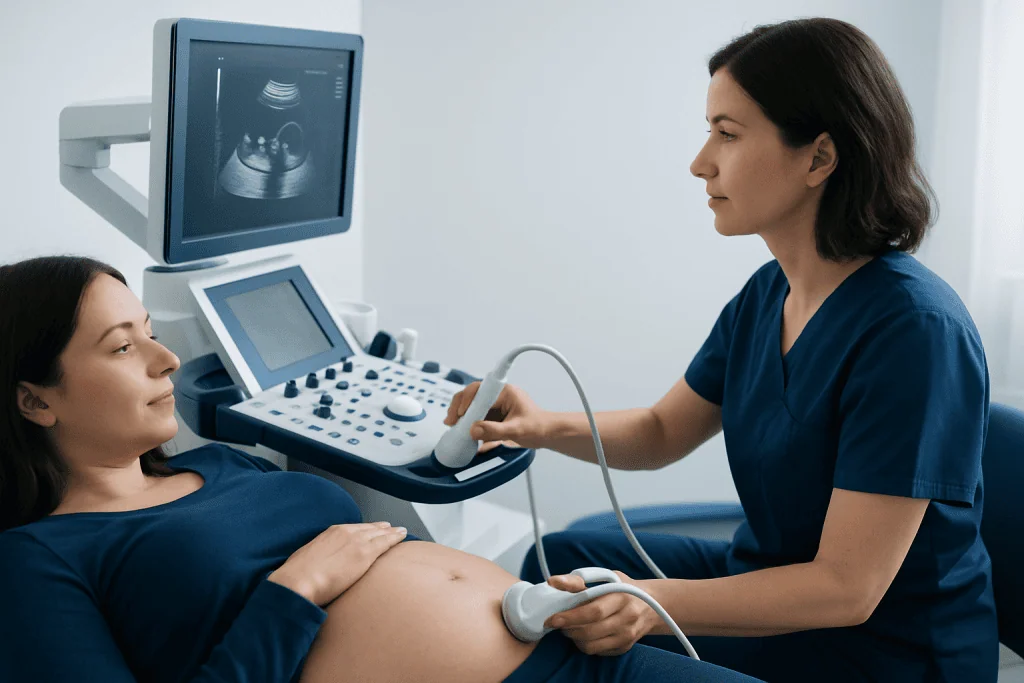
The scan is performed using ultrasound, most often through the abdomen and sometimes with a transvaginal approach if clearer views are needed. The sonographer measures the thickness of the fluid behind the baby’s neck while the baby is in a precise position. Because the result depends on timing and technique, the examination is ideally carried out by trained professionals using standardized methods.
Nuchal translucency is mainly used to estimate the chance of chromosomal conditions such as Down syndrome (trisomy 21), trisomy 18, and trisomy 13. An increased measurement can also be associated with some congenital heart defects and, less commonly, other genetic syndromes or structural differences. At the same time, many babies with increased NT are ultimately found to be healthy, which is why follow-up testing matters.
Unlike a diagnostic test, the NT scan cannot confirm why the measurement is increased. It is one part of prenatal screening and may be combined with other assessments, including blood tests or a genetic testing pathway recommended by the pregnancy care team. Some patients may also later need more detailed imaging, such as a targeted ultrasound or fetal echocardiography, if heart development needs closer review.
Understanding the results

NT results are interpreted according to the baby’s crown-rump length, the exact gestational age, and the overall clinical picture. Rather than relying on one universal cut-off, clinicians usually assess whether the measurement is within the expected range for that stage of pregnancy. The result may then be combined with maternal age and blood test results to calculate an individualized screening risk.
If the nuchal translucency is increased, the next step depends on how large the measurement is and whether any other ultrasound findings are present. The doctor may discuss additional screening, diagnostic testing, or repeat imaging. This can feel stressful, but it is important to remember that an abnormal screening result points to the need for clarification, not a certain diagnosis.
When the measurement is within the expected range, that is generally reassuring, but it does not remove the need for routine prenatal care. Some conditions are not detectable with first-trimester screening alone. Follow-up with scheduled pregnancy visits and the mid-pregnancy anatomy scan remains essential.
What can cause an increased nuchal translucency?
An increased nuchal translucency can have several explanations. One possibility is a chromosomal difference, including conditions such as Down syndrome. Another is a structural problem, especially a congenital heart defect. In some pregnancies, the measurement is temporarily increased for reasons that never become fully clear, and the baby is born healthy.
Doctors may also consider a broader range of genetic or developmental conditions if the NT is significantly increased or if other findings are seen on ultrasound. These can include rare syndromes or problems affecting the lymphatic or cardiovascular system. Because the same ultrasound finding can be linked with different causes, one measurement alone cannot identify the exact reason.
Risk does not always come from a family history, and many pregnancies with increased NT occur in people with no known inherited condition. For this reason, further evaluation is based on the scan result itself and the overall pregnancy assessment, rather than assumptions. A careful, stepwise approach usually gives the clearest answers.
Diagnosis and follow-up after an abnormal NT result
If the NT scan suggests a higher chance of a problem, the clinician may recommend genetic counseling to explain the result and outline available options. Follow-up can include noninvasive prenatal screening from maternal blood, which estimates the chance of some chromosomal conditions using placental DNA fragments. This type of screening is useful, but like NT, it remains a screening test rather than a diagnosis.
For a definite answer about chromosomes, diagnostic testing may be offered. Depending on gestational age and local practice, this may involve chorionic villus sampling or amniocentesis. These tests can identify many chromosomal differences directly, and the medical team will discuss their benefits, limitations, and potential risks so patients can make informed decisions.
Imaging follow-up is also important. A repeat specialist ultrasound may look for structural differences later in the first trimester or early in the second trimester, and a detailed anatomy scan is usually recommended. If there is concern about the heart, the team may suggest pregnancy follow-up and detailed ultrasound as well as fetal echocardiography to assess cardiac structure and function more closely.
What patients can do after the scan
After a nuchal translucency scan, the most helpful step is to review the result with the clinician who knows the pregnancy history. Patients may want to ask what the result means for their individual risk, whether any blood test should be added, and what timeline applies for further testing. Writing down questions in advance can make the follow-up discussion easier.
It can also help to understand the difference between screening and diagnosis. Screening helps identify who may benefit from more evaluation; it does not label a pregnancy as healthy or unhealthy by itself. This distinction can reduce confusion and support calmer decision-making if additional testing is offered.
Emotionally, waiting for answers can be difficult. Practical support from a partner, family member, counselor, or genetics professional may be valuable during this period. Patients should continue routine prenatal care, take prescribed prenatal vitamins, and report any new symptoms to their maternity team, even though these symptoms are not usually directly related to the NT result.
When to seek medical care
A nuchal translucency result should always be discussed with a qualified pregnancy care professional, especially if the report says the measurement is increased, borderline, or difficult to interpret. Prompt follow-up matters because some additional tests are time-sensitive and are best arranged within a particular stage of pregnancy.
Urgent medical attention is not usually needed because of the NT result alone, but pregnant patients should contact their doctor or maternity service right away if they have concerning symptoms such as vaginal bleeding, severe abdominal pain, leakage of fluid, fever, or reduced well-being. These symptoms require assessment for reasons separate from the screening result.
Specialist review is particularly important when increased NT is seen together with other ultrasound findings, or when there is a personal or family history of genetic or congenital conditions. Near the end of the care pathway, some families may wish to seek support from centers with multidisciplinary expertise. Acibadem International’s multidisciplinary specialists in JCI-accredited hospitals diagnose and manage complex prenatal findings for international patients, including further assessment when screening results need clarification.
Frequently asked questions
What is nuchal translucency in pregnancy?
Nuchal translucency is the ultrasound measurement of the fluid-filled space at the back of a baby's neck in early pregnancy. It is used as part of prenatal screening to estimate the chance of certain chromosomal conditions and some structural differences.
When is the nuchal translucency scan done?
It is usually performed between 11 weeks and 13 weeks plus 6 days of pregnancy. This timing is important because the baby's size must fall within a specific range for the measurement to be interpreted correctly.
Does an increased nuchal translucency mean the baby has Down syndrome?
No. An increased NT can be associated with Down syndrome and other conditions, but it does not confirm any diagnosis on its own. Many pregnancies with increased NT have normal follow-up results and healthy outcomes.
Is the NT scan the same as NIPT or cell-free DNA testing?
No, they are different screening methods. The NT scan is an ultrasound measurement, while NIPT analyzes placental DNA fragments in the mother's blood. They may be used separately or together depending on the clinical situation and local practice.
What happens if the nuchal translucency result is abnormal?
The doctor may recommend genetic counseling, additional blood screening, a detailed ultrasound, fetal echocardiography, or diagnostic testing such as chorionic villus sampling or amniocentesis. The exact plan depends on the size of the measurement, gestational age, and whether any other ultrasound findings are present.
Can a normal nuchal translucency result rule out all problems?
No. A normal NT result is reassuring, but it cannot exclude every genetic, structural, or developmental condition. Routine prenatal care and later ultrasound examinations are still important.
This article is for general information only and is not a substitute for professional medical advice. Please consult a qualified doctor about your individual situation.
Explore treatments in Turkey — costs, top hospitals & a free quote
JCI-accredited · board-certified surgeons · reply within 24h
Add us as a Preferred Source to see more of our trusted health content across Google Search, AI Overviews and Discover.

More from the Health Library

High Testosterone in Women: What Patients Need to Know

Thyme Oil: What Patients Need to Know

Trauma Focused Cbt Tf Cbt — Explained by Medical Evidence, Not Myths

Cat allergy: A Complete Medical Guide for Patients

Doxylamine — Explained by Medical Evidence, Not Myths