Dysphonia: An Evidence-Based Guide for Patients

Dysphonia refers to an abnormal change in voice quality, pitch, loudness, or vocal effort. Common causes include viral illness, voice overuse, reflux, allergies, smoking, and benign vocal cord problems.
Key Takeaways
- Dysphonia refers to an abnormal change in voice quality, pitch, loudness, or vocal effort.
- Common causes include viral illness, voice overuse, reflux, allergies, smoking, and benign vocal cord problems.
- A voice change lasting more than two to three weeks should be assessed by a qualified clinician, especially in smokers or people with swallowing or breathing symptoms.
- Diagnosis may involve a voice history, throat examination, and visualization of the vocal cords with laryngoscopy.
- Treatment may include vocal rest, hydration, managing reflux or allergies, voice therapy, and treatment of structural or neurological causes.
Dysphonia means the voice sounds different from usual, such as hoarse, weak, rough, strained, or breathy. It is a symptom rather than a disease itself, and the best treatment depends on the underlying cause, duration, and any associated warning signs.
What Is Dysphonia?
Dysphonia is a medical term for a voice that no longer sounds or feels normal. A person may notice hoarseness, roughness, breathiness, strain, reduced volume, pitch changes, vocal fatigue, or extra effort needed to speak. In many cases, dysphonia is temporary and follows a cold, heavy voice use, or irritation of the throat.
Importantly, dysphonia is a symptom, not a single diagnosis. The voice can change because of inflammation, reflux, allergies, vocal cord lesions, nerve problems, muscle tension, or other conditions affecting the larynx, also called the voice box. This means evaluation focuses on finding the cause rather than treating every voice change in the same way.
The impact of dysphonia varies. For some people it is a mild nuisance. For others, especially teachers, singers, call-center workers, public speakers, and anyone who relies on the voice professionally, it can affect work, social interaction, and quality of life. Persistent symptoms deserve attention because early assessment often leads to more targeted treatment.
How Dysphonia Can Feel and Sound
People describe dysphonia in different ways. One person may say the voice sounds raspy, while another feels that words do not come out strongly enough. The pattern can offer clues about the cause. A voice that worsens after long speaking may suggest overuse or muscle tension, while a voice change after a respiratory infection may point to inflammation.
Symptoms can include:
- Hoarseness or a rough voice
- Breathy or weak speech
- Strained or tight voice quality
- Loss of high or low pitch range
- Voice breaks or instability
- Throat discomfort or the need to clear the throat often
- Vocal fatigue, especially later in the day
- Reduced ability to project the voice
Some people have additional symptoms such as cough, heartburn, postnasal drip, swallowing discomfort, or a sensation of a lump in the throat. These symptoms do not always mean a serious problem, but they can help guide the clinical assessment. Breathing difficulty, pain when speaking, coughing up blood, or unexplained weight loss need prompt medical review.
Common Causes and Risk Factors

One of the most common causes of dysphonia is acute laryngitis, often due to a viral upper respiratory infection. Inflammation makes the vocal cords swell and vibrate less smoothly, producing a hoarse or weak voice. Voice overuse or misuse can have a similar effect, particularly after shouting, prolonged talking, singing without rest, or speaking loudly in noisy environments.
Other frequent contributors include smoking, dry air, dehydration, allergies, sinus drainage, and acid reflux reaching the throat. Some people develop benign growths or changes on the vocal cords, such as nodules, polyps, cysts, or swelling from chronic irritation. These may be more likely in people with high vocal demand. In selected cases, evaluation may overlap with care for throat cancer when warning signs are present, although most dysphonia is not caused by cancer.
Dysphonia can also result from neurological or functional problems. Examples include vocal cord paralysis, tremor, spasmodic dysphonia, Parkinsonian voice changes, and muscle tension dysphonia, in which excess muscle activity interferes with efficient voice production. Less commonly, thyroid surgery, intubation, trauma, or certain medicines can affect the voice. Risk rises with tobacco use, alcohol overuse, untreated reflux, occupational voice strain, and age-related changes in the vocal cords.
How Doctors Diagnose Dysphonia
Diagnosis begins with a careful history. The clinician usually asks when the voice change started, whether it came on suddenly or gradually, what makes it better or worse, and whether there are related symptoms such as cough, swallowing difficulty, heartburn, breathing problems, neck swelling, or recent illness. A person’s work, smoking history, medication use, and any previous surgery are also relevant.
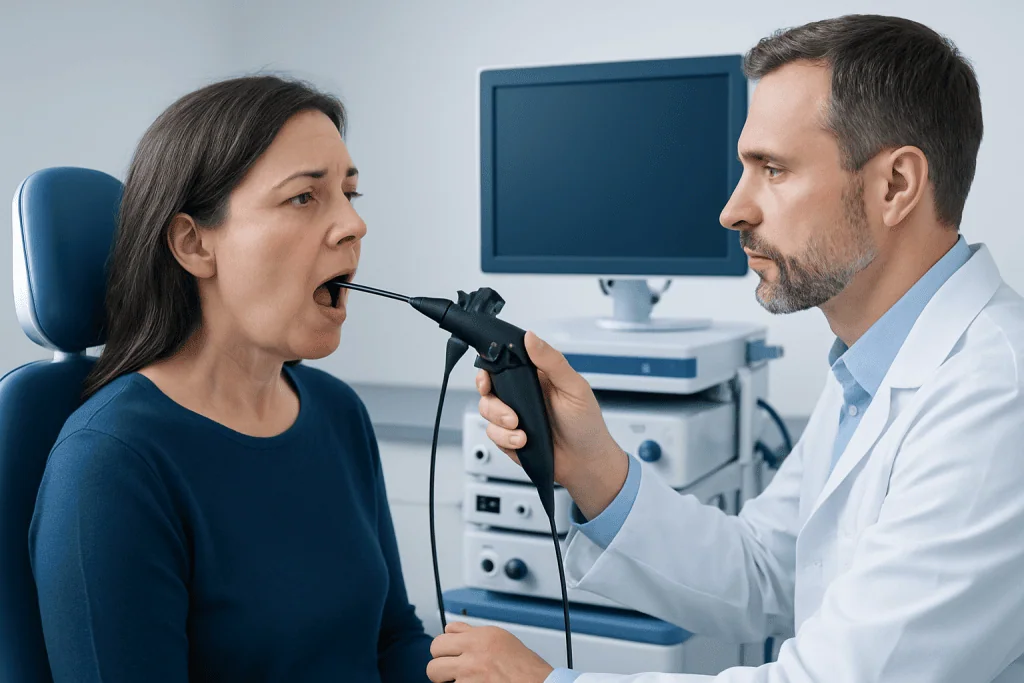
The next step is a physical examination of the head and neck and, when needed, direct visualization of the larynx. This is commonly done with laryngoscopy, a procedure that allows the doctor to look at the vocal cords while the patient breathes and speaks. In some cases, stroboscopy may be used to assess vocal cord vibration in more detail. If structural changes are suspected, patients may also be assessed through ENT diagnosis and treatment.
Additional tests are not needed for everyone. Depending on the findings, a doctor may recommend imaging, reflux evaluation, voice assessment by a speech-language pathologist, or neurological review. The goal is to identify the specific reason for dysphonia so that treatment is targeted and unnecessary treatments are avoided.
Treatment Options for Dysphonia
Treatment depends on the cause. Short-lived dysphonia from a viral infection or voice overuse often improves with hydration, voice rest, avoiding shouting or whispering, and reducing irritants such as smoke. If reflux, allergies, or sinus disease are contributing, managing those conditions can help the voice recover. Not every hoarse voice needs antibiotics, and treatment should be based on medical assessment rather than assumption.
Voice therapy is an important treatment for many forms of dysphonia. Guided by a speech-language pathologist, therapy may focus on healthier vocal technique, reducing throat tension, improving breath support, and preventing recurrence. It is commonly used for muscle tension dysphonia, vocal fatigue, some benign vocal cord lesions, and recovery after certain procedures.
When there is a structural problem, treatment may involve office-based or surgical intervention. For example, persistent polyps, cysts, severe nodules, or vocal cord paralysis may require specialist procedures. In appropriate cases, doctors may discuss voice disorders treatment or, if a lesion needs removal or biopsy, laryngeal surgery. If reflux is strongly suspected, management may be linked with broader gastroenterology assessment. The best plan is individualized, balancing symptom severity, the cause, and how important the voice is to daily life and work.
Self-Care and Prevention
Healthy voice habits can lower the risk of dysphonia and support recovery. Drinking enough fluids, resting the voice after heavy use, and using a microphone in large or noisy settings can reduce strain. It also helps to avoid repeated throat clearing, which can further irritate the vocal cords. Gentle swallowing or sipping water is often a better substitute.
Smoking cessation is one of the most important preventive steps because tobacco irritates the larynx and increases the risk of serious disease. Limiting exposure to secondhand smoke, excessive alcohol, dust, and chemical fumes may also protect the voice. People prone to reflux may benefit from practical measures such as avoiding late large meals and discussing persistent symptoms with a clinician.
Warm-up routines, pacing speaking tasks, and proper vocal technique are especially valuable for singers, teachers, coaches, and others with high voice demands. Seeking help early for recurring hoarseness can prevent minor strain from becoming a longer-term problem. Near the end of the care pathway, some patients may choose multidisciplinary evaluation at Acibadem International, where JCI-accredited hospitals care for international patients with voice and airway conditions.
When to Seek Medical Care
A short period of hoarseness after a cold or a day of heavy voice use is common. However, medical assessment is recommended if dysphonia lasts more than two to three weeks, keeps returning, or is clearly worsening. Earlier evaluation is wise for people who smoke, have a history of head and neck surgery, or depend on their voice professionally.
Urgent medical attention is needed if voice change is accompanied by trouble breathing, noisy breathing, severe swallowing difficulty, coughing up blood, a new neck lump, significant pain, or unexplained weight loss. These features do not always mean a serious illness, but they should not be ignored.
Because dysphonia has many possible causes, self-diagnosis can be misleading. A qualified doctor or ENT specialist can determine whether the problem is simple irritation, a functional voice disorder, a benign lesion, or a condition that needs prompt treatment.
Frequently asked questions
Is dysphonia the same as hoarseness?
Hoarseness is a common way people describe dysphonia, but dysphonia is a broader medical term. It includes any abnormal change in voice quality, pitch, loudness, or effort, not just a rough or raspy sound.
How long does dysphonia usually last?
It depends on the cause. Dysphonia from a viral illness or short-term voice strain may improve within days to a couple of weeks, while symptoms from reflux, vocal cord lesions, or muscle tension can last longer without treatment. A voice change that persists beyond two to three weeks should be checked by a clinician.
Can acid reflux cause dysphonia?
Yes. Reflux can irritate the throat and larynx, leading to hoarseness, throat clearing, cough, and a sensation of throat discomfort. Because these symptoms can overlap with other problems, medical evaluation is useful if they are frequent or persistent.
Should a person rest the voice or keep talking normally?
Brief voice rest can help when dysphonia follows overuse or an acute infection. It is usually best to avoid shouting and prolonged speaking, and also to avoid whispering, which can strain the voice for some people. If symptoms persist, a doctor or speech-language pathologist can advise on the safest voice use.
Can dysphonia be a sign of cancer?
Most cases of dysphonia are not caused by cancer. However, persistent hoarseness can sometimes be associated with serious laryngeal or throat disease, especially in people who smoke or have other risk factors. That is why ongoing or worsening symptoms should be assessed rather than ignored.
What kind of doctor treats dysphonia?
Dysphonia is often evaluated by an ENT specialist, also called an otolaryngologist. Depending on the cause, care may also involve a speech-language pathologist, gastroenterologist, neurologist, or other specialists.
This article is for general information only and is not a substitute for professional medical advice. Please consult a qualified doctor about your individual situation.
Explore treatments in Turkey — costs, top hospitals & a free quote
JCI-accredited · board-certified surgeons · reply within 24h
Add us as a Preferred Source to see more of our trusted health content across Google Search, AI Overviews and Discover.

More from the Health Library

Abdominal Migraine: What Patients Need to Know

Spotting Blood Postmenopausal: What Patients Need to Know

Frequency Specific Microcurrent: An Evidence-Based Guide for Patients

Carrot Allergy: What Patients Need to Know

Bentyl — Explained by Medical Evidence, Not Myths