Syndrome Mrkh: Early Signs, Risk Factors, and How It Is Treated

Syndrome MRKH usually becomes apparent when a teen has normal puberty but does not start menstrual periods. The ovaries are usually present and working, so breast development and pubic hair often develop as expected.
Key Takeaways
- Syndrome MRKH usually becomes apparent when a teen has normal puberty but does not start menstrual periods.
- The ovaries are usually present and working, so breast development and pubic hair often develop as expected.
- Diagnosis commonly involves a pelvic exam, ultrasound, and sometimes MRI and kidney evaluation because related differences can occur.
- Treatment is individualized and may include non-surgical vaginal dilation, surgery in selected cases, and psychological support.
- People with syndrome MRKH cannot usually carry a pregnancy with their own uterus, but fertility options may still be possible if ovaries are functional.
- A multidisciplinary team can help address reproductive, urinary, skeletal, and emotional aspects of care.
Syndrome MRKH is a congenital condition present from birth in which the uterus and upper vagina do not fully develop, even though external genitalia usually appear typical and puberty often progresses normally. It is commonly recognized in the teenage years when periods do not start, and care focuses on diagnosis, emotional support, sexual health, and fertility counseling.
Overview: What syndrome MRKH means
Syndrome MRKH, short for Mayer-Rokitansky-Küster-Hauser syndrome, is a congenital condition in which the uterus and the upper part of the vagina do not fully develop. It is present from birth, but it often is not noticed until adolescence because external genital structures usually look typical and puberty commonly begins in the usual way.
Many people with syndrome MRKH have functioning ovaries. This means the body often produces estrogen normally, so breast development and pubic hair usually appear as expected. The most common first sign is primary amenorrhea, meaning menstrual periods have not started by the expected age.
Syndrome MRKH is not caused by anything a patient or parent did during pregnancy. It develops early in fetal life as the Müllerian ducts, which normally help form the uterus, cervix, fallopian tubes, and upper vagina, do not develop fully. The exact reason is often unclear, and in many cases it appears sporadically rather than following a simple inherited pattern.
Doctors sometimes describe two broad forms. In isolated MRKH, the reproductive tract is mainly affected. In a more complex form, there may also be differences involving the kidneys, spine, hearing, or, less commonly, the heart. This is why evaluation often goes beyond the reproductive organs alone.
Early signs and symptoms
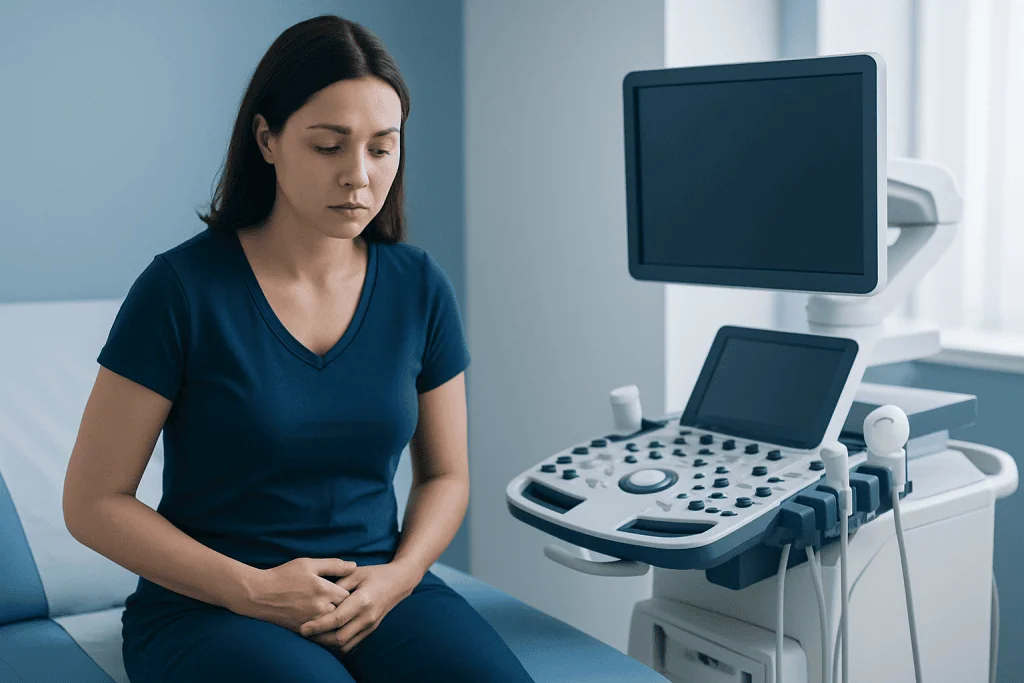
The most common early sign of syndrome MRKH is the absence of menstrual periods despite otherwise normal pubertal development. A teenager may have breast growth and pubic hair but still not menstruate. This pattern often leads a family doctor, pediatrician, or gynecologist to begin an evaluation for primary amenorrhea.
Some people also notice discomfort or difficulty with vaginal penetration because the vagina may be shorter than usual or end in a small pouch. Others do not discover the condition until later, such as during evaluation for pain with intercourse, trouble using tampons, or a fertility consultation in adulthood.
Syndrome MRKH usually does not affect chromosome pattern in the way some other causes of absent periods do. Many patients have a typical female karyotype and normal hormone levels for puberty. Because of this, the diagnosis can be surprising and emotionally difficult at first.
Possible features that may accompany syndrome MRKH include:
- No menstrual periods by mid-to-late adolescence
- Normal breast development and external genital appearance
- A short or absent upper vagina
- Pain or difficulty with penetrative sex
- Urinary tract differences, such as a missing or unusually placed kidney
- Spinal or skeletal differences in some cases
Causes and risk factors

Syndrome MRKH happens during fetal development, when structures called Müllerian ducts do not form as expected. These ducts normally contribute to the uterus, cervix, fallopian tubes, and upper vagina. In MRKH, this development is incomplete or absent, while the ovaries are often preserved because they arise from different embryologic tissue.
The exact cause is still being studied. Researchers believe that multiple genes and developmental signals may be involved, but there is no single confirmed cause in most patients. A family history may occasionally be present, yet many people diagnosed with syndrome MRKH are the only affected person in their family.
There are no well-established lifestyle risk factors known to cause syndrome MRKH. It is not linked to exercise, stress, or diet, and it is not something that could have been prevented by routine behavior changes during pregnancy. This point can be reassuring for patients and parents who worry they did something wrong.
Because associated differences can occur, doctors may also look for related conditions affecting the urinary system, skeleton, or hearing. In some patients, syndrome MRKH may overlap in evaluation with other congenital reproductive tract conditions, including uterine anomalies, so careful imaging is important to define the anatomy clearly.
How syndrome MRKH is diagnosed
Diagnosis usually begins with a medical history and physical examination after a teen or adult seeks care for absent periods or symptoms related to vaginal anatomy. A clinician may ask about puberty, pelvic symptoms, family history, and any urinary or skeletal issues. The examination is done sensitively and may be adapted to the patient’s age, symptoms, and comfort.
Pelvic ultrasound is commonly the first imaging test. It can help show whether the uterus is absent or underdeveloped and whether the ovaries are present. If the anatomy is not fully clear, magnetic resonance imaging may offer a more detailed picture of the reproductive organs and nearby structures.
Blood tests are often used to evaluate hormones and to rule out other causes of primary amenorrhea. Chromosome testing may also be recommended in some cases to distinguish syndrome MRKH from other conditions with similar presentations, such as androgen insensitivity syndrome or gonadal disorders. The goal is to make an accurate diagnosis and guide the right support plan.
Because kidney and skeletal differences are more common in people with MRKH than in the general population, additional tests may be advised. These can include renal ultrasound, spine assessment, or hearing evaluation, depending on symptoms and examination findings. In some centers, diagnosis and counseling are coordinated through specialists in gynecology and adolescent reproductive health.
Treatment options and long-term care
Treatment for syndrome MRKH depends on a person’s symptoms, goals, age, and anatomy. Not everyone needs immediate treatment after diagnosis. In many cases, the first steps are education, emotional support, and a careful discussion about sexual health, body image, and future fertility options.
For patients who want a functional vaginal canal for sexual activity, non-surgical vaginal dilation is often the first-line approach. This method uses graduated dilators over time to gently create or lengthen the vaginal canal. When guided by experienced clinicians and pelvic floor specialists, it can be effective and avoids surgery for many patients.
Surgery may be considered if dilation is not suitable, not successful, or not preferred after counseling. Different reconstructive techniques exist, and the best option depends on individual anatomy and the expertise of the care team. In selected patients, this may involve vaginoplasty or other reconstructive procedures, followed by consistent aftercare to help maintain results.
Long-term care also includes fertility counseling. Although most people with syndrome MRKH cannot carry a pregnancy because the uterus is absent or underdeveloped, the ovaries may produce eggs. Depending on local laws, personal values, and medical factors, family-building discussions may include egg retrieval with assisted reproduction and gestational surrogacy. In some settings, support from IVF specialists can help explain what is and is not medically possible.
Emotional health, relationships, and self-care
A diagnosis of syndrome MRKH can affect more than physical health. Many patients experience grief, confusion, anger, or isolation, especially when they learn about infertility or differences in reproductive anatomy. These feelings are understandable, and mental health support can be an important part of care rather than an afterthought.
Counseling may help patients process the diagnosis, talk with family members, and build confidence in future relationships. Some people also benefit from peer support groups where they can connect with others who have had similar experiences. Honest, age-appropriate information often reduces fear and helps patients make informed decisions at their own pace.
Self-care usually focuses on staying engaged with follow-up care, asking questions, and not rushing treatment choices. If dilation therapy is recommended, clear guidance and gentle expectations matter. If surgery is chosen, understanding recovery and long-term maintenance is essential for the best functional outcome.
Sexual health should be addressed respectfully and without assumptions. Many people with syndrome MRKH can have satisfying intimate relationships, but comfort, communication, and individualized treatment are important. In specialized centers, coordinated support from gynecology, psychology, radiology, urology, and reproductive medicine can help patients feel fully cared for. Acibadem International’s multidisciplinary specialists and JCI-accredited hospitals also diagnose and treat syndrome MRKH for international patients.
When to seek medical care
Medical advice should be sought if menstrual periods have not started by the expected age, especially when breast development has already occurred. A doctor should also be consulted for pelvic pain, difficulty with tampon use, pain with attempted intercourse, or concern about reproductive anatomy. Early evaluation can clarify the cause and prevent unnecessary uncertainty.
Prompt assessment is also important when urinary symptoms, recurrent urinary infections, back problems, or known kidney differences are present. These features do not confirm syndrome MRKH, but they may point to associated conditions that deserve attention. A careful diagnosis helps guide both immediate care and long-term planning.
Families often worry about how to begin this conversation with a teenager. A reassuring first step is an appointment with a pediatrician, adolescent medicine specialist, or gynecologist experienced in delayed menstruation and congenital reproductive tract conditions. Referral to specialists may include pediatric and adolescent gynecology when age-appropriate expertise is needed.
Urgent emergency care is not usually needed for syndrome MRKH itself unless severe pain or another acute problem develops. Even so, emotional distress after diagnosis can be significant, and timely support matters. Questions about diagnosis, fertility, and treatment options are valid reasons to schedule follow-up rather than waiting to cope alone.
Frequently asked questions
What is syndrome MRKH?
Syndrome MRKH is a congenital condition in which the uterus and upper vagina do not fully develop. It is usually discovered in adolescence when menstrual periods do not begin, even though puberty otherwise seems normal.
Can someone with syndrome MRKH go through puberty normally?
Yes. Many people with syndrome MRKH have working ovaries, so estrogen production is usually normal. Breast development and pubic hair often appear at the expected time.
Does syndrome MRKH cause infertility?
Syndrome MRKH usually means a person cannot carry a pregnancy because the uterus is absent or underdeveloped. However, if the ovaries are functioning, eggs may still be available, and assisted reproductive options may be discussed with a fertility specialist.
Is surgery always needed for syndrome MRKH?
No. Non-surgical vaginal dilation is often the first treatment when a functional vaginal canal is desired. Surgery is generally reserved for selected cases after careful counseling about benefits, limitations, and follow-up care.
Can syndrome MRKH affect other organs?
Yes, in some people it can be associated with kidney, spine, or hearing differences. That is why doctors may recommend imaging or other tests beyond the reproductive system.
Is syndrome MRKH inherited?
Most cases appear sporadically, meaning they happen without a clear family pattern. Researchers believe genetic factors may contribute in some patients, but the cause is often not fully defined.
How is syndrome MRKH confirmed?
Doctors usually confirm the diagnosis with a combination of history, physical examination, pelvic ultrasound, and sometimes MRI. Hormone tests, chromosome testing, and kidney imaging may also be part of the evaluation.
References
- American College of Obstetricians and Gynecologists
- National Organization for Rare Disorders
- NIH Genetic and Rare Diseases Information Center
- American Society for Reproductive Medicine
- Merck Manual
This article is for general information only and is not a substitute for professional medical advice. Please consult a qualified doctor about your individual situation.
IVF & fertility treatment in Turkey — success rates and costs
JCI-accredited · board-certified surgeons · reply within 24h
Add us as a Preferred Source to see more of our trusted health content across Google Search, AI Overviews and Discover.