Apheresis: An Evidence-Based Guide for Patients

Apheresis separates blood into components and targets only the part that needs to be removed or collected. It may be used as treatment for selected blood, immune, neurological, or metabolic conditions, or for blood donation.
Key Takeaways
- Apheresis separates blood into components and targets only the part that needs to be removed or collected.
- It may be used as treatment for selected blood, immune, neurological, or metabolic conditions, or for blood donation.
- Common forms include plasma exchange, plateletpheresis, leukapheresis, and red cell exchange.
- Most sessions are planned and monitored closely, with side effects that are often mild and temporary.
- The reason for apheresis, the number of sessions, and expected results depend on the underlying condition.
Apheresis is a medical procedure that separates blood into components so a specific part can be removed, exchanged, or collected while the rest is returned to the body. It is used both to treat certain diseases and to collect blood components such as platelets or plasma from donors.
What apheresis is and how it works
Apheresis is a procedure that draws blood from a person, separates it into its main parts, and then removes, exchanges, or collects one specific component. The remaining blood components are returned to the body, usually through the same needle line or a second line. This targeted approach allows treatment or donation without removing whole blood.
The separation process is done by a machine that uses centrifugation or membrane filtration. Depending on the goal, the machine may isolate plasma, platelets, white blood cells, red blood cells, or other substances circulating in the blood. In therapeutic apheresis, the removed component may be discarded and replaced with another fluid, such as donor plasma or albumin, or it may simply be reduced to help control disease.
Apheresis is not one single treatment but a group of procedures. For example, plasmapheresis or plasma exchange removes plasma; plateletpheresis collects platelets; leukapheresis removes white blood cells; and red cell exchange replaces a person’s red blood cells with donor cells. A doctor chooses the method based on the condition being treated and the person’s overall health.
Why doctors use apheresis
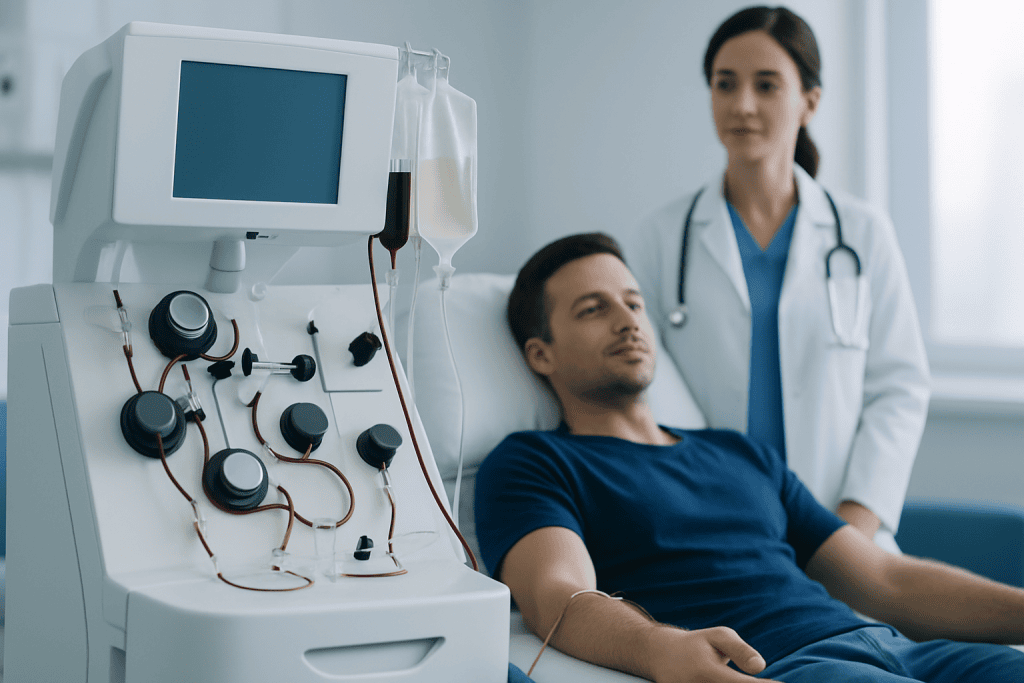
Apheresis has two main roles: therapy and donation. As a treatment, it can help remove harmful antibodies, abnormal proteins, excess cells, or disease-related substances from the bloodstream. As a donation method, it allows blood centers to collect only the needed component, such as platelets or plasma, while returning the rest to the donor.
Therapeutic apheresis is used in selected conditions where quickly changing the composition of blood may improve symptoms or reduce complications. Examples include some autoimmune diseases, certain neurological disorders, severe lipid disorders, blood cancers with very high cell counts, and inherited red blood cell diseases. It may also be used as part of care for some patients with kidney, liver, or transplant-related complications.
Because apheresis works on circulating blood components, it is often used alongside other treatments rather than as a complete replacement for them. A person may still need medicines, immunotherapy, chemotherapy, or long-term disease-specific follow-up. In some cases, apheresis is used urgently; in others, it is planned as a scheduled course over days or weeks.
Common types of apheresis

Plasma exchange is one of the best-known forms of therapeutic apheresis. In this procedure, plasma is removed and replaced with a substitute fluid. It is used when disease-causing antibodies, immune complexes, or abnormal proteins are mainly found in the plasma. This approach may be part of care for some immune and neurological conditions, including certain severe flare-ups of multiple sclerosis when recommended by a specialist.
Plateletpheresis and plasmapheresis are also widely used in blood donation. Platelet donation can help patients receiving cancer treatment, recovering from major surgery, or living with bone marrow disorders. Plasma donation may support the production of blood products used in many medical settings.
Other forms include leukapheresis, which removes excess white blood cells in selected blood disorders; red cell exchange, used in conditions such as severe sickle cell anemia; and lipoprotein apheresis, which lowers very high cholesterol-related particles in rare, serious lipid disorders. In some situations, apheresis may be integrated with specialist care such as bone marrow transplantation or chemotherapy as part of an overall treatment plan.
What patients can expect before, during, and after the procedure
Before apheresis, the care team reviews the person’s diagnosis, blood test results, medications, and vein access. Some people can have the procedure through veins in the arms, while others may need a temporary central venous catheter if repeated treatments are planned or if veins are difficult to access. The team also checks blood pressure, pulse, and fluid balance.
During the session, blood flows through tubing into the apheresis machine, which separates the needed component and returns the rest. A treatment session may last from about one to several hours depending on the type of apheresis, the amount being exchanged or collected, and the machine being used. Patients are usually awake and can speak with staff, read, or rest during treatment.
Afterward, patients are monitored briefly for side effects such as fatigue, lightheadedness, tingling, or bruising at the needle site. Some people need only one session, while others need a series of treatments over several days or as regular maintenance. The doctor explains what the procedure is intended to achieve, how response will be measured, and whether repeat treatment is likely.
Benefits, limits, and possible risks
The main benefit of apheresis is that it can target harmful or excess blood components relatively quickly. This can be especially useful when symptoms are severe, when laboratory values need rapid improvement, or when other treatments take longer to work. In donation settings, apheresis can collect a higher amount of a specific component from one donor while returning the rest of the blood.
However, apheresis also has limits. It does not cure every condition, and in many diseases it offers temporary control rather than permanent resolution. If the body continues to produce the harmful substance or abnormal cells, additional sessions or ongoing medical treatment may be needed. The decision to use apheresis depends on evidence for that specific disease, the person’s stability, and whether the expected benefits outweigh the burdens.
Possible risks include low blood pressure, dizziness, nausea, chills, tingling around the lips or fingers from citrate used during the procedure, bleeding or clotting problems, allergic reactions to replacement fluids, and infection or irritation related to vascular access. Serious complications are less common but can occur, especially in people who are critically ill or need central venous access. Careful monitoring helps reduce these risks.
- Mild tiredness after the session is common.
- Good hydration may help recovery unless a doctor advises fluid restriction.
- Patients should tell staff right away if they feel faint, cold, short of breath, or develop chest discomfort.
How doctors decide if apheresis is appropriate
The decision to recommend apheresis is individualized. Doctors consider the exact diagnosis, how severe the condition is, how quickly treatment is needed, and whether strong evidence supports apheresis for that clinical situation. They also look at age, other medical conditions, pregnancy status when relevant, blood counts, clotting factors, and the person’s ability to tolerate fluid shifts and vascular access.
Guidance from expert groups helps doctors classify when apheresis is first-line, second-line, or rarely indicated. In practice, many patients are assessed by a multidisciplinary team that may include hematology, neurology, nephrology, intensive care, transfusion medicine, or oncology specialists. This is important because apheresis is often only one part of a broader treatment strategy.
Tests before and during treatment may include complete blood count, electrolytes, kidney function, calcium levels, clotting studies, and disease-specific markers. These tests help plan the procedure safely and show whether it is working. If symptoms do not improve as expected, the team may adjust the schedule, add other therapies, or reconsider the diagnosis.
Self-care and practical tips for recovery
Most people can return home the same day unless they are already in hospital for another reason. Resting for the remainder of the day, drinking fluids if allowed, and eating a light meal may help recovery. If the procedure involved citrate, a person may notice temporary tingling or muscle cramping; staff may recommend calcium support when appropriate.
Patients should keep needle or catheter sites clean and follow the care team’s instructions about bathing, activity, and signs of infection. Heavy lifting may need to be avoided for a short time, especially if a central line is in place. Medicines should be taken only as directed, since some treatments can affect blood clotting or blood pressure around the time of apheresis.
It can also help to keep a simple record of symptoms, temperature, fluid intake, and any side effects between sessions. This information helps the clinical team judge response and make treatment safer and more effective. For people receiving apheresis as part of complex care, such as for severe neurological disease or cancer, coordinated follow-up remains essential.
For international patients who need assessment or ongoing treatment, Acibadem International’s multidisciplinary specialists and JCI-accredited hospitals diagnose and treat conditions that may involve apheresis, including related services such as hematology and neurology.
When to seek medical care
Medical care should be sought promptly if a person develops chest pain, shortness of breath, severe dizziness, fainting, heavy bleeding, fever, or new confusion during or after apheresis. These symptoms do not always mean a serious complication, but they need urgent medical assessment.
Patients should also contact their doctor if they notice increasing redness, swelling, pain, or discharge at the needle or catheter site, or if they develop chills, persistent weakness, worsening bruising, or symptoms that are not improving. Anyone with a chronic condition being treated by apheresis should ask what warning signs are most relevant to their diagnosis.
For non-urgent concerns, patients should speak with the treating team if they have repeated side effects, trouble with hydration or nutrition, questions about medicines, or uncertainty about whether treatment is helping. Clear follow-up plans are an important part of safe care.
Frequently asked questions
Is apheresis the same as dialysis?
No. Both use machines to filter blood, but they are used for different purposes. Dialysis mainly removes waste products and extra fluid when the kidneys cannot do so, while apheresis selectively removes or collects specific blood components such as plasma, platelets, or white blood cells.
How long does an apheresis session take?
The length depends on the type of apheresis and the amount being removed, exchanged, or collected. Many sessions take a few hours, but some may be shorter or longer. The care team can give a more accurate estimate based on the treatment plan.
Does apheresis hurt?
Most people feel only the needle insertion and then mild discomfort from sitting or lying in one position. Some notice temporary tingling, chills, or lightheadedness during the procedure. Staff monitor closely and can often ease these symptoms quickly.
Are the effects of therapeutic apheresis permanent?
Not always. In many conditions, apheresis removes harmful substances that are currently circulating in the blood, but the body may continue to produce them. For that reason, the procedure is often combined with medicines or other treatments that address the underlying disease.
Can apheresis be used for blood donation?
Yes. Donation apheresis is commonly used to collect platelets or plasma from healthy donors while returning the remaining blood components to the body. This method can help obtain a targeted blood product efficiently.
Who should not have apheresis?
There is no single rule for everyone. Apheresis may be unsuitable or need extra caution in people with unstable blood pressure, severe clotting problems, poor vein access, certain heart conditions, or active infection related to vascular access. A doctor decides this by weighing the risks and benefits in the specific clinical situation.
This article is for general information only and is not a substitute for professional medical advice. Please consult a qualified doctor about your individual situation.
Explore treatments in Turkey — costs, top hospitals & a free quote
JCI-accredited · board-certified surgeons · reply within 24h
Add us as a Preferred Source to see more of our trusted health content across Google Search, AI Overviews and Discover.
Check your numbers in seconds
BMI, calories, due date, blood pressure and 30+ more clinical calculators — free, instant, doctor-reviewed ranges.

More from the Health Library

Positions That Release Gas: What Patients Need to Know

Anicteric: What Patients Need to Know

Deon sanders: Symptoms, Causes, and Treatment — Complete Patient Guide

Veins — Explained by Medical Evidence, Not Myths

Skin Peeling in Tongue — Explained by Medical Evidence, Not Myths