Upper Body Workout: What Patients Need to Know

A well-planned upper body workout improves strength, posture, function, and joint support. Balanced training should include pushing, pulling, shoulder, arm, and core-stability movements.
Key Takeaways
- A well-planned upper body workout improves strength, posture, function, and joint support.
- Balanced training should include pushing, pulling, shoulder, arm, and core-stability movements.
- Good form, gradual progression, and recovery help reduce the risk of strain and overuse injuries.
- Pain is not the same as normal exercise effort; sharp, worsening, or persistent pain needs medical attention.
- People with heart, joint, spine, or chronic health conditions may need medical advice before starting a new program.
An upper body workout is a structured way to strengthen the muscles of the chest, back, shoulders, and arms. For most people, it is safe and beneficial when exercises are matched to fitness level, performed with good technique, and balanced with rest and recovery.
Overview: What an Upper Body Workout Means
An upper body workout is a group of exercises designed to strengthen and condition the muscles above the waist, especially the chest, upper back, shoulders, and arms. In practical terms, it helps with everyday tasks such as lifting groceries, carrying children, pushing a door, pulling objects closer, and maintaining upright posture during work and daily life.
For patients and the general public, the most important point is that an upper body workout does not have to mean intense bodybuilding or heavy gym training. It can include bodyweight exercises, resistance bands, light dumbbells, cable machines, or supervised rehabilitation-based movements. The right program depends on age, fitness level, medical history, and personal goals.
A balanced routine usually trains several movement patterns rather than focusing on one body part alone. That includes pushing movements for the chest and triceps, pulling movements for the back and biceps, overhead or shoulder movements, and exercises that support shoulder blade control and core stability. This more functional approach can support joint health and reduce muscular imbalance.
Benefits for Strength, Posture, and Daily Function
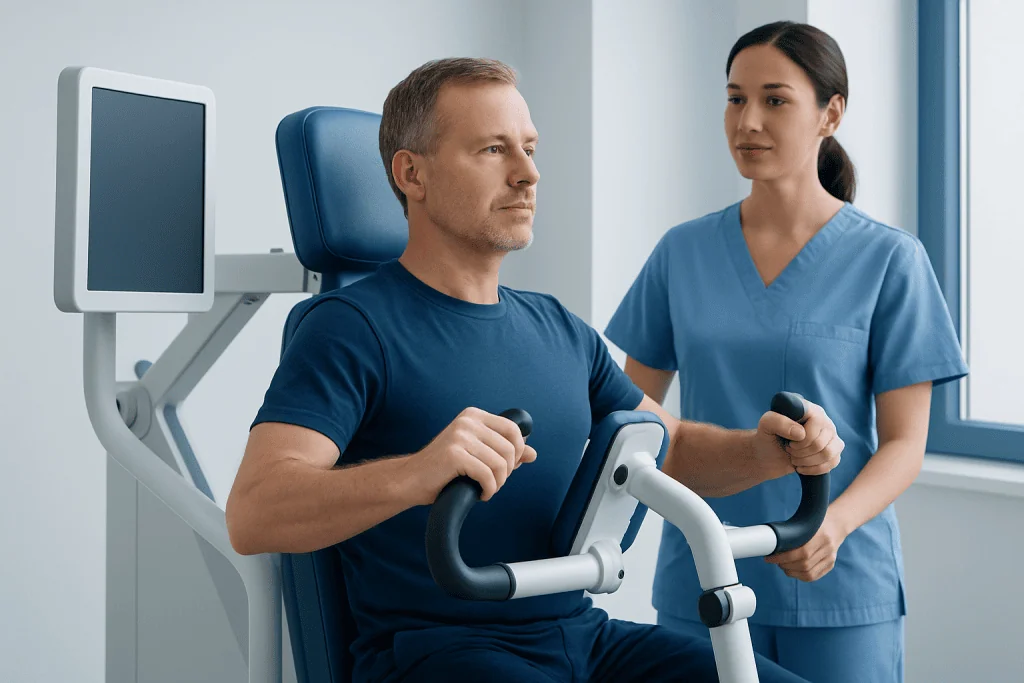
A regular upper body workout can improve muscular strength and endurance. Stronger upper body muscles may make daily movements feel easier and more efficient, especially tasks involving lifting, reaching, carrying, and pulling. This can be particularly helpful for adults who spend long hours sitting or who notice fatigue with routine activities.
Another key benefit is posture support. Many people develop tightness in the chest and weakness in the upper back from desk work, prolonged screen time, or repetitive activities. A balanced upper body routine can help strengthen the muscles that support the shoulders and shoulder blades, which may improve alignment and reduce muscle tension over time.
Upper body training may also support long-term musculoskeletal health when done correctly. Resistance exercise helps maintain muscle mass as people age and can be part of a broader healthy lifestyle plan that includes walking, flexibility work, sleep, and good nutrition. In some cases, a clinician may recommend targeted exercise as part of care for posture-related discomfort, shoulder weakness, or deconditioning after illness.
- Improves strength for daily tasks
- Supports posture and shoulder stability
- Helps maintain muscle mass with age
- Can improve exercise confidence and functional independence
What a Balanced Upper Body Workout Should Include

A balanced upper body workout should train the major muscle groups without overloading one area. Many beginners focus mainly on mirror muscles, such as the chest and arms, but the upper back and shoulder stabilizers are just as important. When pulling muscles are neglected, posture problems and shoulder irritation may become more likely.
In broad terms, a complete plan may include pushing exercises such as wall push-ups, incline push-ups, machine press, or chest press variations; pulling exercises such as rows, assisted pull-downs, or band pulls; shoulder-focused movements like lateral raises or controlled overhead pressing; and arm exercises for the biceps and triceps. Core and scapular-control exercises can also be useful because the shoulders work best when the trunk and shoulder blades are well supported.
Exercise selection should match the individual. Someone recovering from pain, surgery, or weakness may benefit from lighter resistance and guided movement retraining rather than a traditional gym routine. Patients with ongoing shoulder symptoms may need assessment for conditions such as rotator cuff problems before progressing to overhead work.
Many people do well with two to three upper body sessions per week on nonconsecutive days, though training frequency depends on total activity level and recovery. A program should leave room for rest, lower body exercise, and aerobic activity rather than repeating the same intense session every day.
How to Exercise Safely and Avoid Common Mistakes
Safety starts with proper technique, realistic loads, and gradual progression. A common mistake is using too much weight too soon, which can cause compensatory movements, loss of control, and excessive strain on the shoulders, elbows, neck, or lower back. Controlled movement through a comfortable range is usually more beneficial than lifting heavier weight with poor form.
It also helps to warm up before training. A simple warm-up might include light aerobic movement, shoulder rolls, arm circles, and a few easy practice repetitions of the planned exercises. This prepares the muscles and joints for work and may improve movement quality. Afterward, some people find that gentle stretching or a short cool-down helps them feel less stiff.
Another frequent issue is ignoring pain signals. Mild muscle effort and next-day soreness can be normal, especially after a new workout, but sharp pain, sudden weakness, joint catching, numbness, or pain that worsens with each session is not typical. Repetitive strain can contribute to shoulder, neck, or elbow complaints and may overlap with problems such as carpal tunnel syndrome in people who also perform repetitive hand-intensive work.
- Choose a load that allows good control
- Avoid holding the breath during effort
- Keep the shoulders from excessively shrugging toward the ears
- Progress gradually in weight, repetitions, or sets
- Allow time for recovery between sessions
Who Should Be Cautious Before Starting
Although an upper body workout is safe for many people, some individuals should take extra care before beginning a new strength program. This includes those with shoulder instability, recent surgery, untreated injuries, chest pain with exertion, significant shortness of breath, uncontrolled high blood pressure, or chronic medical conditions that affect exercise tolerance.
People with previous neck, shoulder, elbow, or spine problems may need exercise modifications. For example, overhead pressing may aggravate some shoulder conditions, while unsupported rowing can strain a sensitive lower back. In such cases, a clinician or physical therapist can suggest safer alternatives and guide progression.
After orthopedic injury or surgery, rehabilitation-based strengthening is often more appropriate than general fitness advice alone. Depending on the condition, treatment may involve clinical assessment, exercise therapy, and in selected cases procedures such as shoulder surgery or physical therapy and rehabilitation. Medical clearance is also sensible for people returning to exercise after prolonged inactivity or major illness.
Upper Body Workout for Beginners: A Practical Approach
Beginners often benefit from simplicity. Rather than doing many isolated exercises, it is usually better to start with a small number of well-taught movements that cover the main patterns. One pushing exercise, one pulling exercise, one shoulder movement, and one arm or stability exercise may be enough at first.
A practical starting session might include wall or incline push-ups, seated or band rows, a light shoulder press or raise within a comfortable range, and a basic biceps or triceps exercise. Each movement can be performed for a modest number of repetitions with a focus on control, steady breathing, and stopping before technique breaks down. Rest between sets should be enough to maintain form.
Progress is usually safest when it is gradual. People may increase resistance slightly, add a few repetitions, or add one extra set only when the current level feels well controlled. Recovery matters as much as training itself, so sleep, hydration, adequate protein intake, and rest days all support adaptation.
People who want a medically guided approach due to pain, weakness, or post-injury limitations may benefit from supervised rehabilitation. In more complex orthopedic cases, specialists may assess whether targeted exercise alone is enough or whether further evaluation, including orthopedic rehabilitation, is appropriate.
When to Seek Medical Care
Medical advice is important if symptoms suggest more than routine post-exercise soreness. A person should stop the workout and seek assessment if they develop sharp or tearing pain, visible swelling, marked loss of strength, shoulder dislocation, chest pain, dizziness, fainting, or severe shortness of breath during exercise. These symptoms need timely evaluation rather than self-treatment.
It is also wise to consult a doctor if discomfort lasts more than several days, keeps returning with the same movement, or interferes with sleep, work, or daily activities. Ongoing pain in the shoulder, neck, elbow, or wrist may reflect an overuse injury, tendon problem, nerve irritation, or a condition unrelated to exercise that still needs diagnosis.
For people with persistent symptoms, clinical evaluation may include a physical examination and, when necessary, imaging or referral to a rehabilitation or orthopedic specialist. Acibadem International’s multidisciplinary specialists in JCI-accredited hospitals diagnose and treat musculoskeletal concerns for international patients, including exercise-related shoulder and upper limb problems.
Frequently asked questions
What muscles does an upper body workout train?
An upper body workout usually targets the chest, upper back, shoulders, biceps, and triceps. Many routines also include muscles that stabilize the shoulder blades and core, because these support safe and efficient arm movement.
How often should a person do an upper body workout?
For many adults, two to three sessions per week is a practical starting point. The exact frequency depends on overall fitness, the intensity of training, recovery time, and whether the person also does other forms of exercise.
Is soreness after an upper body workout normal?
Mild muscle soreness can be normal, especially after starting a new program or increasing intensity. However, sharp pain, joint pain, numbness, or symptoms that worsen instead of improving are not typical and should be assessed.
Can beginners do an upper body workout at home?
Yes, beginners can start at home with bodyweight exercises, resistance bands, or light weights. The key is choosing simple movements, using good form, and progressing slowly rather than trying advanced exercises too early.
Should people with shoulder pain avoid upper body exercise?
Not always, but they should be cautious. Some exercises may need to be modified or temporarily avoided, and persistent or worsening shoulder pain should be evaluated by a qualified clinician before continuing.
What is the difference between normal effort and exercise-related injury?
Normal effort feels like muscle fatigue or exertion that settles with rest. Injury is more likely if there is sudden pain, loss of movement, swelling, instability, weakness, or symptoms that return every time the same exercise is performed.
References
- World Health Organization
- American College of Sports Medicine
- Centers for Disease Control and Prevention
- National Institute of Arthritis and Musculoskeletal and Skin Diseases
This article is for general information only and is not a substitute for professional medical advice. Please consult a qualified doctor about your individual situation.
Joint and spine care in Turkey — expert assessment & treatment
JCI-accredited · board-certified surgeons · reply within 24h
Add us as a Preferred Source to see more of our trusted health content across Google Search, AI Overviews and Discover.

More from the Health Library

Rice cracker: Symptoms, Causes, and Treatment — Complete Patient Guide

Phosphodiesterase-5 Enzyme Inhibitors: A Complete Medical Overview

Buccal Fat Removal — Explained by Medical Evidence, Not Myths

E Coli: An Evidence-Based Guide for Patients

Vyvanse — Explained by Medical Evidence, Not Myths