

Dandruff
Dandruff is a common scalp condition causing flaking, itching, and irritation, often linked to seborrheic dermatitis. Treatment focuses on accurate dermatologic assessment and medicated shampoos or topical therapy.
Quick answer
Dandruff is a common scalp condition that causes flaking, itching, and irritation, often related to excess oil, skin sensitivity, or seborrheic dermatitis, and it is usually managed with dermatologic assessment and targeted scalp treatment. At Acibadem in Turkey, evaluation focuses on confirming the cause and treatment may include medicated shampoos, topical therapies, and guidance on scalp care to help control…
Understanding Dandruff: A Common Condition That Still Deserves Careful Attention
Dandruff may seem simple, but for many people it is not a minor inconvenience. Visible flakes on dark clothing, persistent itching, scalp tenderness, redness around the hairline, or irritation that returns after every shampoo can affect confidence and daily comfort. International patients often seek dermatologic care when over-the-counter products have not worked, when symptoms are spreading to the eyebrows or face, or when they worry the problem may be something more serious than ordinary dandruff.
Dandruff is common, and it is not a sign of poor hygiene. It is usually related to how the scalp reacts to oil, yeast that naturally lives on the skin, inflammation, and individual skin sensitivity. In many patients, dandruff exists on the same spectrum as seborrheic dermatitis, a chronic inflammatory skin condition that can involve the scalp, ears, eyebrows, sides of the nose, beard area, chest, and other oil-rich areas of the body.
Although dandruff is not dangerous in most cases, persistent flaking and itching should be evaluated if symptoms are intense, recurring, associated with hair shedding, or not improving with appropriate treatment. Several other conditions can mimic dandruff, including psoriasis, eczema, allergic contact dermatitis, fungal infection of the scalp, and certain inflammatory hair disorders. These conditions require different treatment plans. A precise dermatologic assessment helps avoid months of trial-and-error and reduces the risk of worsening irritation from unsuitable products.
At Acibadem, dandruff treatment begins with a dermatology-led evaluation that considers the scalp, skin type, medical history, hair care practices, lifestyle factors, and possible underlying diagnoses. For international patients, this approach is particularly valuable because treatments and product ingredients vary by country, and many patients arrive having already tried multiple shampoos, oils, topical medicines, or cosmetic procedures. The goal is to identify the cause of scaling and inflammation, calm symptoms, protect the scalp barrier, and create a realistic maintenance plan that fits the patient’s routine.
What Dandruff Treatment Is
Dandruff treatment is a dermatologic care plan designed to reduce scalp flaking, itching, redness, oiliness, and irritation. In most cases, treatment combines medicated shampoos with targeted topical therapy and practical scalp-care guidance. The plan may be short-term for a mild flare, or longer-term for recurrent seborrheic dermatitis, which often requires maintenance to keep symptoms controlled.
The most commonly used treatments work in several ways. Antifungal shampoos and lotions help reduce the activity of Malassezia, a yeast that normally lives on the scalp but can contribute to inflammation in susceptible people. Keratolytic ingredients help loosen and remove scale. Anti-inflammatory medicines calm redness and itching. Barrier-supportive care reduces irritation from harsh cleansing, fragrance, frequent coloring, or aggressive styling products.
For many patients, the key to successful dandruff care is not simply choosing a shampoo. It is using the correct product, at the correct frequency, for the correct contact time, and then transitioning to a maintenance schedule before symptoms return. Some patients need prescription-strength topical medications for a short period, especially if the scalp is inflamed, sore, crusted, or resistant to standard products. Others require evaluation for a diagnosis other than dandruff, because persistent scaling may reflect psoriasis, eczema, fungal infection, or contact allergy.
Dandruff treatment is generally noninvasive. It does not usually require surgery, hospitalization, or downtime. However, professional assessment can make a significant difference, especially when symptoms are chronic, the scalp is sensitive, hair loss is present, or the patient has other skin conditions. A dermatologist can tailor treatment to hair texture, wash frequency, scalp oiliness, pregnancy status, immune status, age, medication use, and cultural or personal hair-care practices.
Who May Need Dandruff Treatment
You may benefit from professional dandruff treatment if flakes, itching, or scalp irritation interfere with your comfort, appearance, or daily life. Many people first notice small white flakes on the shoulders or hair. Others experience yellowish, greasy scale that sticks to the scalp, redness along the hairline, or itching that worsens in cold weather, during stress, after sweating, or after using certain hair products.
Common symptoms that lead patients to seek dermatologic care include:
- White, gray, or yellow flakes on the scalp, hair, or clothing
- Itching, burning, tightness, or tenderness of the scalp
- Redness or irritation at the hairline, behind the ears, or around the eyebrows
- Greasy scale that returns quickly after washing
- Crusting, oozing, or soreness in more inflamed cases
- Flaking in the beard, mustache, eyebrows, ears, or around the nose
- Symptoms that improve briefly with over-the-counter shampoo but recur quickly
- Concern about hair shedding, thinning, or scalp sensitivity
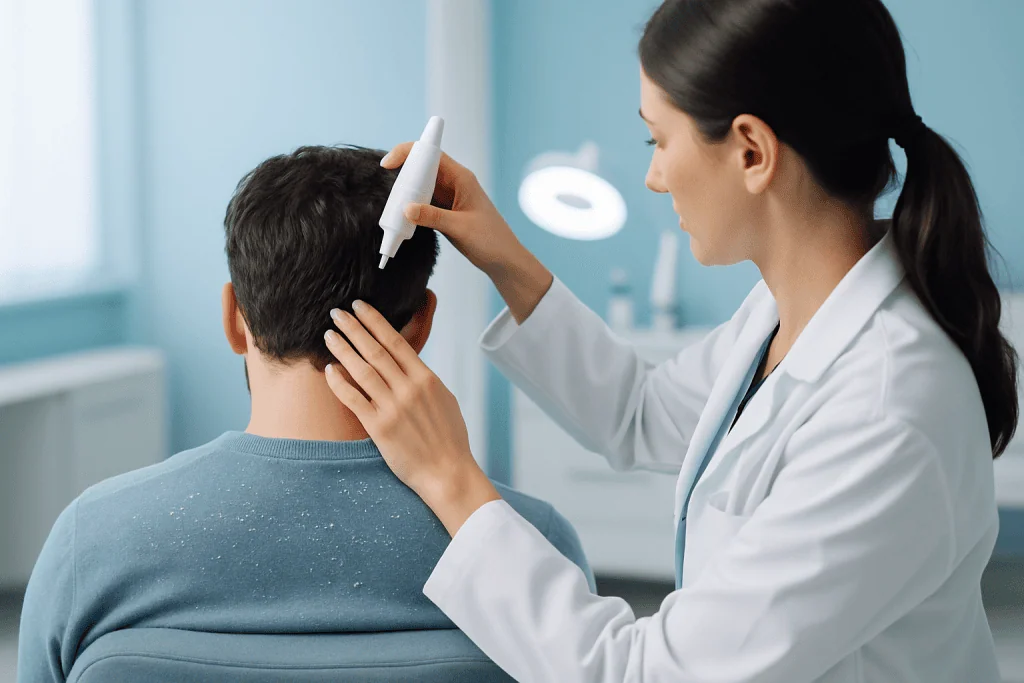
Dandruff is diagnosed primarily through a clinical examination. A dermatologist evaluates the appearance and distribution of scale, the level of redness and inflammation, the presence of hair loss or broken hairs, and whether other areas of the skin are involved. In many cases, this is enough to distinguish dandruff or seborrheic dermatitis from other conditions.
When the diagnosis is uncertain, additional tests may be recommended. High-magnification scalp examination, sometimes called trichoscopy or dermoscopic evaluation, can help assess scaling patterns, redness, follicle openings, and signs of other scalp disease. If fungal infection is suspected, a small sample of scale or hair may be examined under a microscope or sent for culture. If allergic contact dermatitis is possible, patch testing may be considered. Rarely, a small skin biopsy is needed when psoriasis, inflammatory scarring alopecia, or another scalp disorder must be ruled out.
Patients often seek care after trying multiple products without lasting improvement. This is common. Dandruff can recur because the underlying tendency of the scalp remains. Treatment is not only about clearing the current flare; it is also about reducing triggers and planning maintenance. Professional care is especially important for people with darker skin tones, sensitive skin, textured hair, frequent chemical treatments, or protective hairstyles, because irritation, product buildup, and washing frequency may require a personalized approach.
Conditions and Indications Addressed by Dandruff Treatment
Dandruff treatment can address a range of scalp and skin conditions that cause flaking and itching. The plan depends on the diagnosis. While mild dandruff and seborrheic dermatitis are the most common reasons for treatment, a careful dermatologic evaluation helps identify when another condition is contributing.
Mild dandruff usually causes loose white flakes with little or no visible redness. It may worsen with dry air, stress, infrequent washing, or sensitivity to hair products. Treatment often focuses on medicated shampoos and scalp-care habits.
Seborrheic dermatitis is a more inflammatory form of the condition. It may cause greasy yellow scale, redness, itching, and flaking in oil-rich areas such as the scalp, eyebrows, ears, sides of the nose, beard area, and chest. It tends to recur and often needs maintenance therapy.
Scalp psoriasis can look like severe dandruff but usually produces thicker, more sharply defined plaques with silvery scale. It may extend beyond the hairline and may be associated with psoriasis elsewhere on the body or nail changes. Psoriasis requires a different treatment strategy, which may include anti-inflammatory topical medicines, vitamin D analogues, phototherapy, or systemic treatment in selected cases.
Eczema and irritant dermatitis can cause flaking, itching, and burning, especially after exposure to fragrances, dyes, preservatives, hair color, straightening products, styling sprays, or harsh cleansers. Treatment may involve identifying and avoiding triggers, repairing the skin barrier, and using anti-inflammatory therapy.
Allergic contact dermatitis may be suspected when symptoms begin after a new hair product, dye, adhesive, topical medication, or cosmetic treatment. It can involve the scalp, ears, eyelids, neck, and face. Patch testing may help identify the allergen.
Tinea capitis, a fungal infection of the scalp, is more common in children but can occur in adults. It may cause scaling, broken hairs, patchy hair loss, tenderness, or swollen lymph nodes. Unlike ordinary dandruff, tinea capitis usually requires oral antifungal medication and should not be managed with dandruff shampoo alone.
Inflammatory scalp disorders associated with hair loss can sometimes be mistaken for dandruff in early stages. If there is persistent pain, burning, pustules, scarring, or progressive thinning, dermatologic assessment is essential. Early diagnosis may help preserve hair follicles in conditions that can cause permanent hair loss.
How Dandruff Treatment Is Performed
Preparation Before Your Dermatology Visit
Preparing for a dandruff consultation is straightforward, but a few details can help the dermatologist make a more accurate diagnosis. Patients are usually advised to bring a list or photographs of products they use, including shampoos, conditioners, oils, leave-in treatments, hair dyes, topical medicines, and styling products. It is helpful to note when symptoms began, what makes them worse, what has helped, and whether there is flaking or rash elsewhere on the body.
If possible, avoid using a medicated shampoo immediately before the appointment unless symptoms are severe. Arriving with the scalp in its typical condition can make the examination more informative. However, patients should not stop prescribed medication without medical guidance. International patients who have already received treatment abroad may bring previous prescriptions, laboratory results, biopsy reports, or photographs of earlier flare-ups.
Clinical Examination and Diagnosis
The dermatologist begins by examining the scalp, hairline, eyebrows, ears, face, neck, and sometimes other areas such as the chest, elbows, nails, or back. The pattern of scaling is important. Loose white flakes, greasy yellow scale, sharply defined plaques, broken hairs, pustules, or patchy hair loss can point to different diagnoses.
Modern dermatology clinics may use magnified scalp imaging to evaluate scale, redness, follicular openings, hair shaft changes, and signs of inflammation more closely. This technology can help distinguish dandruff from psoriasis, fungal infection, or certain hair disorders. If infection is suspected, a sample may be taken for microscopic analysis or culture. If allergy is suspected, patch testing may be planned. In unusual or treatment-resistant cases, a small scalp biopsy may be recommended to clarify the diagnosis.
Creating the Treatment Plan
Once the diagnosis is established, the dermatologist creates a personalized treatment plan. For mild dandruff, this may involve a medicated shampoo used several times per week at first, then less often for maintenance. The shampoo may contain an antifungal, anti-scaling, or anti-inflammatory ingredient. Patients are usually instructed to massage it into the scalp and leave it on for a specified contact time before rinsing, because rinsing too quickly may reduce effectiveness.
For seborrheic dermatitis, treatment may include a prescription antifungal shampoo or lotion, sometimes combined with a short course of topical anti-inflammatory medication. Topical corticosteroid solutions, foams, lotions, or gels may be used briefly to calm intense redness and itching. Because the scalp skin can become irritated if strong medicines are overused, dermatologists provide clear instructions on how long to use them and when to step down to maintenance care.
If scale is thick, a keratolytic product may be recommended to help loosen buildup. If the scalp is very sensitive, the dermatologist may advise gentle, fragrance-free products and avoidance of oils or occlusive styling products that worsen flaking in some patients. If symptoms also affect the face or beard, separate treatments may be prescribed for these more delicate areas, where scalp-strength medications may be inappropriate.
What Happens During Treatment
Dandruff treatment is usually performed at home after the dermatology visit. The in-clinic portion is the assessment, testing if needed, education, and prescription planning. A typical appointment may include scalp examination, review of product use, diagnosis, explanation of the treatment schedule, and follow-up planning. If a sample is taken for microscopy, culture, allergy testing, or biopsy, the timing of results depends on the test.
The first phase of treatment focuses on clearing the flare. Patients may use medicated shampoo on a scheduled basis, alternating with a gentle regular shampoo if needed. Topical medications may be applied to specific itchy or red areas. The second phase is maintenance, which is often the most important part of long-term control. Once symptoms improve, patients may continue medicated shampoo less frequently to reduce recurrence.
Dermatologists also address practical factors: how often to wash the scalp, how to apply medicine through dense or textured hair, how to avoid irritating the scalp after coloring or chemical treatments, and how to adjust therapy during travel, humid climates, winter dryness, or periods of stress. For international patients, the care team may help clarify product names and active ingredients so patients can continue appropriate care after returning home.
Typical Duration and Recovery Process
Most patients begin to notice improvement in itching and flaking within the early phase of consistent treatment, although the exact timing varies. More inflamed seborrheic dermatitis, thick scale, or an incorrect previous diagnosis can take longer to settle. Conditions such as psoriasis, eczema, or fungal infection follow different timelines and may require additional therapy.
There is usually no downtime after dandruff treatment. Patients can return to work, travel, and normal activities immediately. The main commitment is following the treatment schedule consistently. Some medicated shampoos can dry the hair shaft, so the dermatologist may recommend applying the product mainly to the scalp, using conditioner on hair lengths, or adjusting frequency once symptoms improve. If irritation develops, treatment should be reviewed rather than intensified without guidance.
Why Acting Early Matters
Dandruff is often manageable, but delaying care can allow symptoms to become more persistent and uncomfortable. Ongoing itching may lead to scratching, which can irritate the scalp, create small breaks in the skin, and increase the risk of secondary infection. Inflammation can also make the scalp more sensitive to hair coloring, heat styling, and cosmetic products.
Another reason to act early is diagnostic accuracy. Not every flaky scalp is dandruff. Scalp psoriasis, fungal infection, allergic reactions, and inflammatory hair disorders may be missed when symptoms are treated only with over-the-counter shampoo. Some of these conditions can worsen if the wrong treatment is used. For example, a fungal scalp infection may continue to spread without appropriate antifungal medication, while allergic contact dermatitis may persist if the triggering ingredient is not identified.
Early evaluation is especially important when flaking is accompanied by pain, pus, crusting, swollen lymph nodes, patchy hair loss, broken hairs, scarring, or rapid worsening. These features are not typical of simple dandruff and deserve prompt dermatologic assessment. Timely treatment can reduce discomfort, limit unnecessary product use, and help patients regain control before the condition affects sleep, confidence, or hair-care choices.
Benefits of Dandruff Treatment
A structured dermatologic treatment plan can improve symptoms and help patients understand how to keep flares under better control.
| Benefit | What It Means for You |
|---|---|
| Reduced flaking | Medicated shampoos and scale-reducing treatments help decrease visible flakes on the scalp, hair, and clothing. |
| Less itching and irritation | Anti-inflammatory and antifungal therapy can calm scalp sensitivity, redness, and the urge to scratch. |
| More accurate diagnosis | A dermatology evaluation helps distinguish dandruff from psoriasis, eczema, fungal infection, allergy, or hair disorders. |
| Personalized product guidance | Your plan can be adapted to your hair type, scalp sensitivity, styling habits, and products available in your home country. |
| Reduced recurrence | Maintenance therapy helps many patients keep symptoms controlled instead of repeatedly treating severe flares. |
| Protection of scalp health | Managing inflammation and avoiding irritants supports the scalp barrier and may reduce complications from scratching. |
Recovery Timeline After Starting Treatment
Dandruff treatment does not usually require physical recovery time, but symptoms improve gradually as inflammation and scaling come under control.
| Time Period | What Patients Can Expect |
|---|---|
| Day 1 | After the dermatology visit, you receive a diagnosis, treatment schedule, and instructions for medicated shampoo or topical therapy. Normal daily activities can continue. |
| First Week | Itching may begin to ease with consistent treatment. Flaking can still be visible as older scale loosens and lifts from the scalp. |
| First Month | Many patients see clearer improvement in flaking, redness, and comfort. The dermatologist may adjust frequency or transition toward maintenance care. |
| Longer Term | Recurrent dandruff or seborrheic dermatitis often needs ongoing maintenance. Flares can still occur, but they are usually easier to manage with an established plan. |
Factors That Influence Outcomes
The outcome of dandruff treatment depends on the diagnosis, the severity of inflammation, the consistency of treatment, and how well triggers are identified. Mild dandruff often responds well to correctly used medicated shampoo. Seborrheic dermatitis can also be controlled effectively in many patients, but it tends to recur and may require maintenance. Scalp psoriasis, eczema, contact allergy, and fungal infection require diagnosis-specific treatment and may not improve with standard dandruff products alone.
Consistency is one of the most important factors. Medicated shampoos need enough contact time with the scalp to work. Patients sometimes apply them like ordinary shampoo and rinse immediately, which may reduce benefit. Others stop as soon as symptoms improve, only to experience a rapid recurrence. A clear schedule for active treatment and maintenance helps prevent this cycle.
Hair type and hair-care routines also matter. Patients with textured hair, extensions, protective styles, frequent coloring, or chemically treated hair may not be able to shampoo daily or use drying products frequently. A dermatologist can adapt treatment using scalp-directed applications, alternate schedules, or gentler supportive products. This is not simply cosmetic; a plan that respects the patient’s routine is more likely to be followed and less likely to irritate the scalp.
Underlying health and medications may influence symptoms. Seborrheic dermatitis can be more persistent in some neurologic conditions, immune suppression, chronic stress, or other medical settings. Hormonal changes, climate, sweating, and seasonal dryness may contribute to flares. Patients with acne, rosacea, atopic dermatitis, or psoriasis may need broader skin management beyond the scalp.
Product selection is another major factor. Fragrance, preservatives, dyes, hair-color chemicals, essential oils, heavy oils, and leave-in products can irritate some scalps or worsen buildup. Natural products are not always gentle, and medicated products are not always appropriate for every diagnosis. Professional guidance can help patients avoid both under-treatment and over-treatment.
A good result usually means the scalp is more comfortable, flaking is reduced, redness is controlled, and the patient knows what to do when early symptoms return. For chronic seborrheic dermatitis, the goal is long-term management rather than a permanent cure. With the right plan, many patients can keep symptoms at a low level and reduce the social and physical burden of recurring flares.
Why International Patients Choose Acibadem for Dandruff and Scalp Care
Patients traveling for care often want more than a prescription. They want a careful diagnosis, clear communication, and confidence that their concerns are being taken seriously. At Acibadem, dandruff and scalp symptoms are evaluated within dermatology services that can assess both common and complex scalp disorders. This is important because the visible symptom, flaking, may have several different causes.
Acibadem’s JCI-accredited hospitals follow structured clinical processes designed for patient safety, coordinated care, and international standards of medical practice. Dermatologists use evidence-based diagnostic pathways and treatment protocols, adapting them to the individual patient rather than relying on a single product or routine recommendation. When symptoms suggest another medical issue, patients can be referred to relevant specialists, such as allergy, infectious diseases, endocrinology, rheumatology, or hair and scalp specialists, depending on the findings.
For more complex presentations, multidisciplinary discussion can be valuable. Persistent scalp inflammation with hair loss, suspected autoimmune disease, unusual infection, or medication-related skin changes may require input beyond a routine dermatology visit. Acibadem’s hospital network allows patients to access specialist opinions, laboratory testing, pathology services, and imaging when appropriate, all within a coordinated care environment.
Technology supports the diagnostic process. High-magnification scalp and skin examination can help clinicians see patterns that are not obvious to the naked eye. Laboratory microscopy and culture can help detect fungal causes when suspected. Pathology evaluation may clarify rare or complex inflammatory scalp diseases. These tools are used selectively, based on the patient’s symptoms and examination, to avoid unnecessary testing while improving diagnostic confidence.
International patient services are also an important part of care. Acibadem International supports patients in more than 20 languages, helping with appointment coordination, medical record transfer, interpretation, travel planning, and follow-up arrangements. For a condition such as dandruff, this may sound simple, but clear instructions matter. Patients need to understand how to use shampoo and topical medications correctly, when to reduce frequency, what side effects to watch for, and how to continue care after returning home.
For patients from the United States and other countries, another advantage is the ability to obtain a second opinion when symptoms have not improved despite prior treatment. A second evaluation can confirm whether the condition is truly dandruff, whether seborrheic dermatitis is undertreated, whether contact allergy is being missed, or whether another scalp disease is present. The objective is practical: to replace uncertainty with a clear, medically grounded plan.
Acibadem’s approach is personalized. A patient who washes daily and has oily scalp may need a different routine from a patient with tightly coiled hair who washes less often and uses protective styles. A person with facial seborrheic dermatitis needs safe treatment for delicate skin areas. Someone with scalp psoriasis may require long-term inflammatory disease management. A traveler may need a simplified plan using active ingredients available in their country. These details shape treatment quality.
Moving Forward With Confidence
Dandruff is common, but living with constant flaking, itching, or scalp irritation can be frustrating and emotionally draining. The good news is that most patients can improve with an accurate diagnosis, correctly selected treatment, and a realistic maintenance plan. If your symptoms keep returning, are spreading beyond the scalp, or are associated with pain or hair loss, a dermatology consultation can help clarify what is happening and what to do next.
Acibadem offers dermatologic evaluation for dandruff, seborrheic dermatitis, and other scalp conditions, with care adapted to international patients and their long-term needs. Whether you are seeking a first diagnosis, a second opinion, or a more effective plan after trying multiple products, a specialist can review your symptoms and guide treatment based on the underlying cause.
To learn more, you may request a consultation or share your medical history and photographs for guidance on the most appropriate next step.
This information is general and educational. It is not a substitute for professional medical advice, diagnosis, or treatment from a qualified healthcare professional.
Preparation
- Before the dermatology visit, note when flaking and itching started, what hair products you use, and any previous treatments. Avoid applying new scalp products shortly before the appointment unless prescribed. The doctor may examine the scalp and consider other causes such as psoriasis, eczema, or fungal infection.
Aftercare
- Use medicated shampoos or topical treatments exactly as prescribed, allowing enough contact time on the scalp. Avoid harsh hair products, excessive scratching, and stopping treatment too early. Follow-up may be recommended if symptoms persist, recur often, or spread beyond the scalp.
Turkey vs UK, Germany & USA
Dandruff treatment is usually outpatient care focused on identifying the cause of flaking, itching, and scalp irritation. Costs and the patient experience can vary depending on the dermatology assessment, prescribed products, follow-up needs, and local healthcare pathways.
The comparison below highlights practical factors that may influence the cost and experience of seeking dandruff or seborrheic dermatitis care in different destinations.
| Factor | Turkey | UK | Germany | USA |
|---|---|---|---|---|
| Care pathway | Private dermatology appointments are commonly arranged directly, with international patient coordination available in major hospitals. | Care may be through public referral pathways or private dermatology clinics; access routes affect timing and cost. | Dermatology care is available through private or insurance-based pathways, with structured specialist assessment. | Access is often private or insurance-based, and billing may vary by provider, facility, and plan. |
| Price drivers | Consultation type, dermoscopy or scalp evaluation, prescribed topical therapy, and follow-up planning influence the quote. | Private consultation fees, prescription arrangements, and follow-up appointments are common cost drivers. | Specialist fees, diagnostic evaluation, prescriptions, and insurance status may affect total cost. | Provider fees, facility billing, prescription coverage, and insurance deductibles can strongly influence out-of-pocket cost. |
| Hospital and specialist factors | International hospitals may offer dermatologists, multilingual support, and coordinated appointments in the same facility. | Patients may choose between hospital dermatology departments and private clinics depending on availability and preference. | University hospitals, specialist clinics, and private practices may differ in access, language support, and billing approach. | Academic centers, private dermatology groups, and hospital systems may have different consultation and billing structures. |
| Accreditation and quality | Some hospital groups serving international patients operate with JCI-accredited facilities and standardized patient pathways. | Quality is supported by national regulation and professional standards; private providers may have separate accreditation processes. | Quality is supported by national medical regulation, specialist training, and clinic or hospital quality systems. | Quality systems vary by hospital, clinic network, and accreditation status, with strong specialist availability in many areas. |
| Waiting and scheduling | Private appointments for non-urgent scalp conditions may be scheduled relatively flexibly, depending on clinic capacity. | Public referral waiting can vary; private care may offer more flexible scheduling. | Scheduling depends on specialist availability, insurance route, and region. | Appointment timing depends on provider demand, insurance authorization, and clinic location. |
| Travel and language logistics | International patient departments may assist with appointment planning, translation, and pharmacy guidance. | English-speaking care is standard; international patients may need to arrange travel and private billing directly. | Language support varies by provider; larger hospitals may offer interpreter services for international patients. | English-speaking care is standard, but international patients may need support navigating billing and prescriptions. |
| Typical package scope | A package may include dermatologist consultation, scalp assessment, treatment plan, prescription guidance, and care coordination. | Private visits may include consultation and treatment advice; tests, prescriptions, and follow-up are often billed separately. | Consultation, diagnostic assessment, and prescriptions may be arranged through the chosen clinic or hospital pathway. | Consultation, tests, prescriptions, and follow-up may be billed separately depending on the provider and insurance status. |
What affects your final cost
- Whether the condition is simple dandruff, seborrheic dermatitis, psoriasis, eczema, fungal infection, or another scalp disorder.
- The need for dermoscopic scalp examination, laboratory testing, or biopsy if the diagnosis is unclear.
- The type and duration of medicated shampoo, topical antifungal, anti-inflammatory lotion, or combination therapy prescribed.
- The number of follow-up visits needed to control symptoms and adjust treatment.
- Hospital, clinic, and dermatologist experience, including international patient services and language support.
- Whether prescriptions and follow-up care are included in the quoted package or billed separately.
Compare your options
Dandruff treatment depends on the underlying cause and severity of scalp inflammation. Suitability for any option should be decided by a dermatologist or qualified specialist after assessment.
| Option | What it is | Typical use | Key considerations |
|---|---|---|---|
| Medicated anti-dandruff shampoos | Shampoos containing antifungal, anti-inflammatory, or scale-reducing ingredients. | Common initial treatment for flaking, itching, and mild seborrheic dermatitis. | Correct contact time, frequency, and rotation of products may affect response; irritation can occur in sensitive scalps. |
| Topical antifungal therapy | Prescription creams, gels, foams, or shampoos aimed at yeast overgrowth linked to seborrheic dermatitis. | Used when flaking and redness suggest seborrheic dermatitis or when standard shampoos are insufficient. | Often used as a course followed by maintenance care; recurrence is possible without ongoing scalp management. |
| Topical anti-inflammatory treatment | Short-course lotions, solutions, or foams that calm redness, itching, and irritation. | Used for inflamed or itchy scalp symptoms under medical supervision. | Choice and duration should be guided by a specialist to reduce the risk of irritation or overuse. |
| Keratolytic or scale-softening care | Products designed to loosen thick scale and improve penetration of other topical treatments. | Used when the scalp has adherent flakes or thicker buildup. | May not be suitable for broken or very irritated skin; product selection should match scalp sensitivity. |
| Assessment for other scalp conditions | Dermatologic evaluation to rule out psoriasis, eczema, allergic contact dermatitis, tinea, or other causes. | Recommended when symptoms are severe, recurrent, one-sided, associated with hair loss, or not improving. | Additional tests or a change in diagnosis can alter the treatment plan and final cost. |
| Maintenance and relapse prevention | A long-term scalp care plan using intermittent medicated products and trigger management. | Helpful for chronic or recurring dandruff and seborrheic dermatitis. | Consistency, hair type, skin sensitivity, and lifestyle factors influence the plan; follow-up may be needed. |
Trusted care for international patients
General information only — not medical or financial advice. Final costs depend on the factors above and your individual case; request a free, personalised quote.
Frequently Asked Questions
What affects the cost of dandruff treatment?
The final cost depends on the dermatologist consultation, whether the diagnosis is straightforward, any tests needed, the prescribed shampoos or topical medicines, and whether follow-up care is included. A personalised quote can be prepared after a free consultation and review of your symptoms.
How can I get a personalised quote before travelling?
You can share your scalp symptoms, photos if requested, previous treatments, medical history, and any known allergies. The care team can then advise whether an in-person dermatology visit is needed and what the expected package may include.
Is dandruff treatment usually a hospital procedure?
Dandruff care is usually outpatient dermatology care rather than a procedure. The main value of hospital-based care is access to specialist assessment, accurate diagnosis, prescription planning, and coordinated support for international patients.
Will the quoted cost include shampoos and medicines?
This depends on the package and local pharmacy arrangements. Some quotes may cover consultation and care coordination only, while prescribed products, tests, or follow-up visits may be listed separately.
Why might I need a dermatologist if dandruff shampoos are available over the counter?
Persistent flaking, itching, redness, scalp pain, or hair shedding may be caused by conditions that look like dandruff but need different treatment. A dermatologist can confirm the likely cause and recommend a safe, targeted plan.