

Impetigo
Impetigo is a contagious bacterial skin infection treated with hygiene measures and topical or oral antibiotics. Dermatology assessment helps confirm diagnosis, prevent spread, and reduce complications.
Quick answer
Impetigo is a contagious bacterial skin infection that causes sores or crusted patches and is usually treated with careful skin hygiene and antibiotic medicines applied to the skin or taken by mouth. At Acibadem in Turkey, dermatology evaluation is used to confirm the diagnosis, guide treatment, and help limit spread and complications.
When a Skin Infection Spreads Quickly, the Right Diagnosis Matters
Impetigo can appear suddenly: a small red spot near the nose or mouth, a blister on a child’s arm, or a crusted patch that seems to spread from one area of skin to another within days. For many families, the concern is not only the rash itself, but also how contagious it is, whether it will leave marks, and how to prevent it from passing to siblings, classmates, teammates, or other close contacts.
Although impetigo is usually a treatable bacterial skin infection, it deserves careful attention. It can be uncomfortable, visible, and socially difficult, especially for children, adolescents, and people who work closely with others. In some cases, it may be confused with other skin conditions such as eczema flare-ups, cold sores, fungal infections, allergic rashes, insect bites, or more serious bacterial infections. A dermatology assessment helps confirm the diagnosis, choose the appropriate treatment, and reduce the chance of spread or recurrence.
International patients may also face added questions. Is it safe to travel? Does the infection require oral antibiotics? Can a child return to school or sports? Should family members be treated? At Acibadem, impetigo care is approached through clinical evaluation, evidence-based antibiotic use, hygiene guidance, and patient education. The goal is not only to clear the visible lesions, but also to help patients understand how to avoid reinfection and protect those around them.
What Is Impetigo Treatment?
Impetigo treatment is the medical care used to eliminate a contagious bacterial infection of the superficial layers of the skin. The infection is most often caused by Staphylococcus aureus or Streptococcus pyogenes. These bacteria can enter the skin through tiny breaks, scratches, insect bites, irritated eczema, or areas damaged by friction. In some people, bacteria that normally live on the skin or in the nose can contribute to repeated episodes.
Treatment usually combines three elements: careful skin hygiene, topical antibiotic medication applied directly to the affected area, and, when needed, oral antibiotics taken by mouth. The choice depends on the number of lesions, their location, the patient’s age, the presence of fever or spreading redness, and whether other people in the household or school setting have similar symptoms.
For mild, localized impetigo, a dermatologist may recommend gentle cleaning of the skin and a prescription topical antibiotic. This approach targets bacteria at the surface while limiting unnecessary systemic medication. For more extensive disease, rapidly spreading lesions, recurrent infection, or situations where topical treatment is difficult to use consistently, oral antibiotics may be recommended. If there are signs of deeper infection or complications, further evaluation is required.
Impetigo treatment also includes practical infection-control advice. Patients are usually guided to avoid scratching, keep nails short, cover draining lesions when appropriate, avoid sharing towels or clothing, and wash hands regularly. These steps are important because impetigo can spread through direct skin contact or contaminated items. Good treatment is therefore both medical and preventive.
Who May Need Impetigo Treatment?
Anyone with symptoms suggestive of impetigo should be assessed, especially if the rash is spreading, painful, recurring, or affecting a child. Impetigo is more common in children, particularly between preschool and early school age, but adults can develop it as well. Athletes, people in close-contact environments, individuals with eczema, and those living in warm or humid climates may be at higher risk.
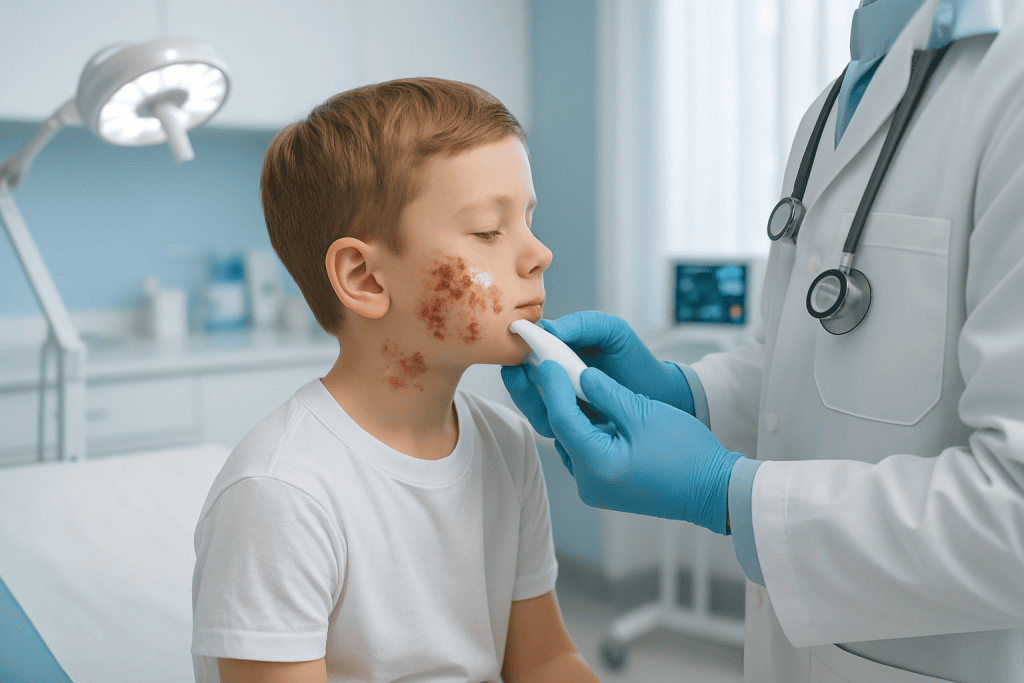
The classic sign of non-bullous impetigo is a cluster of red sores or erosions that develop a yellow-brown or “honey-colored” crust. These lesions often appear around the nose, mouth, cheeks, arms, or legs. They may begin as small blisters or red spots before breaking open. Itching is common, and scratching can transfer bacteria to other parts of the body.
Bullous impetigo, another form of the infection, causes larger fluid-filled blisters. These blisters may rupture and leave a thin, shiny surface or crust. Bullous impetigo can occur on the trunk, skin folds, diaper area, or limbs and is often associated with certain strains of Staphylococcus aureus. In infants and very young children, medical review is especially important.
Diagnosis is usually clinical, meaning the dermatologist can often identify impetigo by examining the lesions and reviewing the patient’s history. The doctor may ask when the rash started, whether it is spreading, whether other family members have symptoms, and whether there has been recent eczema, insect bites, trauma, shaving, sports contact, or previous skin infections. A skin swab or bacterial culture may be recommended if the infection is recurrent, severe, not responding to treatment, or if antibiotic-resistant bacteria are a concern.
Patients should seek medical attention promptly if there is fever, increasing pain, rapidly expanding redness, swelling, pus, red streaks, involvement near the eyes, or symptoms in a newborn or immunocompromised person. These findings may indicate a more significant infection or a need for more urgent care.
Conditions and Situations Impetigo Treatment Addresses
Impetigo treatment addresses bacterial infection limited mainly to the upper layers of the skin. The treatment plan is adapted to the type of impetigo, the extent of involvement, and the patient’s general health. It may be used for a single localized patch, multiple lesions across several areas, or repeated outbreaks that suggest bacterial carriage or ongoing exposure.
Common situations include non-bullous impetigo with crusted sores around the face; bullous impetigo with larger blisters; secondary impetigo developing over eczema or dermatitis; impetigo after insect bites or minor cuts; and infection spreading among siblings, classmates, athletes, or close contacts. In adults, impetigo may appear after shaving irritation, skin injury, cosmetic procedures, occupational exposure, or close-contact sports.
Treatment may also be part of a broader dermatology plan when impetigo complicates another skin condition. For example, children with atopic dermatitis may scratch intensely, creating small breaks in the skin that allow bacteria to enter. In these cases, treating the bacterial infection is only one part of care. The underlying eczema also needs attention to reduce future episodes.
In recurrent cases, the dermatologist may consider whether bacteria are being carried in the nose or on the skin, whether household items are contributing to reinfection, or whether close contacts have untreated lesions. The plan may include hygiene strategies for the household, environmental cleaning, and targeted testing when clinically appropriate.
How Impetigo Treatment Is Performed: From Assessment to Recovery
Impetigo care begins with a focused clinical assessment. The dermatologist examines the skin closely, including the number, size, location, and appearance of the lesions. The pattern of crusting, blistering, drainage, redness, and surrounding inflammation helps distinguish impetigo from other skin diseases. The physician also evaluates whether the infection appears superficial or whether there are signs of deeper involvement, such as cellulitis.
Preparation is usually simple. Patients may be asked not to apply cosmetic products, over-the-counter creams, or antiseptics before the visit if possible, because these can alter the appearance of the rash. For children, parents may be encouraged to bring a list of medications, allergy history, recent antibiotic use, and information about school or daycare exposure. International patients should also share any recent travel history, previous skin infections, and known antibiotic resistance concerns, if available.
If the diagnosis is clear and the infection is mild, treatment can often begin immediately. Gentle cleaning is usually recommended. Crusts may be softened with warm water or saline compresses, then carefully removed if advised by the clinician. This can help topical medicine reach the affected skin. Harsh scrubbing is avoided because it can irritate the skin and spread bacteria.
Topical antibiotic therapy is commonly used for limited impetigo. The medication is applied to the affected area as instructed, usually after gentle cleansing. The exact product and duration depend on the patient’s age, allergies, local resistance patterns, and clinical findings. It is important to use the medication as prescribed and not to stop too early because lesions look improved. Incomplete treatment may allow bacteria to persist.
Oral antibiotics may be recommended when impetigo is widespread, rapidly spreading, recurrent, associated with outbreaks, or difficult to treat with topical medication alone. They may also be used when lesions are numerous or located in areas where topical treatment is impractical. The choice of antibiotic is based on likely bacteria, severity, allergy history, and regional resistance considerations. In some cases, culture results guide treatment adjustments.
Technology in impetigo care is usually diagnostic and supportive rather than procedural. Dermatologists may use magnified skin examination to evaluate lesion morphology. Clinical photography can help document progress, especially for international patients or those receiving follow-up after travel. Laboratory testing, such as bacterial swabs and cultures, can identify the organism and help determine antibiotic sensitivity when needed. Electronic medical records and coordinated clinical communication support continuity of care, particularly when more than one specialist is involved.
The clinical visit itself is typically brief compared with surgical or hospital-based procedures, although more time may be needed for children, recurrent cases, or patients with extensive skin disease. Most patients are treated as outpatients and do not require hospitalization. Hospital care is uncommon for simple impetigo but may be considered if there are signs of severe infection, systemic illness, very young age, immune compromise, or complications requiring closer monitoring.
Recovery begins once effective treatment and hygiene measures are in place. Many patients notice reduced drainage, crusting, and spread within the first few days, although visible healing takes longer. Lesions gradually dry, crusts lift, redness fades, and the skin surface repairs. Patients should avoid picking at crusts because this can delay healing and increase the risk of temporary discoloration or marks.
Return to school, daycare, sports, or work depends on medical advice, local policies, and whether lesions can be covered. In many settings, patients are considered less contagious after appropriate antibiotic treatment has begun and draining lesions are covered, but specific timing should be confirmed with the treating physician. For contact sports, swimming, and shared equipment, additional precautions may be needed until lesions are healed or no longer contagious.
Why Acting Early Matters
Early treatment helps reduce discomfort, limit spread, and lower the risk of complications. Because impetigo can spread through touch, towels, clothing, bedding, toys, sports gear, and scratching, even a small lesion may lead to multiple areas of infection if not addressed. Children may unintentionally spread bacteria from the face to the arms, legs, or trunk by scratching and then touching other skin.
Delaying care may also allow impetigo to spread to other people. This is especially important in households with infants, elderly relatives, people with eczema, or individuals with weakened immune systems. In daycare, school, camps, and sports teams, a single untreated case can contribute to clusters of infection.
Most impetigo remains superficial, but complications can occur. The infection may extend deeper into the skin, causing cellulitis, which is typically more painful and may involve warmth, swelling, and spreading redness. Rarely, certain streptococcal infections can be associated with kidney inflammation after infection. While this is uncommon, it is one reason proper diagnosis and treatment are important.
Early care also helps avoid inappropriate treatment. Steroid creams, antifungal medications, or home remedies may not treat the bacteria causing impetigo and may sometimes worsen the problem if used without medical guidance. A dermatologist can identify when impetigo is the primary issue and when another condition, such as eczema or allergic dermatitis, is contributing to the skin breakdown.
Benefits of Impetigo Treatment
Appropriate impetigo treatment offers both medical and practical benefits for patients and families.
| Benefit | What It Means for You |
|---|---|
| Clears the bacterial infection | Topical or oral antibiotics help eliminate the bacteria causing the lesions, allowing the skin to heal more predictably. |
| Reduces contagiousness | Effective treatment and hygiene measures lower the chance of spreading impetigo to family members, classmates, teammates, or colleagues. |
| Relieves visible symptoms | Crusting, oozing, redness, and irritation usually improve as the infection comes under control. |
| Helps prevent complications | Early care reduces the risk of deeper skin infection and helps identify warning signs that require further medical attention. |
| Addresses recurrence risks | Dermatology guidance can identify eczema, bacterial carriage, hygiene factors, or close-contact exposure that may contribute to repeated episodes. |
| Supports safe return to daily life | Patients receive guidance on school, work, sports, travel, and contact precautions based on their condition and treatment plan. |
Recovery Timeline After Impetigo Treatment
Recovery varies depending on the extent of infection, the treatment used, and whether there are underlying skin conditions, but many patients improve steadily with appropriate care.
| Time Period | What Patients Can Expect |
|---|---|
| Day 1 | The dermatologist confirms the diagnosis, starts topical or oral treatment when indicated, and explains hygiene steps to reduce spread. |
| First Few Days | New lesions should become less frequent, drainage and crusting often begin to decrease, and itching or irritation may improve. |
| First Week | Many lesions dry and begin to heal. Patients should continue medication as prescribed and avoid scratching or picking at crusts. |
| First Month | The skin surface usually continues to normalize. Temporary redness or color change may persist, especially in sensitive or darker skin types. |
| Longer Term | Prevention focuses on managing eczema or skin irritation, avoiding shared personal items, and addressing recurrent infection if it occurs. |
Factors That Influence Outcomes
A good outcome in impetigo treatment depends on accurate diagnosis, appropriate antibiotic selection, consistent medication use, and careful hygiene. Most patients respond well when treatment targets the correct bacteria and is started before the infection becomes extensive. However, several factors can affect the speed and completeness of recovery.
The extent of infection is important. A small patch around the mouth may respond quickly to topical therapy, while widespread lesions on multiple body areas may require oral medication and closer follow-up. Bullous impetigo may need different clinical attention than a limited crusted lesion. If there is surrounding cellulitis, fever, or significant swelling, the treatment approach changes.
Underlying skin health also matters. People with eczema, dermatitis, scabies, insect bites, or frequent scratching have more breaks in the skin barrier. Unless these triggers are managed, bacteria may re-enter the skin and cause repeated infection. For this reason, dermatologists often treat both the impetigo and the skin condition that allowed it to develop.
Antibiotic resistance can influence treatment response. If lesions do not improve as expected, a swab culture may be needed to identify the bacteria and determine which antibiotics are likely to work. Patients should avoid using leftover antibiotics or non-prescribed creams because these may be ineffective and can contribute to resistance.
Adherence is another major factor. Topical antibiotics must be applied correctly to clean skin. Oral antibiotics should be taken according to the prescribed schedule, even if symptoms improve early. Families should follow instructions about handwashing, laundry, towel use, nail trimming, and covering lesions. These measures may feel simple, but they are central to preventing spread.
The patient’s immune status, age, and exposure environment also play a role. Infants, older adults, and immunocompromised patients may require more cautious assessment. Children in daycare or school, athletes in close-contact sports, and people living in shared housing may need additional prevention guidance to reduce reinfection.
Why International Patients Choose Acibadem for Impetigo Care
For international patients, even a common skin infection can feel more complicated when it occurs during travel, before a planned procedure, or while arranging care in another country. Patients want a clear diagnosis, careful medication choices, and practical advice that fits their schedule, family circumstances, and travel plans. Acibadem provides dermatology care within a hospital network experienced in caring for patients from abroad, with clinical pathways designed to support both medical accuracy and patient communication.
Acibadem Hospitals are JCI-accredited, reflecting internationally recognized standards for patient safety, quality systems, infection control, and clinical governance. For a contagious condition such as impetigo, infection-control awareness is particularly relevant. Patients receive guidance not only on medications, but also on how to reduce transmission at home, in hotels, during travel, and in shared environments.
Dermatology assessment at Acibadem is supported by modern diagnostic pathways. When impetigo is straightforward, diagnosis may be clinical and treatment can begin promptly. When the presentation is atypical, recurrent, widespread, or not responding as expected, laboratory testing can help identify the responsible bacteria and guide antibiotic selection. This evidence-based approach is especially important for patients with recent antibiotic use, prior resistant infections, or complex medical histories.
Although impetigo is usually managed by dermatology, multidisciplinary collaboration is available when needed. Pediatricians may be involved for infants and children. Infectious diseases specialists may advise on recurrent, resistant, or complicated infections. Other physicians can contribute if the patient has diabetes, immune suppression, chronic wounds, or another condition affecting skin healing. This specialist-board culture supports careful decision-making without adding unnecessary complexity for simple cases.
International patient services at Acibadem help coordinate appointments, interpretation, medical documentation, and communication in more than 20 languages. This is valuable for patients who need to understand medication instructions precisely, especially when caring for a child or when continuing treatment after returning home. Clear written plans can help patients follow the correct application schedule, know when to seek urgent care, and understand when normal activities may resume.
Personalized treatment planning is important in impetigo because not every patient needs the same level of medication. A child with one small crusted patch may need a different plan than an athlete with multiple lesions, a traveler with rapidly spreading infection, or a patient with recurrent impetigo over eczema. Acibadem physicians consider the clinical picture, allergies, age, travel needs, household exposure, and follow-up availability when recommending treatment.
For patients seeking a second opinion, Acibadem can review the history, lesion appearance when available, previous treatments, and culture results if already performed. This may be useful when the diagnosis is uncertain, symptoms persist despite treatment, or recurrent episodes are disrupting school, work, sports, or travel. The purpose of a second opinion is to clarify the diagnosis and refine the care plan, not to repeat unnecessary steps.
Moving Forward With Clear, Practical Care
Impetigo is common, contagious, and often distressing because it affects visible skin and can spread quickly. With timely dermatology care, most patients recover well and return to normal routines with appropriate precautions. The key is to confirm the diagnosis, use antibiotics thoughtfully when needed, protect the skin barrier, and follow hygiene steps that reduce transmission.
If you or your child has crusted sores, blisters, spreading redness, or a rash that may be impetigo, a dermatology consultation can provide clarity and a treatment plan tailored to the situation. International patients may request an appointment or a second opinion through Acibadem International, where care coordination, interpretation, and follow-up planning are available to support treatment before, during, and after travel.
This information is general and is not a substitute for professional medical advice. Diagnosis and treatment should always be guided by a qualified healthcare professional who can assess your individual condition.
Preparation
- Before the appointment, avoid applying unprescribed creams or antiseptics to the affected area unless advised. Keep lesions clean and covered, and note when symptoms began, fever history, and any recent contact with infected skin. Children should avoid school or close-contact activities until a doctor confirms when it is safe to return.
Aftercare
- Use prescribed topical or oral antibiotics exactly as directed and complete the full course. Wash hands often, keep sores covered, avoid scratching, and do not share towels, clothing, or bedding. Seek medical advice if redness spreads, fever develops, symptoms do not improve, or infections recur.
Turkey vs UK, Germany & USA
Impetigo treatment costs depend mainly on the consultation pathway, whether laboratory testing is needed, and whether topical or oral medication is prescribed. Dermatology assessment helps confirm the diagnosis, reduce spread, and choose an appropriate treatment plan.
Costs and patient experience vary by healthcare system, appointment route, and what is included in the dermatology visit.
| Factor | Turkey | UK | Germany | USA |
|---|---|---|---|---|
| Care pathway | Private dermatology access is commonly arranged through hospital international patient departments. | Public care may start with a general practitioner referral; private dermatology is also available. | Access may depend on statutory or private insurance and local specialist availability. | Access is often shaped by insurance networks, urgent care options, or direct private dermatology booking. |
| Main price drivers | Dermatology consultation, medication, culture test if required, and follow-up planning. | Private consultation fees, prescription route, and any laboratory testing can affect cost. | Insurance status, specialist consultation, pharmacy rules, and laboratory testing influence cost. | Insurance coverage, deductibles, facility fees, laboratory testing, and medication formulary can affect final cost. |
| Hospital and specialist factors | International hospitals may coordinate dermatology, pharmacy, and language support in one pathway. | Care may be split between primary care, pharmacy, and dermatology depending on severity. | Specialist dermatology clinics and hospital outpatient services may be used based on the case. | Care may involve primary care, urgent care, dermatology clinics, or hospital outpatient departments. |
| Accreditation and quality | JCI-accredited hospitals such as Acibadem follow structured quality and safety processes. | Regulated public and private providers follow national clinical and safety standards. | Providers follow national healthcare regulations and professional standards. | Accreditation and quality oversight vary by hospital, clinic, and insurance network. |
| Typical waiting experience | Private appointments may be arranged with international patient support, subject to availability. | Public pathways can involve referral waiting; private appointments may be quicker. | Waiting time varies by region, insurance status, and clinic capacity. | Waiting time varies widely by insurance network, clinic availability, and urgency of symptoms. |
| Travel and language logistics | Interpreter support, appointment coordination, and pharmacy guidance may be included for international patients. | International patients may need to arrange travel, payment, and prescription access separately. | Language support may be available in larger centers but may need advance arrangement. | Travel, insurance authorization, and out-of-network rules can add complexity. |
| What a package may include | Dermatology consultation, diagnosis confirmation, treatment prescription, hygiene advice, and follow-up guidance. | Private packages may vary and often separate consultation, tests, and medication. | Package contents depend on provider type and insurance arrangements. | Consultation, tests, and medication are often billed separately depending on provider and insurer. |
What affects your final cost
- Whether the rash is simple, widespread, recurrent, or complicated.
- Whether a bacterial swab or culture is recommended.
- Whether topical treatment is enough or oral antibiotics are needed.
- Whether other skin conditions need to be ruled out by a dermatologist.
- Follow-up needs, especially for children, recurrent infection, or household spread.
- International patient services such as translation, appointment coordination, and pharmacy support.
Compare your options
Impetigo is usually managed with hygiene measures and antibiotics, but the best option depends on the type, extent, and severity of infection. Suitability is decided by a specialist after assessment.
| Option | What it is | Typical use | Key considerations |
|---|---|---|---|
| Hygiene and skin care measures | Gentle cleansing, avoiding scratching, covering lesions when advised, and not sharing towels or personal items. | Used alongside medical treatment to reduce spread and support healing. | Important for households, schools, and close-contact settings; does not replace antibiotics when they are needed. |
| Topical antibiotic treatment | Antibiotic medicine applied directly to affected skin. | Often considered for localized impetigo when the patient is otherwise well. | Correct application and completing the prescribed course are important; resistance patterns and allergies matter. |
| Oral antibiotic treatment | Antibiotic medicine taken by mouth. | May be used for more widespread lesions, recurrent infection, outbreaks, or when topical treatment is not suitable. | Choice depends on age, allergies, local resistance, pregnancy status, other medicines, and clinical severity. |
| Bacterial swab or culture | A sample from the lesion is tested to identify bacteria and antibiotic sensitivity. | May be considered for recurrent, severe, non-responding, or unusual cases. | Can guide antibiotic choice but may not be necessary for every typical case. |
| Assessment for complications or mimics | Dermatology evaluation to check for eczema, herpes infection, fungal infection, cellulitis, or other skin problems. | Useful when the diagnosis is uncertain, symptoms are worsening, or there is frequent recurrence. | Helps avoid inappropriate treatment and supports prevention planning. |
Trusted care for international patients
General information only — not medical or financial advice. Final costs depend on the factors above and your individual case; request a free, personalised quote.
Frequently Asked Questions
What affects the cost of impetigo treatment?
The main factors are the dermatology consultation, whether laboratory testing is needed, the type of antibiotic prescribed, follow-up needs, and whether international patient services such as interpretation or appointment coordination are used.
Can I get a quote before travelling to Turkey?
Yes. You can request a free consultation by sharing photos of the affected area, symptom history, previous treatments, allergies, and any relevant medical information. A personalised quote can then be prepared based on the likely care pathway.
Is a laboratory test always required for impetigo?
Not always. Many typical cases are diagnosed clinically by a doctor. A swab or culture may be recommended if the infection is recurrent, severe, not improving, or if antibiotic resistance is a concern.
Does the cost change if oral antibiotics are needed?
It can. Oral antibiotics may add medication costs and may require closer follow-up, especially for widespread infection, recurrent cases, or patients with other health conditions.
What is usually included in an international dermatology visit for impetigo?
It may include dermatology assessment, diagnosis confirmation, treatment prescription, hygiene and contagion advice, pharmacy guidance, and follow-up recommendations. Exact inclusions vary by hospital and patient needs.
Is this information medical or financial advice?
No. This is general educational information. A dermatologist should confirm the diagnosis and treatment plan, and the hospital team can provide a personalised quote after reviewing your case.