Turkey Tail Mushroom Benefits — Explained by Medical Evidence, Not Myths

Turkey tail mushroom contains bioactive compounds, especially PSK and PSP, that may influence immune function. The strongest medical interest has been in supportive cancer care, but turkey tail is not a cure and should never replace standard treatment.
Key Takeaways
- Turkey tail mushroom contains bioactive compounds, especially PSK and PSP, that may influence immune function.
- The strongest medical interest has been in supportive cancer care, but turkey tail is not a cure and should never replace standard treatment.
- Research in humans is promising in some areas, yet overall evidence remains limited and product quality can differ widely.
- Side effects are usually mild but may include digestive upset or allergic reactions, and interactions with medicines are possible.
- People with cancer, autoimmune disease, organ transplants, or those taking immunosuppressive medicines should speak with a doctor before use.
Turkey tail mushroom benefits are most often linked to immune support, mainly because it contains polysaccharides such as PSK and PSP that have been studied in laboratory and some clinical settings. However, the evidence is mixed, product quality varies, and turkey tail should be viewed as a supplement with possible supportive roles rather than a proven treatment for disease.
Overview: what medical evidence says about turkey tail mushroom benefits
Turkey tail mushroom benefits are often described in broad wellness terms, but the medical evidence supports a narrower and more careful view. Turkey tail, also called Trametes versicolor or Coriolus versicolor, contains biologically active compounds that may affect the immune system. The best-known of these are polysaccharide-K (PSK) and polysaccharopeptide (PSP), which have been studied for immune modulation and supportive roles in some cancer settings.
What this means in practice is that turkey tail may have potential as a complementary supplement in selected situations, especially under medical guidance. It does not mean that it can prevent cancer, cure infections, reverse chronic illness, or replace proven medical therapies. Many online claims go beyond what current research can confirm.
A balanced reading of the evidence shows both interest and uncertainty. Some laboratory, animal, and small human studies suggest immune-related effects, but supplements sold to the public are not all the same as the purified extracts used in research. For patients, the most useful question is not whether turkey tail is “good” or “bad,” but whether it is appropriate, safe, and realistic for their own health needs.
What is turkey tail mushroom and how might it work?
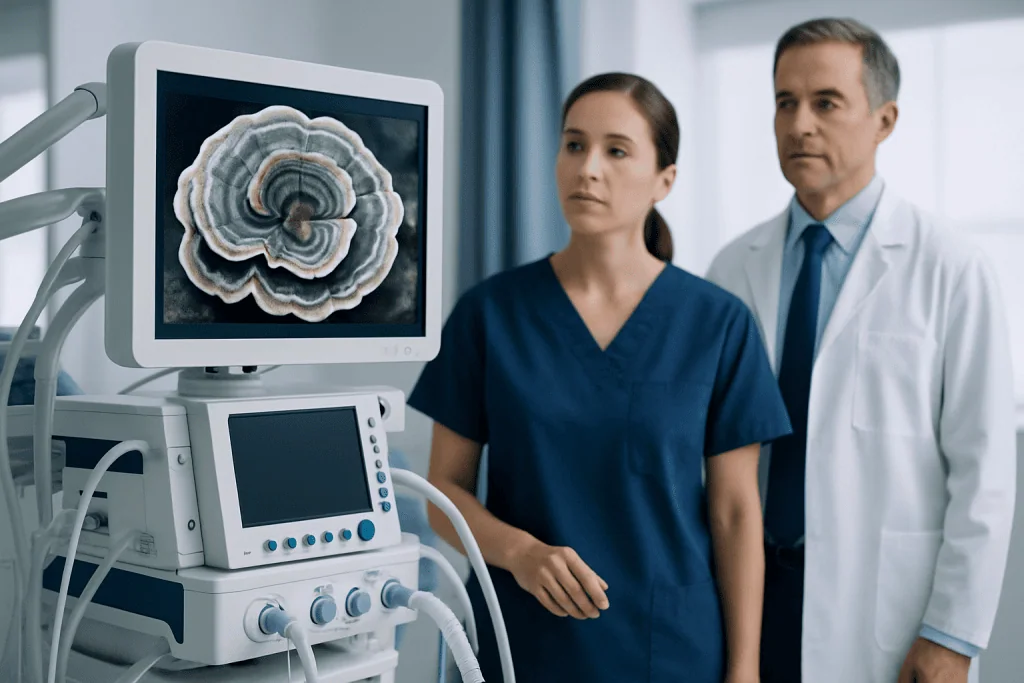
Turkey tail is a type of fungus that grows on decaying wood and has a fan-shaped appearance with colored rings that resemble a wild turkey’s tail. It has a long history in traditional medicine, but modern interest focuses on its chemical components rather than tradition alone. The most studied compounds are PSK and PSP, along with other polysaccharides, beta-glucans, and antioxidant substances.
These compounds may act as biological response modifiers. In simple terms, they may help the immune system recognize and respond to signals more effectively. Researchers have explored effects on immune cells such as natural killer cells, macrophages, and certain lymphocytes. This does not necessarily mean the immune system becomes “stronger” in a general sense; rather, it may become modulated in specific ways.
Turkey tail may also influence the gut microbiome, which is linked to digestion, immunity, and inflammation. Early research suggests that some compounds in mushrooms can act like prebiotics, supporting beneficial intestinal bacteria. Even so, microbiome findings are still developing and should not be overstated as a proven clinical benefit.
Because mushrooms and mushroom extracts can vary greatly in composition, one product may not match another. A tea, powdered supplement, capsule, and standardized extract can differ in concentration, purity, and how much of the active compounds they actually contain.
Potential benefits supported by current research

The most credible discussion of turkey tail mushroom benefits starts with immune support. Some studies suggest that turkey tail compounds may help regulate immune activity, particularly in people whose immune systems are affected by illness or medical treatment. This is why it has been studied in supportive oncology care rather than as a general cure-all.
In cancer-related research, PSK in particular has been used in some countries as an adjunct to conventional treatment for certain cancers. This means it may be used alongside surgery, chemotherapy, or other standard therapies, not instead of them. The goal in these settings is supportive care, and decisions should always be made by oncology teams. People seeking care for cancer should be cautious about unsupported supplement claims online.
There is also growing interest in whether turkey tail may help support gut health and reduce some treatment-related effects through microbiome changes or immune signaling. However, this evidence is still preliminary. Findings from one patient group should not be generalized to everyone, and over-the-counter products have not all been tested in rigorous clinical trials.
Some early studies also examine antioxidant and anti-inflammatory actions, but these findings are not enough to confirm a clear health outcome in the general population. At present, the most accurate conclusion is that turkey tail has biologically interesting compounds and possible supportive benefits, but its role remains complementary and evidence-limited.
What turkey tail mushroom cannot do
It is important to separate possibility from proof. Turkey tail mushroom has not been proven to prevent cancer in healthy people, cure cancer, treat autoimmune disease, eliminate infections, or replace prescribed medicines. Statements that it “boosts immunity” in a guaranteed way or “detoxifies” the body are not medically precise and can be misleading.
This matters most when a person is seriously unwell. Delaying proper diagnosis or standard treatment while relying on supplements can allow an underlying disease to progress. For example, persistent digestive symptoms, bleeding, unexplained weight loss, or ongoing fatigue deserve medical evaluation rather than self-treatment with mushroom products alone. Depending on symptoms, doctors may recommend tests such as endoscopy or colonoscopy to look for a cause.
Turkey tail should also not be seen as automatically safe because it is natural. Natural products can cause side effects, contamination, or drug interactions. The safest approach is to treat it like any other biologically active substance: something that may help in certain contexts but needs thoughtful use.
Safety, side effects, and who should be careful
Turkey tail is generally considered well tolerated for many adults when used appropriately, but side effects can occur. The most commonly reported issues are mild digestive symptoms such as bloating, nausea, gas, or changes in bowel habits. Some people may also notice darkened stools or changes related to the product’s ingredients rather than the mushroom itself.
Allergic reactions are possible, especially in people who are sensitive to mushrooms. Signs may include rash, itching, swelling, or trouble breathing. Any severe reaction requires urgent medical attention. Quality is another safety issue, since supplements can vary in purity and may contain fillers, contaminants, or less active material than the label suggests.
People who should take extra care include those with autoimmune diseases, those taking immunosuppressive medicines, organ transplant recipients, pregnant or breastfeeding individuals, and anyone on multiple medications. Because turkey tail may affect immune signaling, it may not be suitable in every medical situation. Patients with immune-related conditions should ask their doctor before starting supplements, particularly if they already have a diagnosed immune system disorder.
For people receiving oncology treatment, supplement decisions are best discussed with the treating team. Cancer care is complex, and even products used as supportive therapies in some settings may not be appropriate for every diagnosis or treatment plan. In specialist centers, guidance may be coordinated alongside medical oncology care.
How doctors evaluate supplement use and related health concerns
There is no single medical test that tells whether turkey tail is “working.” Instead, doctors look at the person’s overall health, goals, symptoms, diagnoses, medications, and any potential risks. If someone is considering turkey tail for general wellness, the discussion may be brief. If they are considering it during cancer treatment, after transplantation, or with autoimmune disease, the evaluation becomes more careful.
Clinicians may review the ingredient label, dose form, manufacturer information, and whether the product is standardized to a known compound. They also ask why the patient wants to take it. Sometimes a person is trying to manage symptoms that need proper diagnosis, such as fatigue, abdominal discomfort, or recurrent infections. In these cases, addressing the root cause is more important than adding a supplement.
When symptoms suggest a possible medical problem, testing depends on the situation. Blood tests, imaging, or referrals may be needed. If a person is exploring supplements while being assessed for a serious condition, specialists may coordinate supportive advice with the main treatment plan. In international settings, Acibadem International’s multidisciplinary specialists and JCI-accredited hospitals diagnose and treat complex conditions while helping patients make informed decisions about complementary products.
Practical guidance for using turkey tail responsibly
Anyone interested in turkey tail should begin with realistic expectations. It is best approached as a possible adjunct, not a substitute for healthy habits or medical treatment. A patient-friendly rule is simple: use evidence, not myths. That means checking whether the reason for taking it matches what research actually supports.
Before starting, people should speak with a qualified doctor or pharmacist if they have a chronic illness, take prescription medicines, are preparing for surgery, or are receiving treatment for cancer. They should bring the exact product name and ingredient list to the appointment. This helps reduce the chance of interactions or choosing a low-quality supplement.
General self-care matters more than any single supplement. For immune and overall health, a balanced diet, regular physical activity, sleep, stress management, vaccination when appropriate, and recommended screenings remain far better supported by evidence. Supplements can sometimes play a supportive role, but they work best when placed in that wider context.
- Choose products from reputable manufacturers with clear labeling.
- Avoid exaggerated claims such as “cures cancer” or “guaranteed immune boost.”
- Stop use and seek advice if new symptoms or side effects appear.
- Do not replace prescribed treatment with turkey tail or any other supplement.
When to seek medical care
Medical care should be sought if a person is using turkey tail and develops signs of an allergic reaction, such as swelling, wheezing, severe rash, or difficulty breathing. Urgent evaluation is also important for severe vomiting, dehydration, intense abdominal pain, or any symptom that feels sudden or serious.
A doctor should also be consulted if someone plans to use turkey tail during chemotherapy, after an organ transplant, with autoimmune disease, or while taking medicines that affect immunity. These are situations where individualized medical advice is especially important.
Even if a person is not taking any supplement, they should seek medical evaluation for warning signs such as unexplained weight loss, ongoing fever, blood in the stool, persistent fatigue, trouble swallowing, or symptoms that do not improve. These symptoms may point to conditions that need diagnosis and standard treatment rather than self-care alone.
Frequently asked questions
What are the main turkey tail mushroom benefits supported by evidence?
The most studied potential benefit is immune modulation, especially through compounds called PSK and PSP. Some research has also explored supportive use alongside standard cancer treatment, but evidence is not strong enough to treat turkey tail as a stand-alone therapy.
Can turkey tail mushroom treat or cure cancer?
No. Turkey tail has not been proven to cure cancer, and it should never replace surgery, chemotherapy, radiation, or other doctor-recommended treatments. In some settings it has been studied as a supportive therapy, but that is very different from a cure.
Is turkey tail mushroom safe for everyone?
Not necessarily. While many adults tolerate it well, some people develop digestive upset or allergic reactions, and certain health conditions can make supplement use more complicated. People with autoimmune disease, organ transplants, pregnancy, or cancer treatment plans should ask a doctor before using it.
Does turkey tail really boost the immune system?
A more accurate term is immune modulation rather than a simple immune boost. Research suggests turkey tail compounds may influence how some immune cells behave, but the effect varies by person and has not been proven as a broad benefit for everyone.
Can turkey tail interact with medications?
Possible interactions are a concern, especially with medicines that affect the immune system or complex treatment plans such as oncology care. Because supplement formulas differ, a pharmacist or doctor should review the specific product before use.
How should someone choose a turkey tail supplement?
It helps to look for clear labeling, a reputable manufacturer, and as much product transparency as possible. Even then, quality can vary, so patients should avoid dramatic marketing claims and discuss use with a healthcare professional if they have any medical condition.
This article is for general information only and is not a substitute for professional medical advice. Please consult a qualified doctor about your individual situation.
Explore treatments in Turkey — costs, top hospitals & a free quote
JCI-accredited · board-certified surgeons · reply within 24h
Add us as a Preferred Source to see more of our trusted health content across Google Search, AI Overviews and Discover.

More from the Health Library

Lump on Forehead: What Patients Need to Know
Oblique Muscle: What Patients Need to Know

Nyquil Ingredients: What Patients Need to Know

Belladonna — Explained by Medical Evidence, Not Myths
Throwing Up Yellow Bile — Explained by Medical Evidence, Not Myths