

Sports Hernia: What Patients Need to Know
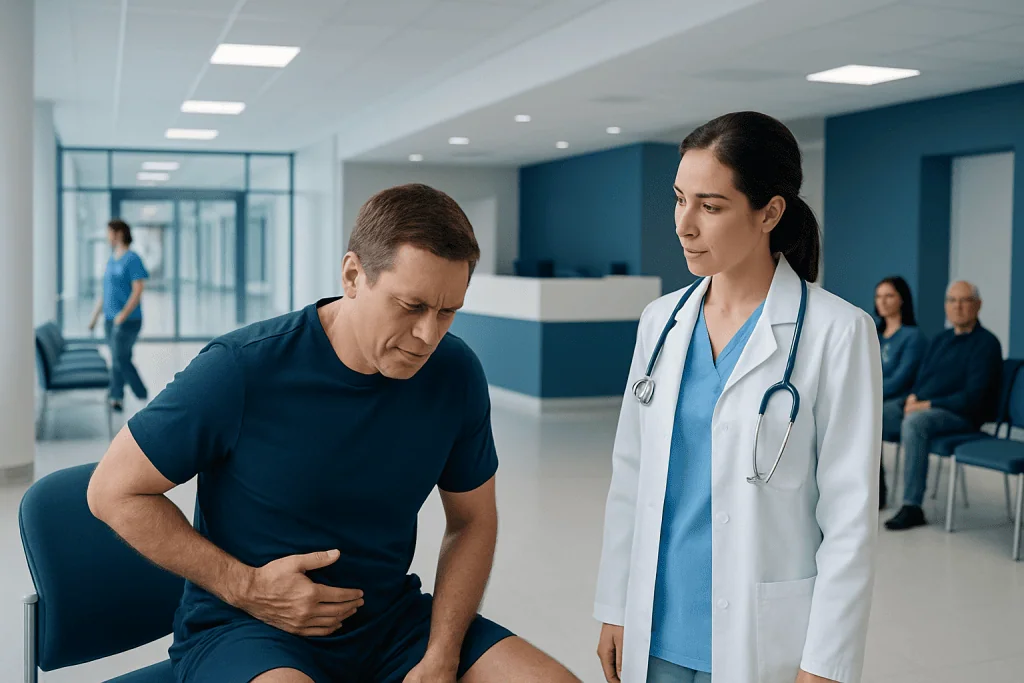
A sports hernia usually refers to a strain or tear in soft tissues of the lower abdomen or groin rather than a visible bulge. Pain often starts during exercise and may improve with rest but return when activity resumes.
Key Takeaways
- A sports hernia usually refers to a strain or tear in soft tissues of the lower abdomen or groin rather than a visible bulge.
- Pain often starts during exercise and may improve with rest but return when activity resumes.
- Diagnosis is based on medical history, physical examination, and sometimes imaging to rule out other causes of groin pain.
- Treatment often begins with rest, rehabilitation, pain control, and a gradual return to sport.
- Surgery may be considered when symptoms persist despite structured non-surgical care.
- Early assessment can help distinguish sports hernia from hip, groin, or true inguinal hernia problems.
Sports hernia is not a true hernia in the usual sense. It is a painful injury of the lower abdominal wall or groin tendons that commonly affects active people, especially during sports that involve twisting, sprinting, and sudden changes in direction.
Overview: what a sports hernia really is
A sports hernia is a soft-tissue injury in the lower abdomen or groin area. Despite the name, it is usually not a classic hernia with an obvious bulge through the abdominal wall. Instead, it commonly involves strain, tearing, or weakness in muscles, tendons, or connective tissues near the pubic bone, where the abdomen and inner thigh meet.
Doctors may also call this condition athletic pubalgia or core muscle injury. It is most often seen in people who play sports that require sudden twisting, pivoting, kicking, sprinting, or rapid acceleration and deceleration. Football, soccer, hockey, tennis, and running-based sports are common settings, but non-athletes can also develop similar injuries.
Many patients worry that any groin pain means a traditional hernia. In reality, groin pain can come from several structures, including the abdominal wall, hip joint, adductor tendons, or nerves. That is why an accurate diagnosis matters. A sports hernia can feel severe and limiting, but with appropriate evaluation and treatment, many patients recover well and return to daily activities or sport.
Symptoms and how patients describe the pain
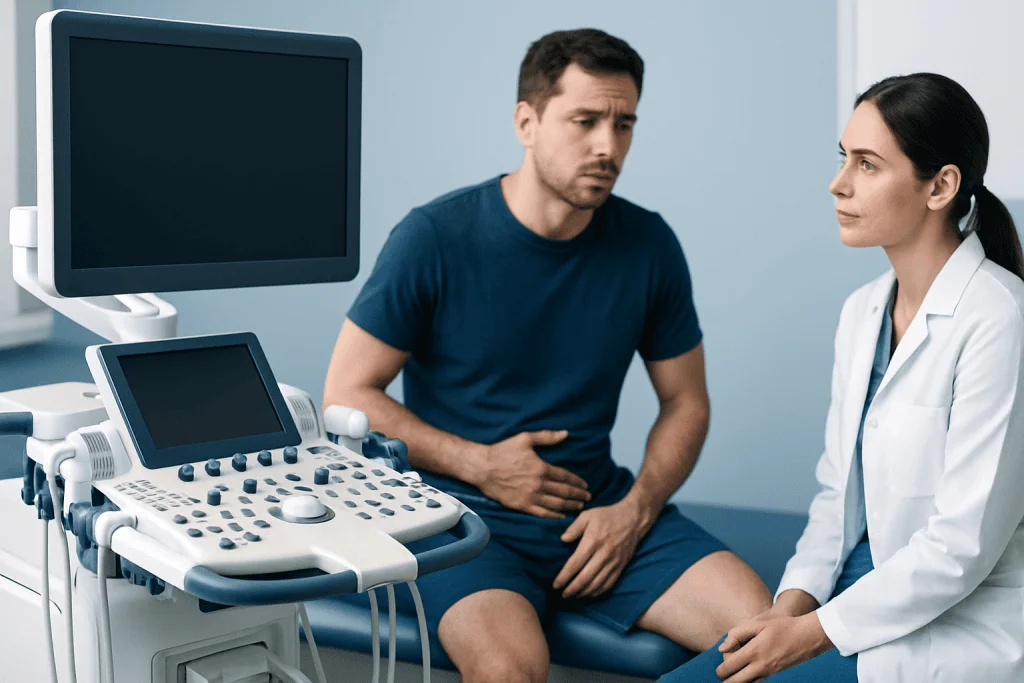
The main symptom of a sports hernia is pain in the lower abdomen, groin, or upper inner thigh. The pain may begin suddenly after a forceful movement, or it may build gradually over time. Many patients notice it while sprinting, cutting, kicking, or getting up quickly from a seated position.
A common pattern is pain during activity that improves with rest, only to return when exercise starts again. Some people feel pain with coughing, sneezing, sit-ups, or rotating the trunk. Unlike a true inguinal hernia, there is often no visible lump or bulge.
Symptoms can vary, but patients often report:
- Sharp or burning groin pain during sport
- Tenderness over the lower abdomen or pubic area
- Pain when changing direction or twisting
- Discomfort with resisted sit-ups or leg adduction
- Reduced speed, power, or athletic performance
- Stiffness or lingering soreness after exercise
Because the groin is a complex area, symptoms can overlap with inguinal hernia, hip impingement, adductor strain, osteitis pubis, or other causes of chronic groin pain. Careful assessment helps identify which structure is responsible.
Why it happens: causes and risk factors
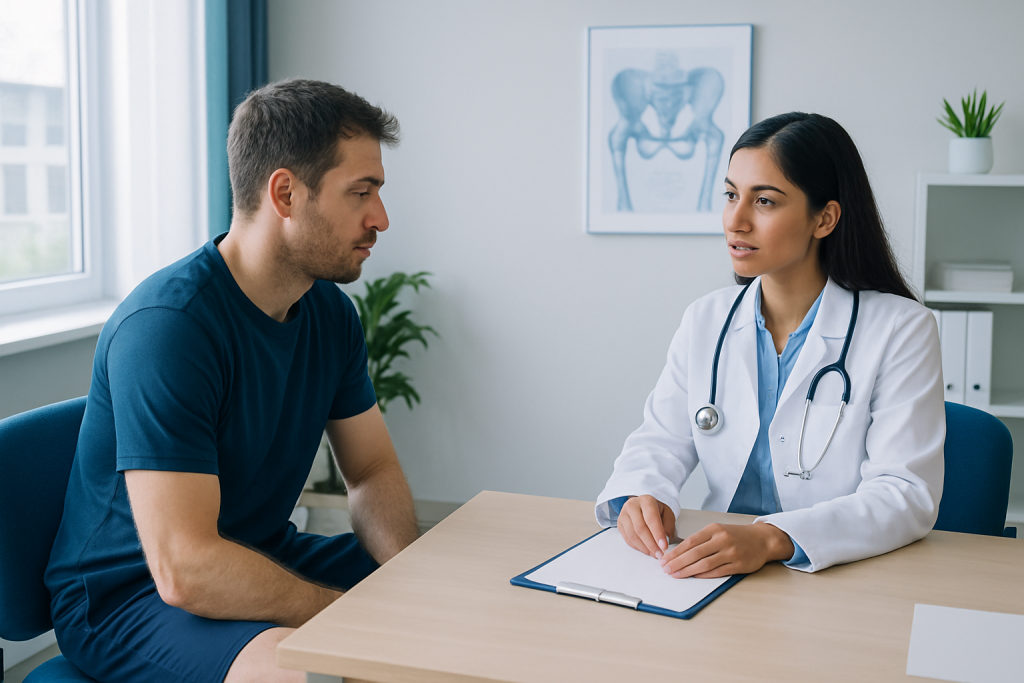
A sports hernia usually develops when repeated stress overloads the tissues that stabilize the pelvis and lower abdomen. The injury often happens at the point where abdominal muscles and adductor tendons attach near the pubic bone. When these structures are pulled in opposite directions during forceful movement, small tears or weakening can occur.
Sports that involve sudden rotation of the trunk over a planted leg place particular strain on this region. Repetitive kicking, abrupt changes of direction, heavy training loads, and inadequate recovery may all contribute. In some people, a single intense movement causes the injury; in others, it results from repeated microtrauma over weeks or months.
Risk factors may include:
- Participation in high-intensity field or court sports
- Poor core stability or muscle imbalance
- Tight hip or groin muscles
- Previous groin injuries
- Reduced hip range of motion
- Training errors or a rapid increase in activity
Sometimes sports hernia occurs alongside other problems, especially in the hip or groin. For example, a person may have both adductor tendon pain and hip-related motion problems. This overlap is one reason persistent symptoms should be reviewed by a clinician familiar with sports-related groin conditions.
How diagnosis is made
Diagnosis starts with a discussion of symptoms, the type of sport or activity involved, and exactly when the pain occurs. Doctors often ask whether pain is triggered by sprinting, twisting, coughing, or abdominal exercise, and whether rest brings temporary relief. This history can offer important clues.
During the physical examination, the clinician checks the lower abdomen, groin, adductor muscles, and hips. Tenderness near the pubic bone, pain with resisted sit-up, and discomfort with adductor testing can suggest a sports hernia. The doctor may also examine for a true hernia and assess hip range of motion to look for conditions that may mimic or accompany the problem.
Imaging is not always needed immediately, but it is often helpful when symptoms persist or the diagnosis is unclear. Ultrasound may evaluate soft tissues and look for a conventional hernia. MRI is commonly used to assess muscles, tendons, and the pubic region, and to exclude other injuries. In some cases, the workup may include evaluation for hip joint disorders, and MRI scanning can be part of that process.
Because groin pain has many possible causes, diagnosis is often about ruling in the most likely source while ruling out others. A patient-centered approach usually considers muscle injury, tendon injury, hip impingement, stress injury, nerve irritation, and true abdominal wall hernia before deciding on the best treatment plan.
Treatment options and recovery
Initial treatment for sports hernia is usually non-surgical. Rest from painful activity, especially twisting and sprinting movements, is often recommended for a period of time. Many patients also benefit from ice, short-term pain relief measures, and a guided rehabilitation program. Physical therapy typically focuses on core stability, hip mobility, pelvic control, and gradual strengthening of the abdominal and adductor muscles.
Rehabilitation is usually progressed step by step. Early work may reduce pain and restore movement. Later stages often include balance training, resisted strengthening, sport-specific drills, and a carefully monitored return to running, cutting, or kicking. A structured physical therapy and rehabilitation program is commonly central to recovery.
If symptoms continue despite a well-supervised rehabilitation plan, surgery may be considered. The exact procedure depends on the tissues involved and whether a traditional hernia is also present. Surgical repair may reinforce or repair the weakened abdominal wall and address associated tissue damage. Some patients may also need evaluation by a general surgery team when the diagnosis overlaps with abdominal wall hernia conditions.
Recovery time varies. Mild cases may improve within weeks, while more persistent injuries can take longer. Surgical recovery also differs by procedure and by the patient’s activity goals. A safe return to sport usually depends on pain-free movement, restored strength, and the ability to perform sport-specific actions without symptoms.
Prevention and self-care
Not every sports hernia can be prevented, but some habits may reduce risk. A balanced conditioning program that supports core strength, hip mobility, and lower-body control can help the body tolerate the demands of sport. Warm-up routines, flexibility work, and gradual progression in training intensity may also be useful.
Patients returning after a groin injury should be especially careful not to progress too quickly. Continuing to play through significant pain can worsen tissue strain and prolong recovery. It is often better to address discomfort early than to wait until the injury becomes chronic.
Helpful self-care measures may include:
- Reducing or temporarily stopping painful activities
- Using ice after activity if advised by a clinician
- Following a rehabilitation plan consistently
- Improving core and hip strength under supervision
- Allowing recovery time between intense sessions
- Watching for recurring pain with twisting or sprinting
If pain keeps returning, self-care alone may not be enough. Ongoing groin pain deserves a proper assessment so that the treatment matches the real cause rather than just the symptom.
When to seek medical care
Medical review is a good idea if groin or lower abdominal pain lasts more than a short time, repeatedly returns with activity, or limits walking, exercise, or daily tasks. Evaluation is also important when there is tenderness near the pubic area, pain with coughing or sit-ups, or uncertainty about whether the problem is muscular, tendon-related, or a true hernia.
Urgent care may be needed if pain is sudden and severe, if a new groin bulge appears, or if symptoms are accompanied by nausea, vomiting, fever, or inability to pass stool or gas. These features may suggest a different condition that needs prompt attention rather than a sports hernia alone.
Because groin pain can involve several specialties, some patients benefit from coordinated care among sports medicine, orthopedics, physical therapy, radiology, and surgery. Near the end of the care pathway, if advanced evaluation or treatment is needed, Acibadem International’s multidisciplinary specialists in JCI-accredited hospitals diagnose and treat sports hernia and related groin conditions for international patients.
Frequently asked questions
Is a sports hernia the same as a regular hernia?
No. A sports hernia usually refers to a strain or tear in soft tissues of the lower abdomen or groin, while a regular hernia often involves tissue pushing through a weak spot and may cause a visible bulge. The two can cause similar discomfort, so medical assessment is important.
Can a sports hernia heal without surgery?
Yes, many patients improve with rest, activity modification, and structured rehabilitation. Physical therapy is often a key part of recovery. Surgery is generally considered when symptoms continue despite appropriate non-surgical treatment.
How long does recovery from a sports hernia take?
Recovery varies depending on the severity of the injury, the patient’s activity level, and whether surgery is needed. Some people improve within a few weeks of rehabilitation, while persistent cases can take longer. Return to sport should be guided by symptoms, strength, and function rather than by a fixed timeline.
What activities make a sports hernia worse?
Twisting, pivoting, sprinting, kicking, sudden directional changes, and abdominal exercises such as sit-ups commonly aggravate symptoms. Coughing or sneezing can also increase pain in some patients. Rest often reduces discomfort, but symptoms may return when activity resumes.
Do all patients with groin pain have a sports hernia?
No. Groin pain can come from many causes, including muscle strain, adductor tendon injury, hip joint problems, nerve irritation, or a true inguinal hernia. Because the symptoms overlap, diagnosis should be made by a qualified clinician.
Can someone return to sports after treatment?
Many patients are able to return to sports after appropriate treatment and rehabilitation. The safest return happens when pain has settled, strength has improved, and sport-specific movements can be done comfortably. A gradual, supervised progression is usually recommended.
This article is for general information only and is not a substitute for professional medical advice. Please consult a qualified doctor about your individual situation.
Joint and spine care in Turkey — expert assessment & treatment
JCI-accredited · board-certified surgeons · reply within 24h
Add us as a Preferred Source to see more of our trusted health content across Google Search, AI Overviews and Discover.

More from the Health Library

Manic: An Evidence-Based Guide for Patients

Aspie Asperger — Explained by Medical Evidence, Not Myths

Precipitous Labor: What Patients Need to Know

Qulipta Uses for Preventing Migraine in Adults

Appetite Stimulant: A Complete Medical Overview

Best Ear Wax Removal: An Evidence-Based Guide for Patients
General Surgery Specialists at Acibadem

Assoc. Prof. Dr. Halil Kara
General Surgery
Assoc. Prof. Dr. Hayrettin Dizen
General Surgery
Assoc. Prof. Dr. Hikmet Aktaş
General Surgery
Assoc. Prof. Dr. Hüseyin Cahit Yılmaz
General Surgery