Ice Roller for Face: A Complete Medical Overview

An ice roller for face may briefly reduce puffiness and create a cooling, soothing effect. It works through cold exposure that narrows superficial blood vessels and decreases temporary swelling.
Key Takeaways
- An ice roller for face may briefly reduce puffiness and create a cooling, soothing effect.
- It works through cold exposure that narrows superficial blood vessels and decreases temporary swelling.
- It should be used gently for short periods to avoid cold injury, irritation, or worsening sensitive skin.
- People with rosacea, very sensitive skin, cold intolerance, or unexplained facial swelling should be cautious.
- Persistent redness, rash, pain, or swelling should be assessed by a qualified doctor rather than self-treated.
An ice roller for face can temporarily reduce puffiness, cool the skin, and provide short-term comfort after heat, mild irritation, or morning swelling. It is generally safe when used correctly, but it is not a treatment for medical skin conditions, persistent swelling, or facial pain.
Overview: What an Ice Roller for Face Can and Cannot Do
An ice roller for face is a handheld skincare tool with a chilled rolling head that is moved across the skin for a brief cooling effect. In practical terms, it may help reduce temporary morning puffiness, provide a refreshed feeling, and soothe the skin after heat exposure or mild irritation. Many people also find it relaxing as part of a simple self-care routine.
Its effects are mostly short-lived. Cooling the skin causes superficial blood vessels to narrow for a time and may limit mild swelling in soft tissues. This can make the face look less puffy for a while, especially around the eyes and cheeks. However, an ice roller does not remove fat, reshape the face, tighten loose skin, or treat a medical cause of swelling.
It is best understood as a comfort and wellness tool rather than a medical treatment. If someone has ongoing redness, acne flares, chronic under-eye swelling, hives, facial pain, or skin disease, the correct approach is to identify the cause. In some cases, symptoms may be related to conditions such as eczema or rosacea, which need tailored care rather than repeated cold application.
How It Works on the Skin
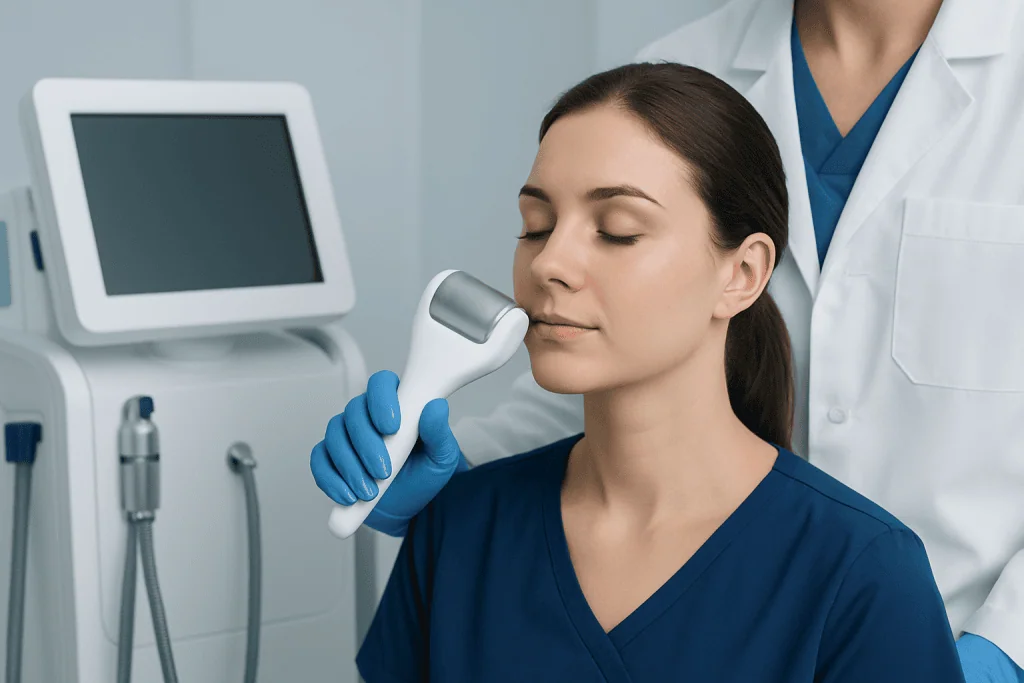
Cold exposure affects the skin in several simple ways. First, it causes superficial blood vessels to constrict, which may lessen visible redness for a short time and reduce fluid buildup that contributes to puffiness. Second, the cooling sensation can calm the feeling of heat or mild irritation, particularly after exercise, a hot environment, or a warm shower.
An ice roller may also create a temporary tightening sensation because cooler skin and reduced swelling can make facial contours appear a little more defined. This visual effect is often most noticeable in the morning. It does not mean that the tool is changing skin structure or stimulating lasting collagen production.
The rolling motion itself may contribute to comfort. Gentle massage can help distribute skincare products on the surface and may support brief lymphatic fluid movement in some areas. Still, facial swelling has many causes, and not all respond to massage or cold. If puffiness is persistent, painful, one-sided, or linked to other symptoms, it should not be dismissed as a cosmetic issue.
Possible Benefits and Common Uses

Used appropriately, an ice roller for face can have practical short-term benefits. The most common reason people use it is to reduce morning puffiness, especially around the eyes. Others use it after time outdoors in warm weather, after a workout, or after cosmetic skincare steps that leave the skin feeling warm.
Some people find that a chilled roller briefly eases discomfort after minor irritation from shaving, cleansing, or wearing a mask for long periods. It may also feel soothing when tension is concentrated in the forehead, temples, or jawline, although it does not treat the cause of headaches or jaw disorders. The benefit in these situations is mainly sensory and temporary.
Common situations where people use a facial ice roller include:
- Morning facial puffiness
- A temporary feeling of facial heat
- Mild post-exercise redness
- Short-term comfort after shaving or cleansing
- A calming step before makeup application
People seeking treatment for lasting texture changes, significant acne scarring, or pigmentation should know that cold rolling is not a substitute for medical dermatology care. Depending on the concern, a specialist may discuss options such as laser treatment or other evidence-based therapies.
Risks, Side Effects, and Who Should Be Careful
Although generally low risk, an ice roller can irritate the skin if it is too cold, used for too long, or pressed too firmly. Possible side effects include redness, discomfort, burning, numbness, and in rare cases mild cold injury. Applying extreme cold directly to the skin is more likely to cause problems than using a properly chilled roller for brief contact.
Caution is especially important for people with sensitive or reactive skin. Cold can trigger or worsen symptoms in some individuals with rosacea, broken capillaries, eczema, or cold-induced hives. If the skin barrier is damaged from over-exfoliation, retinoids, recent peeling, or active dermatitis, even gentle rolling may sting and add irritation.
People should also be careful if they have reduced skin sensation, circulation problems, neuropathy, or conditions in which cold exposure causes unusual reactions. It is wise to avoid use over open wounds, infected areas, sunburn, or after procedures unless a clinician has advised that cooling is appropriate. If someone has had a recent cosmetic or surgical treatment, aftercare instructions should come from the treating doctor rather than from general skincare advice.
How to Use an Ice Roller for Face Safely
Safe use starts with temperature and timing. The roller should be chilled, not extremely frozen to the point that it sticks painfully to the skin. Short sessions are usually enough. Many people use it for a few minutes, moving continuously rather than holding it still on one spot. A protective fabric cover is not usually needed with a standard roller, but direct use should always feel cool and comfortable, not harsh.
The face should be clean, and the tool should also be cleaned according to the manufacturer’s instructions before and after use. Gentle pressure is best. Rolling can begin at the center of the face and move outward, with especially light contact around the eyes. The goal is comfort, not deep pressure. If a serum or moisturizer is used, it should not make the device slip in a way that causes tugging.
A few simple precautions help lower risk:
- Limit sessions to short periods rather than prolonged use
- Do not apply strong pressure or leave the roller on one area
- Stop if the skin becomes painful, very red, numb, or blotchy
- Avoid use on broken skin, infection, or severe irritation
- Clean the roller regularly to reduce contamination
Any new skincare routine should be introduced carefully, especially for those using prescription creams or acne treatments. If a person is already under dermatology care, it is reasonable to ask whether cold rolling fits safely alongside therapies such as acne treatment.
What It Does Not Treat: Understanding the Limits
An ice roller for face may improve how the skin looks and feels for a short time, but it should not be confused with treatment for disease. It does not cure acne, allergic swelling, sinus infection, dental infection, thyroid eye disease, or inflammatory skin disorders. It also does not treat dark circles caused by pigmentation, hollowing, or genetics.
Facial puffiness has many possible causes, from poor sleep and salty meals to allergies, eczema, rosacea, infections, medication effects, or systemic medical conditions. If swelling keeps returning, affects one side more than the other, or comes with itching, fever, rash, tooth pain, or breathing symptoms, it needs proper evaluation. In these cases, cooling alone may delay diagnosis.
People also sometimes hope that repeated cold rolling will slim the face or deliver an anti-aging effect. There is no good evidence that a home ice roller can permanently tighten skin, lift tissue, or change facial anatomy. If a person’s concern is mainly cosmetic and persistent, an appropriate assessment may be needed to understand whether skin disease, allergy, sinus issues, or another factor is involved.
When to Seek Medical Care
Medical care is advisable when facial symptoms are persistent, unexplained, or uncomfortable. A cooling tool may temporarily mask symptoms without addressing the underlying reason. Ongoing redness, repeated swelling, itching, rash, acne that scars, or pain around the cheeks and jaw should be assessed by a qualified doctor.
Urgent assessment is important if facial swelling appears suddenly, is severe, or occurs with breathing difficulty, lip or tongue swelling, fever, spreading redness, severe headache, visual symptoms, or significant pain. These features can signal an allergy, infection, or another condition that needs prompt treatment.
People should also arrange a medical review if they suspect a chronic skin problem, if home care repeatedly causes irritation, or if cosmetic concerns are affecting quality of life. Depending on the findings, a doctor may recommend dermatology evaluation, allergy assessment, or imaging and laboratory tests. For international patients who need specialist evaluation, Acibadem International’s multidisciplinary teams in JCI-accredited hospitals diagnose and treat skin and facial concerns, including advanced options such as dermatology care when appropriate.
Frequently asked questions
Is an ice roller for face good for the skin?
It can be helpful for short-term comfort and for temporarily reducing puffiness. It is generally safe when used gently for brief periods, but it does not treat the cause of ongoing skin or swelling problems.
Can an ice roller reduce face puffiness permanently?
No. The effect is temporary because cooling briefly narrows blood vessels and may reduce minor fluid buildup. If facial puffiness is frequent or persistent, the underlying cause should be assessed.
How often can someone use an ice roller on the face?
Many people use it occasionally or once daily for a short session, especially in the morning. It should not be used so often or so cold that it causes redness, burning, numbness, or skin irritation.
Can an ice roller help acne?
It may briefly soothe inflamed skin or reduce the feeling of heat, but it does not treat acne itself. Persistent acne usually needs a broader skincare plan or medical treatment tailored to the person’s skin.
Who should avoid using an ice roller for face?
People with rosacea, cold sensitivity, damaged skin barriers, open wounds, skin infection, or reduced skin sensation should be cautious or avoid it unless advised by a doctor. Anyone who feels pain or excessive irritation during use should stop.
Should an ice roller be used directly after a facial procedure?
Not automatically. After chemical peels, laser procedures, injections, or surgery, aftercare depends on the exact treatment and the condition of the skin. The safest approach is to follow the treating clinician’s instructions.
This article is for general information only and is not a substitute for professional medical advice. Please consult a qualified doctor about your individual situation.
Explore treatments in Turkey — costs, top hospitals & a free quote
JCI-accredited · board-certified surgeons · reply within 24h
Add us as a Preferred Source to see more of our trusted health content across Google Search, AI Overviews and Discover.

More from the Health Library

Indolent: An Evidence-Based Guide for Patients

Withdraw From Coffee: What Patients Need to Know

Atp — Explained by Medical Evidence, Not Myths

Fructose Intolerance: A Complete Medical Overview

Focal Seizure: What Patients Need to Know