Gynecomastia Surgery: How It Works, Recovery, and What to Expect

Gynecomastia surgery treats persistent enlargement of male breast tissue that does not improve with time or medical treatment. The procedure may use liposuction, gland removal, skin tightening, or a combination of techniques.
Key Takeaways
- Gynecomastia surgery treats persistent enlargement of male breast tissue that does not improve with time or medical treatment.
- The procedure may use liposuction, gland removal, skin tightening, or a combination of techniques.
- Good candidates are generally healthy, near a stable weight, and have realistic expectations about results and scarring.
- Most people can return to light daily activities within days, but swelling and final contour changes take longer to settle.
- A medical evaluation is important because breast enlargement can be related to hormones, medicines, liver disease, or other health conditions.
Gynecomastia surgery is a procedure that reduces enlarged male breast tissue to create a flatter, more contoured chest. It may involve liposuction, surgical excision, or both, and the right approach depends on the cause of breast enlargement, the amount of tissue present, and the patient’s overall health.
Overview: what gynecomastia surgery does
Gynecomastia surgery is an operation used to reduce enlarged male breasts by removing excess gland tissue, fat, and sometimes skin. In simple terms, it aims to create a flatter, firmer chest contour when breast enlargement has persisted or causes physical discomfort or emotional distress. The procedure is often called male breast reduction.
Not all fullness in the chest is true gynecomastia. Some people mainly have excess fatty tissue, sometimes called pseudogynecomastia, while others have firm glandular tissue beneath the nipple area. Because treatment depends on what is causing the enlargement, a careful assessment is important before any operation is planned.
Gynecomastia itself is common and can occur during infancy, puberty, or later adulthood. In many teenagers, it improves on its own over time. Surgery is usually considered when enlargement has been stable for a while, does not respond to other treatment, or is unlikely to improve without an operation.
For people looking into gynecomastia surgery, the key question is not only whether the chest can be made flatter, but also whether the underlying cause has been properly evaluated first. That step helps support both safety and a more predictable result.
Who may be a candidate
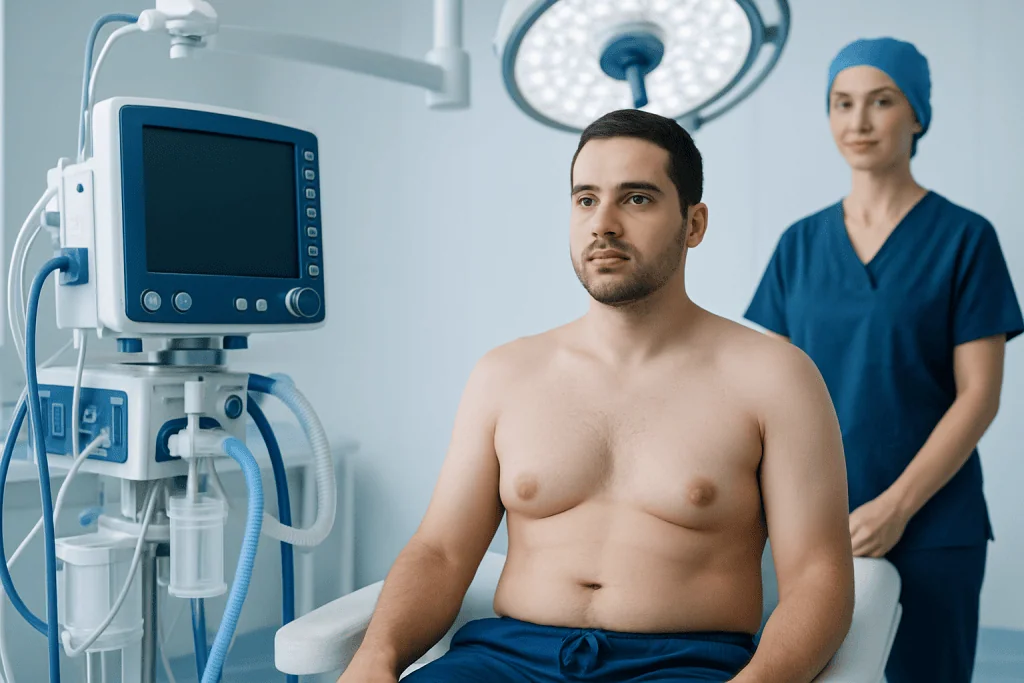
A person may be a candidate for gynecomastia surgery if enlarged breast tissue has lasted for many months, causes tenderness or self-consciousness, or affects clothing choices and daily confidence. Doctors usually look for stable breast size, a relatively stable body weight, and good general health before recommending surgery.
Good candidates often include adults whose gynecomastia has not improved after addressing possible triggers such as weight gain, certain medications, anabolic steroids, or recreational drugs. Teenagers may also be considered in selected cases, but many specialists prefer to wait until puberty-related changes have stabilized unless symptoms are severe.
People who smoke may be asked to stop before surgery because smoking can reduce blood flow and interfere with healing. It is also important to have realistic expectations. Surgery can improve chest contour significantly, but it cannot guarantee perfect symmetry, invisible scars, or a result that never changes with future weight fluctuations.
If the chest enlargement appears linked to a hormone imbalance or another medical problem, evaluation and treatment of that issue come first. In some cases, related concerns such as gynecomastia or broader hormonal imbalance are best assessed before deciding on an operation.
Causes and the pre-surgery medical evaluation

Gynecomastia can develop when the balance between estrogen and testosterone shifts, allowing breast gland tissue to grow. This can happen naturally during puberty or aging, but it may also be linked to obesity, liver disease, kidney disease, thyroid problems, low testosterone, tumors that affect hormone levels, or inherited conditions.
Some medicines are known to contribute as well. Depending on the individual, possible triggers may include certain anti-androgens, anabolic steroids, some antidepressants, ulcer medicines, heart medications, or drugs used for prostate conditions. Alcohol, cannabis, and other substances can also play a role in some cases.
Before recommending surgery, a doctor will usually review symptoms, medication history, weight changes, and overall health. The exam often focuses on whether the fullness feels soft and fatty or firmer and glandular, whether one side is larger than the other, and whether there are warning signs such as a hard fixed lump, skin changes, nipple discharge, or enlarged lymph nodes.
Tests are not needed for everyone, but some patients may need blood work to check hormones, liver or kidney function, or thyroid health. Imaging such as ultrasound or mammography may be used if the diagnosis is uncertain or if there are features that could suggest another breast condition. This evaluation helps confirm that surgery is appropriate and that other causes are not being missed.
How gynecomastia surgery works: step by step
The exact technique depends on how much fat, gland tissue, and loose skin are present. Some patients need liposuction alone, especially when fatty tissue is the main issue. Others need direct surgical excision to remove dense gland tissue behind the nipple. Many operations use both methods together for a smoother chest contour.
On the day of surgery, the surgical team reviews the treatment plan and marks the chest while the patient is standing. The procedure is commonly performed under general anesthesia, although some cases may be done with local anesthesia and sedation. Small incisions are placed in less noticeable areas, often around the edge of the areola or in natural chest contours.
When liposuction is used, a thin tube is inserted through tiny openings to loosen and remove excess fat. If firm glandular tissue is present, the surgeon removes it through a slightly larger incision, typically near the areola. If there is significant skin excess, the surgeon may also tighten or remove skin, although that can mean longer scars than a smaller operation would require.
After the tissue is removed, the surgeon checks symmetry and contour, then closes the incisions. Some patients need temporary drains, but not all do. A compression garment is usually applied at the end of the procedure to help limit swelling and support the healing chest. In selected cases, related body contouring options such as liposuction or skin-focused techniques may be discussed if they are genuinely relevant to the person’s anatomy and goals.
Recovery timeline and what to expect after surgery
Recovery after gynecomastia surgery is usually gradual rather than immediate. In the first few days, it is common to have swelling, bruising, tightness, and mild to moderate soreness. These symptoms are expected and often improve steadily with rest, prescribed pain control, and use of the recommended compression garment.
Many people can return to desk work or light daily activities within several days, depending on the extent of the procedure and the nature of their job. More strenuous activities, heavy lifting, and chest-focused exercise usually need to wait longer. The surgeon provides individualized guidance on when to restart driving, work, sports, and gym routines safely.
Visible swelling often improves significantly over the first few weeks, but the chest contour may continue to settle over several months. It is normal for one side to heal a little differently from the other at first. Temporary numbness or sensitivity around the nipples and chest skin can also occur while nerves recover.
Follow-up visits are an important part of recovery because they allow the surgeon to monitor healing, manage scar care, and address any questions about asymmetry, firmness, or persistent swelling. If needed, supportive options used in reconstructive or contour surgery, such as scar management strategies or selected plastic and reconstructive surgery techniques, may be part of longer-term care.
Benefits, limitations, and possible risks
The main benefit of gynecomastia surgery is improved chest shape. For many patients, this can make clothing fit better and reduce the self-consciousness that enlarged breasts may cause. Some also experience relief from tenderness or rubbing discomfort, especially when gland tissue has been prominent.
Even so, surgery has limits. It cannot address every cause of chest fullness, and the result may be affected by future weight changes, hormone shifts, or medication use. If the underlying cause continues, breast enlargement may recur. Patients also need to understand that scars, while usually planned carefully, are a normal part of surgery.
Like any operation, gynecomastia surgery carries risks. These can include bleeding, infection, fluid collection, delayed wound healing, contour irregularity, asymmetry, changes in nipple sensation, prominent scarring, or the need for revision surgery. More extensive operations, especially those requiring skin removal, may have a longer recovery and higher chance of visible scars.
Choosing a qualified surgeon and following preoperative and postoperative instructions can help reduce risk, but no procedure is completely risk-free. A careful discussion before surgery should cover what technique is planned, what scars are likely, how recovery may feel, and what result is realistic for that individual chest shape.
When to seek medical care
Medical evaluation is important before planning gynecomastia surgery, especially if breast enlargement is new, painful, one-sided, or getting worse. A doctor should also assess symptoms such as nipple discharge, a hard lump, skin dimpling, unexplained weight loss, or signs of hormonal problems like reduced libido, infertility, or testicular changes.
After surgery, patients should contact their care team if they develop worsening pain, fever, spreading redness, heavy drainage, sudden swelling on one side, shortness of breath, or any symptom that feels out of proportion to the expected recovery. These signs do not always mean a serious complication, but they deserve prompt attention.
Anyone considering surgery should seek care from a qualified clinician who can distinguish between gland enlargement, excess fat, and other breast or endocrine conditions. That evaluation helps make sure the right treatment is chosen and that surgery is not being used to mask an untreated medical issue.
Near the end of the treatment journey, some patients benefit from multidisciplinary care that includes endocrinology, imaging, and plastic surgery. Acibadem International’s multidisciplinary specialists and JCI-accredited hospitals diagnose and treat gynecomastia for international patients when evaluation and surgery are needed.
Frequently asked questions
Is gynecomastia surgery permanent?
Results are often long-lasting because the removed gland tissue does not usually grow back. However, recurrence can happen if the underlying cause continues, such as hormone imbalance, significant weight gain, anabolic steroid use, or certain medications.
Will gynecomastia surgery leave scars?
Yes, all surgery leaves some scarring, but surgeons usually place incisions in less noticeable areas such as around the areola or in natural chest lines. Scar visibility depends on the technique used, skin type, healing pattern, and how much tissue or skin had to be removed.
How painful is recovery after gynecomastia surgery?
Most people describe recovery as soreness, tightness, or pressure rather than severe pain. Discomfort is usually most noticeable in the first few days and tends to improve steadily with rest, supportive garments, and the treatment plan provided by the surgeon.
Can exercise get rid of gynecomastia without surgery?
Exercise can help reduce overall body fat and may improve chest appearance when fullness is mostly fatty tissue. It does not reliably remove firm gland tissue, so true gynecomastia often persists even in people who are otherwise fit.
How long does it take to see final results?
The chest usually looks flatter soon after surgery, but early swelling can hide the final contour. Many patients see clear improvement within weeks, while the most refined result may take several months as swelling settles and tissues soften.
Do all patients need liposuction and gland removal?
No. Some people need only liposuction, while others need direct excision of gland tissue, and many benefit from a combination of both. The best method depends on whether the enlargement is caused mainly by fat, gland tissue, loose skin, or a mix of these factors.
References
- American Society of Plastic Surgeons
- Mayo Clinic
- National Health Service
- MedlinePlus
- Endocrine Society
This article is for general information only and is not a substitute for professional medical advice. Please consult a qualified doctor about your individual situation.
Gynecomastia Surgery in Turkey — costs, top hospitals & a free quote
JCI-accredited · board-certified surgeons · reply within 24h
Add us as a Preferred Source to see more of our trusted health content across Google Search, AI Overviews and Discover.