Entropion: What Patients Need to Know

Entropion causes the eyelid to turn inward, making the lashes or skin rub against the eye surface. Common symptoms include watering, redness, irritation, light sensitivity, and a feeling that something is in the eye.
Key Takeaways
- Entropion causes the eyelid to turn inward, making the lashes or skin rub against the eye surface.
- Common symptoms include watering, redness, irritation, light sensitivity, and a feeling that something is in the eye.
- Age-related eyelid laxity is a common cause, but scarring, muscle spasm, and congenital factors can also lead to entropion.
- Diagnosis is usually made with an eye examination that evaluates eyelid position, corneal health, and tear film.
- Temporary relief may come from lubricants or taping, but surgery is often the definitive treatment for persistent entropion.
- Prompt medical care is important if there is eye pain, worsening redness, decreased vision, or signs of corneal injury.
Entropion is a condition in which the eyelid, usually the lower lid, turns inward so the eyelashes and skin rub against the eye. It can cause irritation, tearing, redness, and blurred vision, and it is often treatable once the cause is identified.
Overview
Entropion is an inward turning of the eyelid, most often affecting the lower eyelid. When the lid rolls inward, the eyelashes and eyelid skin can rub against the clear front surface of the eye, called the cornea, as well as the conjunctiva. This repeated friction can make the eye feel irritated and watery and, over time, may damage the eye surface.
For many patients, the key question is whether entropion is serious. The short answer is that it can become serious if it is not treated, because ongoing rubbing may lead to corneal scratches, infection, or vision problems. The condition is usually manageable, and treatment depends on the underlying cause, symptom severity, and whether the cornea has already been affected.
Entropion is more common in older adults because eyelid tissues naturally become looser with age. However, it can also develop after eye inflammation, trauma, scarring, previous surgery, facial nerve or muscle problems, or rarely from birth. Recognizing the condition early helps protect eye comfort and vision.
How Entropion Feels and Looks
Patients with entropion often describe a persistent gritty feeling, as though sand or an eyelash is trapped in the eye. The eye may water heavily because irritation stimulates tear production, yet those tears do not solve the underlying mechanical problem. Some people notice symptoms that come and go at first, especially when squeezing the eyelids tightly.
Typical symptoms and signs may include:
- Redness of the eye or eyelid
- Excess tearing
- Eye irritation or burning
- Sensitivity to light
- Mucus discharge
- Blurred vision, especially if the cornea is irritated
- A visible inward roll of the eyelid
Symptoms are not always constant. In mild or early cases, the eyelid may turn inward only during blinking or forceful eye closure. In more advanced cases, the lid remains inward most of the time, increasing the chance of corneal injury.
Because irritation, watering, and redness can also happen in other eye disorders, entropion can sometimes be confused with dry eye, conjunctivitis, or eyelash disorders. A proper eye examination is important to determine the exact cause.
Causes and Risk Factors

The most common type is involutional entropion, which is related to aging. Over time, the tissues that support the eyelid can stretch or weaken. The muscles controlling eyelid position may also become unbalanced, allowing the lid margin to rotate inward.
Other causes are also possible. Cicatricial entropion happens when scarring on the inner surface of the eyelid pulls the lid inward. This can occur after infections, chronic inflammation, chemical injury, trauma, or certain skin and autoimmune conditions. Spastic entropion may develop when irritation or inflammation causes forceful eyelid squeezing, temporarily turning the lid inward.
In rare cases, entropion is congenital, meaning a child is born with the condition because of an eyelid structure difference. Previous eye surgery, facial trauma, or disorders that affect eyelid support can also increase risk. Sometimes entropion may be evaluated alongside other eyelid position problems or eye surface disorders, including dry eye when symptoms overlap.
Risk tends to increase with older age, a history of eye inflammation, scarring diseases, prior eyelid procedures, and conditions that repeatedly irritate the eyes. Identifying the specific cause matters because treatment planning is not the same for every patient.
How Doctors Diagnose Entropion
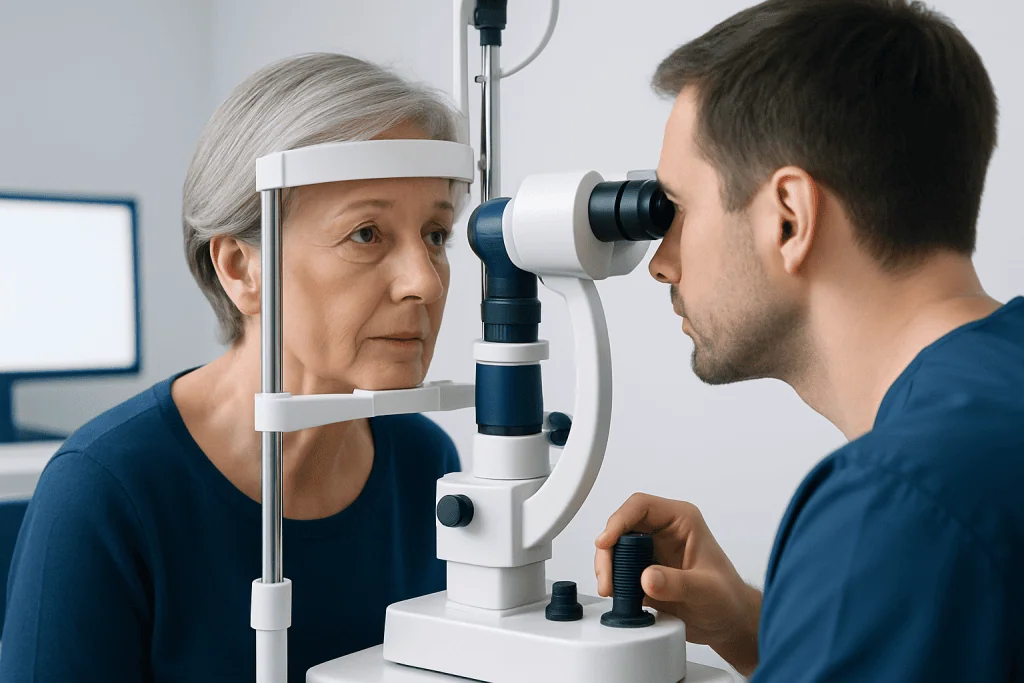
Entropion is usually diagnosed during a clinical eye examination. An ophthalmologist or eye specialist looks at the eyelid position at rest, during blinking, and when the patient gently closes the eyes. The examination also checks whether the lashes or skin are touching the cornea and whether the lid can be easily pulled away from the eye, which helps assess eyelid laxity.
The cornea and conjunctiva are examined carefully for scratches, irritation, ulcers, or signs of chronic damage. Special dye drops may be used to highlight areas of injury on the eye surface. Tear film quality and the presence of other irritation sources may also be assessed, because multiple problems can occur at the same time.
Doctors also look for clues to the cause, such as eyelid scarring, previous surgical changes, inflammation, or facial muscle imbalance. If scarring is present, the specialist may ask about past trauma, burns, infections, autoimmune disease, or long-standing inflammatory eye disease.
In most cases, no complex imaging is needed. Diagnosis depends mainly on a careful history and physical examination, followed by a discussion of whether temporary symptom control or a corrective procedure is most appropriate.
Treatment Options
Treatment aims to protect the eye surface, reduce discomfort, and correct the eyelid position. The best option depends on whether symptoms are mild or severe, whether the cornea is injured, and what is causing the entropion. Temporary measures can help relieve symptoms, but persistent entropion often requires a procedural solution.
Short-term treatment may include lubricating eye drops or ointments to reduce friction, soft contact lenses in selected cases to protect the cornea, or special taping that helps hold the eyelid in a better position. In some patients, injections that reduce muscle spasm may provide temporary benefit. These approaches can be especially useful while waiting for a definitive procedure or when surgery must be delayed.
Surgery is commonly the most effective long-term treatment for age-related or structural entropion. The procedure is designed to tighten or reposition the eyelid so it rests properly against the eye. The exact technique depends on whether the problem is due to lax tissues, muscle imbalance, scarring, or a combination of factors. In broader eyelid reconstruction planning, specialists may also evaluate related procedures such as oculoplastic surgery or targeted eye surgery options when appropriate.
If scarring or another eye condition is contributing, that underlying problem also needs attention. For example, chronic inflammation or surface disease may require treatment alongside eyelid correction to improve comfort and lower the chance of recurrence. The treating ophthalmologist will explain expected recovery, aftercare, and follow-up based on the chosen method.
Prevention, Self-care, and Living With Entropion
Not every case of entropion can be prevented, especially when it is related to aging or congenital anatomy. Still, protecting the eye surface and treating irritation early can reduce complications. People who notice repeated redness, tearing, or a scratchy sensation should avoid assuming it is simply tiredness or allergy if symptoms persist.
Self-care is mainly supportive rather than curative. Lubricating drops or ointments may ease discomfort, and patients should avoid rubbing the eyes, which can worsen irritation. If a doctor recommends eyelid taping or another temporary measure, it should be done exactly as instructed to avoid skin irritation or an ineffective lid position.
Contact lenses should not be worn unless an eye specialist specifically advises them as part of treatment. Any signs of infection, increasing pain, or reduced vision should prompt quick re-evaluation. Patients with known scarring disorders or chronic inflammatory eye problems benefit from regular follow-up because these conditions can affect eyelid position over time.
When entropion is corrected successfully, many patients notice rapid improvement in comfort. Vision-related symptoms often improve as the cornea heals, but healing time varies depending on how much eye surface damage was present before treatment.
When to Seek Medical Care
Medical evaluation is important whenever an eyelid appears to turn inward or the eyelashes are rubbing the eye. Even if symptoms seem mild, continued friction can injure the cornea. Early assessment can help prevent avoidable complications and guide the most appropriate treatment.
Patients should seek prompt medical care if they develop:
- Moderate to severe eye pain
- Sudden increase in redness or tearing
- Blurred or reduced vision
- Marked light sensitivity
- A feeling of something scraping the eye constantly
- Signs of infection, such as discharge or swelling
Urgent evaluation is especially important if symptoms worsen quickly, follow an injury, or occur after eye surgery. Infants or children with suspected congenital entropion should also be assessed by an eye specialist, because the developing eye needs careful protection.
For patients seeking specialist assessment, Acibadem International’s multidisciplinary eye teams in JCI-accredited hospitals evaluate and treat eyelid conditions for international patients, including cases that may need ophthalmology expertise and surgical correction.
Frequently asked questions
Can entropion go away on its own?
Temporary inward turning caused by irritation or eyelid spasm may improve when the underlying problem settles. However, age-related or structural entropion usually does not correct itself permanently and often needs medical treatment.
Is entropion an emergency?
Entropion is not always an emergency, but it should not be ignored. If the eyelid is rubbing the cornea, the eye can become scratched or infected, so prompt evaluation is important, especially if there is pain, light sensitivity, or blurred vision.
What is the difference between entropion and ectropion?
Entropion means the eyelid turns inward toward the eye. Ectropion is the opposite problem, where the eyelid turns outward, which can also cause irritation and watering but through a different mechanism.
Does entropion always require surgery?
Not always. Lubricants, taping, or other temporary measures may help in mild cases or while waiting for treatment, but persistent entropion is often best corrected with surgery because the underlying lid position problem remains.
Can entropion affect vision?
Yes, it can affect vision if constant rubbing damages the cornea or causes significant tearing and irritation. Vision changes may be temporary if the surface heals well after treatment, but prompt care helps reduce the risk of lasting problems.
Who is most likely to develop entropion?
Older adults are most commonly affected because eyelid tissues naturally loosen with age. People with eyelid scarring, chronic eye inflammation, prior eye surgery, or certain skin and autoimmune conditions may also have a higher risk.
References
- American Academy of Ophthalmology
- National Eye Institute
- Mayo Clinic
- Merck Manual Professional Edition
This article is for general information only and is not a substitute for professional medical advice. Please consult a qualified doctor about your individual situation.
Explore treatments in Turkey — costs, top hospitals & a free quote
JCI-accredited · board-certified surgeons · reply within 24h