Quick answer
Ectropion is a condition in which the lower eyelid turns outward, exposing the inner surface and often causing watering, dryness, irritation, and a higher risk of infection. Treatment depends on the cause and severity, and at Acibadem in Turkey it may include lubricating eye care, management of underlying inflammation, and eyelid surgery to restore normal lid position and protect the…
What is ectropion?
Ectropion is an eye condition in which the eyelid, most often the lower eyelid, turns outward, away from the surface of the eye. When the lid sags or rolls outward, its inner surface is exposed, and the eyelid can no longer rest snugly against the eyeball. Because the eyelid normally spreads tears across the eye each time you blink, an outward-turned lid disrupts this protective system. The result is an eye that may feel dry, irritated, and watery at the same time. In medical coding, ectropion is classified under ICD-10 code H02.1.
To understand what is ectropion in everyday terms, it helps to picture the eyelid as a windshield wiper. If the wiper blade lifts away from the glass, it cannot clear moisture properly. Similarly, an everted (outward-turned) eyelid cannot distribute tears or shield the eye’s surface, leaving the cornea, the clear front window of the eye, vulnerable to dryness and damage.
Ectropion most commonly affects older adults, because the muscles and tendons that hold the eyelid in place naturally loosen with age. It can affect one eye or both. Less often, ectropion appears in younger people after facial nerve weakness, injury, scarring, previous eyelid surgery, or certain skin conditions. Rarely, babies are born with a form of ectropion, usually linked to genetic or developmental conditions. Ectropion itself is not usually dangerous in its early stages, but if it is left untreated for a long time, chronic exposure of the eye’s surface can lead to complications such as corneal ulcers (open sores on the cornea) and, in severe cases, threats to vision.
Symptoms of ectropion
Ectropion symptoms develop because the eye’s surface is exposed and tears no longer drain the way they should. Normally, tears flow across the eye and exit through a small opening at the inner corner of the lower eyelid called the punctum. When the eyelid turns outward, the punctum pulls away from the eye, so tears spill over the lid margin and onto the cheek instead of draining properly.
Common ectropion symptoms include:
- Watery eyes (excessive tearing): tears overflow onto the cheek because they cannot drain normally. Doctors call this epiphora.
- Dryness and a gritty, sandy feeling: despite the watering, the eye’s surface dries out because tears are not spread evenly.
- Redness of the eye and eyelid: the exposed inner lining of the lid (the conjunctiva) becomes inflamed and may look red and thickened.
- Irritation and burning: a persistent feeling that something is in the eye.
- Sensitivity to light and wind: the unprotected surface reacts more strongly to environmental triggers.
- Crusting or discharge: mucus and crusts may build up along the eyelid margin, and repeated infections such as conjunctivitis can occur.
- A visibly drooping or outward-turned eyelid: in more advanced cases, the sagging lid is noticeable in the mirror or to others.
Symptoms often vary with how severe the outward turning is. In early or mild ectropion, only a small segment of the lid, often near the inner corner, turns out, and watering may be the only complaint. In moderate ectropion, a larger portion of the lid is everted, and irritation, redness, and crusting become more constant. In severe or long-standing ectropion, the entire lid may hang away from the eye, the exposed conjunctiva can become dry, red, and thickened, and the cornea is at risk of damage. Symptoms can also differ by type: ectropion caused by facial nerve weakness (paralytic ectropion) is often accompanied by difficulty closing the eye fully, while ectropion caused by scarring (cicatricial ectropion) may come with visible tightness or scar tissue of the skin near the eyelid.
New pain, worsening light sensitivity, or blurred vision are not typical of uncomplicated ectropion and may signal corneal damage, which needs prompt medical attention.
Causes and risk factors
The most frequent among ectropion causes is age-related weakening of the tissues that support the eyelid. Doctors group the causes into several types:
- Involutional (age-related) ectropion: the most common form. With age, the muscles, tendons, and ligaments that keep the eyelid taut against the eye gradually stretch and lose tone, allowing the lid to sag outward.
- Paralytic ectropion: weakness or paralysis of the facial nerve, for example after Bell’s palsy, stroke, injury, or certain tumors, can weaken the muscle that closes the eyelid (the orbicularis oculi), letting the lower lid droop away from the eye.
- Cicatricial ectropion: scarring or tightening of the skin around the eye pulls the lid outward. Causes include burns, trauma, previous eyelid or facial surgery, long-term sun damage, radiation therapy, and chronic skin conditions such as eczema or ichthyosis.
- Mechanical ectropion: a lump, cyst, or tumor on or near the eyelid physically weighs the lid down or pushes it outward.
- Congenital ectropion: rarely, a baby is born with an outward-turned eyelid, sometimes as part of a genetic syndrome or because the eyelid skin did not develop fully.
Risk factors that make ectropion more likely include:
- Older age: tissue laxity increases over time, so ectropion becomes more common in later decades of life.
- Previous eyelid surgery or facial procedures: including some cosmetic operations, which can alter lid support or cause scarring.
- Facial nerve disorders: such as Bell’s palsy or nerve injury.
- Skin damage or disease near the eye: burns, significant sun exposure, skin cancers and their treatment, or chronic inflammatory skin conditions.
- Repeated eye rubbing or chronic lid pulling: which may contribute to stretching of the lid tissues over time.
- Growths on the eyelid: benign or malignant lumps that distort the lid position.
Ectropion is sometimes confused with entropion, a related condition in which the eyelid turns inward so that the lashes rub against the eye. The two conditions have overlapping causes but require different treatment approaches, which is one reason an accurate diagnosis matters.
Diagnosis
Ectropion diagnosis is usually straightforward and is made through a clinical eye examination rather than blood tests or imaging. An eye doctor (ophthalmologist) can typically recognize the condition simply by looking at the position of the eyelids, but a full assessment involves several steps:
- Medical history: your doctor will ask about your symptoms, previous eye or facial surgery, injuries, skin conditions, facial weakness, and how long the problem has been present.
- External examination: the doctor inspects the position of the lids, the condition of the surrounding skin, and looks for scars, growths, or signs of facial nerve weakness.
- Eyelid laxity tests: two simple bedside checks are commonly used. In the snap-back test, the doctor gently pulls the lower lid downward and watches how quickly it returns to its normal position; a slow return suggests weak lid tone. In the distraction test, the lid is gently pulled away from the eye; if it can be pulled unusually far (often described as more than several millimeters), the supporting tissues are lax.
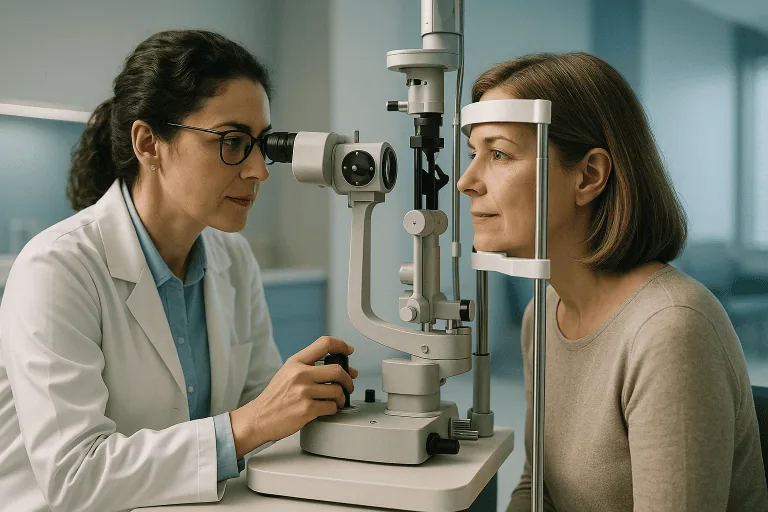
- Slit-lamp examination: a slit lamp is a special microscope with a bright light that lets the doctor examine the surface of the eye in detail. It is used to check the conjunctiva for inflammation and the cornea for dryness, abrasions, or ulcers caused by exposure.
- Fluorescein staining: in many cases, a harmless orange dye is placed on the eye’s surface. Under blue light, the dye highlights dry spots or damaged areas of the cornea, helping the doctor judge how much the exposure has affected the eye.
The doctor will also try to identify the underlying type of ectropion, age-related, paralytic, cicatricial, or mechanical, because the cause guides treatment. For example, if scarring is pulling the lid outward, the surgical plan differs from the approach used for simple age-related laxity. If a lump or lesion appears suspicious, the doctor may recommend a biopsy (removing a small tissue sample for laboratory examination) to rule out skin cancer. Imaging scans are not needed for ectropion itself but may occasionally be used if a nerve problem or tumor is suspected as the underlying cause.
Treatment options for ectropion
Ectropion treatment depends on the cause, the severity of the lid malposition, and how much the eye’s surface is affected. The goals are to protect the cornea, relieve symptoms, and, where appropriate, restore the eyelid to its normal position. Options range from simple supportive care to surgery.
Watchful waiting and supportive care
Mild ectropion with few symptoms may not need immediate surgery. In these cases, your doctor may recommend monitoring the condition and using supportive measures to keep the eye comfortable and protected:
- Artificial tears: lubricating eye drops used during the day help replace the moisture that the abnormal lid position fails to spread across the eye.
- Lubricating ointment: a thicker gel or ointment, often applied at bedtime, protects the eye overnight, especially if the lid does not close fully during sleep.
- Careful wiping technique: when drying tears, patients are usually advised to wipe upward and inward toward the nose rather than pulling the lid downward and outward, which can worsen the sagging over time.
- Taping or moisture protection: in some situations, for example, temporary ectropion after Bell’s palsy: the doctor may show you how to tape the eyelid gently at night or use a moisture chamber to protect the eye while the nerve recovers.
Medication
There is no medicine that corrects the lid position itself, but medications play a supporting role. Antibiotic eye drops or ointments may be prescribed if the exposed surface becomes infected, and short courses of anti-inflammatory drops are sometimes used for significant irritation. Treating any underlying skin disease near the eye can also help in cicatricial cases.
Surgery
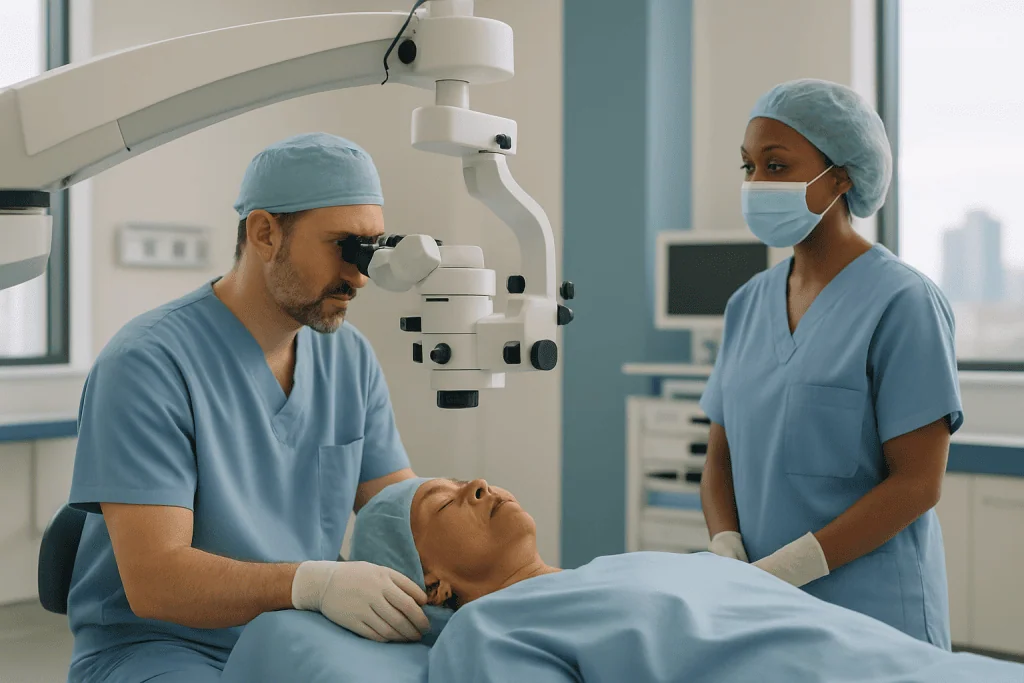
Surgery is the definitive ectropion treatment for most people whose symptoms are troublesome or whose cornea is at risk. Eyelid surgery for ectropion is usually a relatively short procedure performed under local anesthesia (numbing injections around the eye), often on an outpatient basis, meaning you typically go home the same day. The exact technique depends on the cause:
- Lid-tightening procedures: for age-related ectropion, the surgeon typically shortens and tightens the lower lid at its outer corner so it sits back against the eye. Common approaches include the lateral tarsal strip procedure or removing a small wedge of lid tissue.
- Skin grafts or flaps: for cicatricial ectropion, scar tissue may be released and the missing skin replaced with a graft, often taken from the upper eyelid or from behind the ear, to allow the lid to return to its normal position.
- Procedures for paralytic ectropion: when facial nerve weakness is the cause, treatment may be delayed to see whether the nerve recovers. If the problem persists, lid-tightening or lid-supporting procedures can help the eyelid protect the eye.
- Removal of a mass: in mechanical ectropion, removing the cyst, lump, or tumor that is distorting the lid often allows the lid to return toward its normal position, sometimes combined with lid tightening.
After surgery, patients commonly wear an eye pad briefly and use antibiotic ointment while the wound heals. Bruising and swelling of the lid are expected for a week or two in many cases. Most people notice improved comfort once healing is underway, although your surgeon will explain what to expect in your individual situation. As with any operation, there are risks, including bleeding, infection, scarring, over- or under-correction, and, uncommonly, recurrence of the ectropion, which your doctor will discuss with you before you decide.
Ectropion is evaluated and managed by eye specialists, often those with additional training in oculoplastic surgery (surgery of the eyelids and structures around the eye). Within the Acibadem hospital network, this condition is managed by the ophthalmology department.
Living with ectropion and outlook
For most people, the outlook with ectropion is good, particularly when it is recognized and treated before the cornea is damaged. Surgical correction relieves symptoms in the majority of cases, and many patients return to normal activities within days to a couple of weeks, following their surgeon’s guidance. However, no procedure guarantees a permanent result: because the underlying tissue laxity of aging continues, ectropion can occasionally recur years later, and a repeat procedure is sometimes needed.
While waiting for treatment, or if surgery is not appropriate for you, day-to-day self-care makes a real difference. Using lubricating drops regularly, applying ointment at night, protecting the eyes from wind and dust with wraparound glasses, and avoiding rubbing or downward wiping of the eyelids all help protect the eye’s surface. Keeping any scheduled eye appointments matters, because the main long-term risk of untreated ectropion is chronic corneal exposure, which can lead to persistent inflammation, corneal thinning, ulcers, and in severe neglected cases, lasting vision loss. With appropriate care, these complications are uncommon.
If your ectropion is linked to another condition, such as facial nerve palsy or a skin disorder, managing that underlying problem is part of the overall plan, and your outlook will partly depend on how that condition evolves.
Frequently asked questions
What is ectropion in simple terms?
Ectropion means the eyelid, usually the lower one, turns outward and no longer rests against the eye. Because the lid cannot spread tears properly or protect the eye’s surface, the eye often becomes watery, red, dry-feeling, and irritated. It most commonly develops with age, but it can also follow facial nerve weakness, scarring, injury, or previous surgery.
Can ectropion heal on its own?
Age-related ectropion does not usually improve without treatment, because it is caused by stretched tissues that do not tighten again by themselves. Some forms can improve if the underlying cause resolves, for example, ectropion related to Bell’s palsy may lessen as the facial nerve recovers, and mechanical ectropion may improve once a lid lump is removed. Your doctor can advise whether watchful waiting is reasonable in your case.
How serious is ectropion?
In its early stages, ectropion is usually more uncomfortable than dangerous. The concern is what can happen over time if it is left untreated: constant exposure of the eye’s surface can lead to chronic inflammation, infections, and corneal ulcers, which in severe cases can threaten vision. This is why persistent watering, redness, or a visibly drooping lid should be assessed by an eye doctor rather than ignored.
What is the best treatment for ectropion?
There is no single best option for everyone. Mild cases are often managed with lubricating drops and ointment while being monitored. For most people with significant symptoms, surgery to tighten or reposition the eyelid is the standard treatment, and the specific technique depends on whether the cause is age-related laxity, scarring, nerve weakness, or a growth on the lid. An ophthalmologist can recommend the approach that fits your situation.
Is ectropion surgery painful, and how long is recovery?
The operation is usually performed under local anesthesia, so the area is numb during the procedure; most patients describe pressure rather than pain. Afterward, some soreness, bruising, and swelling of the eyelid are common and typically settle over one to two weeks in many cases. Your surgeon will usually prescribe ointment or drops during healing and advise you when to resume normal activities.
Can ectropion come back after surgery?
Yes, recurrence is possible, although many people have a lasting result. Because the tissues around the eye continue to loosen with age, and because scarring or nerve problems can progress, the lid may gradually turn outward again years later in some cases. If that happens, a repeat procedure can often be performed.
What is the difference between ectropion and entropion?
Both are eyelid malposition conditions, but they turn in opposite directions. In ectropion, the eyelid turns outward, exposing the eye’s surface and disrupting tear drainage. In entropion, the eyelid turns inward, so the eyelashes rub against the eye, causing scratching and irritation. Both are diagnosed with an eye examination and are usually correctable with surgery, though the techniques differ.
When to see a doctor
Make an appointment with an eye doctor if you notice persistent watering, irritation, redness, crusting, or a lower eyelid that appears to sag or turn outward, even if the symptoms seem mild. Early evaluation allows the condition to be treated before the eye’s surface is damaged.
Seek urgent medical care if you experience any of the following red-flag warning signs, which may indicate corneal damage or infection:
- Sudden or worsening eye pain, especially with a red eye.
- Decreasing or blurred vision that does not clear with blinking.
- Marked sensitivity to light that is new or rapidly getting worse.
- A white, gray, or cloudy spot on the cornea, which can signal an ulcer.
- Thick discharge, spreading redness, or swelling of the eyelid, suggesting infection.
- Inability to close the eye, particularly if the surface feels increasingly dry or painful.
These symptoms need prompt assessment, because complications of an exposed eye surface can progress quickly but are usually manageable when treated early.
Medically reviewed by the Acıbadem International Medical Board September 3, 2026
See our medical review board →
Update history
- PublishedJune 14, 2026
- Medical review approvedSeptember 3, 2026
- Last content updateSeptember 2, 2026