Blackheads on Nose — Explained by Medical Evidence, Not Myths

Blackheads are open clogged pores, and their dark color is caused by air exposure rather than dirt. The nose is a common site because it has many oil glands and pores that can clog more easily.
Key Takeaways
- Blackheads are open clogged pores, and their dark color is caused by air exposure rather than dirt.
- The nose is a common site because it has many oil glands and pores that can clog more easily.
- Harsh scrubbing, squeezing, and pore strips can irritate skin and may worsen inflammation.
- Evidence-based treatments include salicylic acid, retinoids, and professionally guided acne care.
- A doctor should assess blackheads that are severe, painful, inflamed, or not improving with routine care.
Blackheads on nose are a common form of acne caused by pores becoming blocked with oil and dead skin cells; the dark color comes from oxidation, not poor hygiene. Most cases can be managed with consistent, gentle skin care, while stubborn or widespread blackheads may benefit from medical evaluation and targeted treatment.
Overview: what blackheads on the nose really are
Blackheads on nose are small, open clogged pores. They form when excess sebum, dead skin cells, and debris collect inside a hair follicle near the skin surface. When that material is exposed to air, it oxidizes and turns dark, creating the black appearance. This means blackheads are not caused by dirt sitting on the skin.
The nose is one of the most common places for blackheads because it contains many active oil glands. The skin in this area can produce more sebum than other parts of the face, and pores may appear larger. For many people, blackheads on the nose are part of mild acne rather than a separate skin disease.
Understanding this process helps separate medical facts from common myths. Blackheads do not necessarily mean someone has poor hygiene, and aggressive scrubbing usually does not remove them. Instead, they respond best to regular, gentle care that reduces oil buildup and helps keep pores from becoming blocked again.
How blackheads look and how they differ from other bumps
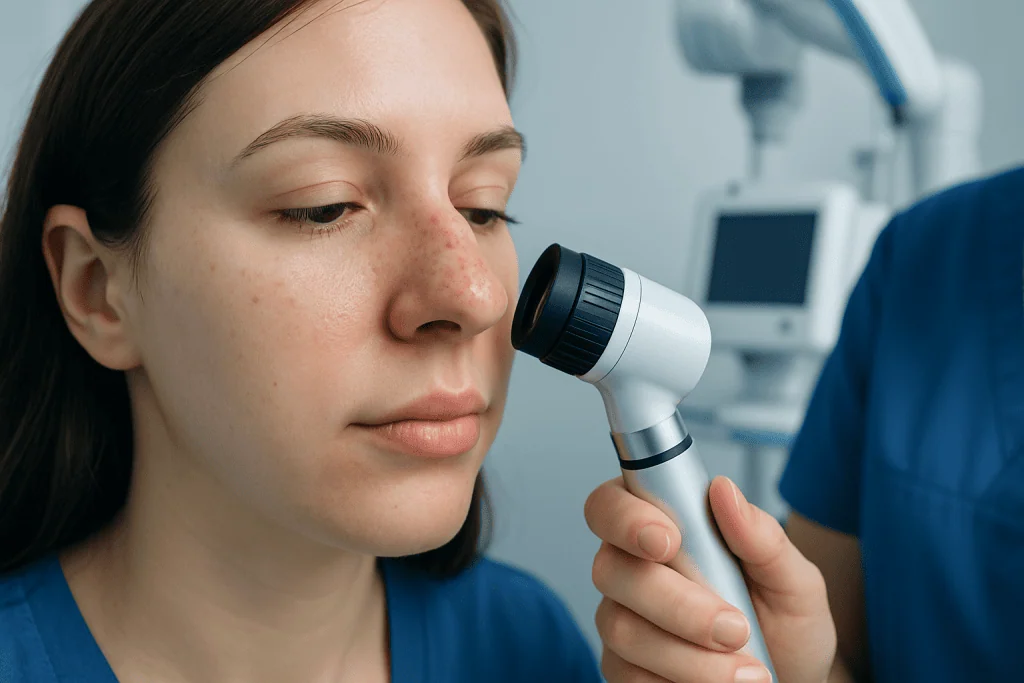
Blackheads are usually tiny dark dots on the surface of the skin. They are generally flat or only slightly raised and most often appear on the nose, chin, forehead, and sometimes the cheeks. They are usually not painful unless the surrounding skin becomes irritated.
They are different from whiteheads, which are also clogged pores but remain closed at the surface. Whiteheads look more like small flesh-colored or white bumps. Blackheads are also different from inflamed pimples, which may become red, tender, or filled with pus.
Some people mistake sebaceous filaments for blackheads. Sebaceous filaments are normal, tube-like structures lining the pore that help move oil to the skin surface. They can look like tiny gray or tan dots on the nose, but they are a normal feature and tend to refill even after cleansing. A dermatologist can help tell the difference if the appearance is unclear.
Why blackheads develop on the nose

Blackheads develop when several factors come together. The skin naturally sheds dead cells, and oil glands produce sebum to protect and lubricate the skin. If dead cells do not shed evenly or if excess oil is produced, this material can collect in the pore opening and create a plug.
Hormonal changes are a common influence. Puberty, menstrual cycles, stress, and some medical conditions can affect oil production. Genetics also matter, as some people are simply more prone to oily skin or acne. Using heavy or pore-clogging cosmetics, sunscreens, or hair products may contribute in some cases, especially around the central face.
Heat, humidity, friction from masks or glasses, and frequent touching of the face may also play a role. Although diet is not the sole cause, some individuals notice acne worsens with certain eating patterns. Blackheads can also appear alongside broader acne concerns such as acne or be confused with inflammatory conditions like rosacea, which need different management.
What does not help: common myths and skin-damaging habits
A common myth is that blackheads are caused by dirty skin and can be scrubbed away. In reality, over-cleansing and abrasive exfoliation may disrupt the skin barrier, increase irritation, and make the area look worse. Washing the face twice daily with a mild cleanser is usually enough for most people.
Squeezing blackheads with fingernails or tools at home may push material deeper into the skin, injure the pore wall, and increase the chance of inflammation, discoloration, or scarring. Pore strips may remove surface material temporarily, but they do not prevent new blackheads from forming and can irritate sensitive skin.
Using multiple strong products at once can also backfire. Combining harsh scrubs, alcohol-based toners, and frequent peels may lead to dryness, redness, and more reactive oil production. A steady routine based on evidence, rather than quick-fix methods, is safer and more effective over time.
Diagnosis and when professional evaluation is useful
Blackheads on the nose are usually diagnosed by simple skin examination. A doctor, often a dermatologist, can identify whether the bumps are open comedones, sebaceous filaments, or another skin issue. In most cases, no blood test or imaging is needed.
Professional evaluation is helpful when blackheads are persistent, widespread, or accompanied by painful pimples, nodules, or marks that remain after breakouts. A doctor may also assess whether skincare products, medications, hormonal influences, or another skin disorder are contributing to the problem.
If symptoms are severe or the diagnosis is uncertain, a specialist may recommend a broader acne treatment plan. In some settings, patients may benefit from dermatology care to create a personalized routine, especially if over-the-counter measures have not helped after several weeks.
Evidence-based treatment options
Treatment aims to keep pores open, reduce oil and dead-cell buildup, and prevent new blackheads from forming. Salicylic acid is commonly used because it helps exfoliate inside the pore. Topical retinoids are another well-supported option; they normalize skin cell turnover and help prevent comedones. These products should be introduced gradually, since irritation can occur, especially in sensitive skin.
For some people, benzoyl peroxide is more helpful when inflammatory acne appears alongside blackheads, though it is usually less targeted for blackheads alone than retinoids or salicylic acid. Non-comedogenic moisturizers and sunscreens are important because effective acne treatments can dry the skin. A balanced routine often works better than using many products at once.
If blackheads are stubborn, a doctor may recommend prescription topical medication, supervised comedone extraction, or procedures such as chemical exfoliation performed in a medical setting. In selected patients with more extensive acne, broader acne treatment may be appropriate. Patients considering cosmetic procedures for texture or pore concerns may also ask whether options used in medical aesthetics are suitable after active acne is controlled.
- Use treatments consistently for several weeks before judging results.
- Start one active product at a time to limit irritation.
- Choose products labeled non-comedogenic or oil-free when possible.
- Stop and seek advice if severe burning, swelling, or rash develops.
Prevention and daily self-care
Preventing blackheads on the nose usually depends on regular skin habits rather than occasional deep-cleaning efforts. A gentle cleanser used morning and evening can remove excess oil and residue without damaging the skin barrier. After exercise or heavy sweating, washing the face can also be helpful.
Lightweight, non-comedogenic moisturizers and sunscreens support skin health without adding unnecessary pore blockage. Makeup should be removed before sleep, and brushes or applicators should be cleaned regularly. Hair products, beard oils, and thick creams should be kept away from the nose area if they seem to trigger congestion.
People with recurrent blackheads often do best with ongoing maintenance, such as a salicylic acid cleanser or leave-on treatment and, if tolerated, a retinoid. Improvement is usually gradual. Rather than trying to remove every visible pore dot, the goal is to reduce true clogged pores while keeping the skin calm and healthy.
When to seek medical care
Medical advice is sensible if blackheads on the nose do not improve after a consistent routine, or if they are part of more troublesome acne. A doctor should also assess skin that becomes painful, red, swollen, or scarred, since this may indicate inflammatory acne or another condition that needs different treatment.
People with very sensitive skin, eczema, pregnancy, or a history of reactions to skincare products may benefit from guidance before starting stronger treatments. Professional advice can also help if the bumps are not true blackheads but another skin concern that only looks similar.
Near the end of the care journey, some patients also want support for lingering texture changes, discoloration, or recurrent acne. Acibadem International’s multidisciplinary specialists and JCI-accredited hospitals diagnose and treat skin conditions for international patients, helping guide appropriate next steps when home care is not enough.
Frequently asked questions
Are blackheads on the nose caused by dirt?
No. Blackheads form when oil and dead skin cells block a pore and the material oxidizes on contact with air, turning dark. Regular cleansing helps manage oil, but blackheads are not simply dirt trapped in the skin.
Why does the nose get so many blackheads?
The nose has many oil glands, so pores in this area are more likely to collect sebum and dead skin cells. This makes the nose one of the most common places for blackheads and visible pore congestion.
Is it safe to squeeze blackheads out?
It is usually better not to squeeze them at home. Pressing on the skin can cause irritation, broken skin, inflammation, and sometimes marks or scarring. If removal is needed, a trained professional can do it more safely.
What is the best treatment for blackheads on nose?
For many people, the most effective options are salicylic acid and topical retinoids, used consistently and gently. The best choice depends on skin sensitivity, whether other acne lesions are present, and how the skin responds over time.
How long does it take for blackheads to improve?
Improvement is usually gradual rather than immediate. Many evidence-based products need several weeks of regular use before changes become noticeable. Stopping too early or switching products often can make it harder to judge what is working.
Can pore strips remove blackheads permanently?
No. Pore strips can remove some surface material for a short time, but they do not treat the underlying tendency of pores to clog. New blackheads or visible sebaceous filaments often return, and frequent use may irritate the skin.
References
- American Academy of Dermatology
- National Institute of Arthritis and Musculoskeletal and Skin Diseases
- Mayo Clinic
- National Health Service
- Merck Manual Consumer Version
This article is for general information only and is not a substitute for professional medical advice. Please consult a qualified doctor about your individual situation.
Explore treatments in Turkey — costs, top hospitals & a free quote
JCI-accredited · board-certified surgeons · reply within 24h
Add us as a Preferred Source to see more of our trusted health content across Google Search, AI Overviews and Discover.

More from the Health Library

Bacon Burger: An Evidence-Based Guide for Patients

Tweens: What Patients Need to Know

Foam Roller: A Complete Medical Overview

Random Breath Test: An Evidence-Based Guide for Patients

Rockmelon Cantaloupe: A Complete Medical Overview