Physiotherapy Treatment Tennis Elbow: Diagnosis, Outlook, and Modern Treatment Approaches
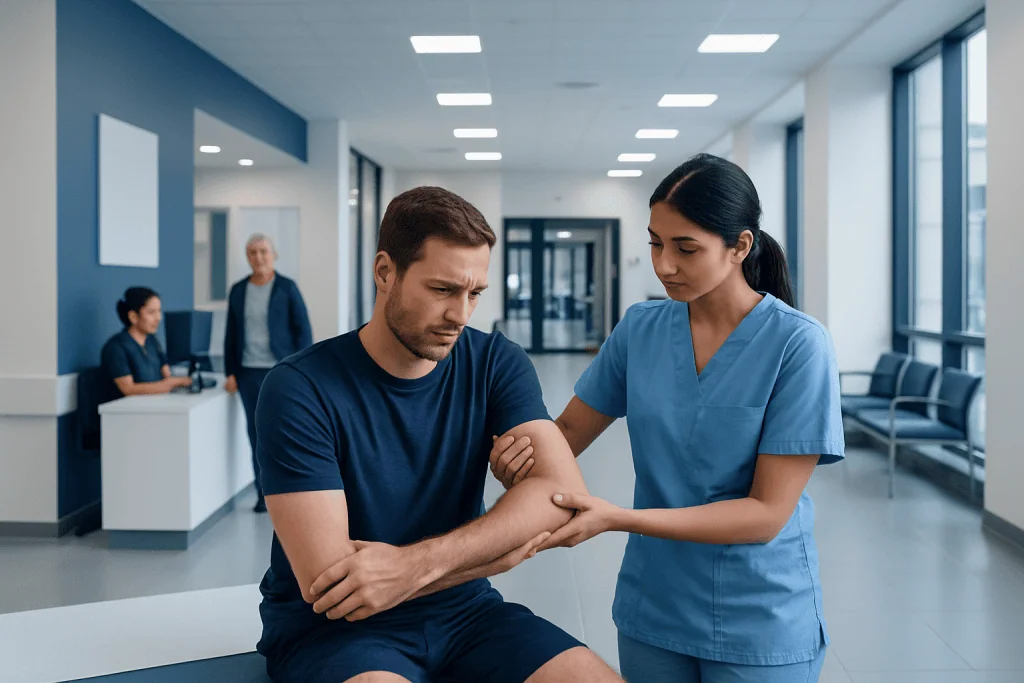
Tennis elbow is an overuse tendon problem on the outer side of the elbow, not only a sports injury. Physiotherapy often includes education, activity adjustment, manual therapy, and progressive strengthening exercises.
Key Takeaways
- Tennis elbow is an overuse tendon problem on the outer side of the elbow, not only a sports injury.
- Physiotherapy often includes education, activity adjustment, manual therapy, and progressive strengthening exercises.
- Recovery is usually gradual, and improvement may take weeks to months depending on severity and tendon healing.
- A doctor should assess symptoms that are severe, long-lasting, spreading, or associated with numbness, weakness, or injury.
- If conservative care does not help, further evaluation may include imaging and discussion of other treatment options.
Physiotherapy treatment tennis elbow usually focuses on reducing pain, improving tendon loading, restoring grip strength, and helping the arm return to daily tasks safely. Most people improve with a structured rehabilitation plan, activity modification, and time, while persistent cases may need imaging, injections, or other specialist care.
Overview: How Physiotherapy Helps Tennis Elbow
Physiotherapy treatment tennis elbow is one of the main non-surgical approaches for pain on the outer elbow caused by tendon overload. The aim is not only to ease pain, but also to improve how the tendon tolerates movement again through a gradual program of exercise, movement correction, and activity modification. For many people, this combination supports healing and helps them return to work, sport, and everyday tasks.
Tennis elbow is also called lateral epicondylitis or, more accurately in many cases, lateral elbow tendinopathy. It affects the tendons that attach forearm muscles to the outside of the elbow. Despite the name, it does not only happen in tennis players. It is common in people who repeat gripping, lifting, typing, tool use, racquet sports, or other wrist and forearm movements.
A modern rehabilitation approach usually moves beyond simple rest alone. While temporary rest from painful activities can help at first, complete inactivity may weaken the arm and delay recovery. Physiotherapy is designed to find the right balance: reducing strain while safely rebuilding strength, endurance, and function over time.
Symptoms and Functional Impact
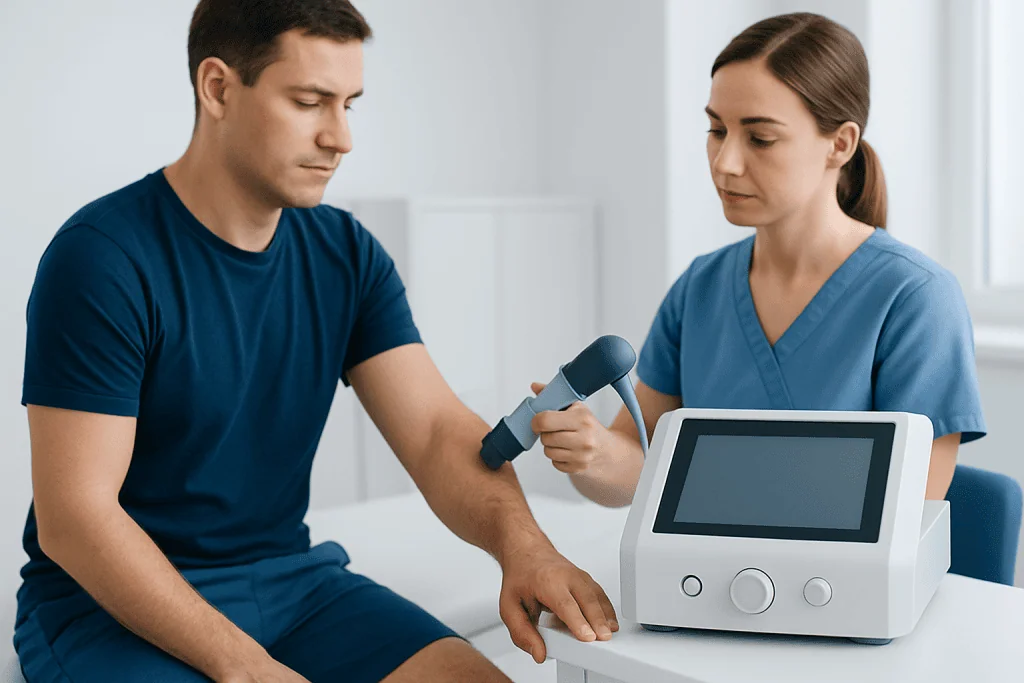
The most common symptom of tennis elbow is pain or tenderness on the outside of the elbow. This pain may stay localized or travel down the forearm. It often becomes more noticeable when gripping objects, shaking hands, lifting a kettle, turning a doorknob, using a screwdriver, or extending the wrist against resistance.
Many people also notice weaker grip strength. Everyday activities can become frustrating, especially when they involve repetitive use of the wrist and hand. Some patients describe morning stiffness, pain after work or exercise, or discomfort when carrying bags with the palm facing downward.
Symptoms usually develop gradually rather than starting suddenly. In some cases, however, a change in workload, a new sport routine, or repeated heavy lifting can trigger symptoms more quickly. Because several conditions can cause outer elbow pain, a professional assessment is helpful when symptoms persist or interfere with normal function.
- Pain on the outer elbow
- Pain with gripping, lifting, or twisting
- Reduced hand or forearm strength
- Forearm aching after repetitive use
- Stiffness or discomfort during wrist extension
Why Tennis Elbow Happens: Causes and Risk Factors
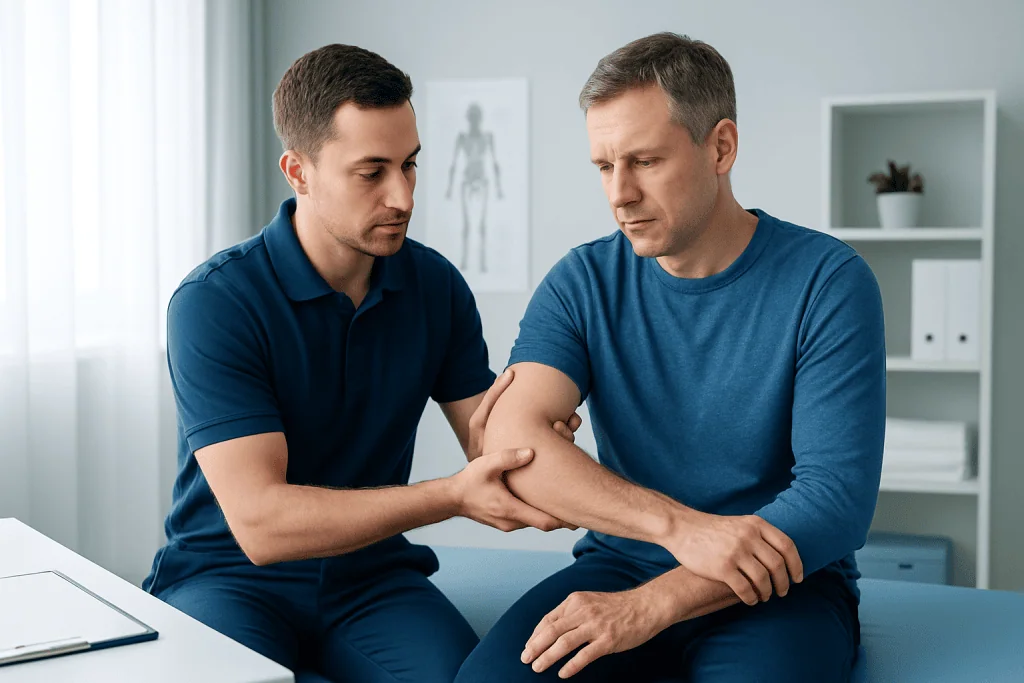
Tennis elbow develops when the extensor tendons of the forearm are repeatedly overloaded. Small tendon changes can build up over time when the tissue does not get enough recovery between episodes of strain. This is why the condition is common in both athletes and non-athletes.
Risk factors often include repetitive hand and wrist use, sudden increases in activity, poor movement mechanics, and tasks that require strong or sustained gripping. Jobs involving tools, keyboards, assembly work, plumbing, carpentry, cooking, or cleaning may contribute. Sports such as tennis, padel, squash, or weight training can also increase stress on the tendon, especially if technique or equipment is not ideal.
Age can play a role because tendon resilience changes over time, and previous arm or shoulder problems may alter movement patterns. In some people, the true source of pain may be related to nearby structures such as the neck, shoulder, or a nerve. This is one reason a full assessment matters, especially if there is numbness, widespread pain, or symptoms that do not fit a typical pattern.
Although tennis elbow is common, outer elbow pain is not always caused by the same problem. Clinicians may also consider nerve-related hand and forearm conditions or referred pain from the neck and shoulder depending on the symptom pattern.
Diagnosis: What a Clinical Assessment Looks For
Diagnosis is usually based on a history of symptoms and a physical examination. A clinician will ask when the pain started, what movements provoke it, whether work or sport demands have changed, and how symptoms affect sleep, grip, and daily activities. They may also ask about numbness, neck pain, previous injuries, or inflammatory conditions.
During the examination, the outer elbow is typically pressed to check for tenderness, and the patient may be asked to resist wrist or finger extension. Grip testing and forearm movement assessment can help identify how the tendon is responding to load. The shoulder, neck, and nerves may also be assessed to rule out other causes.
Imaging is not always needed at the beginning. Ultrasound or MRI may be considered when symptoms are prolonged, unusually severe, or not improving with appropriate care. Imaging can help identify tendon changes, but treatment decisions are often based more on symptoms and function than on scan findings alone. If there is concern about another cause of pain, doctors may also use MRI scanning or musculoskeletal ultrasound as part of a broader evaluation.
Modern Physiotherapy Treatment Approaches
Modern physiotherapy treatment tennis elbow usually combines several strategies rather than relying on one technique alone. Education is an important first step. Patients are guided on how to reduce aggravating loads without stopping all activity, how to pace tasks, and how to use the arm in a way that keeps pain manageable while healing progresses.
Exercise is central to treatment. Early programs may begin with gentle isometric exercises to help pain control, followed by progressive strengthening for the wrist extensors, forearm, shoulder, and upper back. Eccentric and heavy-slow resistance programs are often used because tendons generally respond well to gradual loading. The program is adjusted based on pain levels, work demands, sport goals, and response over time.
Manual therapy may be added to improve comfort and movement, especially in the elbow, wrist, shoulder, or neck. Some therapists also use taping, braces, or temporary supports to reduce strain during activity. These tools can help in the short term, but they usually work best when combined with a strengthening plan rather than replacing it.
Other options may be considered for selected patients, such as shockwave therapy, review of sports technique, ergonomic changes, or assessment by a specialist in physical therapy and rehabilitation. If symptoms are resistant to standard care, specialist evaluation may explore broader elbow problems and whether input from orthopedics and traumatology is appropriate.
Outlook, Recovery Time, and When Other Treatments Are Considered
The outlook is generally good, but recovery can be gradual. Tendons often improve over weeks to months rather than days. Some people feel early pain relief once aggravating activities are reduced and exercise begins, while full return to heavier work or sport may take longer. Consistency matters more than speed.
A common reason recovery feels slow is that symptoms may settle before tendon capacity is fully restored. If activities are restarted too quickly, the pain can return. For this reason, physiotherapy programs often include a staged return to work, exercise, and sports rather than a sudden return to full load.
If symptoms persist despite a well-followed rehabilitation plan, doctors may review the diagnosis and discuss other options. These may include imaging, bracing, injection-based treatments in selected cases, or less commonly surgery. Surgery is usually reserved for persistent symptoms that significantly affect function after a substantial period of non-surgical treatment.
In international centers such as Acibadem International, multidisciplinary specialists and JCI-accredited hospitals evaluate persistent elbow pain with coordinated input from rehabilitation, imaging, and orthopedic teams when needed.
Prevention and Self-care at Home
Prevention focuses on managing load rather than avoiding activity altogether. The forearm tendons usually tolerate repetitive use better when activities are increased gradually and matched to current strength. This is especially important when starting a new exercise plan, returning to sport, or taking on heavier work tasks.
Simple changes can make a meaningful difference. Improving workstation setup, varying repetitive tasks, using proper lifting technique, and taking short breaks during prolonged gripping can reduce strain. In racquet sports, grip size, string tension, and technique may need review. For gym-based activities, exercise form and progression should be checked.
Home care often includes following the exercise program consistently, warming up before activity, and using ice or other comfort measures if advised by a clinician. Supportive braces may help some people during specific tasks, but they should not replace rehabilitation. Persistent self-treatment without improvement is not ideal, because another condition may be mimicking tennis elbow.
- Build activity gradually
- Strengthen forearm and shoulder muscles regularly
- Take breaks during repetitive work
- Check sports equipment and technique
- Seek assessment if pain keeps returning
When to Seek Medical Care
Medical assessment is advisable if elbow pain lasts more than a few weeks, keeps returning, or interferes with work, sleep, grip, or daily activities. Evaluation is also sensible if home measures and exercise have not helped, or if the diagnosis is uncertain.
Prompt medical care is especially important if the pain started after a fall or direct injury, if the elbow looks swollen or deformed, or if there is significant loss of movement. Numbness, tingling, hand weakness, fever, or pain that spreads from the neck or shoulder also needs professional review because these signs may suggest a different problem.
People with persistent symptoms may benefit from a structured plan that combines examination, imaging when necessary, and supervised rehabilitation. A clinician can also help distinguish tennis elbow from other causes of arm pain, including shoulder-related pain or irritation from structures higher up the arm.
Frequently asked questions
What is the best physiotherapy treatment for tennis elbow?
The most effective approach is usually a tailored program rather than a single treatment. This often includes education, activity modification, and progressive strengthening exercises for the forearm and shoulder. Manual therapy, taping, or bracing may be added to support comfort and function.
How long does tennis elbow take to heal with physiotherapy?
Recovery time varies depending on how long symptoms have been present, how much the tendon is being loaded, and how consistently treatment is followed. Many people improve over several weeks, but fuller recovery commonly takes a few months. A gradual return to heavier tasks is important to reduce recurrence.
Should a person rest completely if they have tennis elbow?
Complete rest is usually not the goal. Short-term reduction of painful activities may help, but tendons generally recover better with carefully graded loading. A physiotherapist can guide which activities to reduce and which exercises to continue safely.
Are exercises safe if the elbow is painful?
In many cases, yes, as long as exercises are chosen and progressed appropriately. Mild discomfort during rehabilitation can be acceptable, but pain should not keep escalating or remain significantly worse afterward. A clinician can help set safe limits and adjust the program if needed.
Can tennis elbow come back after treatment?
Yes, it can recur, especially if repetitive strain returns before tendon strength and endurance are rebuilt. Ongoing strengthening, gradual progression of activity, and attention to work or sport mechanics can reduce this risk. Recurrent symptoms should be reassessed to confirm the diagnosis.
When is surgery considered for tennis elbow?
Surgery is usually considered only after a long period of well-managed non-surgical treatment has not provided enough relief. Before surgery, doctors typically review the diagnosis, functional impact, and whether rehabilitation has been optimized. Many patients improve without needing an operation.
References
- American Academy of Orthopaedic Surgeons
- National Institute for Health and Care Excellence
- American Physical Therapy Association
- National Health Service
- Mayo Clinic
This article is for general information only and is not a substitute for professional medical advice. Please consult a qualified doctor about your individual situation.
Joint and spine care in Turkey — expert assessment & treatment
JCI-accredited · board-certified surgeons · reply within 24h
Add us as a Preferred Source to see more of our trusted health content across Google Search, AI Overviews and Discover.