Achromatopsia: An Evidence-Based Guide for Patients
Achromatopsia usually begins at birth or in early infancy and is most often inherited. Common features include poor color vision, light sensitivity, involuntary eye movements, and blurred central vision.
Key Takeaways
- Achromatopsia usually begins at birth or in early infancy and is most often inherited.
- Common features include poor color vision, light sensitivity, involuntary eye movements, and blurred central vision.
- Diagnosis is based on an eye examination, retinal testing, and often genetic testing.
- Treatment focuses on symptom relief, visual aids, and regular care with an eye specialist.
- Children with suspected achromatopsia should be assessed early to support vision and development.
Achromatopsia is a rare inherited eye condition in which the cone cells of the retina do not work properly, leading to little or no color vision, strong light sensitivity, and reduced visual acuity from infancy. While there is no routine cure at present, careful diagnosis, visual support, and long-term follow-up can help many people manage daily life well.
Overview
Achromatopsia is a rare genetic eye disorder that affects the cone cells in the retina. These cells are responsible for color vision, detailed central vision, and seeing well in bright light. When cone function is absent or severely reduced, a person may see little or no color, have difficulty with visual sharpness, and feel uncomfortable in daylight.
The condition is usually present from birth or becomes noticeable in the first months of life. Parents may observe that an infant squints in bright light, does not fix steadily on faces, or has rapid eye movements. Although achromatopsia can significantly affect vision, it is generally not a painful condition and does not usually involve loss of overall eye health in the way some progressive retinal diseases do.
Achromatopsia is different from the more common forms of color blindness. Typical red-green color vision deficiency affects only certain color pathways and often allows normal visual acuity. In achromatopsia, color vision is much more limited and is accompanied by other symptoms, especially sensitivity to light and reduced sharpness of vision.
How Achromatopsia Affects Vision
To understand achromatopsia, it helps to know that the retina contains two main types of light-sensing cells: rods and cones. Rods help with night vision and peripheral vision, while cones support color perception and fine detail in daylight. In achromatopsia, the cones do not function normally, so the visual system relies mainly on rods.
Because rods are not designed for bright light, people with achromatopsia often find outdoor or strongly lit environments uncomfortable. Vision may improve somewhat in dimmer settings. Many people describe the world as being seen in shades of gray or with very limited color discrimination, though the exact degree can vary.
There are complete and incomplete forms of achromatopsia. In complete achromatopsia, cone function is absent, causing no functional color vision. In incomplete achromatopsia, some cone activity remains, so a person may have limited color perception and slightly better visual acuity. An eye specialist may also consider related inherited retinal conditions, such as retinal disorders that affect photoreceptor cells, when symptoms overlap.
Symptoms

The symptoms of achromatopsia are usually stable over time, although their impact may change with age, school demands, work needs, and lighting conditions. Signs often appear very early in life and may prompt an eye examination in infancy or early childhood.
Common symptoms include:
- Very limited or absent color vision
- Marked sensitivity to light, also called photophobia
- Reduced visual acuity, especially for detail at a distance
- Involuntary eye movements, known as nystagmus
- Difficulty seeing in bright daylight
- Need to squint, close the eyes partly, or prefer darker environments
Some children may also hold objects very close, struggle to recognize faces from a distance, or have trouble reading standard-sized print without support. Symptoms can sometimes be mistaken for other causes of childhood low vision, which is why specialist assessment is important.
Achromatopsia does not usually cause eye pain, redness, or sudden vision loss. If those symptoms occur, they may point to another eye problem and should be checked promptly.
Causes and Risk Factors
Achromatopsia is most often caused by inherited changes in genes involved in cone photoreceptor function. Several genes have been linked to the condition, including CNGA3, CNGB3, GNAT2, PDE6C, PDE6H, and ATF6. These gene changes disrupt the normal electrical signaling of cone cells, which prevents them from processing light correctly.
In most families, achromatopsia is inherited in an autosomal recessive pattern. This means a child usually inherits one altered gene copy from each parent. Parents are often healthy carriers who do not have symptoms themselves. When there is a family history of inherited eye disease, or when relatives are related by blood, the likelihood of recessive disorders can be higher.
It is important to distinguish achromatopsia from acquired color vision problems. Some color vision changes develop later in life because of medication effects, optic nerve disease, retinal disease, or brain conditions. A doctor may evaluate for other causes when symptoms begin later than infancy or when the clinical picture does not fit a typical inherited pattern.
Families may benefit from genetic counseling after diagnosis. Counseling can help explain inheritance, discuss the chance of recurrence in future children, and clarify whether other relatives may wish to consider testing.
Diagnosis
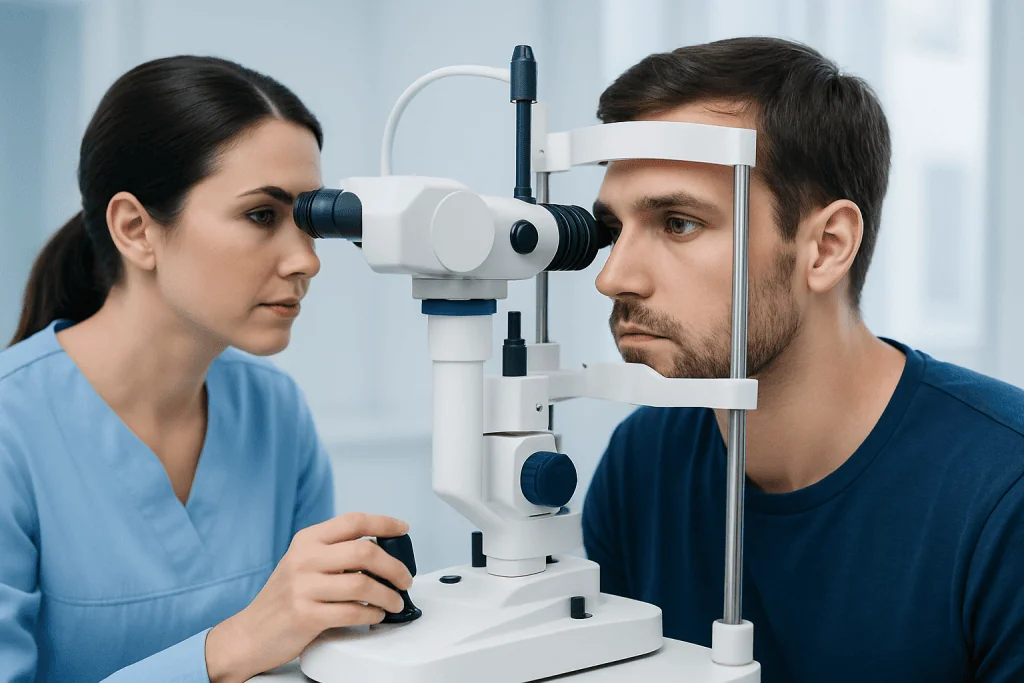
Diagnosis begins with a detailed clinical history and a comprehensive eye examination. In infants and young children, parents often describe light sensitivity, reduced visual attention, or unusual eye movements. The doctor will assess visual behavior, eye alignment, refractive error, and the front and back of the eye.
Specialized testing helps confirm the diagnosis. Color vision assessment may be used in older children and adults, but it is not enough on its own. Tests such as optical coherence tomography can look at retinal structure, and electroretinography can measure how rods and cones respond to light. These studies can help distinguish achromatopsia from other inherited retinal conditions.
Genetic testing is increasingly important because it can support the diagnosis, identify the responsible gene, and help guide counseling or research eligibility. Imaging and functional testing may be part of a broader diagnostic imaging and retinal assessment pathway when the cause of low vision is unclear.
Some patients may also be referred for a low-vision evaluation to better understand practical visual needs. In selected cases, clinicians may monitor for other eye conditions or compare findings with disorders such as macular disease affecting central vision if symptoms or imaging suggest a different diagnosis.
Treatment Options and Daily Management
There is currently no widely available standard cure that restores normal cone function in achromatopsia. Treatment is centered on reducing symptoms, protecting visual comfort, and improving day-to-day function. Management is usually individualized according to age, school or work needs, and the degree of light sensitivity and reduced acuity.
Many people benefit from tinted glasses or contact lenses designed to reduce glare and improve comfort in bright conditions. Prescription lenses can correct any refractive error, although they do not correct the underlying cone dysfunction. Low-vision support may include magnifiers, large-print materials, screen adjustments, and assistive technology for reading and learning.
Children often need practical support at school, such as preferred seating, reduced glare, enlarged print, and digital devices. Adults may need workplace adjustments and advice about driving rules, since legal visual standards vary by country and many patients do not meet them. In some cases, a specialist in eye care and surgical ophthalmology services may be involved to evaluate associated eye findings, although surgery is not a routine treatment for achromatopsia itself.
Research into gene-based therapies is ongoing, and some patients may wish to discuss clinical trial options with an inherited retinal disease specialist. Treatment decisions should be guided by qualified ophthalmologists, ideally including experts in retina, pediatric ophthalmology, and low-vision rehabilitation. When broader visual support is needed, vision rehabilitation services can help patients adapt home, school, and work environments more effectively.
Living With Achromatopsia: Self-care and Family Support
Although achromatopsia is lifelong, practical planning can make a meaningful difference. Managing light exposure is often the most immediate need. Wearing hats with brims, using tinted lenses, choosing shaded routes outdoors, and adjusting indoor lighting can reduce discomfort and improve visual function.
Parents and caregivers play a central role when a child is affected. Early recognition allows timely visual support, developmental monitoring, and school planning. Encouraging independence is important; many children learn effective strategies for reading, mobility, and technology use when they are given the right tools early on.
Emotional support also matters. A child or adult with low vision may feel frustrated in bright settings or when visual tasks take longer. Open communication with teachers, employers, and relatives can help set realistic expectations and reduce misunderstandings about what the person can and cannot see.
Regular follow-up with an eye specialist is recommended, even when symptoms seem unchanged. Review visits can update prescriptions, reassess visual aids, and ensure that no other eye condition has developed. Near the end of the care journey, some international patients choose centers such as Acibadem International, where multidisciplinary specialists in JCI-accredited hospitals diagnose and treat complex eye conditions.
When to Seek Medical Care
Medical assessment is important whenever a baby or child shows persistent light sensitivity, unusual eye movements, poor visual attention, or trouble tracking faces and objects. Early evaluation can help identify achromatopsia or another cause of low vision and allow support to begin sooner.
Adults should seek care if they have long-standing poor color vision and light sensitivity that have never been fully assessed, or if they notice any change from their usual baseline. Achromatopsia is typically congenital and relatively stable, so new or worsening symptoms deserve prompt review.
Urgent medical attention is needed if reduced vision is accompanied by pain, redness, flashes of light, sudden increase in floaters, or a rapid drop in sight. These are not typical features of achromatopsia and may suggest another eye problem that requires timely treatment.
Frequently asked questions
Is achromatopsia the same as common color blindness?
No. Common color blindness usually affects only certain color ranges, such as red and green, and many people still have normal visual sharpness. Achromatopsia is a rarer condition that also causes light sensitivity, reduced visual acuity, and often nystagmus.
Is achromatopsia present from birth?
Yes, achromatopsia is usually congenital, meaning it is present from birth. Signs often become noticeable in infancy, especially sensitivity to light and abnormal eye movements.
Can achromatopsia get worse over time?
Achromatopsia is generally considered relatively stable compared with many progressive retinal diseases. However, daily visual challenges may become more noticeable as school, work, and reading demands increase. Regular follow-up is still important.
How is achromatopsia diagnosed in children?
Diagnosis usually includes a detailed eye examination, review of symptoms, and tests of retinal structure and function. Genetic testing is often recommended because it can confirm the underlying cause and support family counseling.
Is there a cure for achromatopsia?
There is no routine cure currently available that restores normal cone vision for most patients. Treatment focuses on symptom management, visual aids, protective lenses, and specialist follow-up. Research into gene-based therapies is ongoing.
Can people with achromatopsia go to school and work normally?
Many children and adults with achromatopsia can study and work successfully with the right support. Helpful adjustments may include glare reduction, enlarged text, screen tools, and appropriate seating or lighting changes.
References
- National Eye Institute
- American Academy of Ophthalmology
- MedlinePlus Genetics
- National Organization for Rare Disorders
- Orphanet
This article is for general information only and is not a substitute for professional medical advice. Please consult a qualified doctor about your individual situation.
Explore treatments in Turkey — costs, top hospitals & a free quote
JCI-accredited · board-certified surgeons · reply within 24h