Vision Rehabilitation
Vision rehabilitation helps people with low vision maximize remaining sight and independence through specialist assessment, optical aids, adaptive techniques, and personalized training for daily activities.

Quick answer
Vision rehabilitation is a specialist programme for people whose sight cannot be fully corrected with glasses, medication or surgery. It combines functional vision testing, optical and electronic aids, lighting and contrast adjustments, and training in daily-living and mobility skills, so a visually impaired person can read, move around and manage everyday tasks more safely and independently. It does not restore lost sight; it optimises the sight that remains.
Vision Rehabilitation for the Visually Impaired: Making the Most of Remaining Sight
Vision rehabilitation is a structured programme of assessment, training and assistive technology for people whose sight cannot be adequately corrected with glasses, contact lenses, medication or surgery. It does not restore vision that has been permanently lost, and it is not a replacement for medical or surgical eye care when those treatments are still needed. Instead, it teaches you to use the vision you still have as effectively as possible, supported by non-visual strategies where sight alone is not enough. It is designed for anyone who is visually impaired to a degree that interferes with reading, mobility, work, study or self-care.
When vision changes cannot be fully corrected, everyday life can begin to feel uncertain. Reading a message, recognising a face, navigating an unfamiliar building, cooking safely, using a phone or keeping track of medication may demand far more concentration than before. Many people describe low vision not only as a medical problem but as a loss of confidence and independence. That functional loss, not the eye chart result on its own, is what vision rehabilitation exists to address.
International patients often look into vision rehabilitation after being told that their eye condition is stable but their vision remains limited, or when treatment has preserved part of their sight yet reading, mobility, work or personal care are still difficult. Others want a second opinion because they are unsure whether anything more can be done beyond a standard eye examination. At Acibadem, vision rehabilitation is approached as a personalised care pathway: first understanding the cause and pattern of visual loss, then matching tools and training to the tasks that matter in the patient’s real daily life.
The decision to begin can be emotional. Some patients worry that accepting low vision services means giving up on their eyesight. In practice it is usually the opposite. Vision rehabilitation is an active, structured way to protect independence, reduce avoidable risks and regain control of routines that matter. It can help whether the vision loss is recent or long-standing, mild or advanced, stable or gradually changing.
Understanding Vision Impairment and Low Vision
Vision impairment covers a wide spectrum, from mild blur that complicates small print to profound loss of sight. Because the words used to describe it, impaired, low vision, legally blind, carry practical and legal weight, it is worth understanding what each one actually means before looking at what rehabilitation can do.
What does visually impaired mean?
Visually impaired means that a person’s sight is reduced in a lasting way that affects daily activities and cannot be fully corrected with ordinary glasses or contact lenses. The term is deliberately broad. It includes people with reduced sharpness of vision (visual acuity), people with narrowed or patchy visual fields, people with severe glare sensitivity or poor contrast perception, and people with combinations of all of these. Two people with the same diagnosis can be affected very differently: one may read comfortably under strong lighting while another cannot recognise a face across a table. This is why modern eye care describes visual impairment in functional terms, what the person can and cannot do in real life, rather than by a single chart measurement.
What is low vision?
Low vision is sight that remains significantly reduced after the best possible correction and treatment, but that still includes usable vision. It typically shows itself as difficulty with reading, fine detail, faces, screens, contrast or night-time environments, even with an up-to-date prescription. People with low vision are the largest group served by vision rehabilitation, because remaining sight can almost always be used more effectively with the right magnification, lighting, contrast and technique. Low vision is not the same as blindness, and having low vision does not mean a person will inevitably become blind; that depends on the underlying condition and how it is monitored and managed over time.
What does 20/200 vision mean?
20/200 vision means that you need to be 20 feet away from something to see it with the clarity that a fully sighted person has from 200 feet. It is a way of expressing how much detail the eye can resolve, measured with a standard chart. Many countries use acuity of 20/200 or worse in the better eye, with the best possible correction in place, as part of the definition of legal blindness; a severely narrowed visual field can also meet that definition even when central sharpness is better. Importantly, 20/200 does not mean seeing nothing. A person at this level usually perceives shapes, movement, colour and larger objects, and with appropriate magnification many can still read. That remaining function is precisely what a rehabilitation programme is built around.
What about milder results, such as an eye measuring 20/50?
A result of 20/50 means the eye picks out detail at 20 feet that a fully sighted eye can see from 50 feet. This is far from legal blindness, yet it can be enough to make small print, road signs, screens and dim environments hard work, and in many countries it is relevant to driving licence standards. Whether an eye at 20/50 warrants rehabilitation depends on the cause and on daily demands: a keen reader, a professional driver and a craftsperson will experience the same measurement very differently. When both eyes are affected, or when reduced acuity combines with glare sensitivity or poor contrast perception, even apparently modest chart results can justify a full low-vision assessment.
What is the difference between blind and visually impaired?
Blind means having no sight, or so little usable sight that a person relies mainly on non-visual senses, while visually impaired is the broader category covering every lasting, uncorrectable reduction in vision. Total blindness, no light perception at all, is comparatively rare. Most people who meet the legal definition of blindness still perceive light, shapes, movement or colour, and many can read with powerful magnification. The distinction matters for rehabilitation planning. A person with usable central vision may concentrate on optical aids and reading strategies; someone approaching functional blindness may work more on tactile and audio methods, orientation skills and screen-reading technology. Both groups can benefit: the tools simply differ.
Is a visual impairment a disability?
In most legal frameworks, yes: a lasting visual impairment that substantially limits daily activities is recognised as a disability, which can entitle a person to workplace accommodations, educational support, accessible formats and, in many countries, financial assistance. Definitions and entitlements vary between countries and change over time. In the United States, for example, Social Security applies separate rules to people who meet its statutory definition of blindness, so entitlements and earning rules can differ from those applied to other disability categories; whether any individual receives more depends on work history and personal circumstances. Comparable schemes elsewhere use their own criteria. The relevant national authority or a qualified benefits adviser in your own country is the reliable source for current rules; the role of a clinical team is to provide the accurate medical documentation those systems require.
What Vision Rehabilitation Involves
What is low vision rehabilitation?
Low vision rehabilitation is the specialist branch of eye care that helps people with reduced but usable sight function better in daily life. It combines medical assessment, functional vision testing, optical and electronic aids, environmental modifications, adaptive techniques and hands-on training for the tasks that matter to the individual. In practice, the terms low vision rehabilitation and vision rehabilitation describe the same service; the broader term also covers non-visual strategies, audio, tactile and organisational methods, for people whose remaining sight is very limited.
The goal is not simply to measure how much you can see on a chart. A person may read only a few letters in the examination room yet function well with the right magnification, lighting, contrast and technique. Another person may have relatively good central acuity but struggle with glare, peripheral field loss, depth perception or visual fatigue after short periods of concentration. Vision rehabilitation looks at how vision performs in real situations, the kitchen, the street, the office, the classroom, not only in the testing lane.
A comprehensive programme may include low-vision optical devices such as handheld and stand magnifiers, high-powered reading lenses, telescopic lenses for distance tasks, filters that reduce glare, and task-specific illumination. It may also include electronic magnification systems, accessibility settings on smartphones and computers, screen readers, voice-control tools and other digital aids. For some patients the most valuable support is not a device at all but a new technique: eccentric viewing, systematic scanning, safe kitchen methods, medication organisation, contrast marking around the home, or orientation skills for moving through indoor and outdoor environments.
Who delivers vision rehabilitation?
Vision rehabilitation is delivered by an interdisciplinary team rather than a single practitioner. Depending on the patient’s needs, that team may include ophthalmologists, optometrists with low-vision expertise, rehabilitation physicians, occupational therapists, orthoptists, orientation and mobility trainers and nurses. In hospital settings it often sits alongside broader physical medicine and rehabilitation services, which is useful when reduced vision is only one part of a wider recovery. If the vision problem is linked to a neurological condition, diabetes, cancer treatment, trauma or a complex medical illness, coordination with those specialties becomes an important part of the plan. The team-based approach means rehabilitation supports both the eyes and the person living with the condition.
At Acibadem, the process is grounded in evidence-based ophthalmology and individualised planning. The team works through practical questions: Which tasks matter most to you? Which parts of your vision are strongest? Which tools fit your lifestyle, language, work, school, travel habits and home environment? And what training will turn those tools into skills you actually use?
Who May Need Vision Rehabilitation
Vision rehabilitation may be appropriate for anyone whose vision remains limited despite optimal medical or surgical treatment, or whose visual function interferes with daily activities. It is not triggered by a diagnosis or a single test result. It is based on how vision loss affects life, which is why two patients with identical chart readings can have very different rehabilitation plans.
Common signs that a person may benefit include:
- Difficulty reading books, labels, menus, screens, bills or medication instructions
- Trouble recognising faces, even at close range
- Increased sensitivity to light or glare, indoors or outdoors
- Bumping into objects, doorframes or furniture
- Difficulty judging steps, kerbs or uneven ground
- Problems driving, or feeling unsafe in traffic as a pedestrian
- Visual fatigue after short periods of near work
- Loss of independence in cooking, grooming, shopping or managing finances
- Withdrawal from hobbies or social activities because of vision challenges
Some patients arrive after years of coping alone. Others are referred soon after diagnosis, particularly when a condition is expected to affect vision over time. Early referral has real value: patients can learn strategies before confidence erodes and before daily routines drift into unsafe habits.
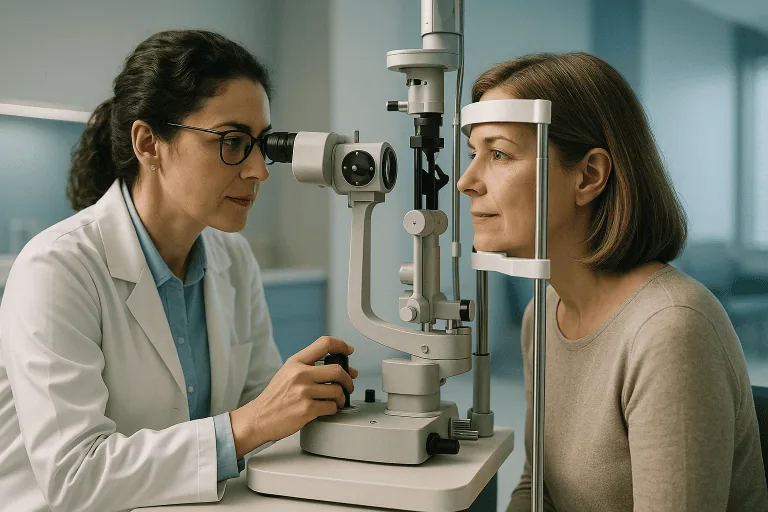
Assessment begins with a detailed eye and medical history. The clinician reviews the underlying condition, previous treatments, medications, surgeries, imaging and current prescription lenses. A low-vision assessment then evaluates not only visual acuity but also near and distance function, contrast sensitivity, visual fields where needed, glare sensitivity, reading speed, eye movement control and the ability to perform specific tasks. The examination may include dilated retinal assessment, imaging of the retina or optic nerve, corneal evaluation or other tests, depending on the suspected cause of the vision loss.
For international patients, it helps to bring previous eye reports, imaging, visual field tests, surgical records, prescriptions, medication lists and any low-vision devices already tried. If records are in another language, translated summaries speed up the team’s understanding of the history.
Situations that commonly lead to vision rehabilitation include stable vision loss after treatment for an eye disease, progressive conditions in which function is changing, visual impairment after injury or stroke, childhood or inherited eye disorders, and age-related changes that ordinary glasses can no longer bridge. The approach adapts to adults, older adults, teenagers and children, although the goals and training methods differ considerably by age and lifestyle.
Conditions Vision Rehabilitation Can Address
Vision rehabilitation supports people with many different causes of low vision. The underlying disease still needs appropriate medical care; rehabilitation addresses the functional consequences of that disease, and the two run in parallel rather than in sequence.
Age-related macular degeneration is one of the most common reasons for low-vision rehabilitation. Because it typically affects central vision, patients struggle with reading, faces, fine detail and screens while retaining peripheral vision. Training usually concentrates on magnification, lighting, contrast, eccentric viewing and structured reading techniques that exploit the healthy retina around the damaged centre.
Diabetic retinopathy and diabetic macular oedema can cause blurred or distorted central vision, patchy loss or day-to-day fluctuation. Rehabilitation runs alongside ongoing retinal treatment and diabetes care, and often focuses on tasks with direct health consequences: reading labels and instructions accurately, monitoring glucose readings, organising medication and using digital tools with enlarged, high-contrast displays.
Glaucoma mainly affects the visual field, especially peripheral vision, which complicates mobility, night vision and scanning. Rehabilitation emphasises environmental awareness, contrast enhancement, safe movement and systematic scanning patterns, while glaucoma treatment continues separately to reduce the risk of further damage.
Inherited retinal diseases, such as retinitis pigmentosa and other retinal dystrophies, may affect night vision, peripheral fields, central vision or colour perception, often over many years. These conditions call for long-term planning: assistive technology that can evolve, education and employment support, and periodic reassessment as needs change.
Optic nerve diseases, including optic neuropathy and optic atrophy, may reduce acuity, contrast, colour perception or visual fields. Planning depends on the pattern of nerve damage and may combine magnification, glare control, contrast strategies and adapted reading methods.
Neurological conditions are a distinct group. Stroke, brain injury, brain tumours, multiple sclerosis and certain neuro-ophthalmic disorders can cause field loss, double vision, visual neglect, eye movement problems or difficulty processing visual information even when the eyes themselves are healthy. In these cases, visual training is usually integrated with neurological rehabilitation, physiotherapy, occupational therapy or speech and cognitive therapy, because the visual difficulty is one strand of a wider recovery.
Other indications include advanced cataract when surgery is not possible or must be delayed, corneal scarring, albinism, nystagmus, high myopia with retinal complications, the after-effects of retinal detachment, ocular trauma, paediatric low vision and combined visual and hearing impairment. In every case the plan is tailored to the diagnosis, the patient’s age, general health, expectations and everyday responsibilities.
How Vision Rehabilitation Is Performed
Vision rehabilitation is a process rather than a single procedure. It moves from careful assessment through device selection, training, adjustment and follow-up, and the most effective programmes are relentlessly practical: the right solution for one patient may be useless for another. A typical pathway looks like this:
- Step 1: Medical review: confirming the eye diagnosis and whether any further medical or surgical treatment is needed before or alongside rehabilitation.
- Step 2: Functional assessment: measuring how vision actually performs, reading, contrast, glare, fields, task performance, against the patient’s stated goals.
- Step 3: Device trials: testing magnifiers, lenses, filters, lighting and electronic aids in the clinic until the useful candidates emerge.
- Step 4: Training: converting recommendations into skills through supervised practice with devices and techniques.
- Step 5: Environment: adapting lighting, contrast and organisation at home, work or school.
- Step 6: Follow-up: refining the plan as skills develop or as the eye condition changes.
Preparation Before the First Assessment
Before the visit, you may be asked to provide previous ophthalmology records, imaging results, visual field tests, prescriptions, medication lists and details of surgeries or injections. Just as useful is a candid list of tasks that have become difficult: reading a newspaper, using a smartphone, sewing, cooking, recognising bus numbers, working at a computer, seeing faces in meetings, moving around at night, keeping track of medication. That list shapes the whole programme. Bring your current glasses, sunglasses, magnifiers, electronic devices and any assistive tools you already use, including the ones that failed, because knowing why something did not work is diagnostic information in itself. For patients travelling from abroad, diagnostic testing, specialist review and rehabilitation sessions are scheduled so the stay is used efficiently.
The Specialist Assessment
The first step is confirming the medical status of the eyes and whether additional treatment is warranted. An ophthalmologist may review the retina, optic nerve, cornea, lens, eye pressure and ocular alignment as the case requires. If there is active disease, diabetic retinopathy, wet macular degeneration, progressing glaucoma, inflammation, cataract, medical or surgical treatment is considered alongside rehabilitation rather than instead of it. The low-vision evaluation then measures how vision performs on real tasks: distance and near acuity with specialised charts, refraction to optimise the prescription, contrast sensitivity, reading speed and fluency, glare response, and colour or field testing where relevant. The clinician’s aim is to map the strongest remaining areas of vision and the specific barriers standing between the patient and their goals.
Choosing Optical and Non-Optical Aids
After assessment, the team trials aids in the clinic. Optical options include handheld and stand magnifiers, illuminated magnifiers, high-add reading lenses, spectacle-mounted systems and telescopic lenses for selected distance tasks such as reading signs or watching a lecture. Filters or tinted lenses help many patients with glare sensitivity or contrast difficulty. Lighting deserves particular attention: the amount, direction and colour temperature of light can transform reading performance, and adjusting a lamp sometimes achieves more than upgrading a lens. Non-optical aids can matter just as much, large-print materials, bold-lined paper, high-contrast labels, tactile markings, talking clocks, medication organisers, signature guides and kitchen safety tools. Small changes, such as improving contrast on stair edges or marking appliance controls, remove daily friction and reduce avoidable risk.
Digital and Assistive Technology
Modern rehabilitation leans heavily on tools most patients already own. Smartphones and tablets carry built-in screen magnification, text-to-speech, voice commands, contrast settings, large fonts and camera-based magnification; learning to use them well is often the single highest-value part of a programme. Some patients benefit from desktop or portable electronic magnifiers for reading, writing, crafts, schoolwork or professional tasks; others rely on audio books, document-scanning applications, navigation tools or computer accessibility software. The principle is always usefulness over sophistication. A device must fit the patient’s vision, hand control, language, comfort with technology, work demands and home environment, and it must come with training, because even excellent tools are abandoned when nobody teaches the patient to use them confidently.
What is eccentric viewing training?
Eccentric viewing training teaches people who have lost central vision, most often through macular degeneration, to direct their gaze slightly off-centre so that a healthier area of retina, called a preferred retinal locus, takes over the detailed work. It sounds simple but runs against a lifetime of habit, so it takes structured practice: identifying the most useful retinal area, learning to hold it steadily on text or a face, then building reading fluency step by step, usually with magnification and strong lighting in support. Eccentric viewing has been studied in low-vision research for decades and is a standard component of rehabilitation for central field loss. How much it helps varies from person to person and depends heavily on regular, guided practice.
Training for Daily Activities
Training is where recommendations become skills. Patients practise reading with magnification, positioning material at the correct working distance, using eccentric viewing where central vision is impaired, scanning systematically where fields are lost, controlling glare, organising medication, cooking safely, handling money, using a phone and moving through public spaces. Occupational therapy can extend this into home tasks, personal care, workplace adaptation and school participation. For patients with mobility concerns, orientation and mobility training may be recommended: learning scanning patterns, using contrast cues, managing stairs, crossing streets with more reliable strategies and, when appropriate, using a cane or other mobility support. The aim is not to make anyone dependent on aids, but to give them methods that hold up in different environments, including unfamiliar ones.
Can vision rehabilitation work for patients with mild cognitive deficits?
Yes, provided the programme is adapted. A low-vision rehabilitation programme for patients with mild cognitive deficits typically favours simpler devices over complex ones, shorter and more frequent training sessions, more repetition, written and audio reminders, and closer involvement of a family member or caregiver who can reinforce techniques at home. A good magnifier, strong task lighting and consistent home organisation often deliver more than a sophisticated electronic aid that requires learning new menus. Goals are kept concrete, reading medication labels, recognising the correct key, moving safely between rooms, and progress is reviewed patiently.
Typical Duration and Follow-Up
A comprehensive first evaluation takes longer than a standard eye appointment because it includes both medical review and functional testing. Some patients leave one extended visit with recommendations they can apply immediately; others need several sessions for device trials and training. Complex cases, children, patients with neurological conditions and those learning multiple technologies usually need a longer plan. Recovery here differs from recovery after surgery: there is no wound to heal, so progress depends on adaptation, practice and refinement. Some gains are immediate, reading larger print with a well-chosen magnifier. Others, such as eccentric viewing, field scanning or fluent use of electronic aids, take weeks of practice. Follow-up appointments allow the team to adjust devices, change strategies and reassess needs if the eye condition itself changes.
Why Acting Early Matters
Low vision narrows a person’s world gradually. When reading becomes difficult, patients stop managing their own documents and medication. When glare or field loss makes walking uncomfortable, they go out less. When faces are harder to recognise, social contact becomes stressful and is quietly avoided. Each change may be small; the cumulative effect is not.
Early vision rehabilitation lets patients build skills before unsafe habits or avoidance set in. It can reduce the risk of falls, medication errors, burns and cuts in the kitchen, missed appointments and lost independence. It also eases the emotional weight of vision loss by demonstrating, concretely, that practical options exist.
Delay is most concerning for older adults living alone, people with diabetes who must manage daily health routines, students whose learning depends on visual access, working adults whose employment requires reading or screen work, and anyone with field loss who navigates traffic or unfamiliar spaces. Waiting can also mean that treatable eye disease progresses without adequate monitoring, which is why rehabilitation should run alongside regular ophthalmic care, not wait until all other options are exhausted.
Starting early is not an admission of a poor outcome. It is building a support system while there is still meaningful vision to optimise: learning which strategies help, which technologies are worth the effort and when medical reassessment is needed. Patients who take this proactive route usually find later changes far less overwhelming.
Benefits of Vision Rehabilitation
The benefits are practical, personal and tied directly to the activities each patient names as important. The table below summarises what a well-run programme aims to deliver.
| Benefit | What It Means for You |
|---|---|
| Better use of remaining vision | Specialised testing identifies your strongest visual abilities and matches them with magnification, lighting, contrast and viewing strategies. |
| Improved reading and near tasks | Low-vision aids and training may make it easier to read labels, medication instructions, mail, menus, screens or printed materials. |
| Greater safety at home and outdoors | Environmental modifications, mobility strategies, glare control and contrast techniques can help reduce avoidable risks such as falls or household injuries. |
| More independence in daily routines | Patients may regain confidence in cooking, grooming, shopping, using a phone, managing appointments and organising medication. |
| Support for work, school and communication | Assistive technology and personalised adaptations can improve access to computers, documents, learning materials and professional tasks. |
| Emotional and practical adjustment | Structured rehabilitation helps patients and families understand what is possible and how to adapt without relying only on trial and error. |
Recovery and Adaptation Timeline
Vision rehabilitation does not follow a surgical healing timeline, but most patients notice progress in stages as they learn and practise new techniques.
| Time Period | What Patients Can Expect |
|---|---|
| Day 1 | Your team reviews your eye condition, measures functional vision, discusses your goals and may begin trialling magnifiers, lighting, filters or digital accessibility tools. |
| First Week | You may start using selected aids at home or during travel. Early practice focuses on simple, high-value tasks such as reading labels, using a phone or improving lighting. |
| First Month | With training, many patients become more comfortable with devices and adaptive techniques. Adjustments are made if a tool is too difficult, too weak or poorly suited to daily routines. |
| Longer Term | Follow-up refines the plan as your needs change. Patients with progressive conditions may need updated devices, new strategies or additional medical review over time. |
What Influences a Good Result
A good result begins with an accurate diagnosis. The team must know whether vision loss is stable, improving or progressing, and whether further medical treatment could help. A patient with active retinal disease, uncontrolled glaucoma, cataract or inflammation may need treatment before or alongside rehabilitation; once the medical picture is clear, functional planning becomes far more precise.
The pattern of vision loss matters just as much as its amount. Central loss usually calls for magnification, contrast enhancement and eccentric viewing. Peripheral field loss calls for scanning training, mobility support and environmental awareness. Reduced contrast sensitivity responds to lighting changes, bold markings and high-contrast materials. Glare sensitivity needs filters, lighting adjustments and planning for outdoor activity. Double vision, eye movement disorders and neurological processing problems require more specialised coordination across teams.
Motivation and practice strongly influence outcomes. Low-vision devices are tools, not treatments that reverse the underlying condition. A magnifier helps only once the patient has learnt the right working distance, lighting angle and reading technique; accessibility settings are powerful only with familiarity. Patients who practise regularly, report honestly what is and is not working, and attend follow-up sessions extract far more benefit from the same equipment.
The fit between recommendation and life is the quiet determinant of success. A device that performs well in a clinic may not suit a person’s home lighting, work tasks, hand strength, travel habits, language needs or comfort with technology. The best plan is sometimes deliberately simple, better lighting, one suitable magnifier, contrast labels and phone accessibility settings. For another patient it may involve advanced electronic magnification, workplace adaptation, mobility training and coordination with school or occupational services. Neither plan is superior; the right one is the one that gets used.
Family and caregiver support makes rehabilitation easier, particularly for older adults, children and patients with neurological conditions. Relatives can learn to organise the home environment, improve contrast, avoid moving essential items unexpectedly, support safe medication management and, importantly, encourage independence rather than taking over tasks that the patient can still do.
Finally, ongoing eye care remains essential. Rehabilitation helps patients function better with the vision they currently have; it does not replace monitoring for disease progression. Regular ophthalmology follow-up allows timely treatment when needed and keeps rehabilitation strategies aligned with the actual state of the eyes.
How Acibadem Approaches Vision Rehabilitation
For patients travelling from abroad, vision rehabilitation is more than a single appointment. It requires careful diagnosis, clear communication and coordination across specialties when the vision loss is connected to a wider condition. Acibadem structures this as one pathway rather than a series of disconnected visits.
Patients typically come after receiving a diagnosis at home, after previous eye surgery or retinal treatment, or because they want a comprehensive second opinion on whether more can be done. The ophthalmology team evaluates whether the vision loss reflects a treatable condition, a stable impairment or a disease needing ongoing monitoring. Where appropriate, cases are discussed with related specialists, retina, glaucoma, cornea, neuro-ophthalmology, endocrinology, neurology, rehabilitation medicine, paediatrics or oncology, which matters most when vision loss is connected to diabetes, neurological disease, trauma, tumours, inherited disorders or complex systemic illness.
Detailed diagnostics underpin the plan: imaging and testing of the retina, optic nerve, cornea, eye pressure, visual fields and functional vision help clinicians separate what can be medically treated from what should be addressed through rehabilitation. For the patient, this means recommendations rest on a documented understanding of the visual system, not on symptoms alone.
The rehabilitation plan itself is built around the individual. An older adult who wants to read medication labels and move safely at home needs a different programme from a university student working through digital textbooks, a professional managing screens and documents, or a child who needs support to participate in school. The team weighs language, occupation, home environment, travel needs, comfort with technology and the availability of follow-up care after the patient returns home.
Acibadem International’s patient services support the practical side: appointment coordination, medical record transfer, interpreter support in multiple languages, and planning around travel and hospital visits, support that carries extra weight for patients with reduced sight, for whom unfamiliar environments are genuinely more demanding. When cataract surgery, retinal injections, glaucoma management, corneal treatment or neuro-ophthalmic assessment is needed, those services are coordinated within the same healthcare system, so medical treatment and functional rehabilitation proceed as parts of one plan rather than competing priorities.
Living Well With Reduced Vision
Low vision changes how a person reads, moves, works and communicates, but it does not fix the limits of what daily life can hold. With accurate assessment, well-chosen aids, adaptive techniques and honest training, most people can use their remaining sight more effectively than they expected and rebuild confidence in the routines that define independence.
Adaptation is ongoing rather than finished. Needs shift as conditions evolve, as work and family circumstances change, and as technology improves, which is why periodic reassessment belongs in every long-term plan. What stays constant is the principle behind vision rehabilitation: the measure of success is not the line reached on a chart, but the tasks a person can do safely, comfortably and on their own terms. For someone who has been told that glasses and medical treatment have done all they can, that reframing is often the most useful thing rehabilitation offers: a clear-eyed account of what remains possible, and a practical route to it.
Preparation
- Before vision rehabilitation, an ophthalmologist evaluates the cause and stability of vision loss and reviews current glasses, medications, and medical history. Patients should bring previous eye reports, prescriptions, and any magnifiers or visual aids they already use. Goals such as reading, mobility, work, school, or home safety are discussed to personalize the program.
Aftercare
- After assessment, patients may receive magnifiers, lighting recommendations, contrast strategies, electronic aids, or orientation training. Regular practice at home is important to build confidence and improve daily function. Follow-up visits help adjust devices, monitor eye health, and refine the rehabilitation plan.
Frequently Asked Questions
What affects the cost of vision rehabilitation?
The final cost depends on the assessment required, the underlying eye condition, recommended optical or electronic aids, the number of training sessions, and whether occupational therapy, mobility support, translation, or travel coordination is needed.
How can I get a personalised quote?
A personalised quote can be prepared after a specialist reviews your diagnosis, recent eye reports, functional needs, and goals for daily activities. You can request a free consultation to understand the recommended plan and expected inclusions.
Are assistive devices included in the rehabilitation package?
This depends on the package and the devices selected. Some plans may include assessment and training only, while optical or electronic aids may be quoted separately after the specialist determines what is suitable.
Will I need more than one visit?
Some patients may complete assessment and initial training during a single coordinated visit, while others benefit from follow up sessions to adjust devices, reinforce techniques, or expand training for work, study, or home activities.
Is vision rehabilitation a cure for low vision?
Vision rehabilitation does not cure the underlying eye disease. Its purpose is to help you use remaining vision more effectively, improve independence, and adapt daily activities with specialist guidance.
Can international patients receive language and travel support?
Many private hospital pathways in Turkey can coordinate appointments, interpreter support, medical documentation, and follow up planning. The exact support available should be confirmed when requesting your personalised quote.
Medically reviewed by the Acıbadem International Medical Board August 31, 2026
See our medical review board →
Update history
- PublishedJune 8, 2026
- Medical review approvedAugust 31, 2026
- Last content updateAugust 31, 2026
References2
- Low Vision medlineplus.gov
- Blindness and vision impairment who.int
Trusted care for international patients
From the Acibadem Blog
Daily Life After Vision Rehabilitation: Practicing Contrast Strategies and Orientation Skills
Living with low vision after rehabilitation works best when contrast and orientation skills become daily habits: use dark-on-light or light-on-dark pairings for food, stairs,…
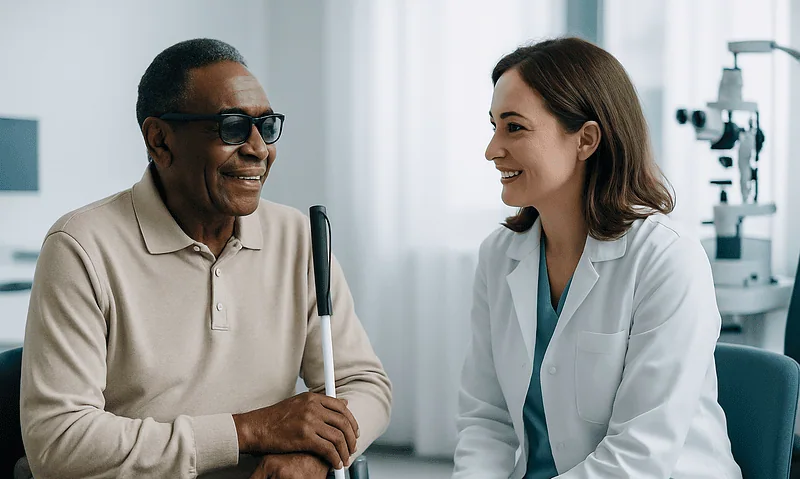
Who Is Vision Rehabilitation For? Making the Most of Remaining Sight After Vision Loss
Vision rehabilitation is for anyone whose sight loss cannot be fixed with glasses, contact lenses, medicine or surgery, and who finds reading, moving around,…

Magnifiers, Lighting and Electronic Aids: How Vision Rehabilitation Training Works
Low vision aids training is a rehabilitation program that teaches people with permanent, uncorrectable vision loss to use magnifiers, task lighting, contrast changes and…