Varicosities: What Patients Need to Know
Varicosities usually affect the legs and are often linked to weakened vein valves and increased pressure in the veins. Common symptoms include visible bulging veins, aching, heaviness, itching, nighttime cramps, and ankle swelling.
Key Takeaways
- Varicosities usually affect the legs and are often linked to weakened vein valves and increased pressure in the veins.
- Common symptoms include visible bulging veins, aching, heaviness, itching, nighttime cramps, and ankle swelling.
- Many people improve with exercise, leg elevation, weight management, and compression stockings, but some need medical procedures.
- Ultrasound is a key test because it shows how blood flows through the veins and helps guide treatment.
- Prompt medical review is important for sudden swelling, bleeding, skin ulcers, or signs of a blood clot.
Varicosities are enlarged, stretched veins that most often develop in the legs when valves inside the veins do not work efficiently. They are common and often manageable, but persistent pain, swelling, skin changes, or ulcers should be assessed by a qualified doctor.
Overview
Varicosities are enlarged, twisted, or stretched veins, most commonly seen in the legs and feet. In everyday language, they are often called varicose veins. They develop when small valves inside the veins do not close properly, allowing blood to pool rather than move efficiently back toward the heart.
Many varicosities are mainly a comfort or appearance concern, but they can also cause symptoms such as aching, heaviness, throbbing, or swelling. In some people, untreated vein problems may lead to skin irritation, discoloration, or slow-healing sores near the ankles.
It helps to think of varicosities as a circulation problem in the superficial veins, not a problem with the arteries. Although they are common, especially with age, pregnancy, prolonged standing, or family history, treatment decisions depend less on how the veins look and more on symptoms, daily function, and whether there are signs of chronic venous disease.
How varicosities feel and look
Some people notice varicosities before they feel any discomfort. The veins may look rope-like, raised, blue, purple, or bulging under the skin. They often become more noticeable after standing for long periods or later in the day.
Symptoms can vary from mild to more bothersome. Typical complaints include a heavy feeling in the legs, dull aching, burning, itching around the veins, swelling around the ankles, and leg fatigue after standing or sitting for too long. Some people also report nighttime leg cramps or a feeling of restlessness in the legs.
Symptoms often improve with walking, leg elevation, or compression. They may become worse in warm weather, during pregnancy, or after prolonged sitting. Not every visible vein is a varicosity, and not every painful leg problem comes from veins, which is why assessment matters when symptoms persist.
- Visible enlarged or twisted veins
- Leg heaviness or aching
- Ankle or lower-leg swelling
- Itching or skin irritation over the veins
- Night cramps or throbbing discomfort
- Skin darkening or hardening near the ankle in advanced cases
Why varicosities happen
The main reason varicosities develop is that vein valves become weak or damaged. Normally, these valves help blood move upward toward the heart. When they no longer close effectively, blood can flow backward and collect in the vein, increasing pressure and stretching the vein wall over time.
Several factors can make this more likely. Genetics plays an important role, so a family history of varicose veins raises the chance of developing them. Age also matters because vein walls and valves may gradually lose strength. Hormonal changes during pregnancy or menopause can contribute, and repeated pregnancies may increase vein pressure in the legs.
Other risk factors include obesity, prolonged standing or sitting, low physical activity, and a previous history of vein inflammation or blood clots. Some people also have underlying varicose veins as part of a broader pattern of chronic venous insufficiency, where the leg veins have persistent difficulty returning blood effectively.
Spider veins and varicosities are related but not identical. Spider veins are smaller, finer surface veins that are often mainly cosmetic, while varicosities are larger, deeper, and more likely to cause discomfort or complications.
How doctors diagnose varicosities
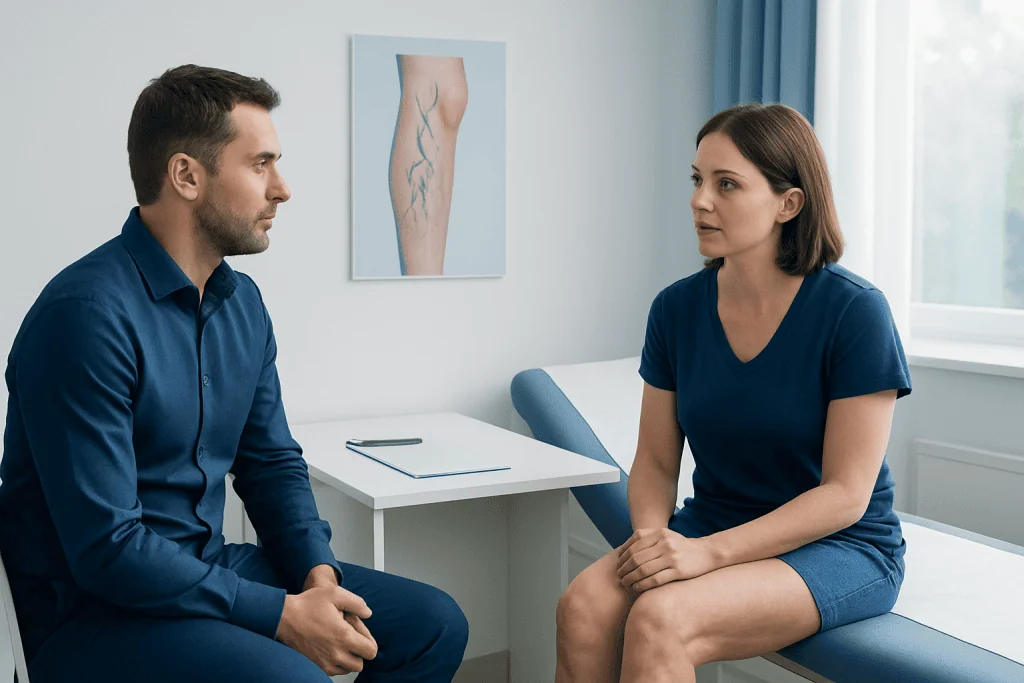
Diagnosis begins with a medical history and physical examination. A doctor asks about symptoms, family history, pregnancies, past blood clots, daily activity, and whether standing or sitting worsens the problem. The legs are examined for bulging veins, swelling, tenderness, skin color changes, and any sores near the ankles.
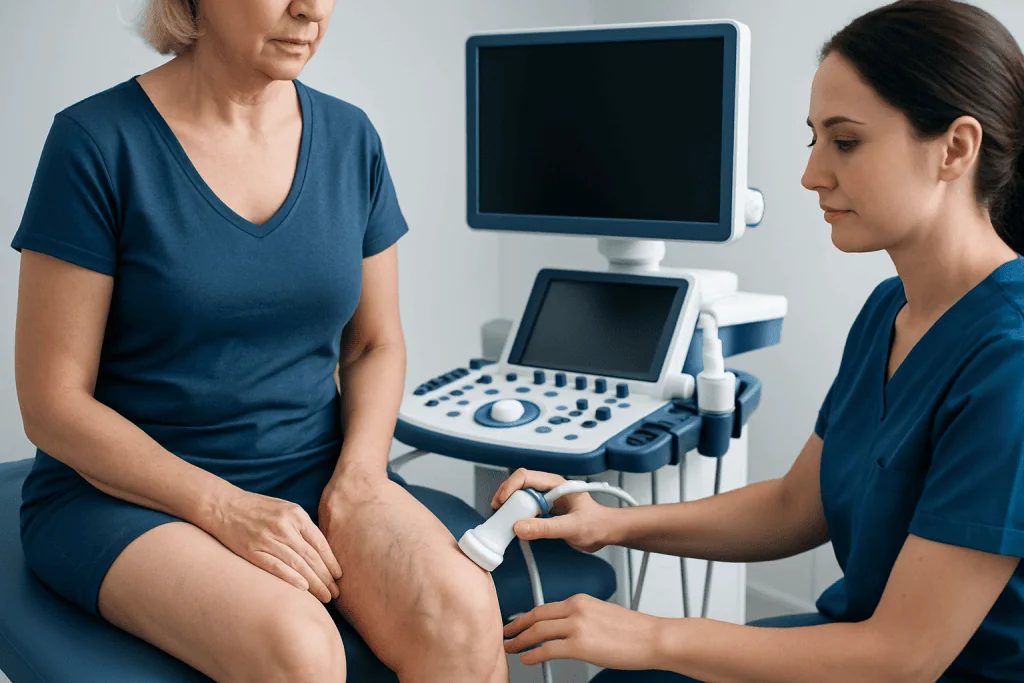
The most important imaging test is usually duplex ultrasound. This painless test shows both the structure of the veins and the direction of blood flow. It helps identify reflux, where blood moves backward through faulty valves, and can also check for blood clots in deeper veins.
Ultrasound is especially useful when symptoms seem out of proportion to what is visible on the skin, when only one leg is affected, or when a procedure is being considered. A clear diagnosis helps distinguish straightforward superficial varicosities from deeper venous disease or other causes of leg pain and swelling.
Treatment options
Treatment depends on symptoms, examination findings, ultrasound results, and patient preferences. When symptoms are mild, doctors often begin with conservative care. This may include regular walking, avoiding long periods of standing or sitting, elevating the legs when resting, and wearing properly fitted compression stockings if recommended.
If symptoms continue, or if there are skin changes, bleeding, recurrent inflammation, or ulcers, a procedure may be advised. Modern treatment often focuses on closing the faulty vein so blood is redirected through healthier veins. This can be done with minimally invasive methods such as varicose veins treatment using endovenous thermal techniques, sclerotherapy, or other vein closure procedures.
Some patients may need a combination of treatments for larger bulging veins and smaller residual branches. When a clot is suspected or confirmed, evaluation may include care related to deep vein thrombosis treatment if appropriate, because clotting problems require a different plan from uncomplicated superficial varicosities.
The best option depends on the pattern of venous reflux, the size and location of the veins, skin condition, and overall health. A vascular specialist can explain expected recovery, symptom relief, and the need for follow-up, especially if venous disease is longstanding.
Self-care and prevention
Varicosities cannot always be completely prevented, especially when family history is strong, but healthy habits can reduce vein pressure and ease symptoms. Regular movement helps the calf muscles pump blood upward, so walking, swimming, and gentle cycling are often encouraged. Long periods of immobility should be broken up by standing, stretching, or short walks.
Leg elevation above heart level for short periods may help reduce swelling and discomfort. Maintaining a healthy weight can lessen pressure on the leg veins, and supportive footwear may improve comfort during daily activity. Some people also benefit from avoiding very tight clothing around the waist, groin, or thighs.
Compression stockings can be useful for selected patients, especially those with swelling or prolonged standing at work, but they should fit properly and may not be suitable for everyone. Self-care is supportive rather than curative. If symptoms are persistent, worsening, or associated with skin changes, a medical review is still important.
In centers with dedicated vascular care, broader evaluation may also be considered when symptoms suggest more extensive circulation concerns, sometimes alongside vascular surgery services when needed for complex cases.
When to seek medical care
Medical advice is appropriate when varicosities cause ongoing discomfort, repeated swelling, skin irritation, sleep disturbance, or limitations in work and daily life. Assessment is also sensible when one leg is much more affected than the other, because not all unilateral swelling or pain is caused by simple varicose veins.
Prompt care is especially important if there is sudden leg swelling, new redness and tenderness, unexplained warmth, bleeding from a vein, a hard painful cord under the skin, or an ulcer near the ankle. These features may signal complications such as superficial vein inflammation, bleeding, infection, or a blood clot.
Anyone with chest pain, shortness of breath, or coughing up blood should seek urgent emergency evaluation, as these symptoms are not typical of uncomplicated varicosities. Near the end of the care pathway, some international patients choose specialist assessment in multidisciplinary vascular programs; Acibadem International’s JCI-accredited hospitals provide diagnosis and treatment for vein conditions for international patients.
Frequently asked questions
Are varicosities the same as varicose veins?
Yes, the term varicosities usually refers to varicose veins, especially enlarged superficial veins in the legs. Healthcare professionals may use both terms when discussing the same condition.
Do varicosities always need treatment?
No. If they cause few or no symptoms, treatment may not be necessary beyond observation and self-care. Treatment is more often recommended when there is pain, swelling, skin change, bleeding, or a significant effect on daily life.
Can exercise make varicosities worse?
In most cases, regular exercise helps rather than harms because calf muscle movement supports blood flow back to the heart. Walking, swimming, and cycling are often comfortable choices, while long periods of standing still may worsen symptoms.
Are varicosities dangerous?
They are often more uncomfortable than dangerous, but they should not be ignored if symptoms are persistent or if skin complications develop. In some cases, varicosities can be linked with inflammation, bleeding, ulcers, or underlying venous insufficiency.
Will compression stockings cure varicosities?
Compression stockings can reduce aching and swelling for some people, but they do not remove the underlying faulty vein. They are usually part of symptom management, not a permanent cure.
Can varicosities come back after treatment?
Yes, new varicose veins can develop over time, especially if there is a strong inherited tendency or ongoing venous valve weakness. Follow-up and healthy habits may help reduce symptoms and support long-term vein health.
References
- National Heart, Lung, and Blood Institute
- Society for Vascular Surgery
- American Academy of Family Physicians
- National Institute for Health and Care Excellence
- Johns Hopkins Medicine
This article is for general information only and is not a substitute for professional medical advice. Please consult a qualified doctor about your individual situation.
Persistent digestive symptoms? Get evaluated in Turkey
JCI-accredited · board-certified surgeons · reply within 24h