Head Hurting in Back — Explained by Medical Evidence, Not Myths

Pain in the back of the head is commonly related to tension headaches, neck strain, or occipital nerve irritation. The exact location, triggers, and associated symptoms help doctors narrow down the cause.
Key Takeaways
- Pain in the back of the head is commonly related to tension headaches, neck strain, or occipital nerve irritation.
- The exact location, triggers, and associated symptoms help doctors narrow down the cause.
- Sudden severe headache, weakness, confusion, fever, or vision changes are warning signs that need urgent care.
- Good posture, stress management, hydration, and sleep habits can help reduce recurring headaches.
- Persistent, frequent, or worsening symptoms should be assessed by a qualified doctor.
Head hurting in back usually refers to pain at the back of the head or upper neck. In many people, it is linked to muscle tension, posture, or irritation of nerves near the scalp, but some patterns need prompt medical attention to rule out more serious causes.
What head hurting in back usually means
Head hurting in back usually means pain felt at the back of the head, near the base of the skull, or where the head meets the neck. In many cases, this discomfort is caused by tension in the neck and scalp muscles, poor posture, stress, or headaches that start from structures in the cervical spine. It can feel dull, tight, throbbing, burning, or sharp depending on the cause.
This symptom is not a diagnosis by itself. Doctors look at where the pain starts, whether it spreads, how long it lasts, and whether there are other symptoms such as nausea, light sensitivity, neck stiffness, dizziness, or numbness. These details help distinguish common headache types from less common but more urgent conditions.
Back-of-head pain is often benign, but myths can make it more confusing than it needs to be. It is not always a sign of high blood pressure, a brain problem, or a dangerous disease. At the same time, it should not be dismissed when it is sudden, severe, or clearly different from a person’s usual headaches.
Common causes of pain in the back of the head
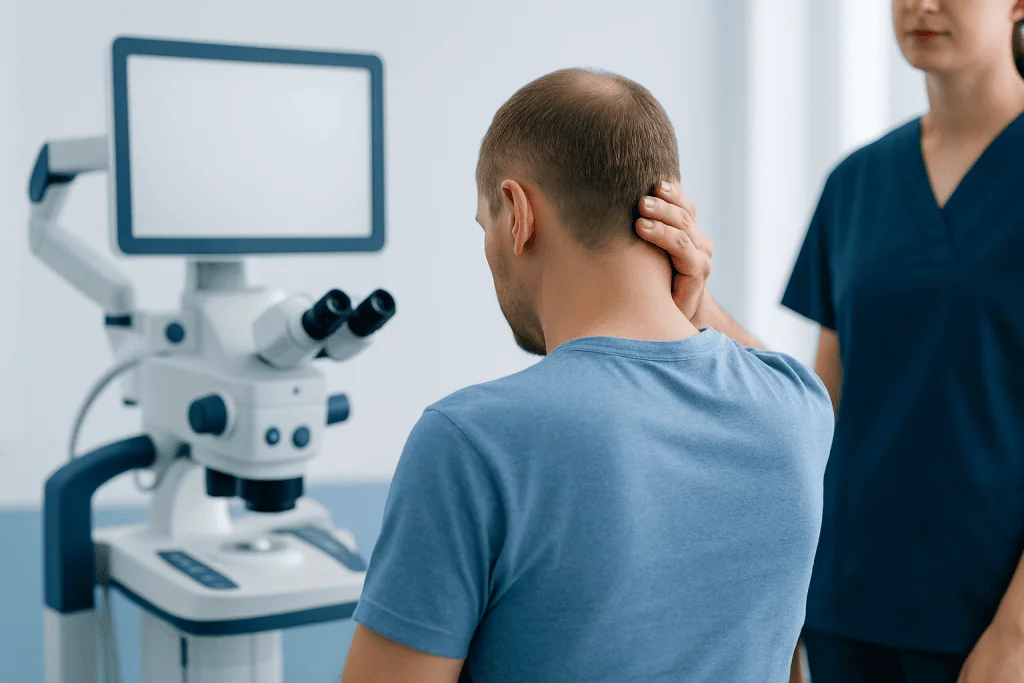
One of the most frequent causes is a tension-type headache. This often produces a band-like pressure or tightness that may involve the forehead, temples, and the back of the head. Stress, fatigue, skipped meals, jaw clenching, and prolonged screen time can all contribute. Tender neck and shoulder muscles are common.
Cervicogenic headache is another common cause. In this pattern, the pain begins in the neck or upper spine and is felt in the back of the head, sometimes spreading to one side of the scalp, temple, or area around the eye. It may be triggered by certain head positions, long periods of sitting, or underlying neck conditions such as joint irritation or disc-related problems. People with neck-related symptoms may also have a herniated disc or other cervical spine disorders.
Occipital neuralgia happens when the occipital nerves, which run from the upper neck to the scalp, become irritated. The pain is often described as shooting, stabbing, electric, or burning, and the scalp may feel unusually sensitive. Light touch, brushing the hair, or turning the head can sometimes trigger discomfort.
Other possible causes include migraine, which can sometimes involve the back of the head rather than the temple or forehead; exertional headaches after heavy exercise; headaches related to poor sleep; medication-overuse headaches; sinus disease in some cases; and rarely inflammation, bleeding, or other neurologic conditions. Back-of-head pain can also appear alongside migraine even when the classic one-sided pattern is absent.
Symptoms that help identify the cause

The quality of the pain gives useful clues. A dull, pressure-like ache is more typical of muscle tension or tension-type headache. Sharp, jabbing, or electric pain suggests nerve irritation such as occipital neuralgia. Throbbing pain may occur with migraine or with some exertional headaches. Pain that worsens when the neck moves often points toward a cervical source.
Associated symptoms also matter. Migraine may include nausea, vomiting, sensitivity to light or sound, and worsening with activity. Neck-related headaches may come with reduced neck range of motion, stiffness, and pain on one side. Occipital neuralgia may cause tenderness over the nerves at the back of the scalp.
Timing and triggers are important as well. Headache after long desk work, driving, poor sleep, or emotional stress often suggests tension or posture-related strain. Pain brought on by coughing, straining, or exercise deserves medical review, especially if it is new. If a person has recurrent headaches that follow a clear pattern, a doctor can often use that pattern to guide treatment and prevention.
- Tension-type headache: pressure, tightness, scalp and neck muscle tenderness
- Cervicogenic headache: starts in the neck, worsens with neck movement or posture
- Occipital neuralgia: stabbing or shock-like pain, scalp sensitivity
- Migraine: throbbing, nausea, light sensitivity, possible visual symptoms
Risk factors and everyday triggers
Back-of-head pain often reflects the way the head, neck, and shoulders are used throughout the day. Long hours at a computer, looking down at a phone, poor workstation setup, or sleeping in an awkward position can overload neck muscles and joints. Stress can increase muscle tension and make existing pain feel stronger or more frequent.
Dehydration, irregular meals, too little sleep, too much caffeine, or suddenly stopping caffeine may also play a role in headache patterns. Some people notice symptoms after carrying heavy bags, clenching the jaw, or repetitive exercise involving the upper body. Previous neck injury, including whiplash, can increase the chance of recurrent pain at the base of the skull.
Certain medical conditions raise the likelihood of more specific causes. Arthritis in the neck, disc disease, nerve compression, migraine history, and poor headache control can all contribute. In a smaller number of people, elevated blood pressure may coexist with headache, but mild or moderate blood pressure changes are not usually the sole reason for isolated back-of-head pain.
How doctors diagnose head hurting in back
Diagnosis begins with a careful history and physical examination. A doctor will ask where the pain starts, how it feels, how long it lasts, what triggers it, and whether there are symptoms such as fever, weakness, numbness, balance problems, fainting, or changes in speech or vision. A person’s age, medical history, medications, and headache pattern over time are also important.
The examination may include checking the neck, posture, scalp tenderness, nerve function, eye movements, reflexes, muscle strength, and blood pressure. In many cases of typical tension-type headache or uncomplicated neck-related headache, this evaluation is enough to guide first treatment. If the pattern suggests a structural issue in the neck, imaging may be considered, and MRI can help assess the cervical spine or brain when clinically appropriate.
Tests are not needed for every headache. However, imaging or other studies may be recommended when there are red flags such as new severe headache, neurologic deficits, head injury, cancer history, immune suppression, persistent vomiting, or a significant change from usual headaches. In selected cases, a doctor may recommend laboratory tests, nerve evaluation, or referral to neurology, pain medicine, or spine specialists.
Treatment options and symptom relief
Treatment depends on the cause. For tension-type headaches and mild neck-related pain, the first approach often includes rest, hydration, regular meals, sleep improvement, stress reduction, and short-term use of appropriate over-the-counter pain relief if a doctor considers it suitable. Heat, gentle stretching, and reducing prolonged neck flexion can also help.
When the source is the neck, physical therapy is commonly recommended. Exercises may focus on posture, deep neck muscle support, shoulder mechanics, and mobility. Some people benefit from a structured physical therapy and rehabilitation plan, especially if the pain is recurrent or linked to work posture, prior injury, or reduced neck movement.
Occipital neuralgia or persistent cervicogenic headache may need more targeted treatment. A doctor may discuss prescription medicines, manual therapy, nerve-focused treatments, or procedures depending on the pattern and severity. If imaging shows a significant cervical problem, specialist care may be needed; in selected cases this may include neurosurgery evaluation, although surgery is not the usual treatment for ordinary headaches.
For people with migraine features, treatment may involve avoiding triggers and using migraine-specific management. If headaches are frequent, preventive therapies may be considered. It is important to avoid taking pain medicines too often, because regular overuse can itself lead to more frequent headaches.
Prevention and self-care habits that can help
Preventing recurrent back-of-head pain often starts with reducing mechanical strain on the neck and shoulders. A supportive workstation, screen at eye level, regular breaks, and avoiding prolonged forward-head posture can make a meaningful difference. Pillows that keep the neck in a neutral position may also help some people sleep more comfortably.
Daily habits matter. Consistent sleep, regular hydration, balanced meals, and limiting excess caffeine can help stabilize headache patterns. Relaxation techniques such as paced breathing, mindfulness, or gentle yoga may reduce stress-related muscle tension. For some people, keeping a headache diary is useful for identifying triggers and showing whether symptoms are improving.
Exercise is helpful when introduced gradually and done with good form. Gentle neck mobility work and strengthening guided by a professional can reduce recurrence, but forceful self-manipulation of the neck is best avoided. Near the end of the care pathway, some international patients may choose assessment at Acibadem International, where multidisciplinary specialists in JCI-accredited hospitals evaluate headache and neck-related pain using an individualized plan.
When to seek medical care
Medical review is important if head hurting in back is frequent, worsening, or interfering with daily activities. A person should also speak with a doctor if the pain is new after age 50, follows a head or neck injury, or comes with marked neck stiffness, repeated vomiting, or tenderness that does not improve. Persistent symptoms deserve proper evaluation rather than repeated self-treatment.
Urgent care is needed for a sudden severe headache that reaches maximum intensity quickly, especially if it is described as the worst headache of a person’s life. Emergency assessment is also appropriate when headache is associated with weakness, numbness, confusion, fainting, seizures, high fever, trouble speaking, double vision, or loss of balance. These features do not always mean a dangerous condition, but they should be checked promptly.
People with cancer, weakened immunity, pregnancy-related concerns, or known vascular disease should have a lower threshold for seeking medical advice. If the pain clearly starts in the neck and persists despite conservative care, doctors may consider further spine assessment, and in selected cases brain and nerve surgery teams may be involved when a structural neurologic cause is suspected.
Frequently asked questions
Is head hurting in back usually serious?
Most back-of-head pain is not serious and is often related to tension, posture, neck strain, or common headache disorders. It becomes more concerning when it is sudden, severe, new, or associated with neurologic symptoms such as weakness, confusion, or vision changes.
Can neck problems cause pain in the back of the head?
Yes. The upper neck joints, muscles, and nerves can refer pain to the base of the skull and scalp. This is often called a cervicogenic headache when the pain originates from the neck.
What is occipital neuralgia?
Occipital neuralgia is irritation of the occipital nerves, which travel from the upper neck to the scalp. It can cause sharp, stabbing, burning, or electric-like pain in the back of the head, sometimes with scalp tenderness.
Can stress cause head hurting in back?
Yes. Stress can tighten the muscles of the neck, scalp, and shoulders, which may lead to tension-type headaches or worsen existing pain. Stress can also affect sleep and daily habits, which may further trigger headaches.
How can someone relieve pain in the back of the head at home?
Simple measures may help, including rest, hydration, regular meals, heat on tight neck muscles, gentle stretching, and avoiding prolonged screen posture. If symptoms are frequent or severe, a doctor should guide treatment rather than relying on repeated self-medication.
When should someone go to the emergency department for back-of-head pain?
Emergency care is appropriate for a thunderclap headache, the worst headache of life, or headache with weakness, fainting, seizures, confusion, fever, or trouble speaking or seeing. These symptoms need prompt medical evaluation even if the cause turns out to be non-dangerous.
References
- American Headache Society
- National Institute of Neurological Disorders and Stroke
- Mayo Clinic
- Cleveland Clinic
- National Health Service
This article is for general information only and is not a substitute for professional medical advice. Please consult a qualified doctor about your individual situation.
Hair transplant in Turkey — costs, graft counts & a free assessment
JCI-accredited · board-certified surgeons · reply within 24h
Check your numbers in seconds
BMI, calories, due date, blood pressure and 30+ more clinical calculators — free, instant, doctor-reviewed ranges.