

DHI Hair Transplant
DHI hair transplant is a minimally invasive hair restoration technique that implants individual follicles directly with a specialized pen. It supports natural-looking density and hairline design.
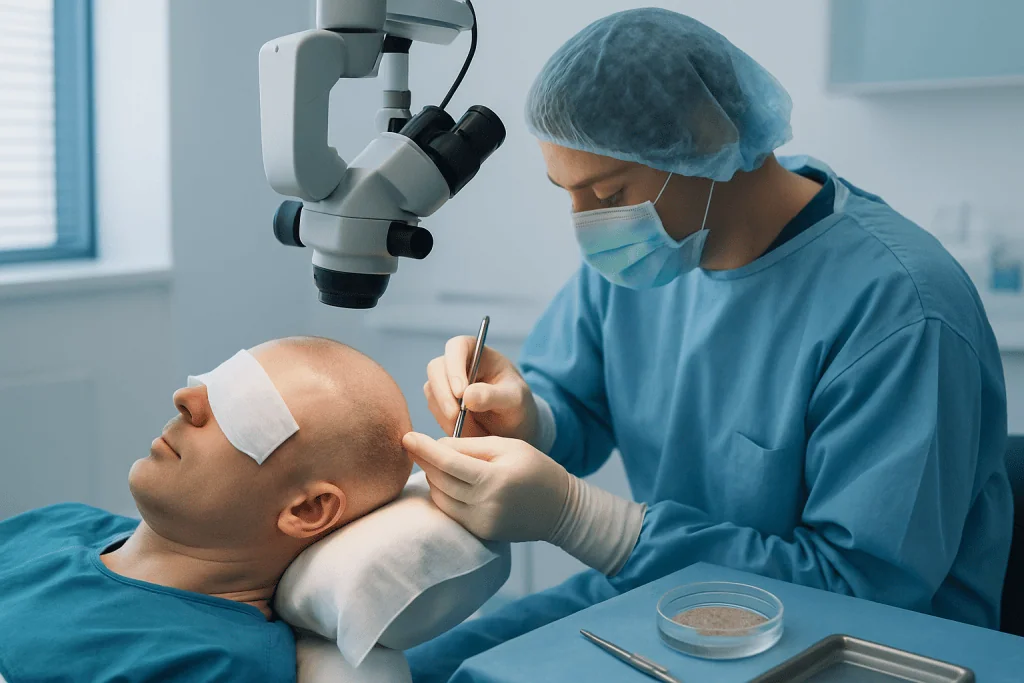
Quick answer
DHI hair transplant is a minimally invasive hair restoration technique that places individual hair follicles directly into the scalp using a specialized implanter pen, without creating channels separately beforehand. At Acibadem in Turkey, the procedure is planned around hairline design and donor area assessment to support natural-looking density with a personalized surgical approach.
Considering DHI Hair Transplant When Hair Loss Has Become Personal
Hair loss can feel far larger than a cosmetic concern. For many people, it affects how they see themselves in the mirror, how they appear in photographs, how they style their hair, and how confident they feel in professional or social settings. Some patients have spent years trying medications, supplements, shampoos, laser devices, or camouflage fibers. Others begin researching treatment as soon as they notice a widening part, thinning crown, or receding hairline. By the time they consider hair transplantation, they often want a solution that looks natural, respects their facial features, and does not call attention to the fact that they had a procedure.
DHI hair transplant, also known as Direct Hair Implantation, is one of the modern methods used in surgical hair restoration. It is designed to move healthy hair follicles from areas that are more resistant to hair loss, usually the back and sides of the scalp, into areas where density has been lost. The goal is not simply to add hair, but to create an age-appropriate hairline, direction, angle, and density that blend with the patient’s existing hair.
For international patients, the decision can involve additional questions. Is the procedure suitable for my type of hair loss? How many grafts might I need? Will the result look natural? How long should I stay in Turkey? Can I return to work quickly? What happens if I need a second session later? These are reasonable concerns. A careful DHI hair transplant plan begins with diagnosis, donor area assessment, realistic expectations, and transparent discussion of what can and cannot be achieved in one treatment session.
What Is DHI Hair Transplant?
DHI hair transplant is a minimally invasive hair restoration technique in which individual follicular units are extracted from the donor area and implanted directly into the recipient area using a specialized implanter pen. Each follicular unit may contain one, two, three, or occasionally more hairs. The surgeon and clinical team select, prepare, and place these grafts according to a personalized design.
The key feature of DHI is the implantation method. In traditional follicular unit extraction approaches, tiny recipient channels are typically created before grafts are placed. In DHI, the follicle is loaded into an implanter device and inserted directly into the scalp at a controlled angle, direction, and depth. This can support precise placement, especially along the frontal hairline and in areas where existing hair must be preserved.
DHI is not a separate biological cure for hair loss. It is a technique for redistributing hair follicles from one area of the scalp to another. The transplanted follicles are usually taken from regions genetically less affected by androgenetic hair loss. Once they heal and enter their normal growth cycle, they can continue producing hair for many years. However, the patient’s non-transplanted hair may continue to thin over time, which is why long-term planning is an important part of treatment.
A natural-looking DHI result depends on more than the instrument used. It requires appropriate patient selection, donor area preservation, graft quality, hairline artistry, careful handling of follicles, and postoperative care. In experienced hands, DHI can be particularly useful for patients who want refined hairline work, targeted density, or implantation between existing hairs with minimal disruption.
Who May Need DHI Hair Transplant?
DHI hair transplant may be considered by men and women who have stable or predictably progressive hair loss and enough healthy donor hair to support transplantation. The most common reason is androgenetic alopecia, often called male-pattern or female-pattern hair loss. Men may notice recession at the temples, thinning at the crown, or a gradually enlarging bald area. Women more often experience diffuse thinning over the top of the scalp, widening of the part line, or loss of density behind the frontal hairline.
Not everyone with hair loss is immediately a candidate for transplantation. Some causes of shedding are temporary or medically treatable. These may include thyroid disease, iron deficiency, hormonal changes, recent illness, rapid weight loss, medication effects, stress-related shedding, or inflammatory scalp disease. For this reason, a responsible hair transplant program starts with evaluation rather than immediate scheduling.
Diagnosis usually includes a detailed medical history, review of family hair loss patterns, scalp examination, and assessment of donor density. Magnified scalp analysis or digital imaging may be used to evaluate miniaturization, hair caliber, and follicle distribution. In selected patients, blood tests or dermatology consultation may be recommended, particularly if hair loss is sudden, patchy, associated with itching or scaling, or does not follow a typical pattern.
Patients who often seek DHI include those with a receding hairline, thinning temples, crown thinning, previous hair transplant requiring refinement, traction-related hair loss, or localized scarring where the scalp tissue is healthy enough to receive grafts. Some patients also inquire about DHI for beard, mustache, or eyebrow restoration, though candidacy and technique differ by area and require careful planning.
A good candidate generally has realistic expectations, adequate donor supply, stable general health, and a willingness to follow aftercare instructions. The best plan is not always the maximum number of grafts possible. In many cases, preserving donor hair for future needs is as important as improving the visible area today.
Conditions and Indications DHI Hair Transplant Can Address
DHI hair transplant is most commonly used for pattern hair loss. In male-pattern hair loss, it may restore or reshape the frontal hairline, fill temporal recessions, add density to the mid-scalp, or improve crown coverage. The exact plan depends on the patient’s age, degree of hair loss, donor capacity, hair characteristics, and likelihood of future progression.
In female-pattern hair loss, DHI may be used when thinning is localized enough and the donor area is strong enough to provide viable grafts. Women require particularly careful diagnosis because diffuse thinning can affect the donor area as well. If the donor hair is miniaturized, transplantation may not produce the desired density. When appropriate, DHI can help reinforce the frontal zone, improve part-line density, or restore areas affected by traction hairstyles.
DHI may also be considered for selected cases of scarring alopecia after burns, surgical scars, trauma, or previous procedures, provided the scar is stable and has sufficient blood supply. In these cases, results can be less predictable than in healthy scalp tissue, and sometimes staged treatment is preferred.
For patients who have undergone a previous hair transplant, DHI can be used to refine the hairline, add density between older grafts, or correct areas where the angle or distribution appears unnatural. Revision cases require special expertise because donor reserves may be limited and scar tissue may affect implantation.
The procedure is not appropriate for every form of hair loss. Active inflammatory scalp disease, uncontrolled medical conditions, insufficient donor hair, unrealistic density expectations, or ongoing severe shedding may need to be addressed before surgery is considered. A thoughtful consultation helps determine whether DHI is the right approach, whether medical therapy should come first, or whether a different treatment strategy is more suitable.
How DHI Hair Transplant Is Performed
Consultation and Treatment Planning
The process begins with a detailed consultation. The physician reviews the patient’s hair loss history, medical background, medications, previous treatments, family pattern, and goals. Photographs and scalp analysis help document the current situation and guide planning. For international patients, an initial remote assessment may be possible using high-quality photos, followed by in-person evaluation before the procedure.
The hairline design is one of the most important steps. A natural hairline is not a straight line; it has subtle irregularities, appropriate recession, and a shape that fits the patient’s forehead, facial proportions, age, and future hair loss risk. A hairline that is too low or too dense can look unnatural and may consume donor follicles that might be needed later. The plan also considers hair direction, curl, color contrast with the scalp, shaft thickness, and the number of grafts available.
Preparation Before the Procedure
Before DHI, patients receive instructions about medications, smoking, alcohol, supplements, and scalp care. Blood tests may be requested according to medical history and local protocols. Patients should inform the team about bleeding disorders, allergies, chronic illnesses, prior surgeries, and all medications, including blood thinners. The donor and recipient areas are examined again on the day of the procedure, and the final design is confirmed with the patient.
Some DHI procedures are performed with the donor area trimmed, while selected cases may use a less visible shaving approach depending on hair length, graft number, and technical feasibility. This is discussed during planning. Local anesthesia is used to numb the donor and recipient areas. Sedation may be considered for certain patients, depending on clinical assessment and patient preference.
Extraction of Hair Follicles
Follicular units are removed one by one from the donor area using fine instruments. The extraction pattern is distributed carefully to avoid overharvesting and to maintain a natural appearance in the donor region. Donor management is especially important for younger patients and those with advanced hair loss, because future sessions may be needed.
After extraction, grafts are examined and kept in controlled conditions to protect follicle viability. The team sorts grafts according to the number of hairs they contain and their quality. Single-hair grafts are typically reserved for the frontal hairline to create a soft, natural edge. Multi-hair grafts may be used farther back to improve the appearance of density.
Direct Implantation With an Implanter Pen
In the DHI phase, grafts are loaded into specialized implanter pens and placed directly into the recipient area. This allows the physician to control the angle, direction, and depth of implantation. Hair naturally exits the scalp at different angles depending on location; for example, the frontal hairline usually requires a shallow forward angle, while the crown follows a spiral pattern. Reproducing these patterns is essential for a convincing result.
Because DHI can place follicles among existing hairs, it may be useful when increasing density without removing all surrounding hair. However, dense packing must be balanced with scalp blood supply and graft survival. Overly aggressive placement can compromise healing. A measured plan aims for visible improvement while respecting the biology of the scalp.
Technology and Clinical Support
Modern DHI hair transplantation may involve magnified scalp evaluation, digital photography, fine micro-instruments for extraction, controlled graft storage solutions, specialized implanter pens, and clinical protocols that support sterility and graft handling. These technologies help the team plan accurately, minimize tissue trauma, protect follicles outside the body, and place grafts with precision. The technology is only one part of the process; clinical judgment and team coordination remain central.
Duration and Immediate Recovery
A DHI hair transplant usually takes several hours and may require most of the day, depending on the number of grafts, the complexity of the design, and whether one or more areas are treated. Large or complex cases may be staged rather than completed in a single session. Patients can usually leave the clinic the same day with detailed instructions.
After the procedure, mild swelling, redness, tenderness, tightness, or small crusts around implanted grafts are expected. Patients are advised to protect the scalp, avoid touching or scratching the grafts, sleep with the head elevated for the first nights, and follow washing instructions carefully. Most people can resume light daily activities within a short time, but exercise, swimming, sun exposure, and activities that may cause sweating or trauma to the scalp are restricted for a period defined by the medical team.
Why Acting Early Can Matter
Hair loss often progresses gradually, which can make it tempting to wait until it becomes severe. In some cases, observation is reasonable, especially if shedding is recent or the diagnosis is uncertain. However, early evaluation is valuable because it can identify treatable causes, stabilize ongoing loss, and help preserve donor resources through proper planning.
Delaying assessment may allow preventable hair loss to continue. For example, inflammation, nutritional deficiencies, hormonal issues, or traction-related damage may worsen if not addressed. In pattern hair loss, medical therapy may help slow progression in suitable patients, even if transplantation is planned later. Without a long-term strategy, patients may chase hair loss area by area, which can lead to unnatural distribution or depletion of donor hair.
For patients considering DHI, timing matters because the procedure works best when the pattern is understood and the donor area is adequate. Acting early does not always mean having surgery immediately. It means receiving an accurate diagnosis, understanding options, and choosing the right moment for treatment. The risks of waiting include larger areas needing coverage, reduced styling options, emotional distress, and more complex future planning.
Benefits of DHI Hair Transplant
The potential benefits of DHI are best understood in terms of how the technique may support natural design, precision, and patient recovery when used for the right candidate.
| Benefit | What It Means for You |
|---|---|
| Direct follicle placement | Grafts are implanted using a specialized pen, allowing controlled angle, depth, and direction for a more natural growth pattern. |
| Refined hairline design | Single-hair grafts can be placed carefully along the front edge to soften the hairline and avoid an artificial appearance. |
| Minimally invasive approach | No linear incision is used, and recovery is usually manageable with small extraction and implantation points that heal gradually. |
| Useful for targeted density | DHI may help add density in selected areas, including between existing hairs, when the scalp and donor supply are suitable. |
| Long-term planning potential | A carefully designed transplant can improve current appearance while preserving donor hair for possible future needs. |
Recovery Timeline After DHI Hair Transplant
Recovery varies by patient, graft number, scalp characteristics, and aftercare, but most people follow a general pattern after DHI hair transplantation.
| Time Period | What Patients Can Expect |
|---|---|
| Day 1 | Mild soreness, redness, swelling, or tightness may be present. The grafts are delicate, and patients must avoid touching or rubbing the implanted area. |
| First Week | Small crusts form and begin to loosen with proper washing. Many patients feel well enough for light activities, while exercise and sun exposure remain restricted. |
| First Month | Some transplanted hairs may shed, which is a normal part of the growth cycle. The scalp continues to settle, and redness gradually fades in most patients. |
| Three to Six Months | Early new growth may begin to appear. Hair is often fine at first and becomes more visible as the follicles mature. |
| Longer Term | Density and texture continue to improve over time. Final cosmetic assessment is usually made after the full growth cycle has progressed. |
Factors That Influence a Good Result
The outcome of a DHI hair transplant depends on several medical, technical, and personal factors. Donor area quality is one of the most important. Patients with strong donor density, favorable hair caliber, and stable donor hair often have more options than those with diffuse thinning or limited donor supply. Hair characteristics also matter. Curly, wavy, or thicker hair may create the impression of greater coverage, while very fine, straight hair or high contrast between hair and scalp can make thinning more visible.
The stage and pattern of hair loss influence planning. A younger patient with early recession may want an aggressive low hairline, but this can be risky if future hair loss progresses. A more conservative, age-appropriate design may look better over time. In crown restoration, expectations must be especially realistic because the crown can require many grafts to create visual density, and hair grows in a complex swirl pattern.
Graft handling is another major factor. Follicles are living tissue. They must be extracted carefully, kept hydrated, protected from trauma, and implanted efficiently. The clinical team’s coordination affects how long grafts remain outside the body and how consistently they are placed. Infection prevention, sterile technique, and postoperative monitoring are also essential.
Patient behavior after surgery can influence healing. Scratching, smoking, early intense exercise, unapproved hair products, sunburn, or failure to follow washing instructions may interfere with recovery. Patients should also understand that transplanted hair growth is gradual. The early shedding phase can be emotionally difficult if it is not expected, but it does not necessarily mean the grafts have failed. New growth typically develops over months, and density continues to mature.
Long-term success also depends on managing ongoing hair loss. In appropriate patients, physicians may recommend medical therapy, scalp treatments, or follow-up monitoring to maintain non-transplanted hair. A DHI transplant can restore lost density in treated areas, but it does not stop the biological process affecting the rest of the scalp.
Why International Patients Choose Acibadem for DHI Hair Transplant
Patients traveling abroad for hair restoration are often looking for more than a technical procedure. They want a medical environment where diagnosis is taken seriously, expectations are discussed honestly, and the experience is organized from consultation through follow-up. At Acibadem, DHI hair transplant is approached as a personalized medical and aesthetic treatment, not a one-size-fits-all session.
Acibadem’s JCI-accredited hospitals operate within internationally recognized quality and safety frameworks. For patients from the United States and other countries, this can be reassuring when comparing treatment options abroad. Accreditation does not replace an individual consultation, but it reflects structured standards for patient safety, infection control, clinical processes, and organizational oversight.
The planning process may involve physicians experienced in hair restoration, dermatology input when needed, and coordination with other specialists for patients who have medical conditions affecting hair loss or healing. This multidisciplinary perspective is particularly valuable for women with diffuse thinning, patients with scarring conditions, individuals with complex previous transplant histories, or those whose hair loss may be related to systemic health issues.
Acibadem uses modern diagnostic pathways to evaluate the scalp, donor area, and pattern of hair loss. Digital documentation, magnified examination, and careful medical history help guide decisions about candidacy and graft planning. The surgical approach is based on evidence-informed protocols, meticulous graft handling, and individualized design rather than simply maximizing graft numbers.
International patients also benefit from dedicated support before, during, and after travel. Acibadem International assists patients in multiple languages and can help coordinate appointments, medical documentation, hospital processes, and communication with care teams. For many patients, this support reduces uncertainty when receiving care in another country. It is especially helpful for those seeking a second opinion, comparing treatment plans, or traveling with a companion.
Technology is used to support precision and comfort, including fine extraction instruments, implanter systems for direct placement, imaging for planning and documentation, and clinical systems that support sterile workflow. The focus is not technology for its own sake, but how each tool contributes to accurate design, gentle tissue handling, and safe recovery.
Experienced physicians understand that hair restoration has both medical and emotional dimensions. A successful plan should respect the patient’s identity, ethnicity, hair texture, facial structure, age, and long-term needs. For some patients, the best recommendation may be DHI. For others, medical therapy, staged transplantation, a different technique, or postponement may be more appropriate. This judgment is central to responsible care.
Moving Forward With Confidence and Realistic Expectations
DHI hair transplant can be a valuable option for patients who want natural-looking hair restoration with precise follicle placement and thoughtful hairline design. The most satisfying results usually come from careful evaluation, realistic goals, strong donor planning, and a team that treats the procedure as both a medical intervention and an aesthetic design process.
If you are considering DHI hair transplant in Turkey, the next step is an individualized consultation or second opinion. A physician can assess your hair loss pattern, donor area, scalp health, previous treatments, and expectations, then explain whether DHI is appropriate for you and what kind of result may be realistically achievable. For international patients, sharing clear photographs and medical history before travel can help begin this process.
Hair restoration is a personal decision. You do not need to make it quickly or without guidance. With the right evaluation and a carefully planned approach, DHI may help restore density in a way that fits your features and supports a natural appearance over time.
This information is general and is not a substitute for professional medical advice. Diagnosis, treatment options, recovery, and expected outcomes should always be discussed with a qualified physician who can evaluate your individual condition.
Preparation
- A specialist evaluates hair loss pattern, donor area quality, medical history, and expectations before planning graft numbers and hairline design. Blood tests or medication review may be needed. Patients are usually advised to stop smoking, alcohol, and certain blood-thinning medicines before the procedure if medically appropriate.
Aftercare
- Mild swelling, redness, and scabbing are common in the first days and should improve gradually. Patients should follow washing instructions, avoid scratching, sun exposure, strenuous exercise, and hats until cleared by the care team. Transplanted hairs may shed before new growth begins over the following months.
Turkey vs UK, Germany & USA
DHI hair transplant costs and patient experience vary by country, clinic model, surgeon involvement, graft planning and aftercare. The information below is educational and should be confirmed through a specialist consultation and personalised quote.
The main differences between destinations usually relate to how care is packaged, how easily appointments can be coordinated, and which services are included before and after the procedure.
| Factor | Turkey | UK | Germany | USA |
|---|---|---|---|---|
| Pricing model | Often offered as an international patient package with procedure and travel support bundled. | Usually private clinic pricing, often itemised by consultation, procedure and follow-up. | Usually private clinic or hospital pricing, with itemised medical and follow-up services. | Private clinic pricing, often influenced by city, surgeon profile and facility type. |
| Hospital and clinic factors | Large medical tourism infrastructure; some hospitals are JCI-accredited and have dedicated international patient teams. | Care is commonly delivered in private clinics; regulatory registration and surgeon credentials should be reviewed. | Care is commonly delivered in regulated private clinics or hospital settings with structured medical standards. | Wide variation between boutique clinics, surgical centres and physician-led practices. |
| Surgeon and team involvement | Final cost depends on the surgeon’s role, hairline planning, extraction team experience and implantation supervision. | Cost may rise with senior surgeon involvement, clinic reputation and bespoke hairline design. | Cost may reflect specialist credentials, clinical setting and detailed preoperative planning. | Cost is strongly influenced by provider reputation, location and level of physician participation. |
| Waiting times | International clinics often coordinate appointments around travel availability. | Private availability varies; cosmetic hair restoration is generally arranged outside public pathways. | Private scheduling is typically planned in advance and depends on clinic capacity. | Availability varies widely by region, clinic demand and surgeon schedule. |
| Travel and language logistics | Many providers offer airport transfers, hotel coordination and multilingual support for international patients. | Travel support is usually limited for domestic clinics; English communication is standard. | International support may be available in larger centres; language support should be confirmed. | Travel arrangements are usually patient-managed; English communication is standard. |
| Typical inclusions | Packages may include consultation, procedure, medications, aftercare guidance, hotel, transfers and translation. | Quotes may include consultation and procedure, while medications, reviews or special products may be separate. | Quotes may include medical assessment and procedure, with follow-up and ancillary services defined separately. | Quotes may include procedure and basic aftercare, while travel, accommodation and additional treatments are usually separate. |
What affects your final cost
- Extent of hair loss and the planned density.
- Donor area quality and whether additional sessions may be recommended.
- Hairline design complexity and crown involvement.
- Surgeon assessment, medical team experience and facility standards.
- Whether the quote includes hotel, transfers, translation, medications and follow-up.
- Need for supportive treatments such as scalp therapy, medical hair-loss treatment or PRP when appropriate.
Compare your options
DHI is one of several hair restoration approaches. Suitability is decided by a specialist after assessing hair loss pattern, donor capacity, scalp health, medical history and expectations.
| Option | What it is | Typical use | Key considerations |
|---|---|---|---|
| DHI hair transplant | Individual follicles are implanted directly with a specialised implanter pen after extraction. | Often chosen for refined hairline design, controlled angle placement and targeted density. | May require detailed planning and an experienced team; not every patient is suitable for very high density in one session. |
| FUE hair transplant | Follicles are extracted individually and placed into prepared recipient sites. | Common option for hairline, mid-scalp and crown restoration. | Technique, graft handling and surgeon planning affect naturalness; shaving requirements and recovery guidance vary. |
| Sapphire or channel-based FUE | A variation of FUE where recipient channels are created with fine blades before follicle placement. | Used when the treatment plan prioritises controlled channel direction and broader coverage. | Outcome depends on channel design, graft survival care and donor management rather than the instrument alone. |
| FUT strip transplant | A strip of donor scalp is removed and divided into follicular units for implantation. | May be considered for selected patients needing substantial graft harvesting when donor conditions are suitable. | Leaves a linear scar and has different healing considerations; suitability must be assessed carefully. |
| Non-surgical hair-loss management | Medical therapy, scalp care or supportive treatments such as PRP when clinically appropriate. | Used to stabilise ongoing hair loss, support existing hair or complement transplant planning. | Requires diagnosis and monitoring; results vary and it does not replace transplantation where follicles are absent. |
Trusted care for international patients
General information only — not medical or financial advice. Final costs depend on the factors above and your individual case; request a free, personalised quote.
Medical Units
Available at These Hospitals



Frequently Asked Questions
What affects the cost of a DHI hair transplant?
Cost is influenced by the degree of hair loss, the planned density, donor area quality, hairline design, surgeon and team involvement, clinic standards, aftercare and whether travel services are included. A specialist assessment is needed for an accurate quote.
How can I get a personalised quote?
You can request a free consultation by sharing clear scalp photos, medical history, previous hair transplant history if any, and your goals. The team can then advise on suitability, treatment plan and package inclusions.
Is a package quote the same in every country?
No. Some destinations commonly bundle hotel, transfers, translation, medication guidance and follow-up, while others itemise these services separately. Always ask what is included and what may be charged separately.
Does choosing DHI always mean a higher cost than other techniques?
Not always. DHI may require specialised instruments and detailed implantation planning, but the final cost depends on the treatment plan, graft needs, surgeon involvement and clinic model. Suitability should guide the technique choice.
Are travel and accommodation included in the treatment cost?
This depends on the provider. International patient packages in Turkey may include travel support such as hotel coordination and transfers, while other clinics may focus only on medical services. Confirm inclusions before booking.
Is this information medical or financial advice?
No. It is general educational information. A hair restoration specialist should evaluate your scalp, donor area and expectations before recommending a technique or providing a personalised quote.